










"Golden age" of military-industrial complex on horizon Analysis by Maxim Petrov
The scope of Poland's rearmament is mind-boggling. We're talking about buying 250 Abrams tanks with the most recent upgrades, as well as hundreds of South Korean K2 tanks and new artillery installations. As part of its Air Force modernisation, Warsaw will also purchase 32 of the latest American f-35 fighter jets. The most powerful, however, are 500 American HIMARS heavy missile systems. In comparison, the world's strongest army, the United States, has between 1,600 and 2,000 such systems.
All this is happening against the background of the rearmament of Germany, which is radically increasing its military budget (up to €100 billion) and intends to become the leading military force in Europe.
The 21st century will shower gold on many countries' military-industrial complexes. And there was a lot of talk about how the new century will usher in new relationships and less violence. Today, with all of this news, as well as the events in Ukraine and the Taiwan crisis, it appears ridiculous and stupid. To recap, the 44-day Armenian-Azerbaijani war in 2020, the rising tensions between Iran and Israel, the civil wars in Iraq and Syria, the forgotten, but no less bloody civil war in Ethiopia (a country with a population of 100 million), and the rising tensions between Ethiopia and one Egypt and Sudan on the other side. The world does not change, and the American philosopher and publicist Nassim [Nicholas] Taleb, who spoke about this, was absolutely right.
Taleb writes: "I conduct pandemic research because pandemics are caused by rare events. And, of course, war research. People are unable to believe that the world is not becoming safer. I say good, but a major war is a rare occurrence. As a result, a much larger sample, another 100-200 years, is required to determine whether the world has become safer."
Nassim Taleb himself comes from such a hot region as the Middle East. His childhood was during the civil war in Lebanon, he knows what he is talking about. Rare events - pandemics and big wars - happen. If they were gone for a long time, it does not mean that they will not be. After the end of the Cold War, the world got used to relative stability. Now it has gone.
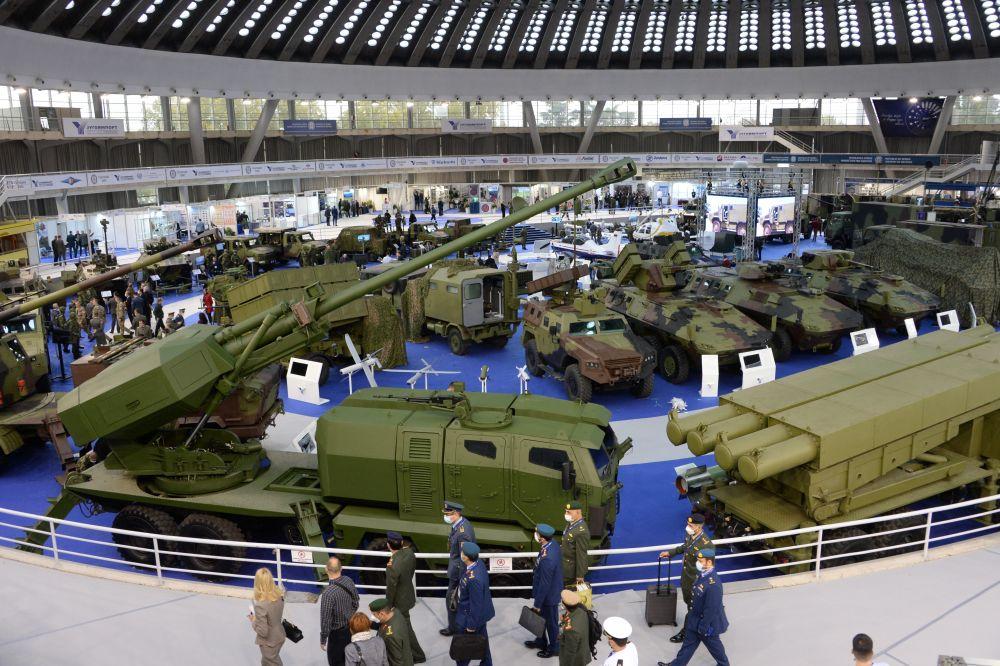
Large outbreaks of violence are inevitable. For example, because the dominance of some powers is always questioned by other, growing revisionist powers like the PRC (or, conversely, falling powers hoping to strengthen and improve their position through conquests or by weakening rising powers). And also because the struggle of the powers for dominance is what they have been doing for the last 4,000 years. As long as there are powers and related corporations competing for control of the planet, resources and markets, there will be major conflicts.
Ukraine's lesson is the experience of a state that today asks for weapons from other countries, and they do not provide them quickly enough or in sufficient quantities, according to Ukrainian officials. As a result, many states will now rely on the development of their own military-industrial complex capable of producing modern weapons, following in the footsteps of Israel, Türkiye, and Iran, Middle Eastern countries that, being in a belligerent region and playing prominent political roles in it, seek to reduce their reliance on arms supplies from other countries - too great risks to their own existence.
Finally, the military-industrial complex of different countries is highly dependent on foreign components, so the bet will be placed on the creation and development of local industries. It is impossible to make everything locally. But some elements of import-substituting industrialisation will undoubtedly take place.
The situation is somewhat reminiscent of the 30s of the last century when the remilitarisation and import-substituting industrialisation of a number of states preceded the great war.
And finally, nuclearisation is likely to become an important element of the new world. If a country possesses nuclear weapons or, at least, the ability to quickly create them (including carriers), then this is an important element of protecting its interests and a way to protect its territory from external encroachments. In the recent past, US sanctions against some regimes that have developed military nuclear programmes have stopped this possibility. But as the risks of large armed conflicts increase, interest in creating their own nuclear weapons will increase.







 editor@caliber.az
 +994 55 444-88-98
 Азербайджан, Баку, ул. Низами, 203, Af Business House, 5-й этаж