










New horizons: ADB deepens cooperation with Azerbaijan Overview by Khazar Akhundov
Azerbaijan, an island of stability in Eurasia, is steadily advancing the digital and “green” transformation of its economy while strengthening its position as a logistics hub in the Caspian region. These reforms have attracted the attention of international development institutions, including the Asian Development Bank (ADB), with which Azerbaijan has been cooperating successfully for more than a quarter of a century. This week, an ADB Board of Directors delegation held talks in Baku with the Cabinet of Ministers, the Ministry of Finance and the Central Bank, discussing prospects for cooperation under the Country Partnership Strategy (CPS) for 2025–2029. The emerging priorities include green energy corridors, the CAREC-2 transport route, financial-sector development and a range of other areas.
Established in 1966 and headquartered in Manila, the Asian Development Bank currently has 69 member countries. Since Azerbaijan became a full member in 1999, the ADB has provided the country with $5.6 billion in loans, grants and technical assistance for 160 projects, primarily in transport, the extractive industries and energy.
In terms of financing Azerbaijan’s socio-economic development, the ADB ranks among the country’s three largest international financial institutions, alongside the World Bank and the European Bank for Reconstruction and Development.
The ADB’s lending activity in Azerbaijan peaked in 2014–2018, when the country received a total of $3.04 billion in loans and grants for government-approved projects. Most of the funding went to initiatives in the oil and gas and transport sectors, as well as a programme aimed at improving public-sector efficiency. As major projects in the extractive industries and infrastructure were completed, the ADB’s next five-year Country Partnership Strategy (CPS) shifted its focus towards strengthening the banking sector and supporting private-sector development, renewable energy, climate-related initiatives, agriculture and other areas.
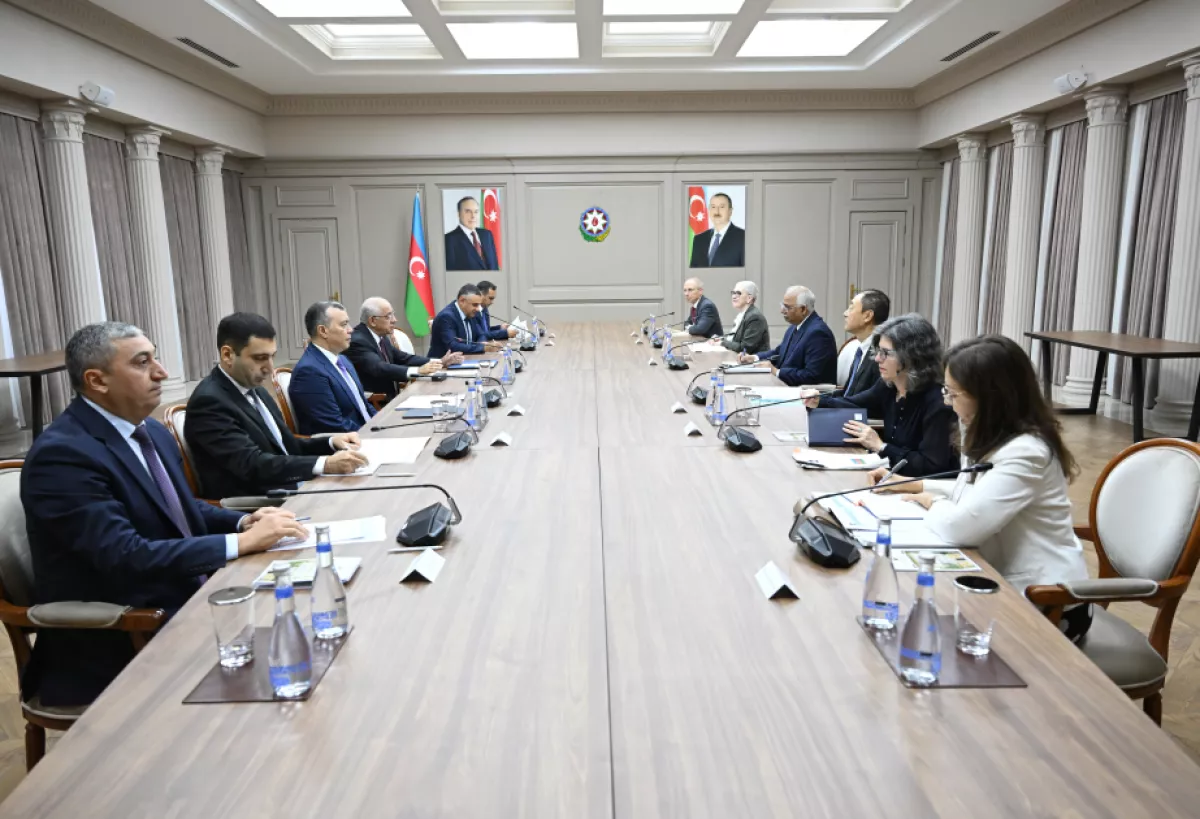
The new areas of cooperation under the CPS were discussed at a recent meeting between an ADB Board of Directors delegation and Azerbaijani Prime Minister Ali Asadov. The two sides highlighted the importance of joint projects to further develop the Middle Corridor, along with cooperation in energy, water supply, finance, education, healthcare and other fields. They also pointed to favourable opportunities for expanding cooperation through public-private partnership (PPP) mechanisms.

Under the new partnership strategy, the ADB plans to provide Azerbaijan with around $2.5 billion in financing. In particular, the bank intends to step up efforts to deepen integration in transport, trade and energy along the Middle Corridor. One of the key initiatives in this area is the transformation of the parallel CAREC-2 transport route into an integrated economic corridor. In this regard, the institution is developing a dedicated development strategy for the CAREC-2 corridor, with priority to be given to relatively low-cost, high-impact projects, such as modernising border crossing points, improving the efficiency of cross-border transport, digitalising trade and developing logistics centres.
In this context, it is worth recalling that in August this year, the ADB Board of Directors approved the regional Border Upgrades for Integration, Logistics, and Development (BUILD) programme, with total financing of $400 million. The project is also expected to attract around $150 million in co-financing from development partners and specialised trust funds. BUILD will not only provide for the upgrading of the physical infrastructure of border crossings and the procurement of inspection equipment, but also the introduction of digital solutions, including a “single window”, AI-powered risk management systems and streamlined inter-agency cooperation. Azerbaijan, along with 10 other countries in the region, is among the beneficiaries of the initiative.
During the visit of the ADB Board of Directors delegation to Baku, discussions were also held on the bank’s projects with Azerbaijan Railways CJSC (ADY). The bank has provided the railway operator with a $47 million loan to digitalise transport management and interaction with freight customers, digitise asset operations and investment planning systems, as well as corporate functions and human resources management.
Under another ADB loan project, the $350 million “Electrification, Signalling and Telecommunications of ADY’s Bilajari–Yalama Section” initiative, the railway line will be equipped with modern electrical infrastructure, signalling and telecommunications systems. The overhead catenary system and power transformers will also be upgraded, while fibre-optic cable will be installed along the railway line and wireless communication systems connected.
Work on the project is scheduled to begin on February 1, 2027. In mid-August this year, the ADB began accepting applications for the selection of a consulting company.

The ADB’s plans to support the green energy sector and Azerbaijan’s initiatives to develop energy corridors also look highly promising. In particular, the financial institution, together with the Asian Infrastructure Investment Bank, is supporting the preparation of a feasibility study for the Caspian Green Energy Corridor project, which envisages transmitting electricity generated from renewable energy sources in Central Asia to Azerbaijan and then on to Europe via an undersea power cable across the Caspian Sea.
As Sunniya Durrani-Jamal, Head of the ADB’s Azerbaijan Resident Mission, previously noted, the bank remains committed to supporting Azerbaijan’s transition to green energy through an integrated and regionally connected approach. “By assessing the technical and economic viability of electricity trade across the Caspian, we can say that this initiative will harness the region’s vast renewable energy resources, strengthen energy security and resilience, and create new avenues for clean energy exchange,” she emphasised.
Under the 2025–2029 Country Partnership Strategy, the bank also plans to finance the renewable energy sector, including projects involving battery energy storage systems (BESS), promote digital innovation in the field of artificial intelligence, and support the financial and banking sector. In this context, during a meeting with the ADB Board of Directors delegation, Azerbaijan’s Minister of Finance Sahil Babayev said that the diversification of the national economy and strengthening the role of the private sector in ensuring sustainable economic growth were among the key priorities of the updated CPS.
Against this backdrop, the importance of expanding the ADB’s non-sovereign operations and increasing opportunities to attract private investment and capital into the country’s economy was emphasised. Notably, Azerbaijan, along with other post-Soviet countries, has been included in the technical assistance project “Deepening Development Impact in Private Sector Operations”, which, among other things, aims to attract investment into high-impact private-sector projects.
In this regard, it is particularly important to mobilise Asian Development Bank resources to support small and medium-sized enterprises operating in innovative service sectors, including technology start-ups, small-scale manufacturing, subcontracting, outsourcing and other areas.
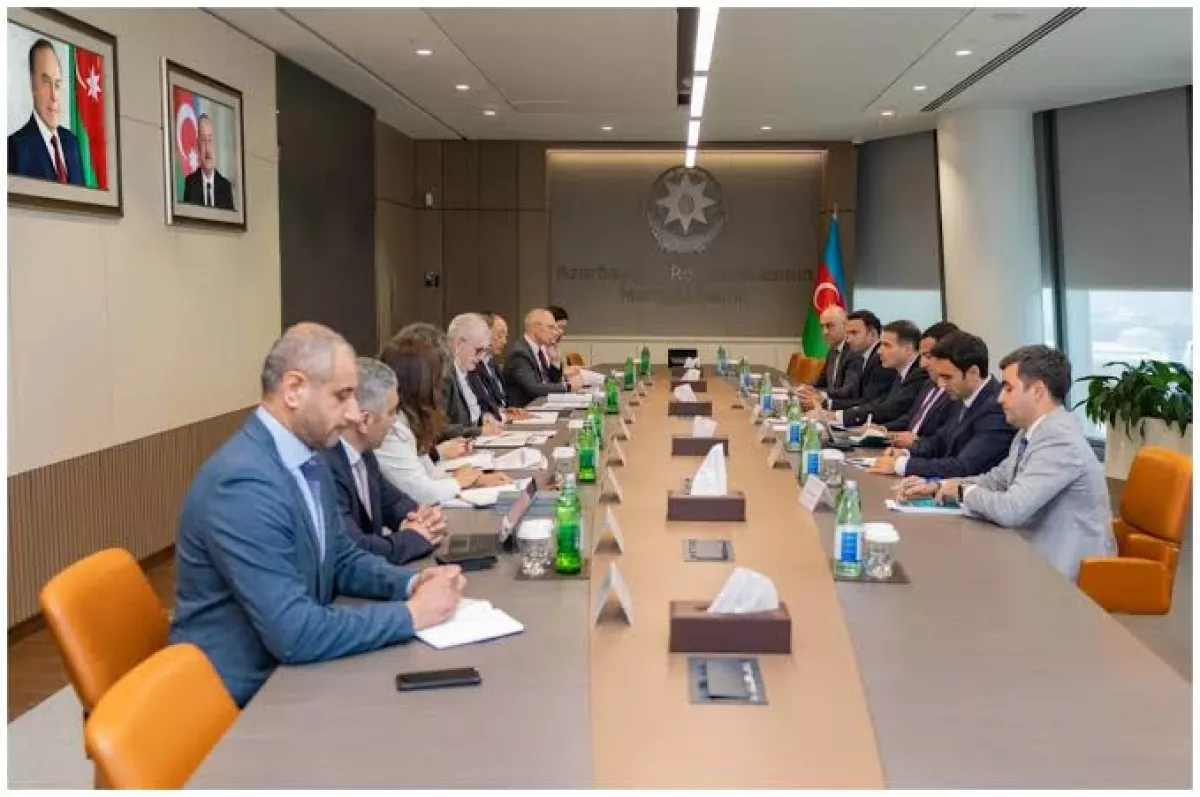
Meanwhile, at a meeting with Aliyar Mammadli, First Deputy Chairman of the Central Bank of Azerbaijan, the ADB delegation discussed opportunities for financial support and measures to expand financial inclusion in the country, particularly the development of green finance and capital markets.
In this context, it is worth noting that the Asian Development Bank has already begun seeking an international individual consultant specialising in innovative finance to assist with arranging a bond issuance in Azerbaijan. The consultant selection process is being conducted under the “Program to Enhance Capabilities of Sovereign Institutions in the Central and West Asia Region to Introduce Innovative Financing Modalities”.
Thus, the horizons of cooperation between Azerbaijan and the Asian Development Bank continue to expand, encompassing new areas in line with the challenges of the modern world.







 editor@caliber.az
 +994 55 444-88-98
 Азербайджан, Баку, ул. Низами, 203, Af Business House, 5-й этаж