










On the brink of a storm Europe caught between the US and the Middle East conflict
The statement by the President of the United States, Donald Trump, about reaching a ceasefire with Iran and achieving all of Washington’s objectives has provoked a mixed reaction in the international community, including among international expert and analytical circles, where doubts are not being concealed regarding the long-term durability of peace in the Middle East, since the fundamental contradictions underlying this war have not disappeared. And such a predictable outlook does not bode well, especially for the weakening states of the European Union.
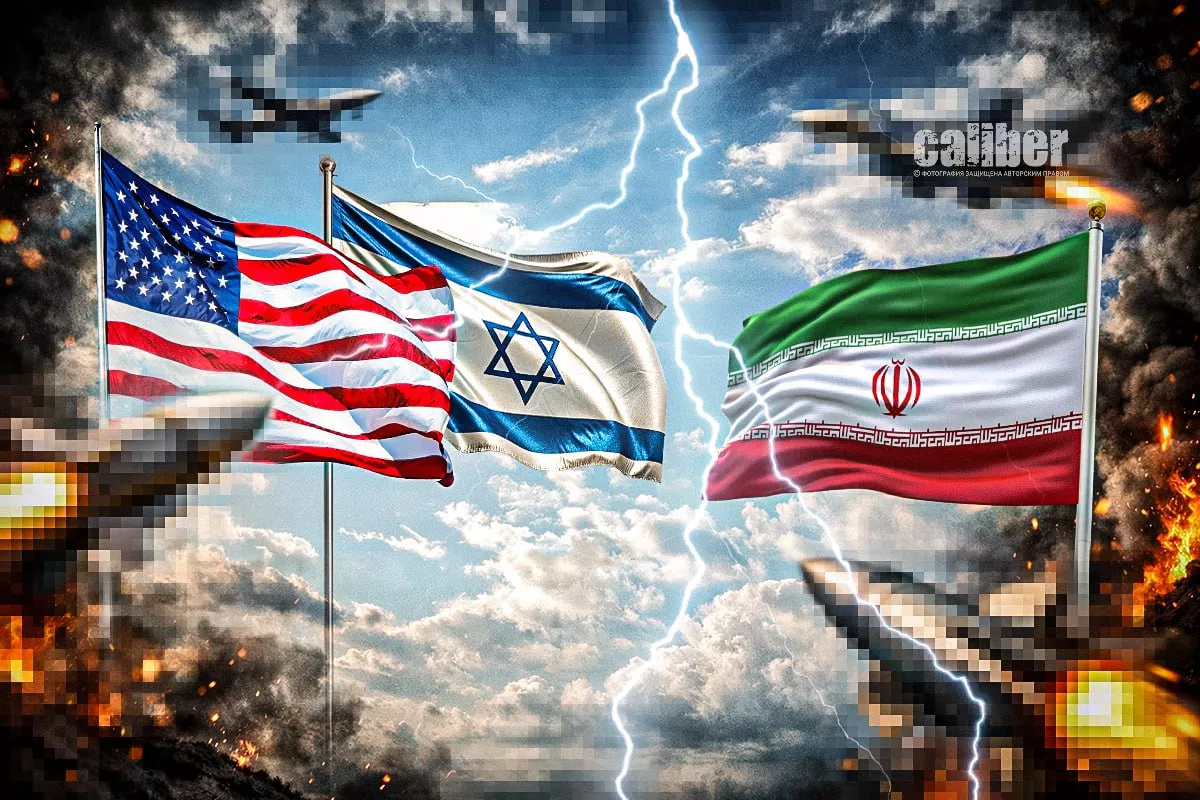
From the very beginning of the conflict between the US–Israel bloc and Iran, European states have sought to maintain Donald Trump’s goodwill while avoiding direct involvement in the war. However, as a result, they have found themselves caught between the United States and the Middle East conflict. Trump also emphasized that other states will have to start learning to fight on their own, since the United States no longer intends to assist them due to allies’ refusal to support Washington in a military operation against Iran.
At the same time, not so long ago, Europeans played a certain role in dialogue with Iran. It was the EU that acted as a mediator in concluding the nuclear deal with the Iranian side, which was described as the greatest achievement of diplomacy. Today, it seems that Brussels is no longer being taken into account.

In addition, it can currently be stated that all European assets and investments in the Middle East are under threat, and new waves of refugees may soon begin arriving on European shores. However, the most serious blow to the European countries could come from an economic crisis driven by a number of factors, the consequences of which can only be compared to a tsunami.
Europe, which depends on energy imports by 60 per cent, has long been vulnerable to shocks in the global energy market, and the situation inevitably worsened sharply after the start of the Russian–Ukrainian war, which led to the cessation of cheap Russian oil and gas supplies. Since then, some of the highest energy prices in the world have been recorded on the European continent. Meanwhile, according to the International Energy Agency, after the closure of the Strait of Hormuz, the world faced “the greatest threat to global energy security in history”: fuel exports (gasoline, diesel) fell by 60–70 per cent, and oil prices rose to over $100 per barrel. At the same time, Europe’s energy reserves are at a record low level.
It’s not just energy resources either: airfares, freight costs, and goods from Asia — the price of everything that is in one way or another linked to oil and gas is rising rapidly. A similar situation can be observed with raw materials as well: supplies of key global-market volumes of urea (used in fertilizer production), helium (used in semiconductor manufacturing), and sulfur extracted in the Gulf countries have been disrupted. This points to a new global wave of price increases.
The situation could worsen further if the Houthi forces allied with Iran block another waterway — the Bab el-Mandeb Strait, which leads into the Red Sea. In that case, transportation costs for delivering oil to Europe would increase even more, and there is little reason to expect the announced ceasefire to hold, as prices rarely return to pre-conflict levels.

On the other hand, even before the latest escalation in the Middle East, stagnating Europe had been experiencing deindustrialization under the pressure of intense competition from China, sharply rising energy prices, and inflation. Today, this process appears to be accelerating.
Thus, the war in the Middle East has effectively eliminated Europe’s already modest economic prospects. In this context, a logical question arises: “What tools does Europe have to deal with this problem?” One of the measures, of course, could be price controls and subsidies, but these would lead to all European Union countries falling into an even deeper debt trap. In 2024, the average debt-to-GDP ratio of European states exceeded 80 per cent, and according to IMF forecasts, it is expected to continue rising steadily. At the same time, higher interest rates aimed at curbing rising inflation would make this debt even more burdensome.
Meanwhile, another question is also coming to the surface: “Who will supply Europe with the necessary energy resources?” The prime minister of Belgium has already proposed normalizing relations between the EU and Russia in order to obtain cheaper energy supplies. However, such a step would imply peace in Ukraine on terms unfavorable to Brussels. The only alternative option is to purchase oil from the United States at any price, which once again forces EU leaders to show compliance with Trump’s policies.
This is reflected in the rhetoric of European politicians, who are trying to maneuver between a powerful Washington and the views of their voters, who are not willing to pay for other people’s wars. The so-called EU three (France, the United Kingdom, and Germany) have called for de-escalation of the conflict and condemned Iran for strikes on neighboring Arab countries.
British leader Keir Starmer, gathering his courage, initially refused to provide the Americans with a base on Diego Garcia in the Chagos Archipelago, but later changed his position, stating that the United States could use it for a “specific and limited defensive purpose.” In response, the White House leader said that the British prime minister “took far too long” to make a decision.
The only dissenter was Spanish Prime Minister Pedro Sánchez, who stated that “It is absolutely unacceptable that those leaders who are incapable of fulfilling this duty use the smokescreen of war to hide their failure and, in the process, line the pockets of a select few – the same ones as always,” and also criticized the “blind and servile obedience” of his colleagues.

In principle, such behavior on the part of Europeans can be understood, since for the past century the foundation of Europe’s prosperity, stability, and unity has been its privileged alliance with the world’s most powerful military and economic power.
Without the undisputed leadership of the United States and the benefits provided by American support, the European Union finds itself facing an existential threat, and Brussels will be forced to sharply increase defense spending in a desperate attempt to compensate for the loss of the security “umbrella” provided by the United States. This will lead to further cuts in social spending, thereby increasing social and political instability across European countries.
Under such a scenario, and given the differences in economic strength and levels of public debt, Europe risks fragmenting into several parts moving in different directions, each of which would nevertheless experience decline and deindustrialization, while increasingly clashing with its neighbors in pursuit of narrowly defined national interests. As a result, Europeans could become easy prey for great powers that are actively reshaping the global map.







 editor@caliber.az
 +994 55 444-88-98
 Азербайджан, Баку, ул. Низами, 203, Af Business House, 5-й этаж