










Russia and China: chasing a nonexistent bloc The limits of “anti-Western alliances”
The Russian-Ukrainian war, involving EU-NATO countries, could have become the central conflict of the “collective West” with its opponents. At first glance, this week even seemed to demonstrate another stage in the military consolidation of the West’s opponents—from Russia and China to India and Iran. Against the backdrop of U.S.-Russia negotiations, the Chinese foreign minister flew to Moscow, and the Indian prime minister personally went to the airport to greet the Russian president. At the same time, it emerged that Russia is supplying Iran with fighter jets. But upon closer inspection, it becomes clear that there is no anti-Western alliance between these countries (let alone other non-Western states). To the illusory and divided “collective West” stands no less ephemeral a “collective East.”
The eloquent reception of China’s foreign minister in Moscow
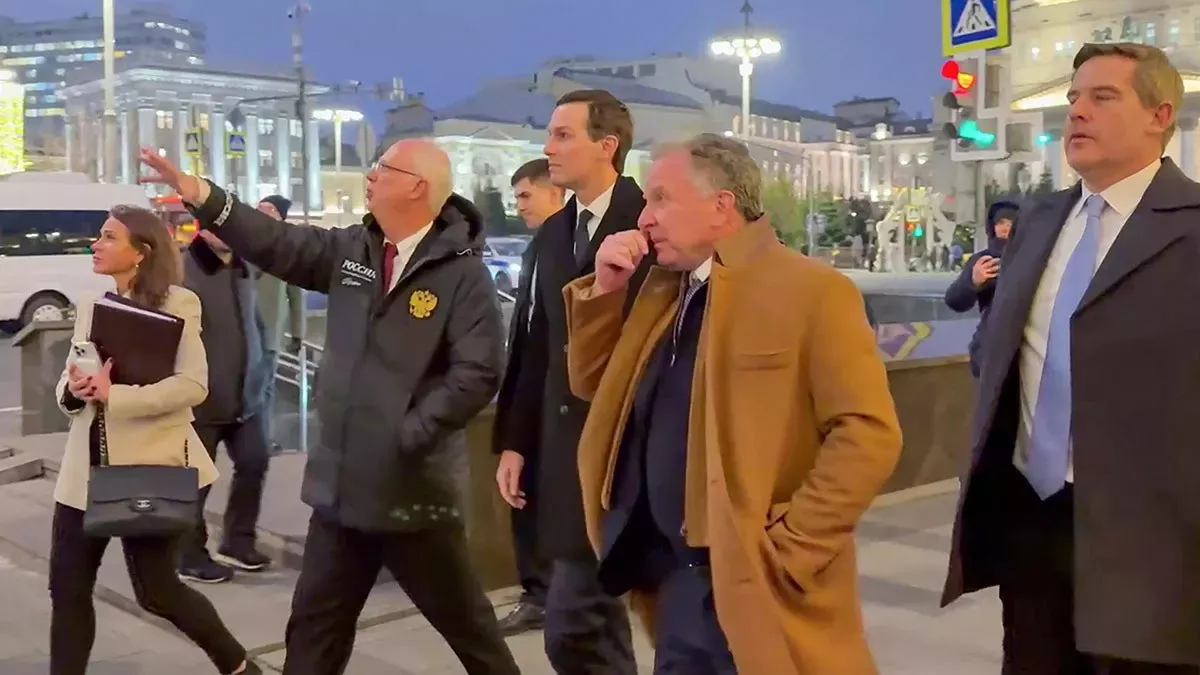
On December 2, not only did U.S. presidential special envoy Steve Witkoff and Jared Kushner, the U.S. president’s son-in-law, visit Moscow, but so did China’s foreign minister, Wang Yi. Russian media repeatedly emphasised that this coincidence was accidental, making it clear that the schedule was hardly coincidental. Wang came for the annual bilateral strategic security consultations, while the American visits were conveniently timed to coincide. The point was to demonstrate to the U.S. that Russia still had cards to play.
According to the Chinese side, the Russian and Chinese delegations reached “agreements on a wide range of issues.” Wang then met with his Russian counterpart, Sergey Lavrov, and remarked pointedly on the timing of the American and Chinese delegations’ visits: “I know that today is an especially busy, tense, and significant day for Russia, for President Vladimir Putin, and for you, esteemed minister. You found the time to meet with me, which demonstrates the high level of our relations.” There is subtle irony in this comment—suggesting that the Russian minister could only meet with Wang, since, unlike “Trump’s son-in-law,” the Chinese foreign minister’s other superiors were apparently not willing (at least publicly) to be seen. Of course, Trump noticed this distinction.
Few details about Wang Yi’s visit are publicly known. However, even in official statements, differences in positions were noticeable. For example, Russian Defence Minister Sergei Shoigu spoke of “revanchism” and “militarism” re-emerging in Europe and Japan, and assured that Russia and China knew how to counter these phenomena—“we will not allow the revival of criminal regimes in Europe and Tokyo.”
Wang Yi did not contradict him but expressed concern about the revival of Japanese militarism, which was a direct response to recent remarks by Japan’s new prime minister Sanae Takaichi, regarding the status of the separatist entity on the Chinese island of Taiwan, where she hinted at a willingness to defend the separatists in this former Japanese colony.
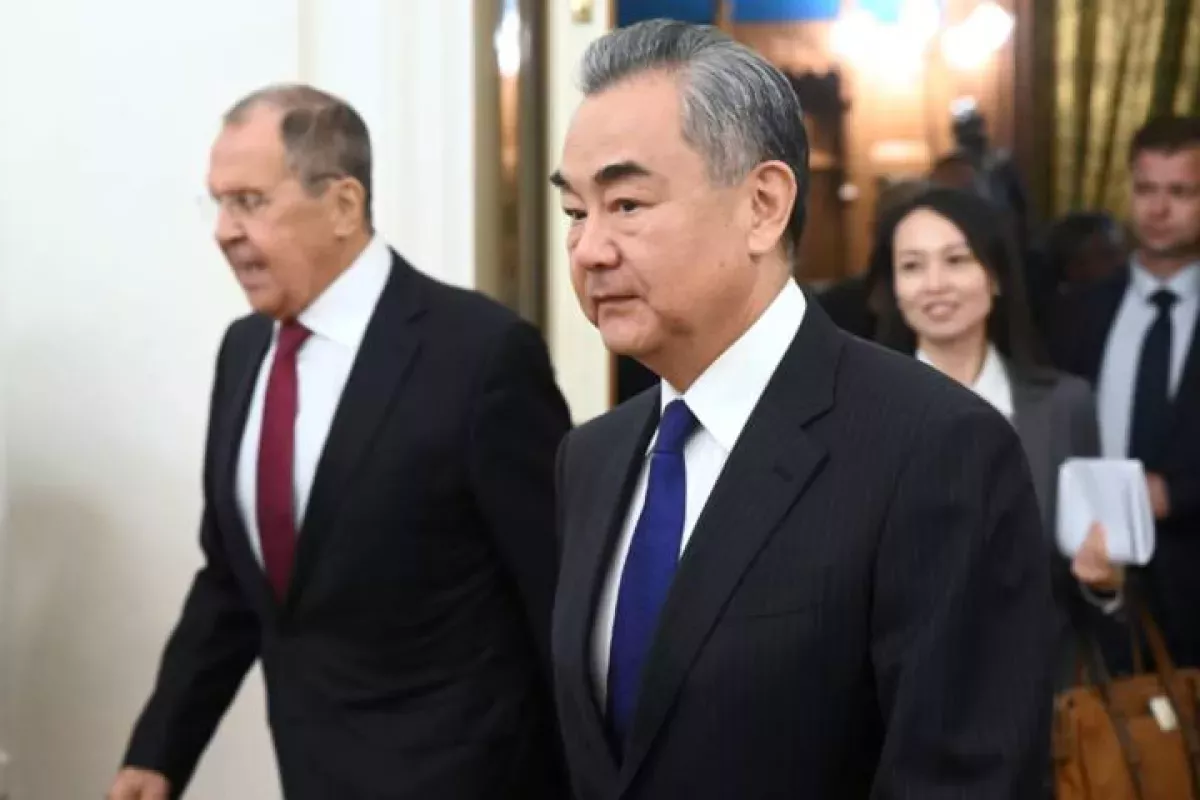
Wang Yi had particular reasons to refrain from attacking Europeans, as this occurred just before a significant diplomatic event for Beijing. On December 4, French President Macron visited China for a three-day trip, during which he discussed not only the sensitive issue of trade with China but also the Ukraine question. The Chinese government organised a ceremonial reception for him, clearly signalling that it was not willing to miss the potential opportunity to negotiate with Europeans amid the ongoing conflict with the U.S.
Moreover, despite what Western commentators might claim, China has not officially, in words or actions, recognised Russia’s territorial claims on Ukraine. The most that can be said is that China has avoided actively severing ties with Russia or reducing trade with it. Informally, many Chinese organisations and firms avoid exposing themselves to Western sanctions linked to bypassing U.S. and EU measures against Russia. China is in no rush to take sides for Ukraine and its Western allies, but this is not only due to recent anti-Chinese moves by Western politicians. In Ukraine specifically, Chinese firms suffered in a particularly extreme episode: in the 2010s, they attempted to invest billions of dollars to save, in their own interest, the formerly leading Soviet aircraft engine manufacturer “Motor Sich.” They were bluntly removed from the project, and the company’s management that cooperated with them was imprisoned on dubious charges, leading to the firm’s collapse. Such events must be remembered when assessing China’s position on Ukraine.
Opponents of the West do not even build infrastructure for cooperation
It is even less obvious that Russia is ready to align with other non-Western countries, even under current military conditions. This is not only due to the strange U.S.-Russia understanding on Ukraine, which likely displeases other countries outside the West, but also due to more prosaic material factors that reveal the real intentions of the parties far better than any statements or signed documents.
On December 3, a letter from the Russian government was leaked, suggesting a possible abandonment of the construction of the North Siberian Railway, which would have developed the Northern Sea Route along the Arctic coast of Siberia—a route crucial not only for Russian trade with Asia but also for Chinese trade with Europe.
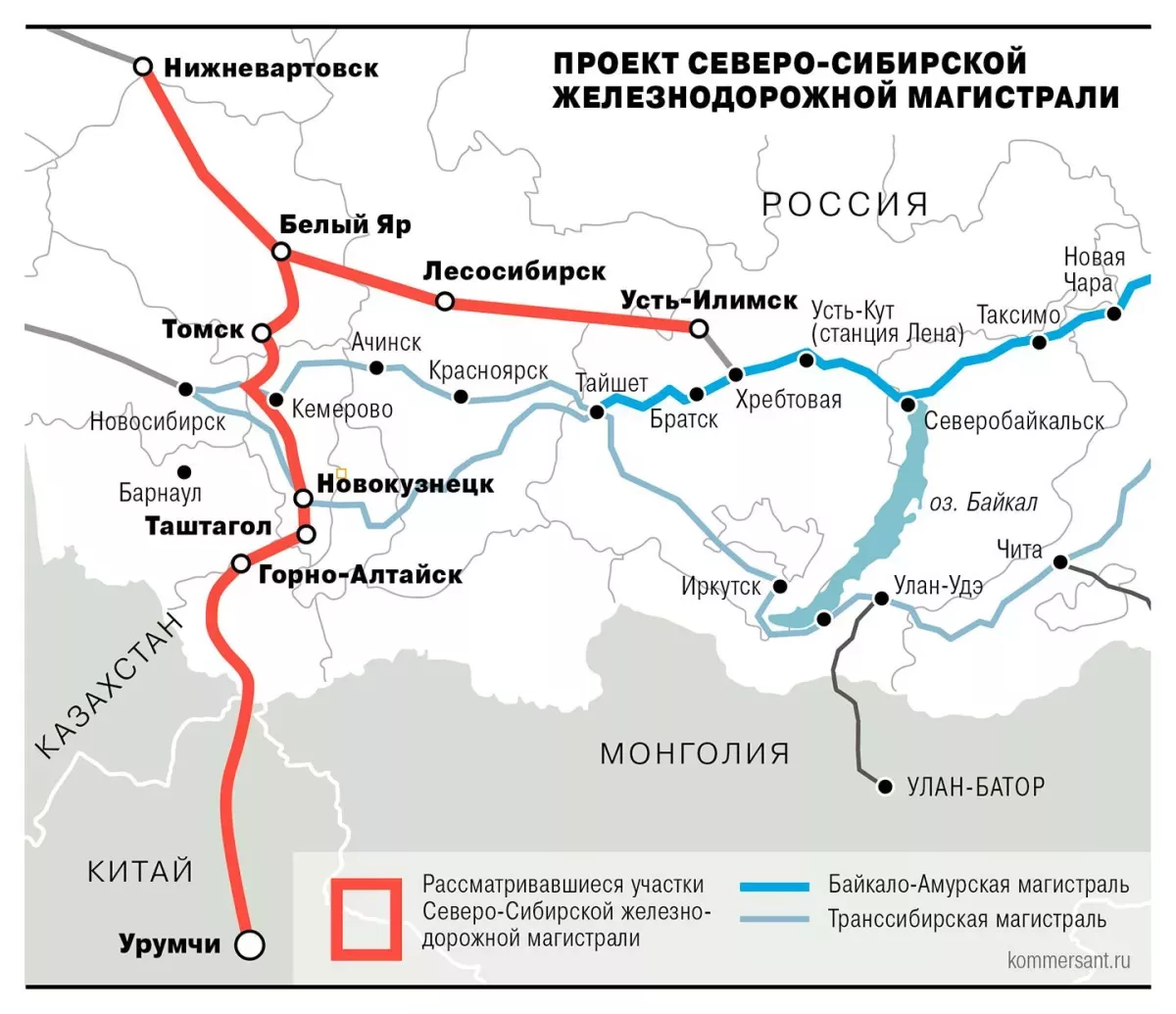
Even the construction of individual sections of the North Siberian Railway—specifically the route from the coast to the capital of China’s Xinjiang province—was deemed inexpedient. These plans had been proposed at the highest level two years ago.
This is a quiet but powerful and telling blow to the prospects of developing communications between Russia and China. Trade and logistics between the two countries are severely limited by primitive infrastructure or its total absence.
The rejected plans would have allowed the transfer of some goods between the Eastern Polygon, the Trans-Siberian Railway, and the Northern Sea Route. Moreover, these plans were particularly important for China because they could have helped develop one of the country’s remote and problematic regions—Xinjiang.
On this background, another so-called “anti-Western alliance”—Russia and India—also takes on new colours. Of course, Russia’s leader was received in Delhi at the highest level, and after the talks, Deputy Head of the Russian Presidential Administration Maksim Oreshkin announced that trade between Russia and India would grow to $100 billion by 2030. He claimed that average annual growth since the start of the war had been about 80% per year, and trade last year nearly reached $64 billion. If you calculate, the numbers roughly match Oreshkin’s claim.
But is this the new international economy, immune to Western sanctions? Hardly. What matters here is not the calculator but the maps—transport routes, economic zoning, and population density. Only then does it become clear that infrastructure for a new international economy does not exist even on the Russia-India segment.
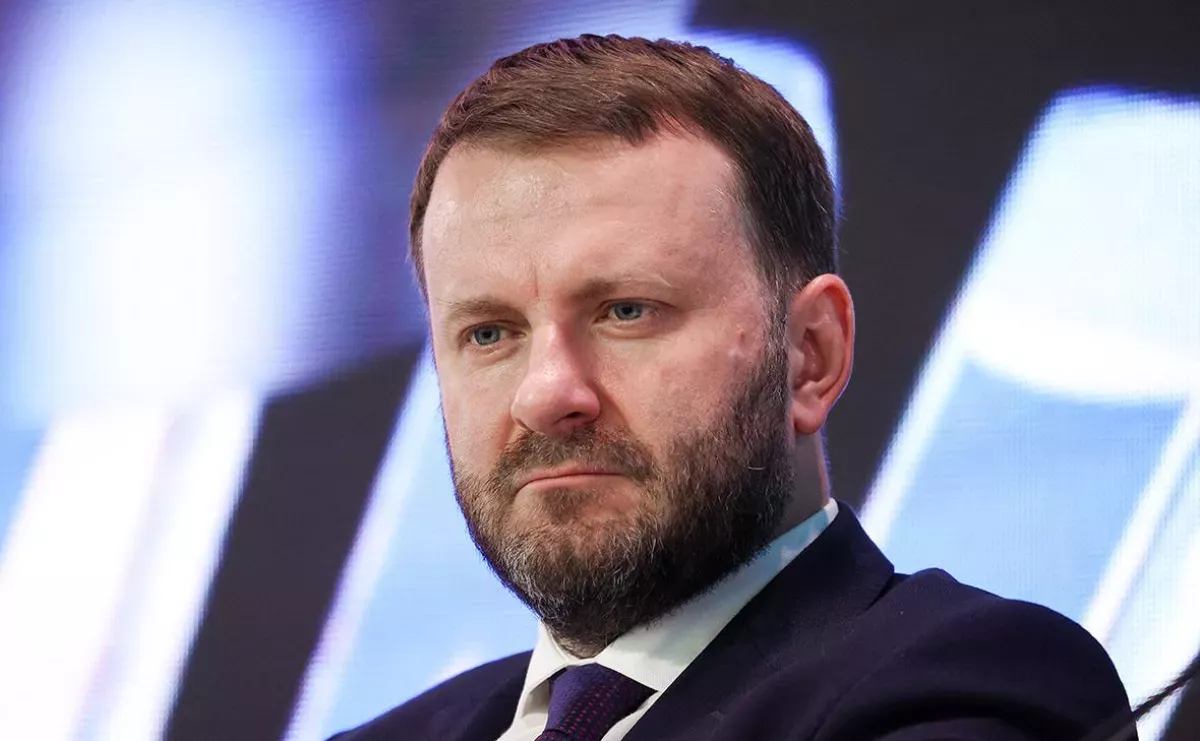
Oreshkin merely said that “joint solutions for logistics development” are needed. For now, deliveries go through the North-South corridor, but “it is necessary to connect the Northern Sea Route and the Eastern maritime corridor Chennai–Vladivostok.” Oh yes, and “e-commerce” also needs to be integrated, as if it could exist independently of physical realities.
In other words, the lack of infrastructure casts doubt even on high-level agreements. Russia’s current trade and contacts with countries south and east of its borders, including India and China, are fully loaded. The proposed route via Vladivostok is also congested, and trading with India through China seems risky given the periodically tense China-India relations. As for the Northern Sea Route, it remains more symbolic than real, since a crucial development project was quietly abandoned due to a lack of funding.
There are no even plans to create infrastructure, and where could it be built? Options are limited. The main route is through Iran, but Moscow will not risk it due to its ties with Israel and growing friendship with the U.S.
The Central Asian route is unrealistic, as Russia and India would need to build ties with many regional states—from Central Asian former Soviet countries to Afghanistan and Pakistan.
Moreover, the problem is not only geography. Infrastructure is not being built even inside Russia. The imbalance of territorial development in Russia has reached gigantic proportions—most economic centres lie west of the Urals, but traditional export routes through the Baltic and Black Seas are already seriously constrained by Western actions, with a tendency for further tightening. Recent attacks on tankers in Turkish territorial waters have shown that exporting via Western routes is increasingly risky for Russia.
This makes northern and eastern transport infrastructure necessary, yet no progress is visible. Even after Russia began its gradual confrontation with the West over Ukraine in 2013, Russia invested huge sums in creating a new export port in the Baltic region (Leningrad Oblast), instead of urgently reallocating funds to develop infrastructure in the Asian part of the country or at least in the North. This is unsurprising, since such projects require enormous investments, and Russian (as well as Indian and other non-Western) elites are generally oriented toward the West rather than each other.
Few exceptions exist—China, where historically there was also a huge imbalance in territorial development and connections of various regions to global markets. Western China, i.e., Xinjiang, Tibet, and adjacent regions, was until the 2000s a virtual backwater where Beijing primarily conducted nuclear and missile tests. Over the last 25 years, these regions have made enormous strides in economic development and infrastructure creation. Yes, many of these steps, particularly new policies toward Uyghurs and Kazakhs in Xinjiang, have drawn criticism, but the regions have developed.
Iran will not bail out Russian companies
Divergent interests and the absence of a common positive agenda undermine many international alliances of the West’s opponents. Interactions are largely transactional and short-term. A case in point is Russian-Iranian relations. This week, Ukrainian media published fairly credible documents regarding Iran’s order for 16 Russian Su-35 fighters in 2025–27.
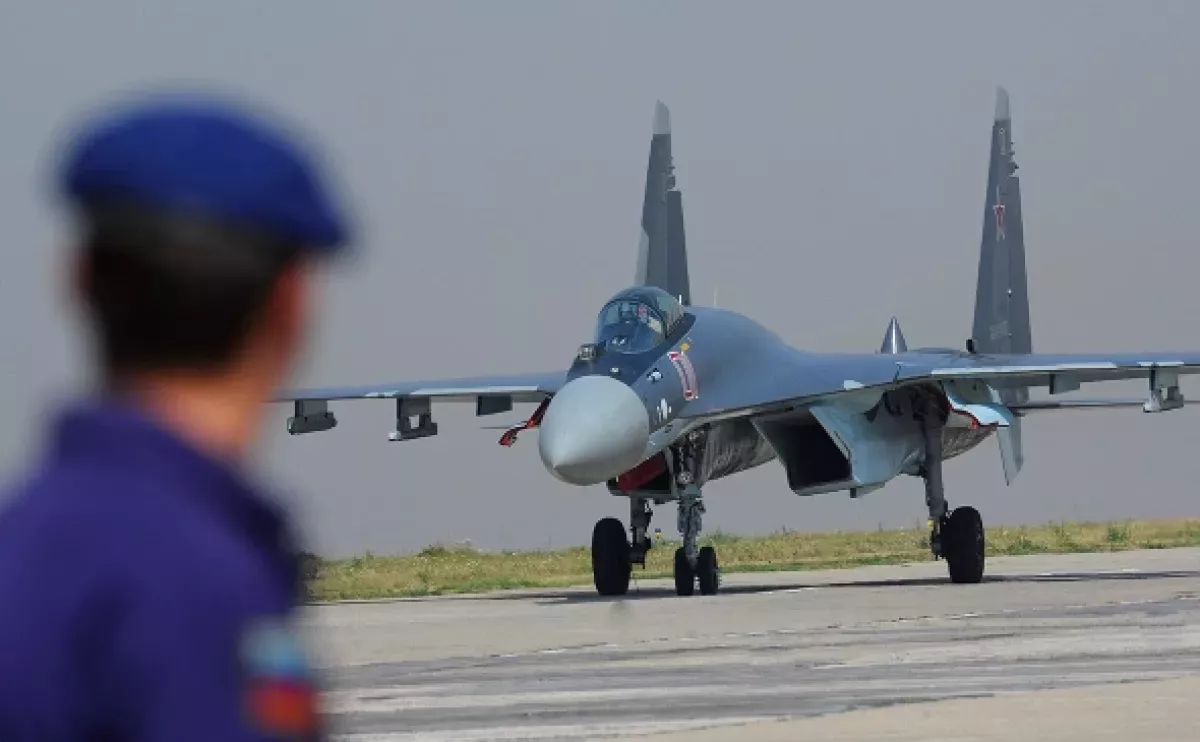
It is immediately noticeable that the delivery is structured under strict terms—full prepayment in 2024. Russia has always operated this way with Iran over the last 25 years: prepayment and instant suspension of payment over any dispute, but those were peaceful times. Now, Russia is dealing with some of the same countries with which Iran is in conflict. Iran provided crucial military equipment to Russia, yet deliveries proceed, as before, strictly for cash.
In Tehran, however, trust in Moscow has been limited in recent years. A typical example was Russian-Iranian support for the Syrian regime of Bashar al-Assad, where both countries maximally distanced themselves from each other’s policies until their protégé ultimately collapsed. One could also recall that Iran effectively offered its services to the EU when it explored options to penetrate Armenia, bypassing Russian influence.
Currently, we see another, albeit smaller, example of how Russia and Iran generally avoid supporting each other. Iran wields significant influence in Iraq. In recent weeks, U.S. and allied forces have successfully forced the Russian company Lukoil out of Iraq, compelling it to close its most successful overseas oil project (around 10% of Iraq’s total oil output) due to sanctions. Likely, this will be resolved by the next New Year. Such issues have already shaken Lukoil—personnel and working hours are being reduced even in distant Belarus. Iran and its allies in Iraq have no intention of assisting Russia’s so-called “allies,” even though one of Russia’s key companies is at stake. Tehran merely observes the American clearance of Russia from Iraq, clearly amused that it occurs against the backdrop of supposedly confidential deals between Moscow and Trump.
As we see, contrary to all rhetoric, even known opponents of the collective West have made little progress in building not just an alliance but even the infrastructure for stable cooperation, the foundation of a new international economy, or the backbone of a new international community. Even Russia’s confrontation with the collective West over Ukraine has not led to a structural reorientation of the country—at most, it temporarily limited Russia’s contacts with the West, which the Russian establishment is eager to restore as soon as possible. Therefore, the Russian-Ukrainian war involving the EU and NATO has not contributed to the crystallisation of any non-Western or alternative international structures. The non-Western world avoids Western sanctions against Russia and anti-Russian rhetoric, but it does not intend to support Russia in its confrontation with the West. Paradoxically, this war is effectively being pushed back as “not their own” by the non-Western world and increasingly looks like an internal conflict of the West with its never fully accepted component, Russia.







 editor@caliber.az
 +994 55 444-88-98
 Азербайджан, Баку, ул. Низами, 203, Af Business House, 5-й этаж