










Social spending, defence, GDP: key priorities of Azerbaijan’s 2026 budget Caliber.Az review
The New Year festivities have faded, and amid the clinking of glasses the outgoing Year of the Snake has passed the baton to the Year of the Red Fire Horse, a symbol of energy and readiness for change. That energy will be in high demand in 2026, as global analysts predict that the negative impact of geopolitical conflicts will persist into the new year.
A slowdown in global GDP growth is expected: the economic systems of most countries will come under pressure from tariff wars and new trade barriers, while high volatility in the oil and gas market is also set to continue. This external pressure will be felt in Azerbaijan as well. At the same time, the country is expected to see growth in the non-oil sector’s share of GDP, optimisation of tax policy, and increased budgetary spending on the social sphere.
A significant number of experts believe that in 2026 the global economy will face a slowdown due to ongoing uncertainty in political and trade relations between the United States and China. This creates additional risks for global production and, as a consequence, may lead to rising unemployment and declining household incomes in many countries around the world.
In particular, according to forecasts by the Organisation for Economic Co-operation and Development (OECD), the pace of global economic growth is expected to slow moderately—from 3.2% in 2025 to 2.9% in 2026. Experts at the Eurasian Development Bank (EDB) share a similar view. According to the bank’s report, the global economy in 2026 will experience a slight deceleration compared to the dynamics of 2024–2025, largely due to adaptation to new rules of the game, above all trade barriers and tariffs. EDB experts expect the US economy to grow by around 1.6% this year, the eurozone by about 1%, while China’s economy is projected to expand by 4.6%, compared with 5% a year earlier.
The fragile equilibrium in global markets during the post-pandemic period was disrupted by the Russia–Ukraine war and conflicts in the Middle East. The subsequent India–Pakistan confrontation, along with tensions in other regions of the world, became additional catalysts that exacerbated many long-standing economic problems. The global economy is increasingly moving towards clustering and inward-looking regional structures; supply chains are being disrupted, and inflationary pressures are intensifying. All of this has a negative impact on commodity markets and affects virtually all developing countries. Over the past four years, Azerbaijan has also felt the full force of these global adverse trends.
At the same time, Azerbaijan—thanks to its high resilience to external shocks—has managed to maintain stability throughout the entire period of global turbulence. Owing to a preferential regime for non-oil production, prudent monetary and fiscal policy, and the stability of key macroeconomic indicators in 2022–2025, the national economy and financial system have demonstrated remarkable resilience. Notably, even last year the government succeeded in maintaining relatively stable business activity amid turbulence in the global economy.
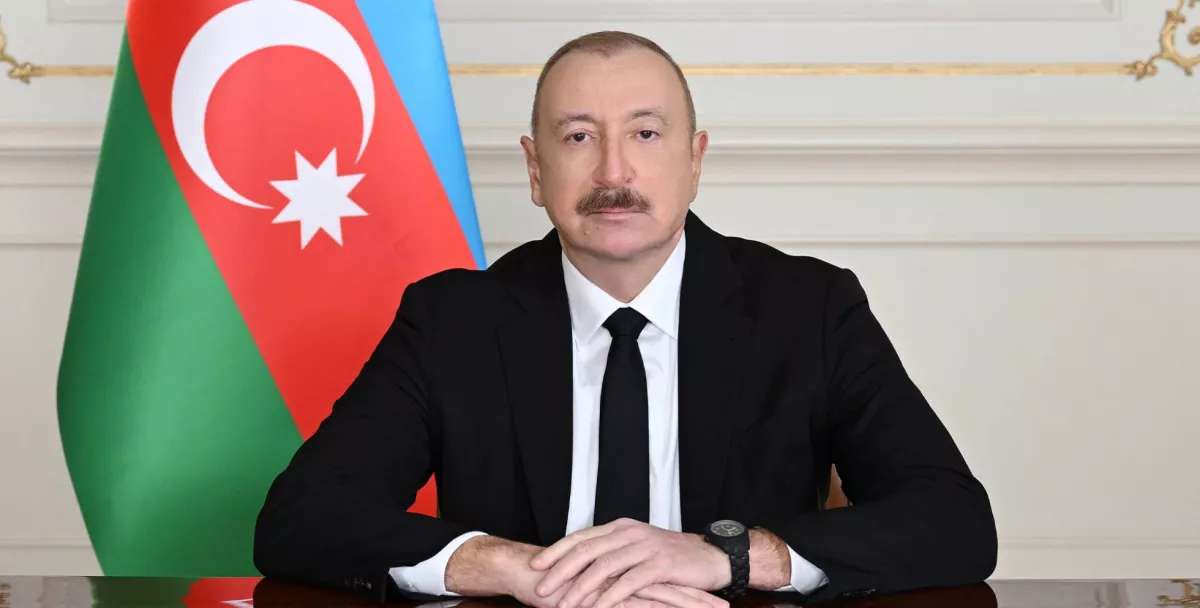
“The year 2025 has now come to an end. It has been another successful year for our country and our people. The people of Azerbaijan have lived in peace, security, and stability,” President of Azerbaijan Ilham Aliyev said in his address marking the Day of Solidarity of World Azerbaijanis and the New Year. “I am confident that 2026 will also be a successful year for our country and that, as always, all the tasks before us will be fulfilled successfully.”
Addressing issues of economic development, the President noted that the country has every reason to be proud of the results achieved in 2025. Azerbaijan’s foreign exchange reserves reached a historic high, exceeding $80 billion, while external debt continued to decline and now stands at just 6.3% of GDP. Moreover, foreign exchange reserves exceed external debt by a factor of 16, and it is no coincidence that leading international rating agencies have upgraded Azerbaijan’s sovereign credit rating to investment grade.
“We are successfully implementing the Great Return Program. Extensive construction work is underway in the liberated territories, and approximately 70,000 people already live, work, and study there. Formerly displaced persons have returned to 32 villages, settlements, and cities, where the best living conditions have been created for them,” President Ilham Aliyev noted.
A low level of external debt and the presence of a substantial foreign exchange reserve “safety cushion” are undoubtedly key factors in shielding the country from potential external shocks in 2026. Equally important for maintaining macroeconomic stability is the ongoing policy of revitalising the territories liberated from occupation. Thus, between 2026 and 2029, some 13.5 billion manats (approximately $8 billion) in state funds are planned to be allocated for the development of the Karabakh and East Zangezur economic regions. This financing will stimulate economic activity by supporting domestic non-oil sector companies through contract work and government procurement.
At the same time, Azerbaijan is part of the global economy and is closely integrated into it through foreign trade mechanisms, remaining sensitive to fluctuations in hydrocarbon prices. In particular, changes in demand conditions and pricing among key trading partners manifest themselves in the form of imported inflation, contributing to rising consumer prices domestically. Azerbaijan’s foreign trade dynamics in 2025 were also indirectly influenced by factors such as global tariff wars and the weakening of the US dollar.
The past year proved to be a year of a “weak” dollar: the US Dollar Index (DXY) fell by around 10% against a basket of six major global currencies. It cannot be ruled out that the policy of the US Federal Reserve, which recently cut its benchmark interest rate by 25 basis points, may continue into 2026. This, in turn, could put pressure on the currencies of emerging markets with rigid pegs to the dollar. To some extent, Azerbaijan may also face such risks.
The US dollar remains the key currency for reserve accumulation and for conducting Azerbaijan’s foreign trade operations. Its weakening inevitably has an adverse impact on import costs, fuelling inflationary expectations and creating additional challenges for domestic price stability.
Overall, price dynamics in 2026 will be shaped by a range of factors, including changes in tariffs in the fuel sector. On the eve of the outgoing year, the Tariff Council adopted a resolution under which the price of AI-92 petrol in Azerbaijan was increased by 0.05 manats, while diesel fuel rose by 0.1 manats.
In September 2025 a targeted budgetary fund, “Public Transport”, was established. One of its funding sources is a portion of the road tax levied on each litre of motor petrol, diesel fuel, and liquefied gas. The road tax has been set at 0.07 manats per litre of fuel. Despite the relatively moderate increase in fuel prices, their multiplier effect—primarily in freight transport and agricultural production—may over time translate into higher prices in retail trade.
At the same time, experts from the International Monetary Fund (IMF) believe that inflation in Azerbaijan as a whole remains under control and within the target parameters set by the Central Bank. In particular, the IMF’s October report Global Economy in Flux, Prospects Remain Dim forecasts that average annual inflation in 2026 will decline to 4.5%, and to 4% by 2030. These estimates largely coincide with the projections of Azerbaijan’s Ministry of Economy, according to which average annual inflation in the country will fall to 4.8% in 2026 and to 4.5% in 2027.
At the end of December, the Central Bank of Azerbaijan announced the goals and priorities of its monetary policy for 2026, with the key objective defined as keeping annual inflation within the target corridor of 4 ± 2%.
“Stable inflation increases confidence in the national currency, strengthens its purchasing power, and reduces the share of assets and liabilities denominated in foreign currency, thereby enhancing the economy’s resilience to external shocks,” the regulator said in a statement.

In 2026, the Central Bank intends to continue building up foreign exchange reserves, improving liquidity management mechanisms within the banking system, and using monetary policy instruments to neutralise external factors not directly related to the monetary sphere.
Overall, given the persistence of global risks, the formation of the 2026 state budget was based on a conservative scenario: the revenue side was consolidated and expenditures were optimised. In addition, the government lowered the so-called “cut-off price” used to calculate oil revenues. In the 2026 state budget, this parameter is set at $65 per barrel of oil. Public spending policy for 2026–2029 will be implemented across six core areas. These include, above all, strengthening the country’s defence capability—encompassing the restoration and safeguarding of state borders, modernisation of the material and technical base of the Armed Forces, demining of territories—as well as the implementation of comprehensive measures and projects aimed at improving social security and service conditions for military personnel.
Thus, projected spending on defence and security in 2026 will increase by 3.8%. At the same time, the budget for the coming year will retain a strong social orientation. In particular, expenditure on the financing of labour pensions in Azerbaijan in 2026 will rise by 782.4 million manats ($460 million), or 10.9% compared with the approved figures for 2025. The average pension will increase to 590 manats ($347), while the average old-age pension will reach 629 manats ($370). Overall, more than 3.433 billion manats ($2 billion) are earmarked for social payments in 2026, accounting for 8.2% of total budget expenditure.
Financing of the economy from the state budget will also continue—both directly and indirectly—in the form of government obligations, public procurement, subsidies, subventions, and grants. Support for state programmes and initiatives implemented with budgetary funds will likewise be maintained. At the same time, state financing for a number of economic and other areas, including agriculture, the utilities sector, and environmental protection measures, will be reduced.
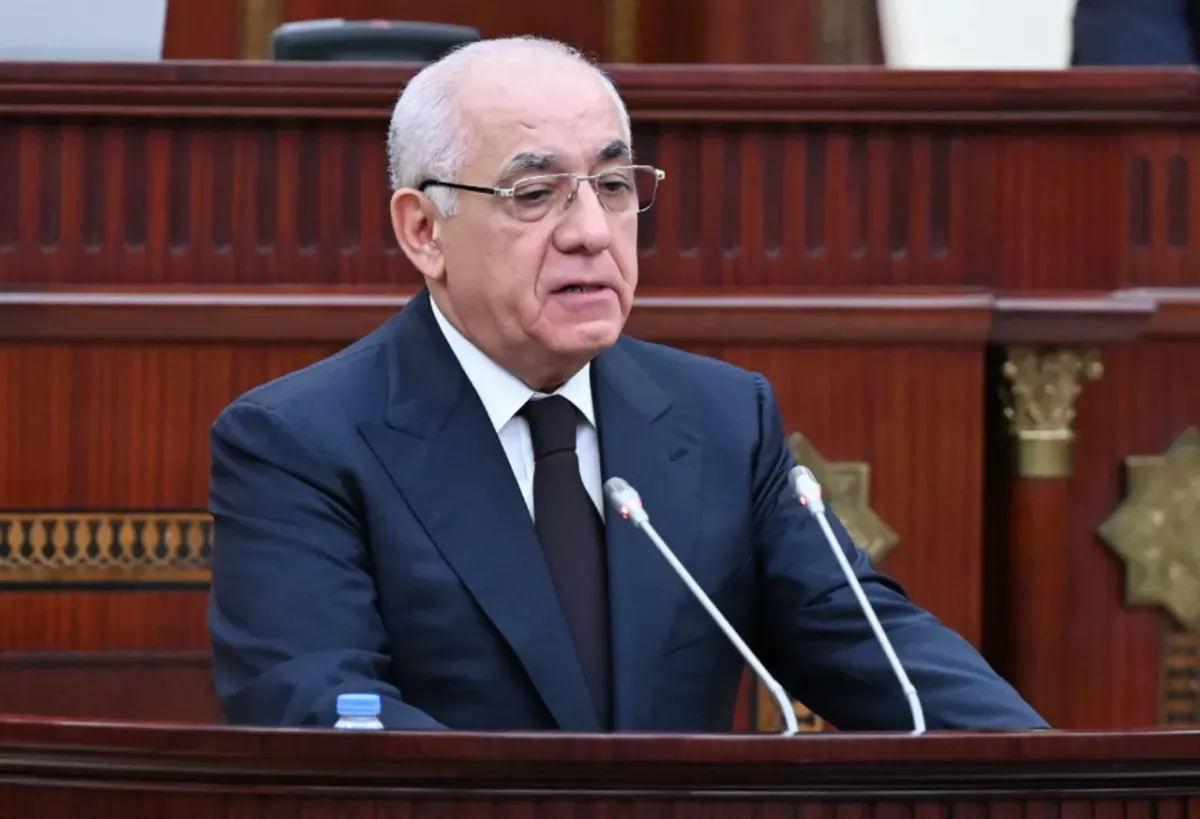
Despite challenging external conditions, Azerbaijan is expected to see growth in budget revenues in 2026. According to Prime Minister Ali Asadov, revenues of the consolidated budget are forecast to rise slightly, reaching around 45 billion manats ($26.4 billlion). Based on macroeconomic projections, real growth in the non-oil sector of GDP in 2026 is expected to stand at 5%, exceeding last year’s performance. Overall, according to calculations by the Ministry of Economy of Azerbaijan, total GDP growth is forecast at 2.9% in 2026 and 3.3% in 2027.
Such optimism appears well founded, given the steady development of Azerbaijan’s non-oil economy. In 2026, the formation of industrial clusters of various profiles will continue, investments in green energy and the digital transformation of the economy will increase, and positive momentum in the transport and logistics sector is set to be maintained.







 editor@caliber.az
 +994 55 444-88-98
 Азербайджан, Баку, ул. Низами, 203, Af Business House, 5-й этаж