










Test of sincerity: Can Yerevan rein in the revanchists for the sake of peace? Overview by Teymur Atayev
The presentation on September 14 by Mohammed Abdelsalam, Secretary General of the Muslim Council of Elders, of the certificate for the 2026 Zayed Award for Human Fraternity to Azerbaijani President Ilham Aliyev once again highlighted the importance of the peace agenda for our planet, which is, quite literally, mired in bloodshed and conflicts of various kinds.
It is highly symbolic that Mohammed Abdelsalam himself, as a member of the Award’s jury and its Secretary General, announced in January this year that the Award Committee had selected the historic peace agreement between Armenia and Azerbaijan, describing it as embodying the mission and objectives of the Award in promoting and developing a culture of dialogue and coexistence, and as an important milestone in advancing global peace and a major diplomatic achievement.
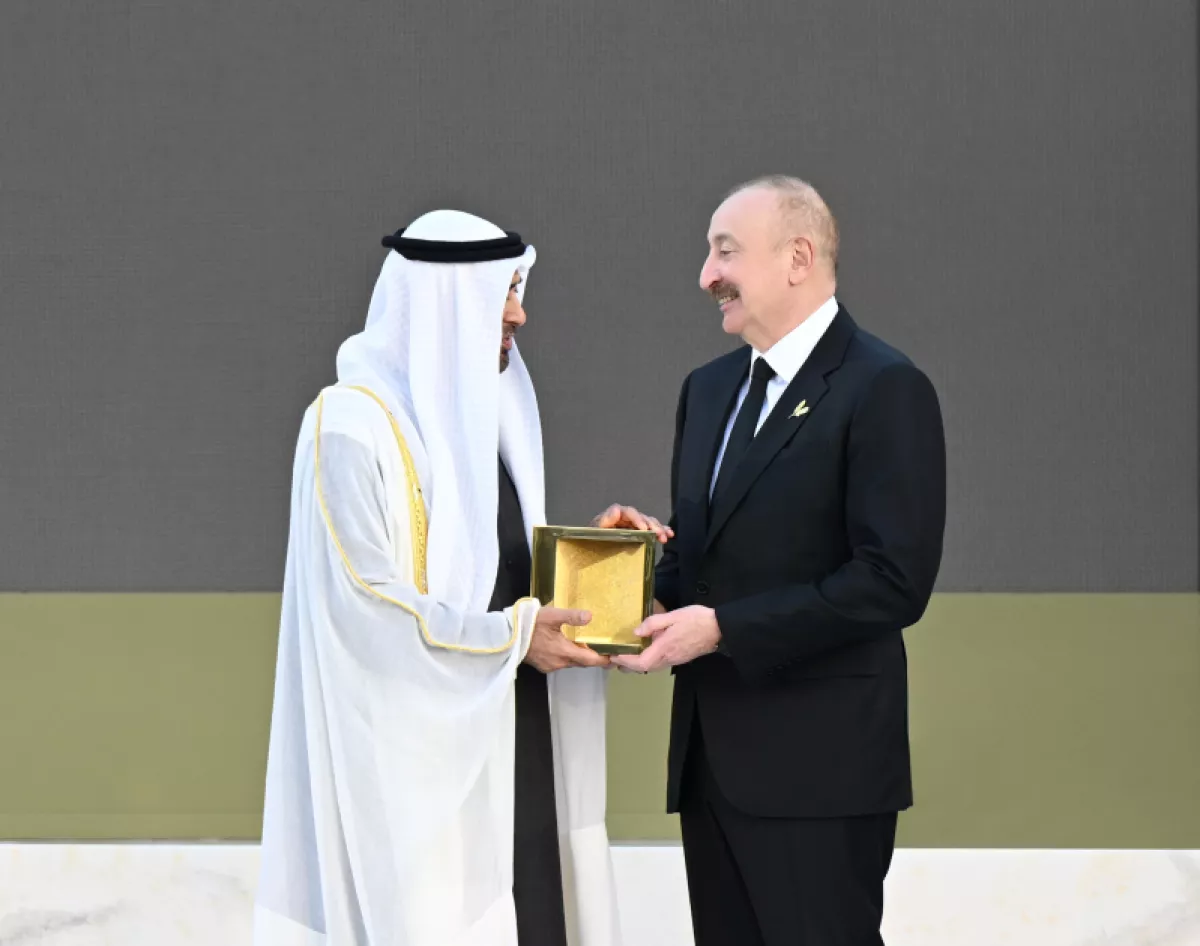
In February, at the ceremony for the presentation of the Award, President Ilham Aliyev, noting that “we have never lived in peace since we became independent, and we are learning quickly”, emphasised not only the lifting of the ban on the transit of cargo to Armenia through Azerbaijani territory, but also the start of Azerbaijani fuel supplies to the neighbouring country, with the prospect of expanding bilateral trade relations.
During a July meeting with European Commission President Ursula von der Leyen, the Azerbaijani President noted that Baku had taken certain unilateral steps, demonstrating that peace exists “not only on paper, but that we can feel it in day-to-day life”. Thus, during the first ten days of this month, around 60,000 tonnes of grain, more than 9,000 tonnes of fertiliser, 1,414 tonnes of propane, 133 tonnes of aluminium, 1,114 tonnes of coal and 608 tonnes of timber were transported from Russia to Armenia in transit through Azerbaijan. In addition, around 17,000 tonnes of diesel fuel and nearly 5,000 tonnes of AI-92 and AI-95 petrol were exported.
What is happening clearly confirms President Ilham Aliyev’s point that Azerbaijan’s example demonstrates that peace is possible despite a protracted conflict, suffering and mutual distrust — provided that both sides demonstrate strong political will and that the process is supported by friendly countries and the international community.
Developing this idea, the Azerbaijani leader described peace as a reality and stressed the importance of efforts to consolidate it and ensure its lasting stability. At a September 15 meeting with participants of conferences held in Baku, the Azerbaijani President expressed confidence in the durability of peace: “At any rate, such is the position of the Azerbaijani state.”

In light of the above, a perfectly reasonable question arises: “What is Armenia’s position, given that its leaders publicly advocate peace in the region but fail to respond appropriately to Azerbaijan’s unilateral steps in this direction?”
Moreover, the Armenian authorities have paid no attention whatsoever to the powerful anti-Azerbaijani campaign that erupted following the visit of representatives of the diplomatic corps accredited in Azerbaijan to Karabakh and East Zangezur. For example, Anna Grigoryan, head of the parliamentary faction of the opposition Armenia bloc, stated that “after the ethnic cleansing, we have effectively been confronted with an act of cultural genocide”. Other Armenian sources described as “extremely outrageous” the presentation of “the centuries-old Armenian Gandzasar Monastery as Albanian, [which] represents a deliberate campaign to eliminate the Armenian historical presence”.
Any reasonable person would undoubtedly react to such insinuations with indignation, not least because of such blatant falsification of world history. Therefore, despite the fact that our article is political-analytical in nature, we are compelled to turn to history, albeit in the briefest possible form.
Let us begin with the fact that, according to the distinguished Soviet historian and Orientalist Ilya Petrushevsky, “Karabakh never belonged to the centres of Armenian culture” (I. Petrushevsky, On the Pre-Christian Beliefs of the Peasants of Nagorno Karabakh, Baku, 1930, p. 13). In the 12th–13th centuries, the Principality of Khachen rose to prominence in Karabakh, ruled by Hasan-Jalal, a descendant of the Albanian Mihranid princes.
The ancient Ganjasar Monastery, built approximately by the middle of the 10th century, served as the ancestral burial place of the Khachen rulers, the Jalalids. At the insistence of Albanian Patriarch Nerses, Hasan-Jalal built the Ganjasar Cathedral in 1238, describing it as the “cathedral of the throne of Albania”. Almost all of the later Albanian Catholicos-Patriarchs are buried at Ganjasar, as evidenced by the inscriptions on the tombstones, dating as far as 1828.
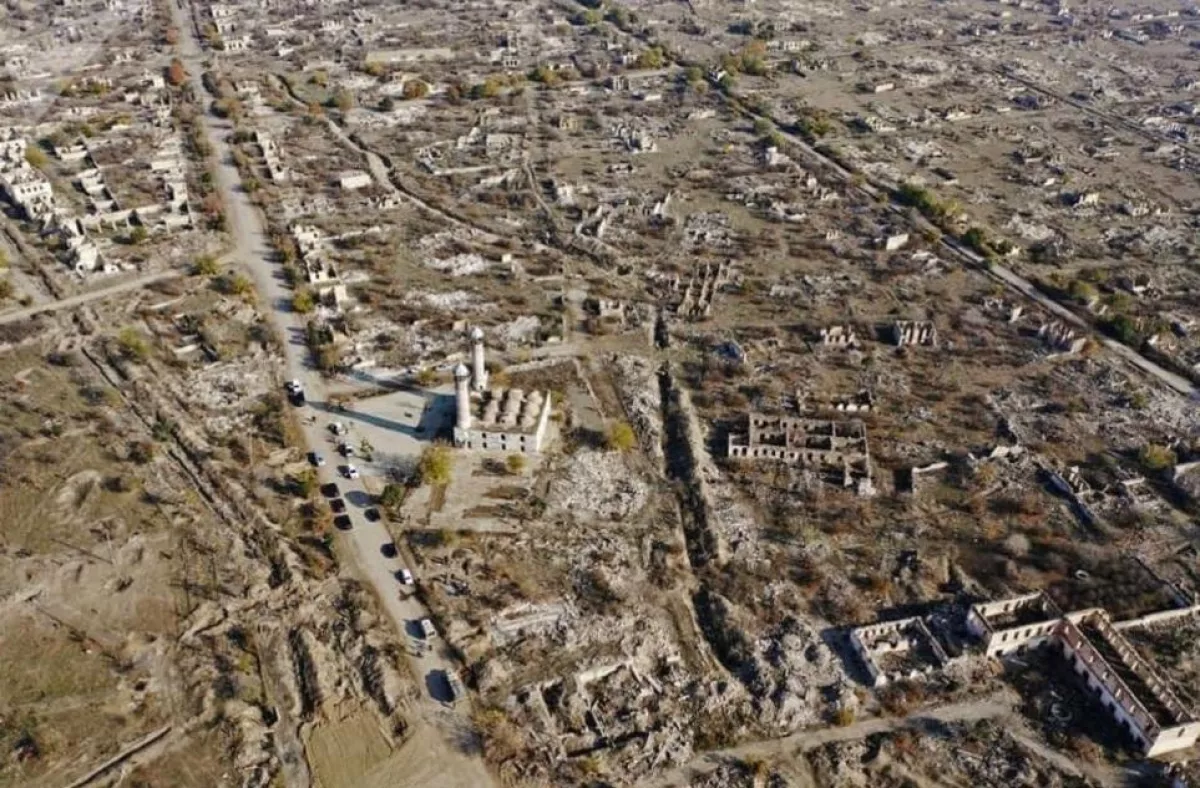
But that is medieval history. If we turn to Armenia’s aggression against Azerbaijan in the modern period, the scale of the destruction becomes even more evident. According to data from Azerbaijan’s Ministry of Defence, 900 settlements, 150,000 houses, 7,000 public buildings, 693 schools, 855 kindergartens, 695 medical facilities and numerous other sites were destroyed. The list is virtually endless.
According to Armenian sources, between 2014 and 2018 alone, 2.3 times more trees were cut down in Karabakh than in Armenia as a whole — 404,800 cubic metres compared with 175,300 cubic metres of timber. Valuable species were also affected, including Eldar pine, walnut, oak, persimmon, Oriental plane, hackberry, mastic tree and others. Some of these trees were reportedly as old as 1,600 years. Some 54,000 hectares of forest, including rare examples of flora, were also destroyed.
Of the 67 mosques in the affected territories, 65 were completely destroyed, while other cultural and historical monuments were either demolished or desecrated. Thus, alongside genocide, the Armenian occupiers carried out urbicide, culturicide and ecocide against the Azerbaijani state. In addition, the territories that were then under occupation were heavily mined, and reliable minefield maps have still not been provided.
As President Ilham Aliyev stressed just days ago, our people were subjected to ethnic cleansing, with around one million Azerbaijanis expelled from their ancestral lands as a result of the Armenian state’s policy of ethnic cleansing: “Today, the entire world sees it—destroyed cities and villages, demolished homes, plundered national wealth, and destroyed mosques. Sixty-five mosques were completely destroyed by the Armenian state—I want to particularly emphasise this: this was the policy of the Armenian state.”
The Azerbaijani people, through the self-sacrifice of their heroic sons, liberated their ancestral lands from occupation and restored justice. War criminals whose hands are stained with the blood of our people are now serving their sentences in Azerbaijani prisons.
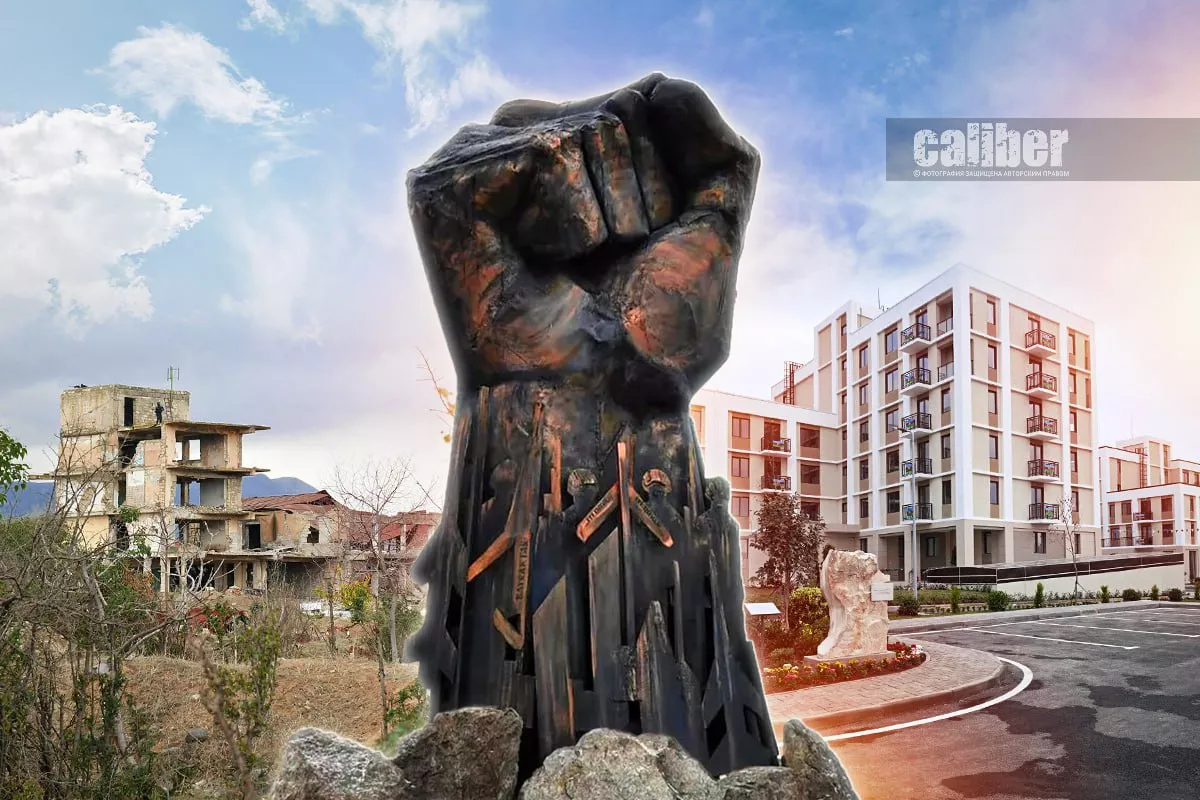
However, as President Ilham Aliyev summed it up, “we will never forget the victims of Khojaly, our destroyed mosques, or our desecrated cultural sites, and this memory will make us even more vigilant. This memory will not allow us to be deceived by sweet words again”. All the more so because the “Iron Fist” remains in place.
In other words, Azerbaijan is firmly committed to peace, and one can only hope that the same aspiration will prevail in Armenia, rather than the revanchist ideas that have once again come to dominate the Armenian public discourse.
As a victorious nation, we continue to rebuild the liberated territories at an extraordinary pace, astonishing the world. Today, under the State Programme for the “Great Return”, more than 90,000 people are already living in 48 cities and villages across Karabakh and East Zangezur. Against this backdrop, it is worth highlighting one more important fact.
We began this article by discussing the presentation of the certificate for the Zayed Award for Human Fraternity to President Ilham Aliyev. It would therefore be fitting to conclude on the following note: under the terms of the Award, the Azerbaijani President was granted prize money of $500,000, which, by decision of the Azerbaijani leader, was transferred to the Karabakh Revival Fund. That gesture speaks for itself.







 editor@caliber.az
 +994 55 444-88-98
 Азербайджан, Баку, ул. Низами, 203, Af Business House, 5-й этаж