










The point of peace President Aliyev defines a new regional reality
The Zayed Award for Human Fraternity ceremony held today in Abu Dhabi became yet another confirmation of the international recognition of the peace process in the South Caucasus. President of Azerbaijan Ilham Aliyev’s speech, meanwhile, sounded like a manifesto of a new regional reality shaped by Baku following its military victory in 2020 and the final restoration of territorial integrity in September 2023.
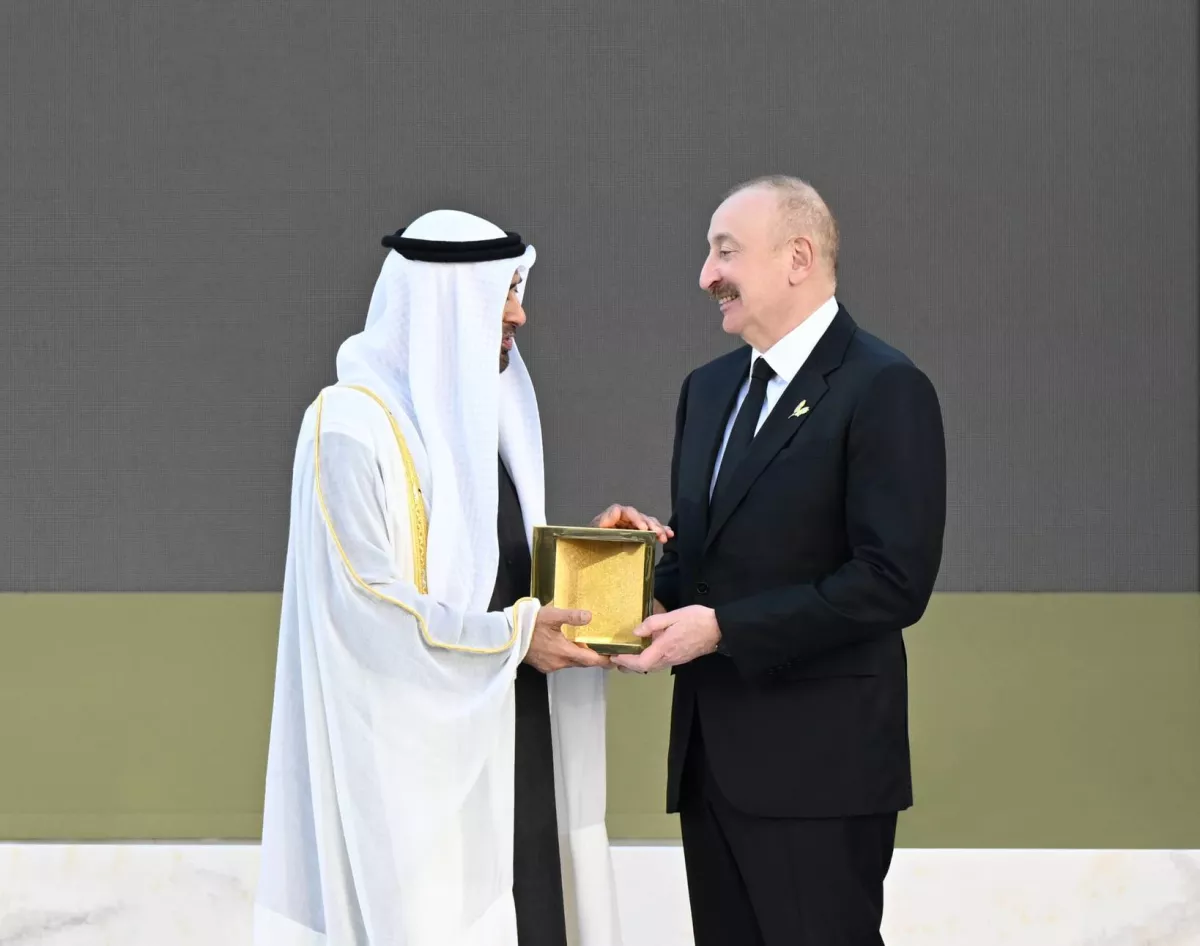
One of the key moments in President Aliyev’s address was a candid acknowledgement: “We were at war for more than 30 years. Now we have lived in peace for six months. As I have said many times, we are learning to live in peace.” In doing so, Aliyev introduces a new chronology of peace in the region, where the point of reference becomes August 8, 2025—the day the Joint Declaration was signed in Washington with the mediation of US President Donald Trump. Everything before that moment is defined as a state of war. Everything after it—as a process of transition to peace.
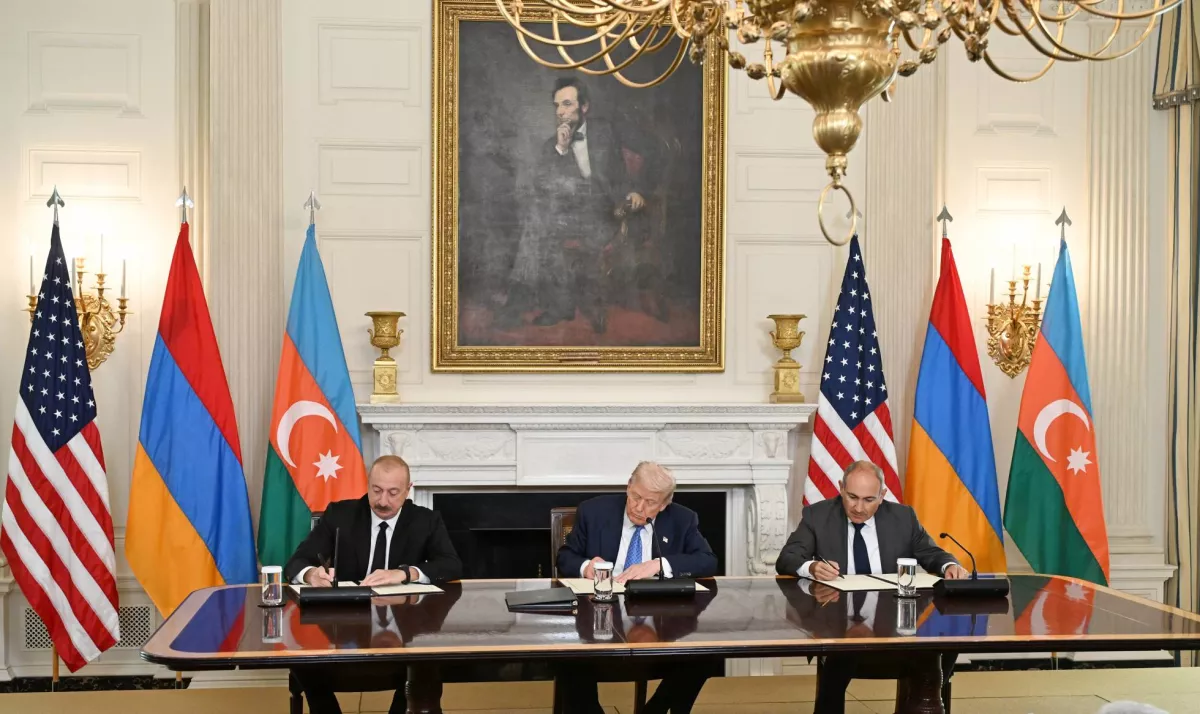
The Washington summit legally enshrined the results of Azerbaijan’s victory through the initialling of a draft peace agreement, with the participation of the US President as a witness and guarantor. At the award ceremony in Abu Dhabi, President Aliyev placed particular emphasis on Donald Trump’s role, describing the Washington summit as historic. “I would also like to express my gratitude to President of the United States Donald Trump for his contribution to peace between Azerbaijan and Armenia,” the head of state said.
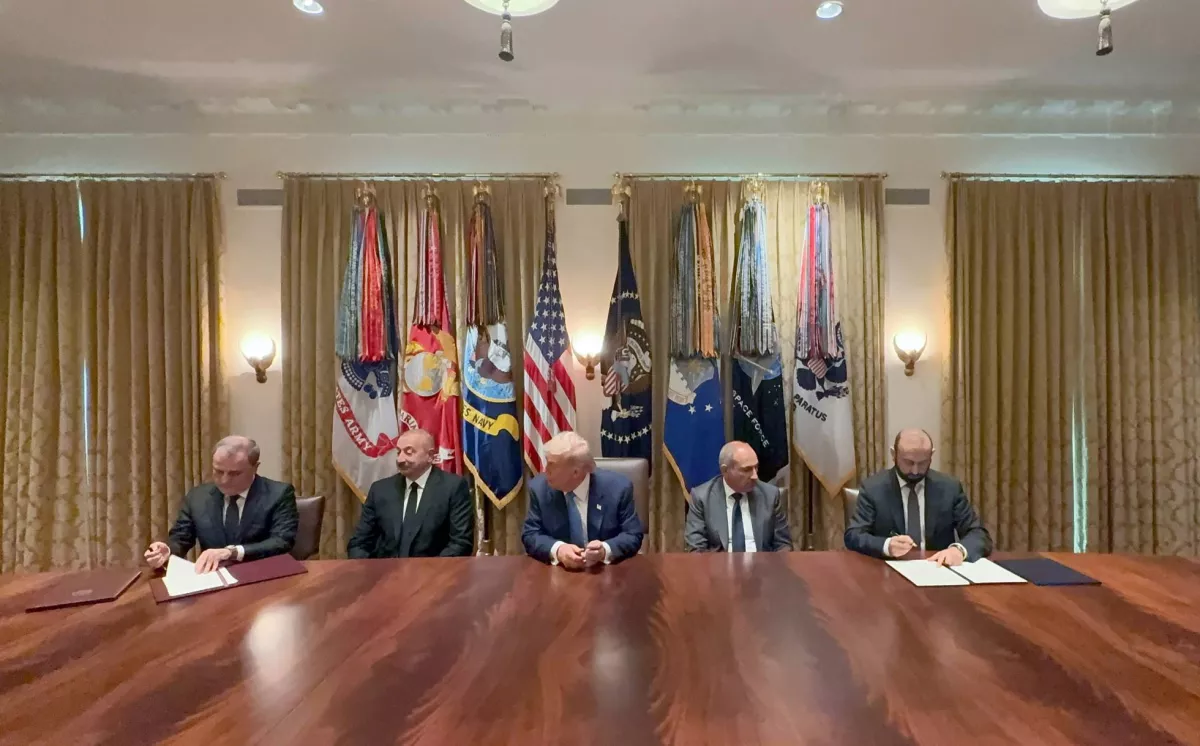
Special attention in the speech was paid to the symbolism of the events unfolding in Abu Dhabi—and this was no coincidence. President Aliyev recalled that it was here, in July 2025, that the final round of high-level Armenian–Azerbaijani talks took place ahead of the Washington meeting. This sequence forms a multi-tiered diplomatic architecture: the United States as the principal political guarantor, the UAE as a neutral venue for delicate diplomacy, and Azerbaijan as the central pillar of the entire framework.
Reflecting on the six months following the Washington summit, Aliyev described this period as one of partnership and steady movement towards a durable peace, citing concrete examples: “We not only lifted the restrictions on cargo transportation through Azerbaijan to Armenia, but also started exporting oil products to Armenia. In other words, during these six months, we have started cooperation. We are now increasing our trade relationship,” the head of state noted. These steps reflect a logic of economic engagement in which Baku occupies a dominant position.
The phrase “we are learning to live in peace” acquires particular significance in this context. Aliyev acknowledges that since gaining independence in 1991, Azerbaijan has never truly lived under conditions of peace. Three decades of conflict shaped a specific political and social matrix, oriented towards the mobilisation of all resources around a single overriding goal—the return of occupied territories. Today, that matrix is undergoing transformation. The transition from war to peace requires the adaptation of institutions, the economy and, of course, public consciousness.
Azerbaijan is now forging a new identity. The reconstruction of liberated territories, the return of former internally displaced persons, the integration of the Karabakh region, and the development of transport corridors are all elements of a strategy built on one fundamental recognition: the conflict has been conclusively resolved.
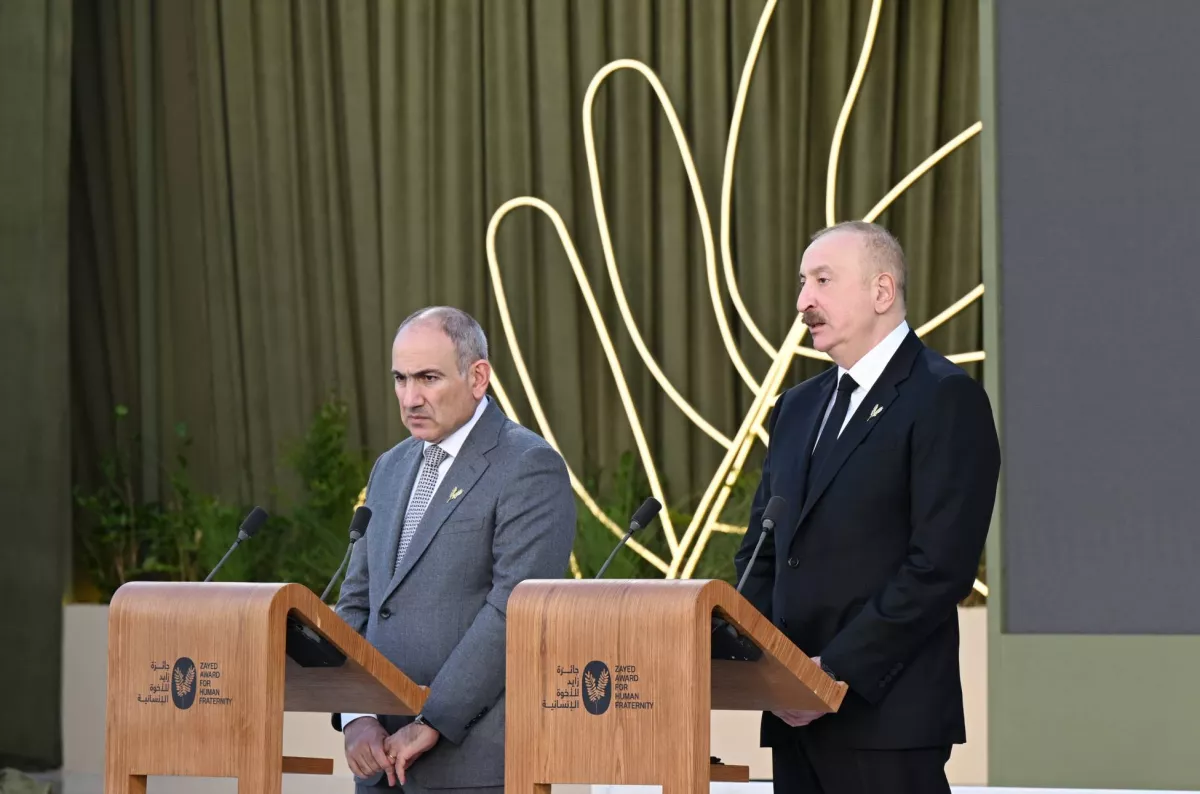
In concluding his address, President Aliyev presented Azerbaijan’s experience to the world as a possible model for resolving protracted conflicts. According to the head of state, Azerbaijan’s example demonstrates that peace is achievable—despite prolonged confrontation, suffering and mutual distrust. Peace becomes possible when there is strong political will on both sides and when the process is supported by friendly countries and the international community.
Behind these universal formulations lies a very specific logic. In the Azerbaijani context, political will meant a determination to change the status quo, without excluding a force-based scenario. The Second Karabakh War of 2020 and the one-day local anti-terrorist measures of September 2023 created irreversible realities that were recognised by Armenia—that is, the acceptance by the losing side of a new reality and a transition towards pragmatic engagement. Support from the international community followed only after this process had become an accomplished fact.
The very fact that this approach is articulated openly reflects Baku’s deep confidence in the correctness of its chosen strategy and its readiness to present it as a model. President Aliyev’s speech in Abu Dhabi amounted to a conceptual statement on the conclusion of a conflict lasting more than three decades and the emergence of a new regional architecture.
A country that lived in a state of war for decades is now transitioning to peace—and doing so on terms it has shaped itself, drawing on military victory and a strategic vision of its future as a regional leader.







 editor@caliber.az
 +994 55 444-88-98
 Азербайджан, Баку, ул. Низами, 203, Af Business House, 5-й этаж