










Why the EU cannot find common ground with Georgia Expert opinions on Caliber.Az
Georgian Prime Minister Irakli Kobakhidze has stated that if the European Parliament (EP) seeks to organise a revolution in Georgia, it will receive an appropriate response.
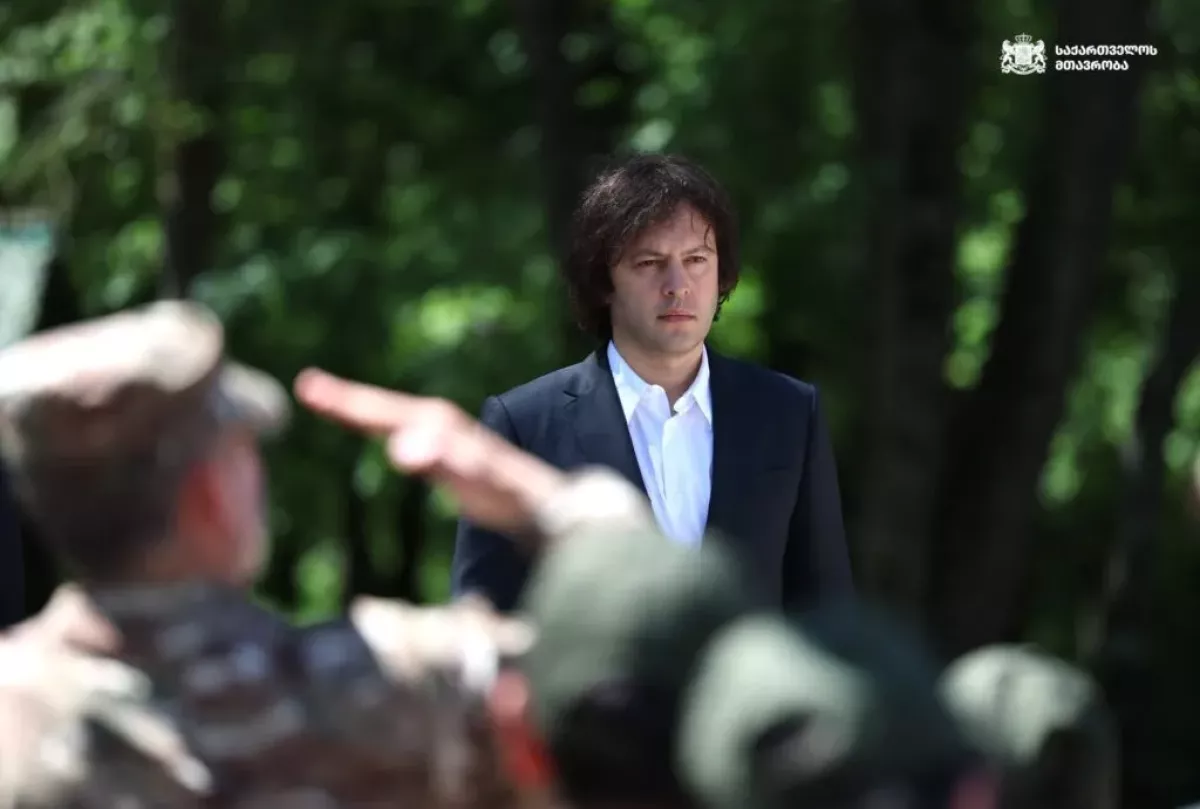
Commenting on Georgia’s Law on Grants, Kobakhidze noted that its adoption would help stabilise the situation in the country, as the absence of such legislation had allowed radical groups to receive funding for inciting hatred and aggression, as well as for attacks against the Georgian Orthodox Church and state institutions. According to him, many grants had served as “a direct instrument of crude foreign interference.”
He also reiterated his claim that there had been five attempts to stage a revolution in Georgia over the past four years, all of which, he asserted, had been financed through grant funding.
“When the European Parliament tells us to repeal this law, it means that, in the fifth year, they want to organise a sixth revolutionary attempt. Naturally, our response to this will be very firm. If the European Parliament wants to stage a revolution in Georgia, it will undoubtedly receive an appropriate response,” Kobakhidze said.
The prime minister added that the Georgian authorities are pursuing a policy of strategic patience in their relations with Brussels.
“We are in a mode of waiting and strategic patience. As soon as we see that Soviet-style approaches within the European Parliament or the European bureaucracy have changed, dialogue will be resumed immediately. That depends on them,” Kobakhidze stated.
According to Kobakhidze, the European Parliament has criticised several laws adopted in Georgia, including the Law on Assemblies and Demonstrations and the Law on Sidewalks. The prime minister argued that these measures were introduced to prevent disruptive actions by the radical opposition.
“This means that the European Parliament is comfortable with 150 members of the United National Movement disturbing the lives of 3.9 million people,” he said.
Commenting on injuries sustained by participants in pro-European demonstrations, Kobakhidze noted that law enforcement agencies had already responded to incidents of violence where there were indications of criminal wrongdoing.
“More than 500 individuals took part in violent actions on a daily basis, yet only around 30 people were detained. The only thing the European Parliament wants today is to return these very ‘UNM members’ to power. Naturally, we will respond appropriately to such attempts,” the prime minister stated.
According to Kobakhidze, relations can be normalised if the European Parliament abandons what he described as “Soviet-style methods” and revises its current approach towards Georgia.
What exactly is the European Parliament seeking to achieve through its policy towards Georgia? What is the current state of diplomatic relations between Tbilisi and Brussels? What would be required to restore dialogue? And is there a possibility that Georgia’s European integration process could be halted altogether?
Leading Georgian experts shared their views on these questions with Caliber.Az.
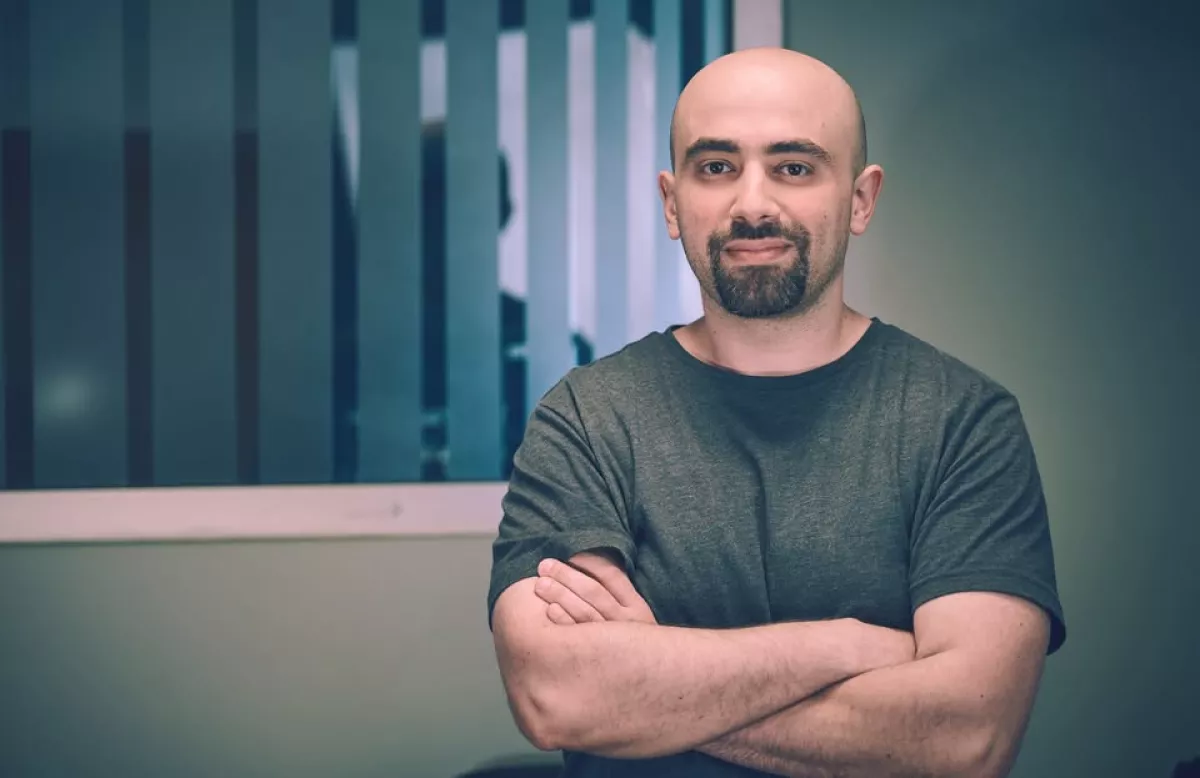
Political analyst and founder of the SIKHA Foundation research centre, Archil Sikharulidze, argues that a de facto cold war is currently underway between Georgia and the European Union at Brussels’ initiative.
“According to available information, the European bureaucracy has split into two camps: the Northern European and Eastern European blocs. These include countries such as Finland, Sweden, Lithuania, Latvia, Estonia, Poland, and Ukraine, which are actively lobbying for sanctions against Georgia and its effective international isolation because it refused to take part in efforts aimed at defeating Russia.
Other states remain silent, as the current political climate does not allow them to openly challenge the prevailing course.
As a result, relations between Georgia and the European Union have effectively been paralysed. Brussels has deliberately suspended virtually all contacts, while lacking the ability to influence Georgia’s domestic political processes. Local representatives of the EU’s ‘soft power’ have proven politically ineffective and incapable of achieving their objectives. If the situation remains unchanged, their activities will yield no tangible results by the time of the 2028 parliamentary elections,” the researcher believes.
In his view, trust cannot be restored unless Brussels acknowledges that its policy has been “heavy-handed” and failed to take Georgia’s geopolitical interests into account.
“Until Brussels admits its mistakes or recognises that its strategy has failed and may ultimately lead to the complete loss of the country, it is difficult to speak of any ‘reset’ in relations.
At present, the integration process has been entirely frozen at the initiative of the European Union. The objective of this move is to encourage the population to take to the streets, overthrow the current government, and bring more compliant figures to power. However, these efforts have produced no results, and therefore no meaningful thaw in relations should be expected in the near future.”
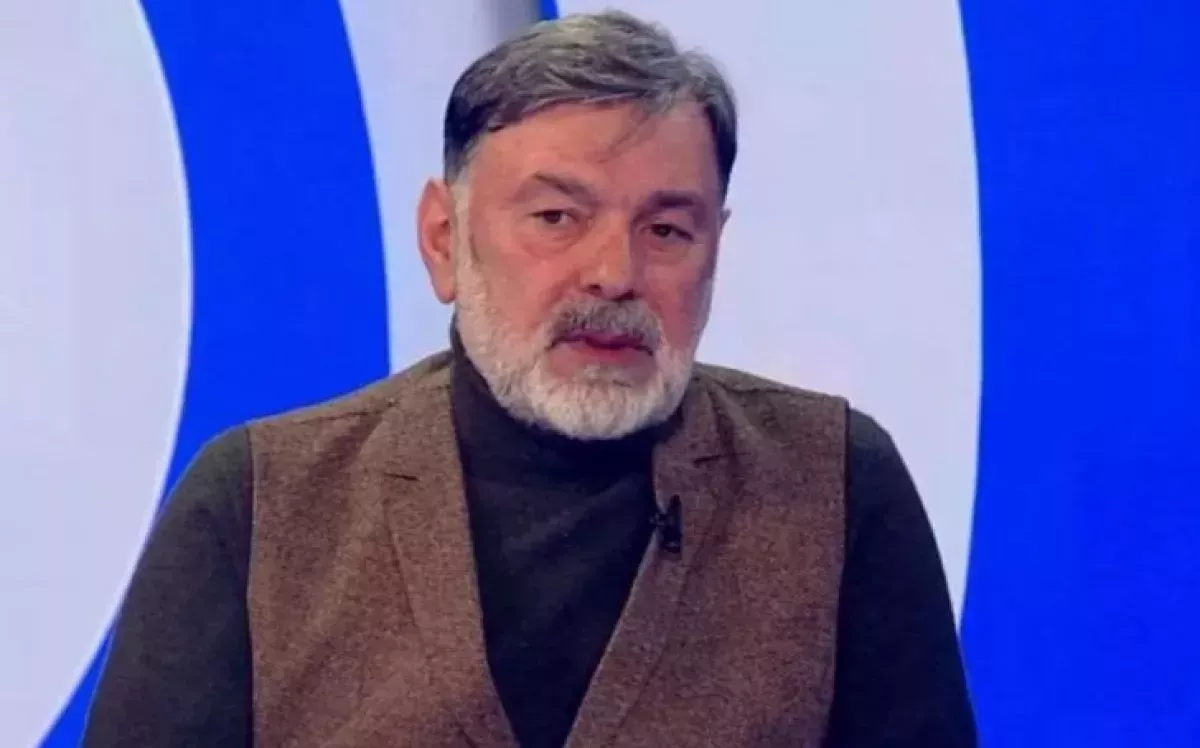
Bidzina Giorgobiani, political analyst and political secretary of the United Neutral Georgia party, believes that an assessment of the current situation in the South Caucasus and the wider world leads to a clear conclusion: the European Union needs the Georgia–Azerbaijan partnership far more than Georgians need the EU itself.
“We are a critically important link for them in connecting with Central Asia.
The strategic orientation towards Europe that has guided our foreign policy for the past 35 years no longer appears the same as it once did. The European Union with which we signed the Association Agreement and the EU of today are, in essence, two very different organisations with entirely different objectives. Their primary goal now is to gather as many partners as possible for confrontation with Russia. They need ‘proxy states’ that will fight, create difficulties for Russia, or support European trade embargoes.
In effect, Brussels is looking for ‘allies’ who will have no real rights within the union itself.
This is reflected in the remarks made by EU Commissioner for Enlargement Marta Kos, who stated that new member states would not enjoy the same rights as existing members.
In my view, they are simply searching for enthusiasts willing to become instruments in their confrontation with Russia.
I can see that Brussels is currently trying to find countries similar to Armenia, whose Prime Minister, Nikol Pashinyan, has demonstrated a willingness to distance himself from former allies in pursuit of closer ties with the European Union. Of course, this is Armenia’s sovereign right, and no one should interfere in its internal affairs. However, Armenia’s geographical position in relation to Europe makes me question the sincerity and transparency of these processes,” the politician stated.
As for Georgia, the expert is convinced that neither a rupture in relations with Europe nor the existence of a weakened Europe locked in confrontation with Russia serves Georgia’s interests — just as neither scenario is in Azerbaijan’s interest.
“Our true interest lies in seeing Europe remain a strong union, a powerful federation of states that demonstrates respect both for its members and for its neighbours.
We want the European Union to be a partner that recognises and values Georgia’s role as a bridge connecting Europe with Central Asia and China.
I do not believe that our ruling party will choose to sever all ties and annul agreements with the European Union altogether. However, I am certain that any undue pressure will be met with a firm response, a right that it is fully entitled to exercise.
At the same time, we are deeply puzzled by the position of the authorities. They insist that Georgia is moving towards the European Union ‘with dignity’, even though it is evident that we are not being welcomed there. Equally troubling is the prospect that new members of the bloc may not be granted the same rights enjoyed by existing member states.
Our position remains unchanged: we must preserve our independence and all the achievements of our country at any cost, defending our sovereignty with dignity,” Giorgobiani concluded.







 editor@caliber.az
 +994 55 444-88-98
 Азербайджан, Баку, ул. Низами, 203, Af Business House, 5-й этаж