










Baku's confidence & collapse of ceasefire in Persian Gulf Caliber.Az weekly review
The Caliber.Az editorial team presents a new edition of the “Events” programme, hosted by Murad Abiyev, in an analytical review of the key developments of the week.
Azerbaijan
Azerbaijan's Foreign Minister, Jeyhun Bayramov, made a number of statements regarding the peace process with Armenia during a meeting with journalists. He stressed that Azerbaijan has already completed all the work necessary to finalise the peace agreement. Bayramov noted that the text of the agreement has already been initiated and made public.
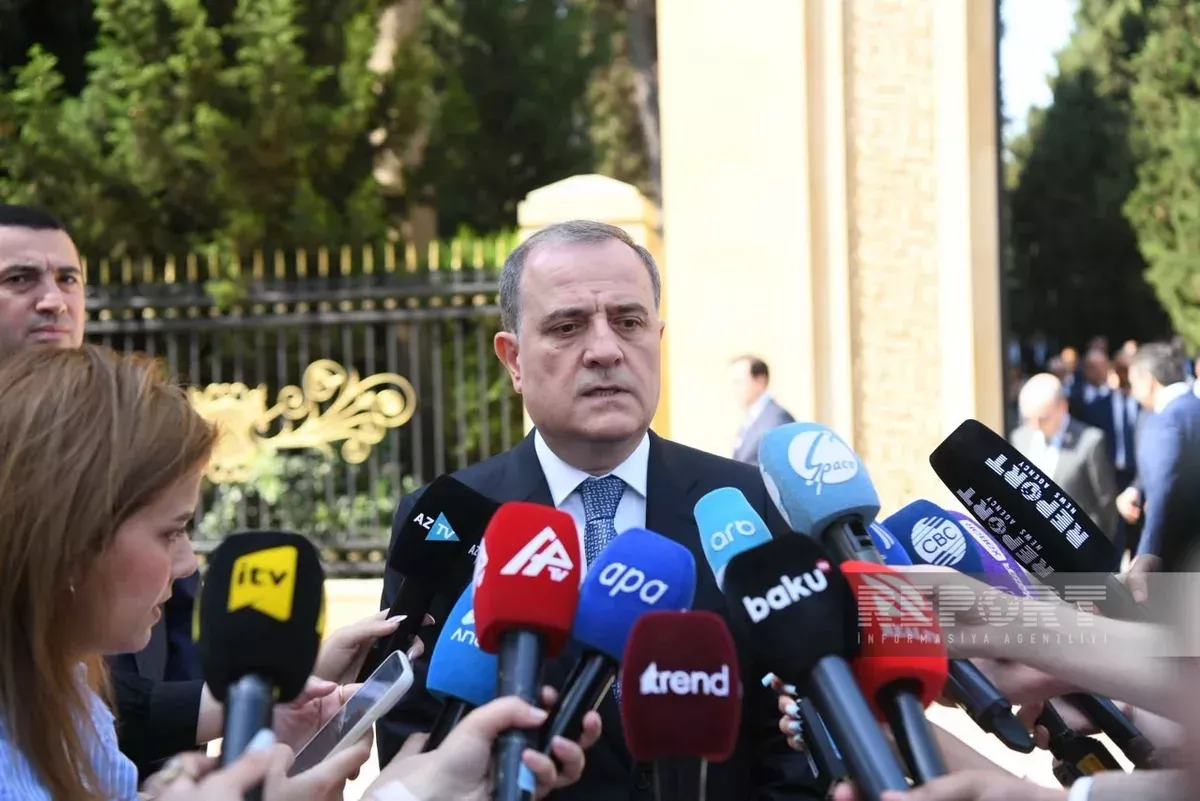
"The main issue that concerns us is the territorial claims against Azerbaijan enshrined in Armenia's Declaration of Independence. Once this issue is resolved, we expect the process to be completed in the near future," the foreign minister said.
Bayramov also noted that the border delimitation process with Armenia continues to show positive momentum.
In addition, he stated that the United States has been keeping Baku informed about the progress of the TRIPP road and railway corridor project.
"We have been informed that work is ongoing. The project is currently at the document preparation stage," the minister said.
Overall, official Baku once again reaffirmed its commitment to continuing the peace process following Armenia's parliamentary elections.
Russia–Ukraine
Amid a sharp slowdown in the Russian army's offensive in Ukraine, the Ukrainian Armed Forces continued to carry out deep strikes against Russia's oil and gas logistics infrastructure, further exacerbating the country's fuel crisis. Meanwhile, Russia has continued launching large-scale aerial attacks on Kyiv and other regions of Ukraine.
At the NATO Summit in Ankara, Alliance members adopted several measures in support of Ukraine. The most significant was a commitment to provide €70 billion in military assistance to Ukraine in 2026. Two additional decisions are more strategic in nature.

First, the United States granted Ukraine licenses for the domestic production of Patriot missiles. Second, the summit's final declaration recognised that Ukraine contributes to transatlantic security. This significantly strengthens the institutional foundations for continued European support for Kyiv.
The indirect involvement of Ukraine's European partners in the war—particularly through the supply of long-range drones—has become so significant that some analysts are warning that the Kremlin may be preparing a "new format of warfare." Moreover, there is growing speculation that Russia could attempt a large-scale operation aimed at completely severing Ukraine from Western logistical support. Such a scenario could involve strikes on border infrastructure in Poland and Romania.
A high-stakes war of nerves is underway. On the one hand, European countries are increasing their support for Ukraine to prevent Russia from achieving a strategic victory. On the other hand, they are equally determined to avoid becoming targets of Russian strikes on their own territory. At the same time, Moscow is also unlikely to want its actions to trigger NATO's Article 5.
For now, the most likely scenario appears to be an escalation of Russian strikes against civilian infrastructure in Ukraine. One objective may be to make the maintenance and continual reconstruction of Ukraine's infrastructure prohibitively expensive for Western governments.
In this sense, the war behind the front lines, no less than the fighting along the battlefield itself, is aimed at exhausting the opponent. The key question is which side will reach its breaking point first.
US-Iran
During the past week, the ceasefire between the United States and Iran, reached on June 17, collapsed. Iran launched attacks on hydrocarbon tankers transiting the Strait of Hormuz, prompting the United States to carry out strikes against military and logistical facilities of the Islamic Republic.
Analysts argue that the breakdown of the June ceasefire was rooted in the agreement's inherent fragility. From the outset, it was built on deliberate ambiguities and vague wording, allowing each side to interpret its provisions in its own favour.
The main point of disagreement appears to have concerned the very meaning of the "opening" of the Strait of Hormuz. Washington maintained that the agreement restored freedom of navigation. Tehran, however, insisted that the memorandum preserved Iran's right to monitor and inspect vessels, as well as to collect transit fees.
To bypass Iranian territorial waters, Oman proposed an alternative route for tankers along its own coastline. As hundreds of vessels began using the new corridor, Tehran realised it was losing one of its principal economic and strategic levers of influence. In an effort to restore that leverage, the hardline faction of the Islamic Revolutionary Guard Corps (IRGC) began targeting commercial shipping.
The situation in other areas of the regional conflict also remained unresolved. Iranian negotiators had expected that the ceasefire with the United States would automatically bring an end to Israeli strikes in Lebanon. However, the Israeli leadership immediately made clear that its campaign against Iran-backed proxy forces had merely been paused, not concluded.
The continuation of Israeli operations in Lebanon provided Tehran with a formal justification for claiming that the agreement had been violated by the American side, paving the way for a return to missile and drone pressure in the Persian Gulf.
It appears that the IRGC believes the leverage offered by a blockade of the Strait of Hormuz has not yet been fully exhausted. The leadership of the IRGC likely calculates that by reimposing the blockade, it could force the United States into a de facto concession before Iran itself suffers the catastrophic consequences of a prolonged confrontation.
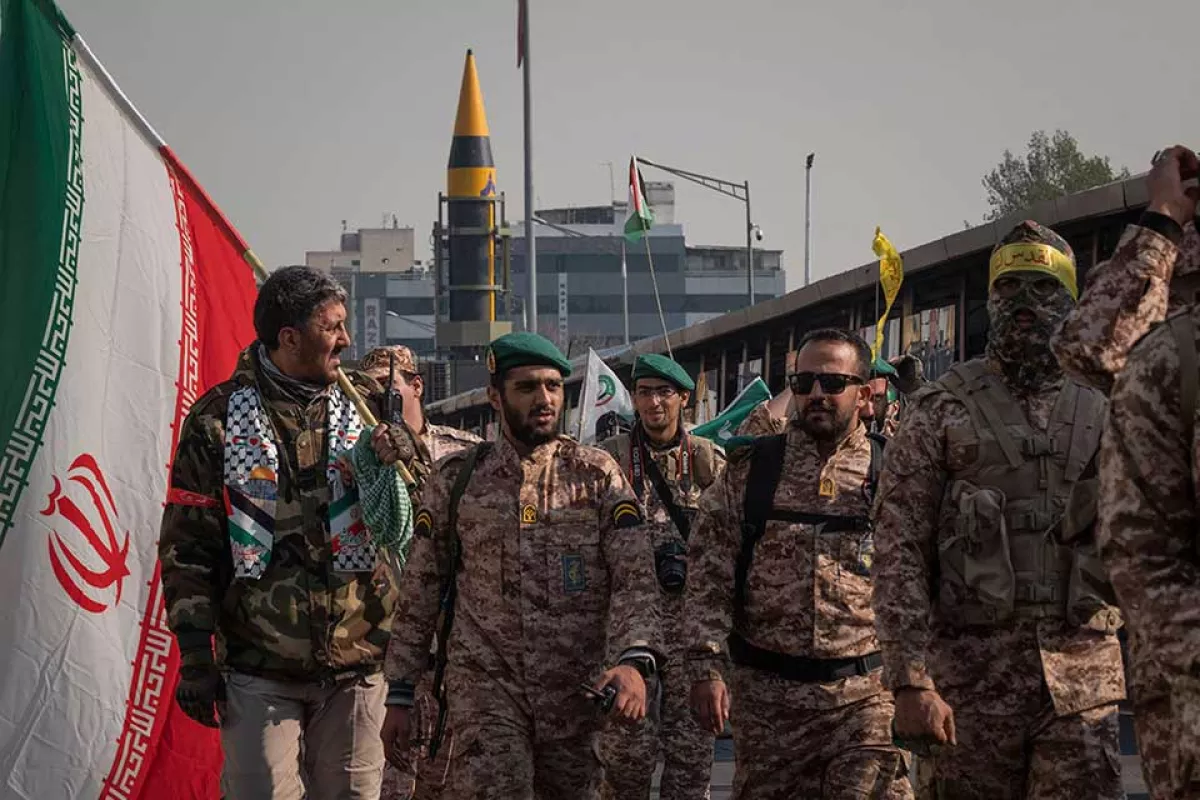
Beyond responding with a counter-blockade, the United States could theoretically escalate further by targeting Iran's critical infrastructure, including roads, power plants, and water supply facilities. Indeed, during the latest round of strikes, U.S. forces hit a railway bridge in northeastern Iran near the Turkmenistan border, as well as several road bridges leading to Mashhad.
Although many observers argue that a major escalation would not serve President Trump's political interests ahead of the midterm congressional elections, it would be unwise to underestimate his determination. Tehran should also take into account that a prolonged blockade of the Strait of Hormuz carries high reputational costs. Under such circumstances, a renewed U.S. military operation could receive considerably broader support, both domestically and internationally.







 editor@caliber.az
 +994 55 444-88-98
 Азербайджан, Баку, ул. Низами, 203, Af Business House, 5-й этаж