










Binoculars before and after peace The EU mission as a vestige of external pressure
Yerevan and Brussels have agreed to maintain the presence of the European Union Mission (EUMA), which began operations on February 20, 2023, on the border with Azerbaijan on the Armenian side. This point is reflected in the document “Strategic Agenda for the EU-Armenia Partnership”, adopted in Brussels on December 2, 2025 and published on the website of the Ministry of Foreign Affairs of Armenia.
Notably, this development, in itself, is not new; it is merely an additional confirmation of an already agreed-upon decision. On January 30, 2025, the Council of the European Union extended the mandate of the monitoring mission in Armenia for two years, until February 19, 2027.
Nevertheless, every mention of EUMA in the news agenda repeatedly raises questions about the relevance of its existence. From the Azerbaijani side, such questions have existed since the mission began its work in February 2023. Now, with substantial progress in the peace process and the text of a peace agreement having been initialled by both sides, the continuation of the mission raises even more questions.
One of the points of the initialled peace agreement stipulates that no forces from third countries should be present on the border between Armenia and Azerbaijan. Of course, it cannot be entirely certain that the peace agreement will be signed, ratified, and come into force by February 2027. At the same time, neither Armenian officials nor the EU have made clear statements regarding the termination of the EUMA mission after a peace agreement is concluded between Baku and Yerevan.
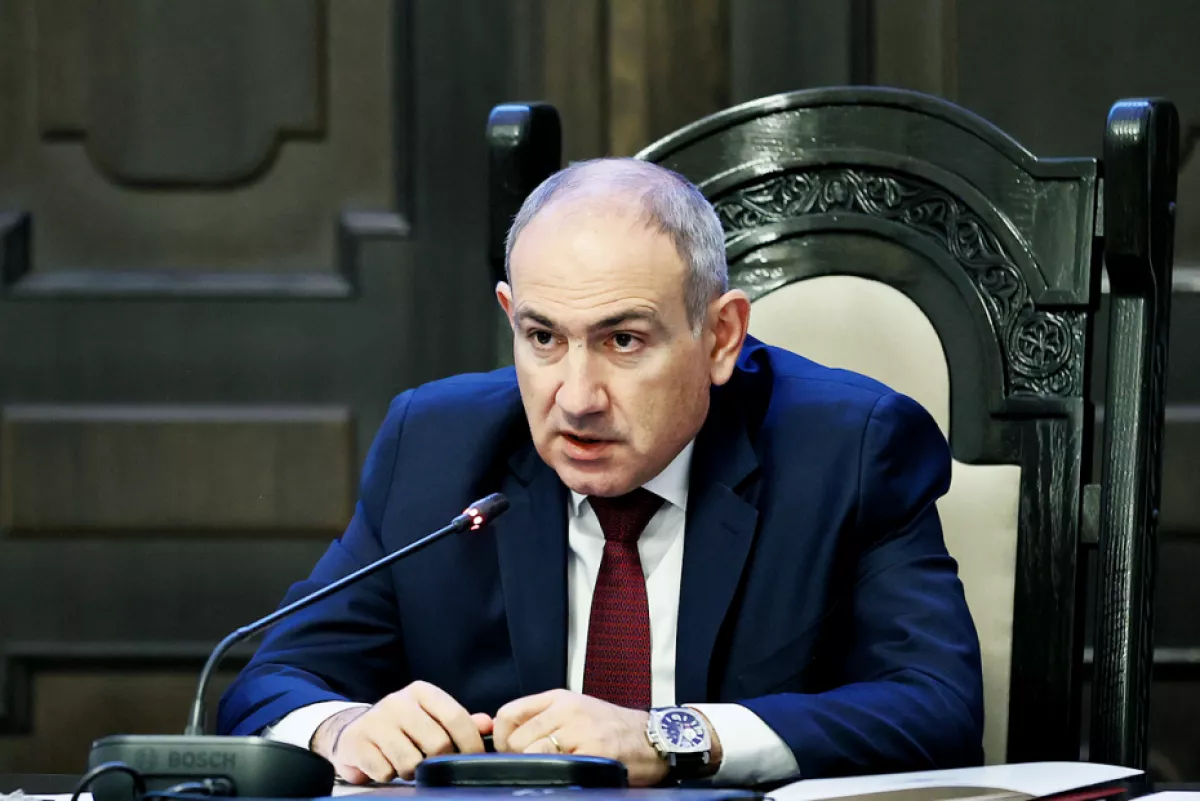
On November 5, Armenian Prime Minister Nikol Pashinyan stated that, after a peace agreement with Azerbaijan is concluded, there may be changes in the format of the European Union mission operating in Armenia. In any case, he made it clear that this does not mean the mission will be terminated.
Meanwhile, the EU Special Representative for the South Caucasus and the crisis in Georgia, Magdalena Grono, said in a recent interview with the news agencies APA and Armenpress, among other things: “The current mandate of the Mission was extended in January 2025 for a further two years, until 19 February 2027. It is my understanding that – unless requested otherwise – it will continue to perform its activities at least until the end of its current mandate.”
However, if peace between Armenia and Azerbaijan is indeed signed before February 19, 2027, a request to modify the mission’s mandate will inevitably follow.
The European Union civilian mission in Armenia was established during a period of high tension on the border. More precisely, it was at the moment when Yerevan, for the first time in October 2022 in Prague, confirmed that Karabakh belongs to Azerbaijan, while still entertaining ideas of some special status for the Armenians living in the region at that time. In this context, Armenia’s European patrons attempted to introduce a mission into Azerbaijani territory, which could later have replaced the Russian peacekeepers. However, Baku categorically rejected this hostile plan and agreed only to the placement of the mission on Armenian soil.
In the eyes of the Armenian public, the mission was perceived as important because they believed its presence would guarantee calm along the border—despite the fact that it was Armenia itself that repeatedly violated that calm.
However, since then, reality has changed. Azerbaijan has fully restored its sovereignty, and the dreams of a “special status” for Karabakh have vanished, leading Yerevan to recognise the need to move towards peace. A joint commission for border delimitation has started work, the Washington Declaration has been signed, the text of a peace agreement has been initialled, the process of restoring transport communications has begun, and there is now dialogue between civil society representatives of both countries. Equally important, provocations by the Armenian side along the border have ceased. It is this last fact that allows Pashinyan to claim that, de facto, peace has already arrived.

So why does it still seem as if EUMA has no intention of leaving? This can be explained by Pashinyan’s attempt to demonstrate to his domestic audience that he is taking the country’s security seriously. However, some factors suggest that Pashinyan personally feels more secure with this mission not in the context of Armenian-Azerbaijani settlement, but rather as a counterbalance to Russian influence.
First, EUMA represents, in one way or another, the presence of the EU and the West on Armenian soil. Second, considering the mission’s intelligence-gathering activities, it can be assumed that its senior representatives provide the Armenian government with various information and even advice. Given that Pashinyan’s overall course, despite occasional deviations, leans toward the West, it is unsurprising if he wants to maintain this element of foreign presence in Armenia. For Azerbaijan, the key is that it should not be directed against us.
Time will tell what the true goals of Yerevan and Brussels are. One can only hope that if, after the peace agreement is signed and comes into force, the EU mission is not disbanded, its format will at least be adjusted, so we no longer see suspicious people with binoculars on our border. Otherwise, it would constitute a violation of the peace agreement—with all the consequences that entails.







 editor@caliber.az
 +994 55 444-88-98
 Азербайджан, Баку, ул. Низами, 203, Af Business House, 5-й этаж