










Cracks in NATO The US exposes the Alliance’s weak spot
The world stands at a crossroads. One manifestation of the ongoing geopolitical turbulence is the crisis within the transatlantic alliance. This is no longer just about disagreements; the question now is whether NATO will continue to exist—at least in its current form.

Among the first sceptics is France, where the parliament may soon discuss the possibility of the country leaving NATO. A corresponding resolution has been prepared by the left-wing party La France Insoumise (“France Unbowed”), which criticises US policies. The initiative was presented by the Vice President of the National Assembly, Clémence Guetté, who accused Washington of pursuing “unconcealed imperial policies” that put the future of the North Atlantic alliance into question. In this context, she argued, it is only natural for Paris to raise the question of the advisability of continuing its NATO membership.
As arguments, Guetté cited, in particular, the “illegal kidnapping of Venezuelan President Maduro,” as well as US President Donald Trump’s threats to “annexe Greenland.” At the same time, she pointed to the “onerous” trade agreements between the US and the European Union, which, she claimed, resulted from pressure by Washington.
Special attention was also given to Trump’s demand that NATO member countries increase their defence spending, which, Guetté emphasised, benefits exclusively the United States, which receives large-scale defence contracts. She also criticised Washington’s open support for right-wing parties in Europe. According to Guetté, all this not only demonstrates the US’s disregard for the norms and principles of international law but also undermines the very foundations of collective security. As a result, she argued, Europe finds itself in a vassal-like position to the United States, making France’s continued membership in NATO increasingly irrelevant.

Historically, France has always maintained a cautious attitude toward NATO, but today the question is broader. Is an open confrontation within the alliance possible, one that could at least lead to its reformatting? Especially considering that recently Donald Trump announced plans to raise tariffs by 10% on goods coming into the US from the United Kingdom, France, Denmark, Norway, Sweden, Finland, and the Netherlands, starting February 1, with the prospect of increasing them to 25% within six months. At the same time, as noted, Europe could avoid these measures if it agreed to the unconditional sale of Greenland to Washington.
In the American interpretation of the NATO situation, the “Greenland issue” emerged after the White House chief called the alliance countries’ military exercises in Greenland “a very dangerous situation for the Safety, Security, and Survival of our Planet.” Moreover, Donald Trump stated in an ultimatum that European participation in these manoeuvres has “put a level of risk in play that is not tenable or sustainable.” According to him, having two dog sledge teams to protect Greenland will not save the region from China’s and Russia’s ambitions.
Europe, of course, has not remained silent, but, as before, its response has been mostly rhetorical. For example, Berlin “took note” of Trump’s threats, while French President Emmanuel Macron announced that the European continent is ready “to respond to real American actions by uniting efforts to safeguard Europe’s sovereignty.”
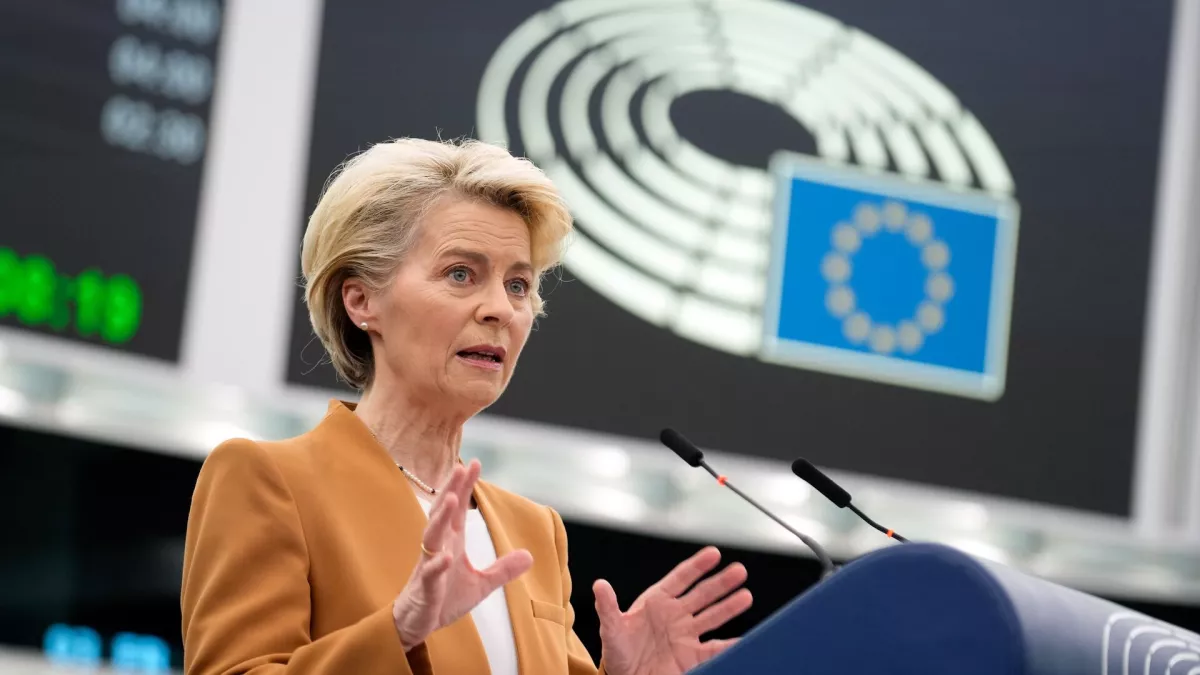
European Commission President Ursula von der Leyen described the coordinated military exercises of the allies in a milder tone as a step aimed at strengthening security in the Arctic. At the same time, however, she criticised Trump’s announced new tariffs on European goods in a firm and unequivocal manner, warning that they could undermine transatlantic relations, creating a risk of extremely dangerous escalation.

Subsequently, several thousand Greenlanders and Danes held protest rallies in Nuuk and Copenhagen, calling on authorities to prevent “the annexation of the island.”
Behind the European politicians’ public bravado, however, lie very real concerns from continental businesses. In particular, German business circles have expressed serious worry over the potential imposition of US tariffs on European goods. As noted, the new tariffs could cause significant damage to German manufacturers, who have already been operating for a long time under extremely challenging financial and economic conditions.
In a more conciliatory tone, London reacted to Trump’s threats as before. Prime Minister Keir Starmer, describing the possible imposition of tariffs as an inadequate response to the allies’ pursuit of collective security, also emphasised the intention to discuss all matters directly with the US administration.
Thus, the “Greenland” factor once again exposed the real confrontation within the Euro-Atlantic space. The issue gained additional attention following a statement by European Commissioner for Defence and Space, Andrius Kubilius, who revived discussion in the European Union about the idea of creating a unified army of up to 100,000 troops.
According to him, the current state of Europe–Washington relations provides sufficient grounds to reconsider the principles of Europe’s collective defence. However, the European Commission quickly softened this position, emphasising that it was merely an “invitation to discussion” rather than an official initiative.
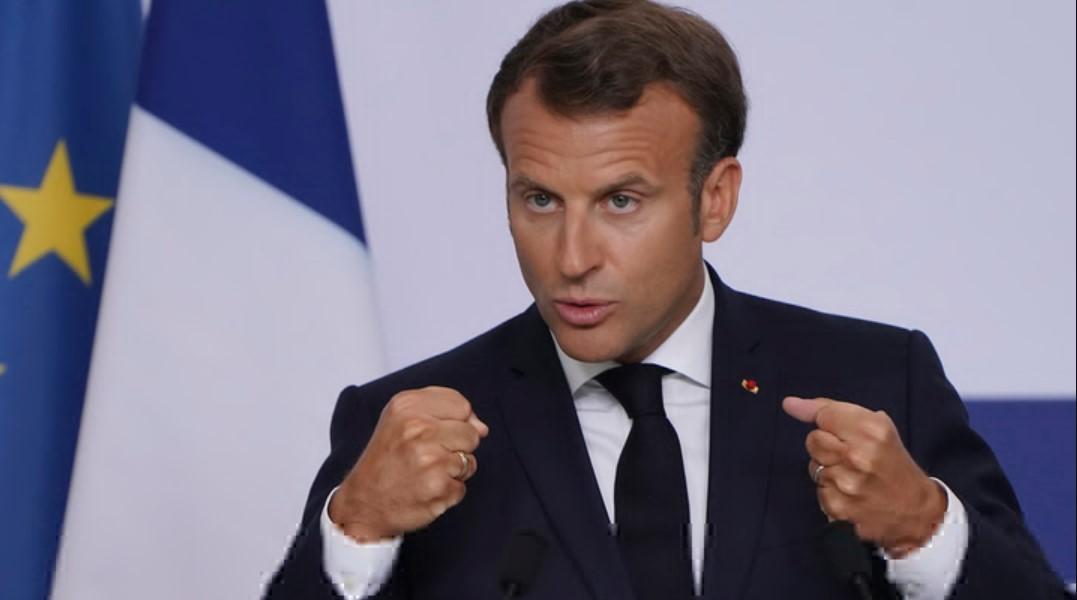
The world is already familiar with the US-promulgated concept of “European strategic autonomy,” which has long been advocated by Macron. Yet, like many of his other proposals, it remains largely rhetorical. According to most analysts, the current activism of European politicians in response to potential anti-American moves is unlikely to translate into concrete action. Most likely, at the upcoming Davos Forum, Brussels will again attempt to resolve these contentious issues with Washington through negotiations.







 editor@caliber.az
 +994 55 444-88-98
 Азербайджан, Баку, ул. Низами, 203, Af Business House, 5-й этаж