










Dead-end path: Aliyev about those who avert future progress in South Caucasus Azerbaijani president's messages
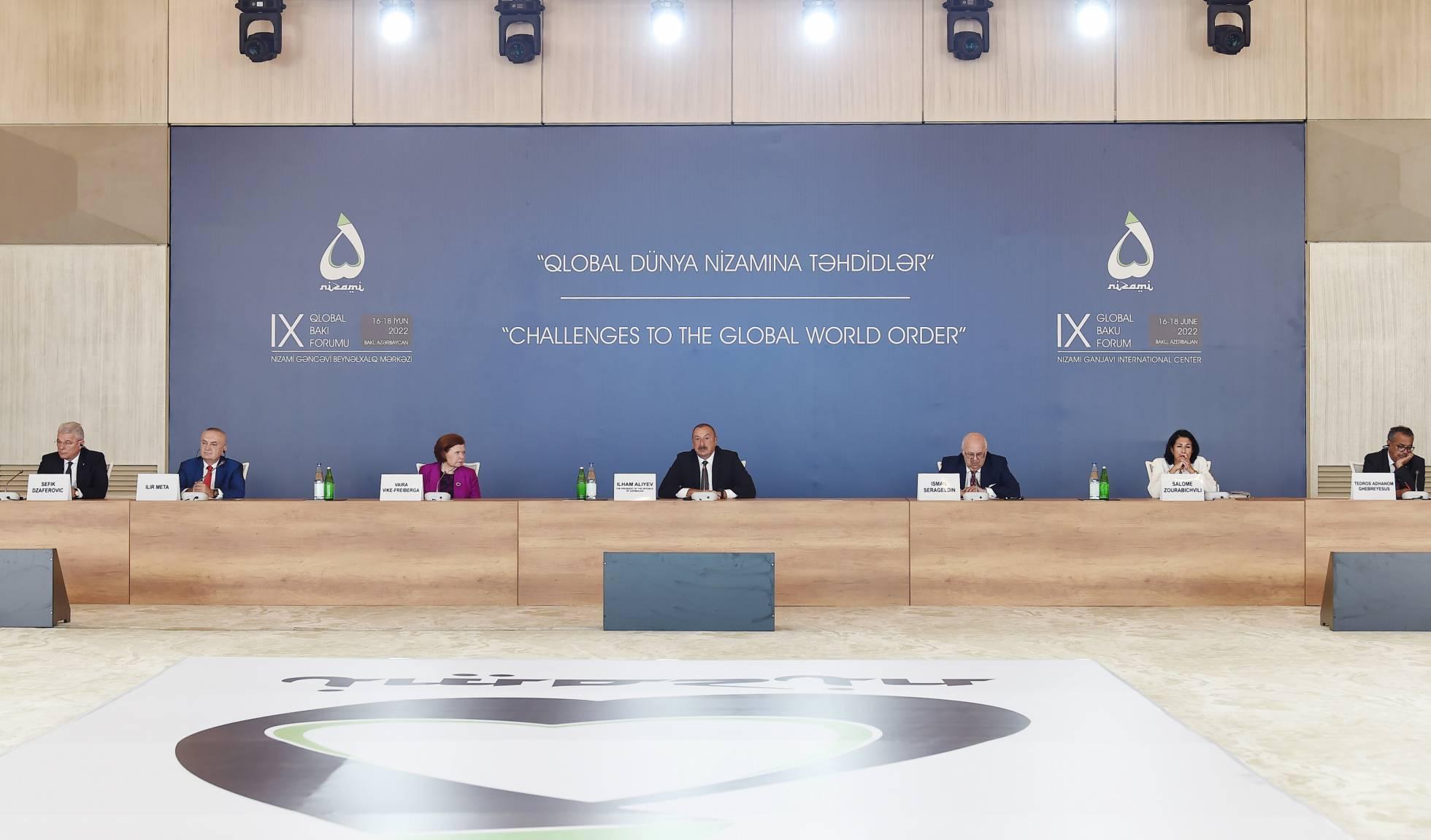
The IX Global Baku Forum "Threats to the Global World Order" has opened in Baku. It is difficult to overestimate the significance of such a gathering of international experts and politicians for modern geopolitics because the threat of a redistribution of the existing world order through the use of weapons and aggressive politics is a frightening trend today. In this context, Azerbaijani President Ilham Aliyev's speech at the opening of the forum outlined the most important vectors of the country's foreign policy in the pursuit of peace and security in the South Caucasus. At the same time, the president directly named the forces that impede the region's well-being and prosperity.
In fact, Aliyev's whole speech conveyed the key idea of the forum - the danger of attempts to resurrect once-existing configurations and the balance of forces, refusing to accept the future and staying in the hopeless past. And one of such countries living in a mythical past is Armenia.
Unwilling to recognise the unconditional victory of Azerbaijan for its lands, Armenia continues to slow down and hinder the development of peaceful dialogue and economic activity in the South Caucasus, Aliyev stressed. Baku sees this as Yerevan's cunning game, in which the Armenian nation literally has no equal in skill: delaying everything that concerns their obligations as much as possible. Yerevan has been conducting this destructive policy for 30 years and, it seems, is not going to abandon it in the future. Although, in words, Armenia declares to the entire world its openness and commitment to a peaceful agenda. And he does it like no one else can: zealously and loudly. But over the years Baku has already learned to analyse the policy emanating from Yerevan and see what others do not notice in the Armenian declarations. However, this time everything is quite clear: Yerevan uses one trick after another to avoid signing a final peace agreement with Azerbaijan.
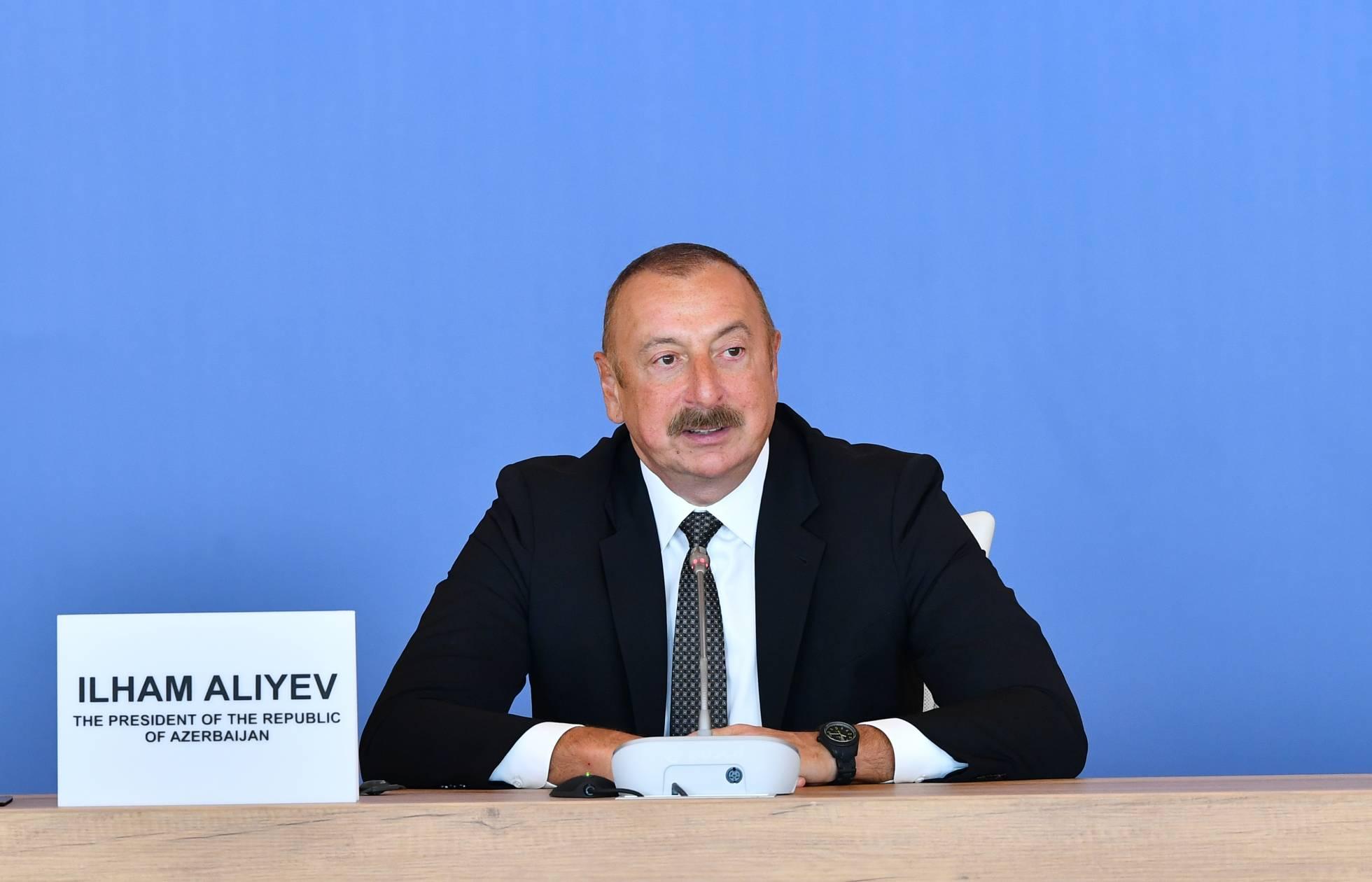
"Why doesn't Armenia do this? Does it want to fight again? But it will be a catastrophe, the end of Armenia's statehood," the Azerbaijani president warns.
However, Ilham Aliyev has repeatedly stated on the most authoritative platforms Azerbaijan's plans to transform the South Caucasus into a prosperous region with completely new prospects. And Karabakh could become the country's economic and tourist hub. In these processes, Baku will not distance itself from Yerevan; our country is open to cooperation. Although, in theory, it could take a different stance and continue the policy of isolating its long-standing adversary - Armenia - by focusing solely on the development of its liberated territories.
But Ilham Aliyev does not back down from the position he once outlined, repeating again: "Our only goal is to sign a peace treaty with Armenia, and then a new, peaceful stage of development in the South Caucasus, the stage of cooperation, will begin." It appears to be even clearer.
Despite Baku's open, neighbourly attitude, Armenian cunning and attempts to gain more bonuses continue to dominate this country's politics. However, as the president once again stressed, the issue of Karabakh's status is closed for Armenians, and no illusory hopes should be entertained.
"Armenia should give up trying to rewrite history," Ilham Aliyev says. According to him, the Azerbaijani Constitution guarantees the rights of all nationalities living in the country and is ready to ensure the rights of all Armenians living on our land. There appears to be nothing else to worry about for the Armenian lobby's detractors and sceptics - Baku does not choose between "ours" and "yours".
"We are ready to do this, but, unfortunately, we are again hearing dangerous and counterproductive demands for 'status'. The so-called 'Nagorno-Karabakh Republic' does not exist, and any mention of the 'status' leads only to conflicts," the president once again clarifies.
The question of "status", which, like a broken record, sounds again in Armenian political rhetoric, may indeed force Azerbaijan to take special countermeasures at some point, but then Yerevan will have a hard time again. And if Armenia again questions Azerbaijan's territorial integrity, then Azerbaijan will have many historical reasons to question Armenia's territorial integrity. For example, to demand status for Western Zangazur, where Azerbaijanis lived.
"But this is a dead-end path," the president said, indicating which direction Baku considers a priority for the development of the South Caucasus. And this is how peaceful dialogue works.
Ilham Aliyev also mentioned the political missions that have hopelessly sunk into oblivion, about which Yerevan continues to rave. For example, the same OSCE Minsk Group: in the speeches of Armenian politicians, in the rhetoric of the Armenian Foreign Ministry, the hope for the Minsk Group flashed again – an absurdity sprinkled with mothballs. It is quite understandable, of course, why the Armenian political elite continues to trash this topic. After all, it was the Minsk Group that consistently supported exclusively Armenian interests and did not even try to reason with Yerevan. And at some point, the mediators exhausted their resources, and brought the negotiations to a standstill, becoming unnecessary for any of the parties to the conflict. So Azerbaijan does not feel any nostalgia for such missions.
"We need to say goodbye to this counterproductive group, not 'thank you and goodbye!', but simply 'goodbye!'," Ilham Aliyev said very clearly.
He also touched upon the topic of the Zangazur corridor, on which all the proposals and statements of the Armenians are literally replete with ambiguities. Although Armenia lost the war and signed up to a number of obligations as a capitulating party, it continues to play a dishonest game. Armenians have been using the Lachin corridor for more than a year and a half, although Azerbaijan has not yet been able to launch the Zangazur corridor. Meanwhile, this obligation, which Armenia must fulfil according to paragraph 9 of the Trilateral Declaration, has not yet been implemented. Why on earth should Baku give Armenia such preferences?
"The opening of the Zangazur corridor is one of the important conditions for concluding a truce between our countries, and Azerbaijan has the right to demand its fulfilment," the president said.
At the same time, Azerbaijan is not going to unnecessarily waste time discussing grievances and triggers of the past, wasting time. This time can and should be spent on work on the effective use of its resources, and the republic sees its future in collaboration and close cooperation among all three South Caucasus countries.
In this sense, the president, unlike many modern politicians, looks exclusively into the future, not forgetting what was missed.
"We should start a trilateral dialogue with Armenia and Georgia, take into account the issue of cross-border rivers, transport hubs. Azerbaijan is close to completing the construction of its part of the Zangazur corridor. If it were not for the Armenian occupation, the South Caucasus would now be a very developed region," the president summed up, clearly outlining the future: he who has ears, let him hear. Azerbaijan still continues to maintain self-control and optimism.







 editor@caliber.az
 +994 55 444-88-98
 Азербайджан, Баку, ул. Низами, 203, Af Business House, 5-й этаж