










Democracy by subscription and an indulgence for Pashinyan Article by Matanat Nasibova
Although Armenia's parliamentary elections concluded with a victory for Prime Minister Nikol Pashinyan's ruling Civil Contract party, the election results have not dispelled concerns about the state of Armenian democracy. On the contrary, they have amplified questions regarding the independence of the judiciary, the concentration of executive power, and the stagnation of key reforms.
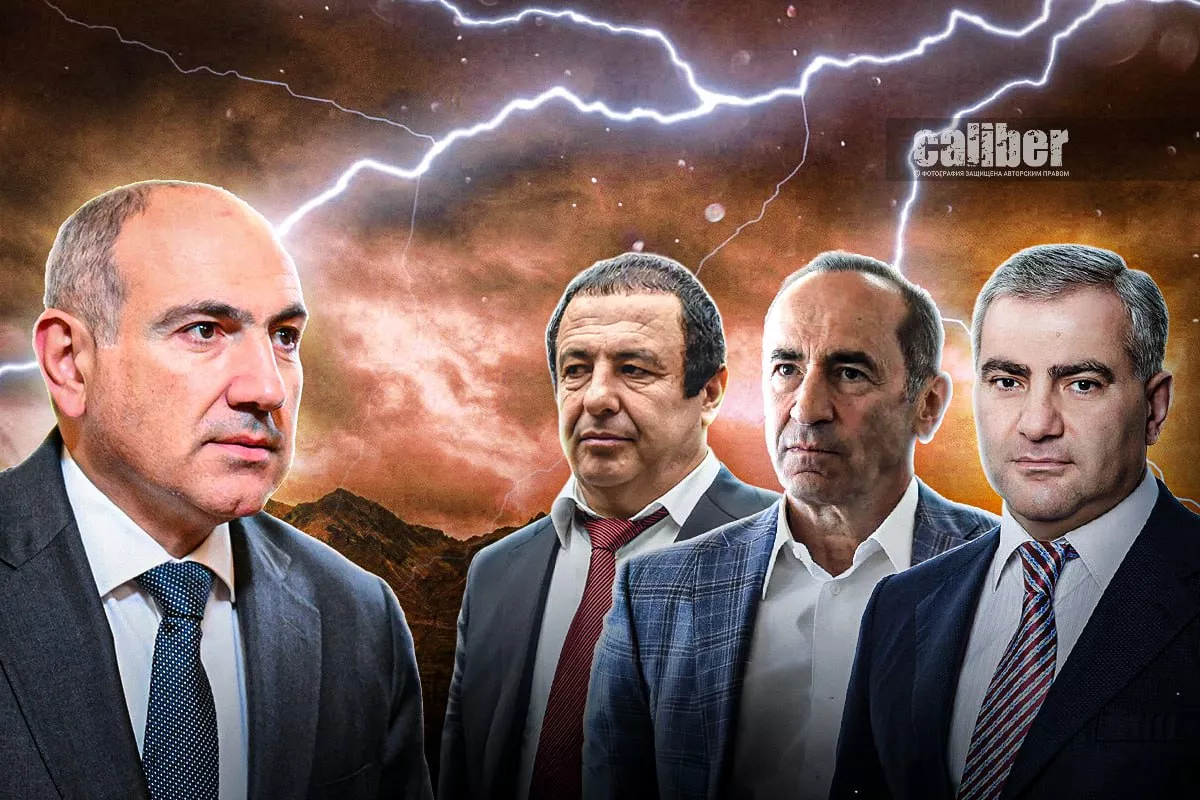
The domestic political climate before, during, and after the elections suggests that political competition in Armenia is increasingly giving way to administrative pressure and the persecution of those who disagree with the incumbent authorities. This trend is vividly illustrated by the numerous cases of opposition figures being detained and subjected to criminal prosecution, often on the basis of highly tenuous evidence, which were widely reported in the run-up to the parliamentary elections.
Notably, tensions have not eased since the elections. On the contrary, high-profile criminal investigations have continued to gain momentum. One of the most prominent examples is the case against Gagik Tsarukyan, a well-known businessman and leader of the Prosperous Armenia party. Armenia's Investigative Committee accuses him of orchestrating a scheme in which 52 vehicles and pieces of equipment were stolen from Iranian companies through document forgery and fraud. The estimated damage amounts to approximately $22 million, while the politician is also suspected of laundering the proceeds of the scheme.
The businessman categorically denies any wrongdoing, insisting that the criminal case against him is entirely fabricated and describing the prosecution as an act of political persecution. Notably, a large proportion of the Armenian public shares this assessment of the situation. Furthermore, widespread public outrage was sparked by the manner of Tsarukyan's arrest, which fell far short of basic human rights standards.

In this context, the reaction of several EU member states to the situation in Armenia deserves particular attention. These countries have long portrayed themselves as the world's foremost champions of democracy and, on the strength of this self-assigned role, frequently demand that others adhere strictly to democratic principles.
A case in point is Georgia. European institutions have repeatedly issued harsh statements criticising the Georgian government for its departure from democratic standards.
Moreover, the European Union has effectively suspended Georgia's EU accession process, frozen financial assistance, officially suspended visa-free travel for holders of diplomatic and service passports, and the European Parliament has even adopted a resolution calling on the Council of the EU to impose targeted sanctions on senior Georgian officials.
All of these measures followed the Georgian authorities' decision to adopt legislation that, in the view of these European “guardians of democratic values,” does not live up to those very values.
One might therefore expect a similar response toward Armenia, or at the very least an effort to examine the situation objectively. Instead, the opposite appears to be the case. Having embraced Pashinyan as a democratic leader, Europe has remained largely silent in the face of politically motivated repression carried out by the current Armenian authorities. Such an approach is difficult to characterise as anything other than a double standard. In practice, it suggests the following principle: if it is "our democrat," then virtually any action is tolerated.
Moreover, Western countries adopted this "anything goes" approach toward Armenia even during the rule of Robert Kocharyan and Serzh Sargsyan. It was a period when corruption permeated the entire state apparatus, individuals deemed undesirable by the authorities literally disappeared without a trace, and people were killed on the streets of Yerevan to serve the political ambitions of certain leaders.
The West's self-proclaimed "champions of democracy and guardians of human rights" remained silent then. They remain silent today as well, as Armenian special forces act with near-unchecked powers, raiding people's homes on the instructions of a compliant Investigative Committee and arresting individuals on highly ambiguous charges.
This makes it possible to argue that, today, a country's democratic credentials are assessed not on the basis of its actual political realities, but solely according to its foreign policy orientation: if a government's leadership is acceptable to the West, its democratic character is treated as an unquestionable constant.
Ultimately, such a practice by Western states undermines the very concept of democracy. When democratic values are applied selectively, they cease to be perceived as universal principles. When identical political processes receive diametrically opposite assessments, an inevitable question arises: Is this truly about defending democracy, or is democracy merely an instrument of foreign policy, entirely dependent on geopolitical considerations?
Thus, in practice, the situation appears as follows: Pashinyan is constructing an authoritarian regime under the guise of "democracy," while Western support is facilitating this process and turning Armenia into a geopolitical instrument.
As a result, Armenia, once considered a Russian stronghold, is now being transformed into a Western one. This is drawing the country into deepening internal divisions and economic difficulties, while gradually turning it into an arena of geopolitical rivalry between the West and Russia.







 editor@caliber.az
 +994 55 444-88-98
 Азербайджан, Баку, ул. Низами, 203, Af Business House, 5-й этаж