










Dissolution in a new reality The OSCE Minsk Group ceases to exist
On the night of December 1, 2025, a historic event took place: the Organisation for Security and Co-operation in Europe (OSCE) officially completed the closure of the Minsk process and its related structures. This was stated in a press release published on the organisation’s website. In short, the OSCE Minsk Group no longer exists, both de facto and de jure.
“This process implemented the 1 September consensus decision of all 57 OSCE participating States in the wake of the historic Joint Declaration signed in Washington D.C. on 8 August 2025 by Prime Minister of Armenia Nikol Pashinyan and President of Azerbaijan Ilham Aliyev, and witnessed by U.S. President Donald J. Trump,” the press release states.
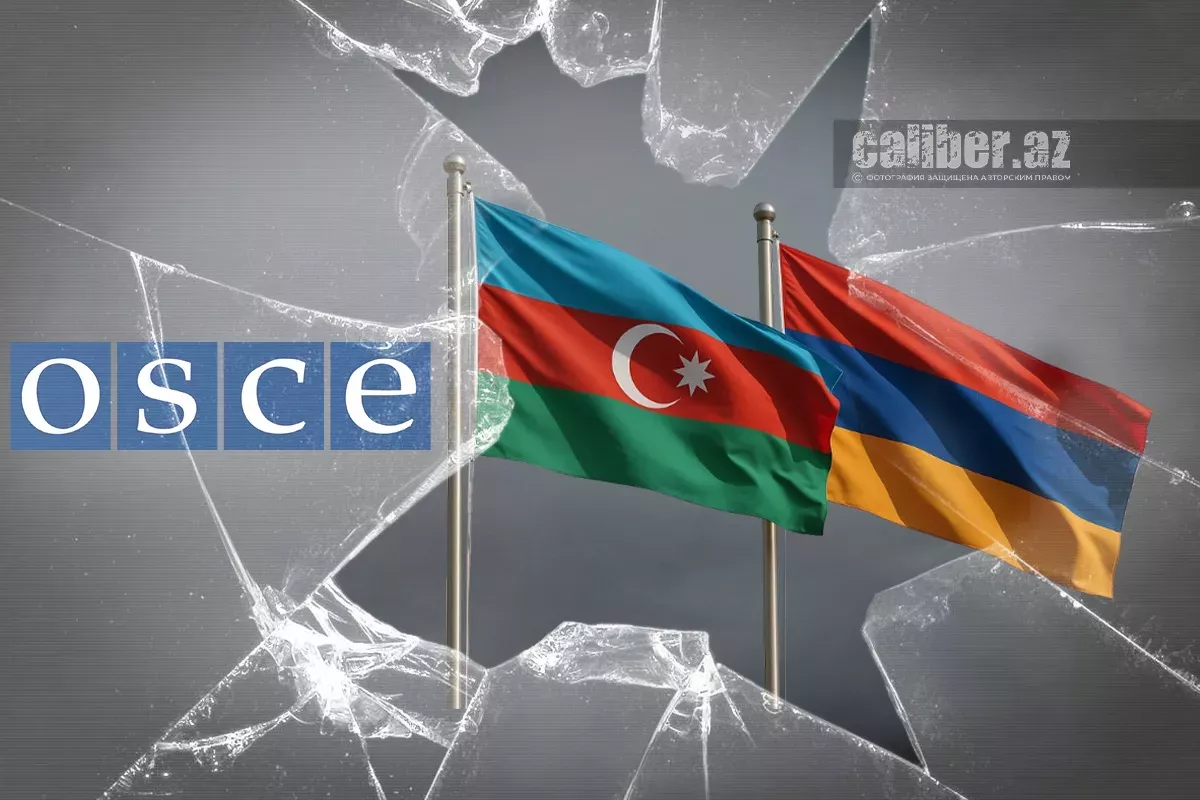
The Minsk Group, it should be recalled, was established in 1992 with the aim of facilitating a peaceful resolution of the Karabakh conflict. For many years, it was regarded as the main international mediator in this process, with the United States, Russia, and France serving as its co-chairs.
However, throughout its existence, the OSCE Minsk Group failed to achieve any tangible results. All the proposed “peace initiatives” and “roadmaps” remained on paper, while the occupation of Azerbaijani territories continued. Over the years, the Minsk Group became a symbol of diplomatic formalism. Meetings, “shuttle diplomacy,” and endless statements from the co-chairs resulted in a process without any real outcome.
The Group effectively became an instrument for maintaining the conflict rather than resolving it. Its activities helped preserve the status quo while Azerbaijani lands remained under the occupation of Armenian armed forces. For the co-chair countries, this format provided a convenient way to showcase “active diplomacy,” but for Azerbaijan, it became a factor that hindered the achievement of a just and sustainable peace.
As Azerbaijani President Ilham Aliyev said while addressing the 80th session of the UN General Assembly in New York on 25 September this year: “The OSCE Minsk Group, established in 1992 to facilitate a settlement, has failed in its mission. Instead of enforcing the norms and principles of international law, its co-chairs sought to preserve the status quo and keep the conflict frozen.”
These words, spoken after the joint appeal by Baku and Yerevan to the OSCE to end the Minsk Group’s activities, sounded more like a condemnatory epitaph for this inglorious institution.
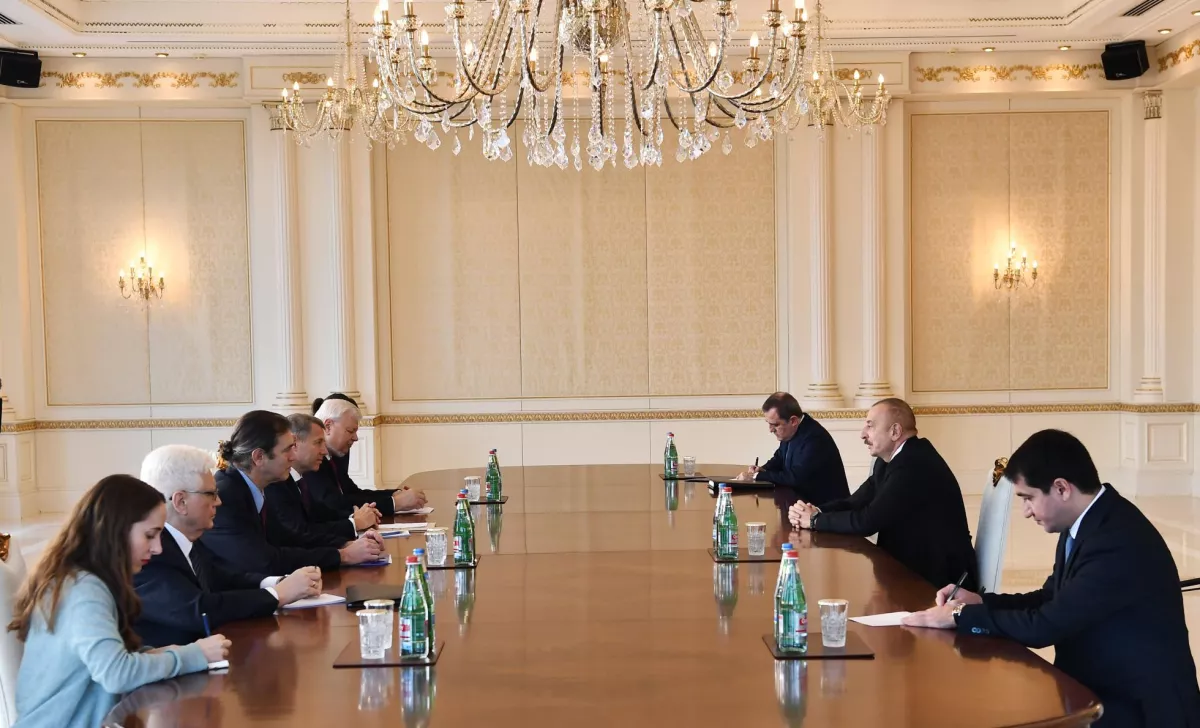
At the same time, President Aliyev has repeatedly spoken since the 44-day war about the OSCE Minsk Group, its dubious role in maintaining the Karabakh conflict, and its irrelevance. Among the most memorable remarks were those he made directly to the Minsk Group co-chairs and the personal representative of the OSCE Chair-in-Office, Andrzej Kasprzyk, on December 12, 2020 in Baku: “… it was your idea to come. I can tell you again in front of the cameras, I did not invite the Minsk Group to come. But when I was informed that the Minsk Group wants to come, I said okay, I don’t mind, maybe they have something to tell me. If you want to do it in front of the cameras, it’s okay, if not, I can tell them to leave. It’s up to you,” said the head of state.
These were the words of the leader of a country that had restored justice by its own efforts. It should be noted that throughout these thirty years, Azerbaijan did not remain passive but systematically and patiently prepared for this outcome. The situation changed completely and irreversibly in 2020, when Azerbaijan, during the 44-day war, restored its territorial integrity. From that moment, the Minsk Group lost all grounds for existence.
Formally, it continued to be mentioned in international statements, but in practice, its activities had ceased. All attempts by individual countries to “revive” its work appeared artificial and were more about maintaining the appearance of the former diplomatic significance. For some revanchist forces in Armenia and their foreign patrons, the Minsk Group was regarded almost as a fetish, whose preservation gave a false illusion of the possibility of reviving the conflict.
However, history has its own logic, and it cannot be reversed… On August 8 in Washington, both Azerbaijan and Armenia officially confirmed: the Minsk Group is no longer needed. The dissolution of the Minsk Group is not only a formality but also a symbolic step, emphasising that the era of externally imposed solutions and conflict management in the region is over. Azerbaijan and Armenia confirmed that the future of the South Caucasus will henceforth be determined solely by the countries of the region.
De jure, the peace process between Baku and Yerevan is not yet complete. The Armenian people still face the most important step to finalise the conflict: voting in a referendum to remove territorial claims against Azerbaijan from the country’s constitution. The overall dynamics of the process, conducted by Armenia’s ruling party, give reason to hope that Armenian society will support the government’s course. One of the key milestones in this process was Yerevan’s agreement to the dissolution of the OSCE Minsk Group.
Ironically, this institution may still become an impetus for peace – simply through the very fact of its dissolution.







 editor@caliber.az
 +994 55 444-88-98
 Азербайджан, Баку, ул. Низами, 203, Af Business House, 5-й этаж