










Dry ports: a new logistics vector for Azerbaijan Connecting East and West
Amid sharply rising demand for cargo transport between China and Europe, the need to diversify transport hubs across Eurasia has become increasingly urgent. As a key beneficiary of these developments, Azerbaijan is actively modernising its fleet, railways, and port infrastructure, while exploring innovative logistics solutions. One promising avenue is the development of dry ports—intermodal terminals located inland, away from seaports, that handle and store maritime containers using both road and rail networks. The potential of this approach was recently highlighted during a joint seminar organised by the Asian Development Bank (ADB) and Azerbaijan Railways (ADY).
According to international classification, a dry port is an intermodal terminal located inland or away from the coast that serves as a key link to seaports. These facilities are directly connected to maritime ports via road and rail networks, enabling the handling, storage, customs clearance, and transshipment of maritime containers to other transport modes for delivery to inland regions—or vice versa. In addition to facilitating transit and accelerating logistics chains, dry ports often provide services such as temporary storage, cargo consolidation, and container handling. Their intermodal design allows for the efficient integration of maritime, rail, and road transport. While particularly common in landlocked countries, dry ports are also found in coastal states, where they help relieve congestion at busy seaports.
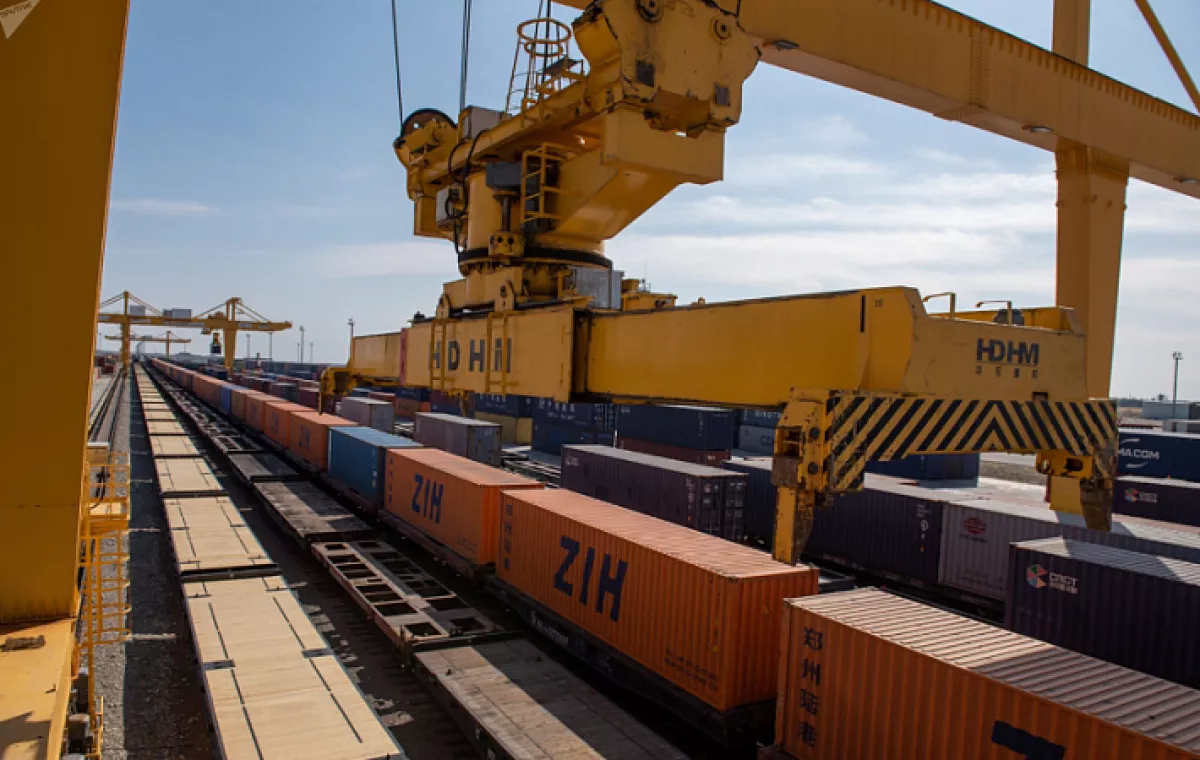
Notably, the significant intergovernmental agreement “On Dry Ports” was signed in November 2013 in Bangkok during the Forum of Transport Ministers of Asian countries, organised by the United Nations Economic and Social Commission for Asia and the Pacific (UNESCAP), and came into force in April 2016. Azerbaijan joined this agreement in April 2020, with the corresponding law signed by President Ilham Aliyev.
In this field, Azerbaijan also cooperates closely with the European Commission (EC), which in recent years has accelerated joint initiatives with South Caucasus and Central Asian countries to develop the transport infrastructure of the Middle Corridor. In particular, the EC supports the integration of countries in the Black Sea–Caspian region—through The Europe–Caucasus–Asia Transport Corridor (TRACECA)—into the Trans-European Transport Network (TEN-T) by establishing a Southeast axis aimed at boosting multimodal transport between West and East.
Dry ports play a key role in these integration projects: large inland rail and road terminals in Uzbekistan and other Central Asian countries without direct access to seaports are included in these initiatives. In these dry ports, “green” energy systems are being implemented, operations automated, and terminals linked to a unified digital data exchange system connecting them with the logistics infrastructure of Caspian ports, including the Baku International Sea Trade Port (BISTP) in Alat.
The development of dry ports is also underway in neighbouring Georgia, through which the Trans-Caspian International Transport Route (TITR) passes. In early June 2025, a dry port with a modern railway container terminal was commissioned in Tbilisi, with infrastructure designed for multimodal cargo transportation. The Tbilisi dry port is being constructed on a 28.5-hectare site in three phases: during the already completed first phase, which saw an investment of $21 million, the terminal can handle up to 100,000 containers per year, and after all phases are completed, its capacity will increase to 200,000 containers. The dry port’s proximity to the airport, road networks, and railway lines enhances its role as a key transport hub of the Middle Corridor.
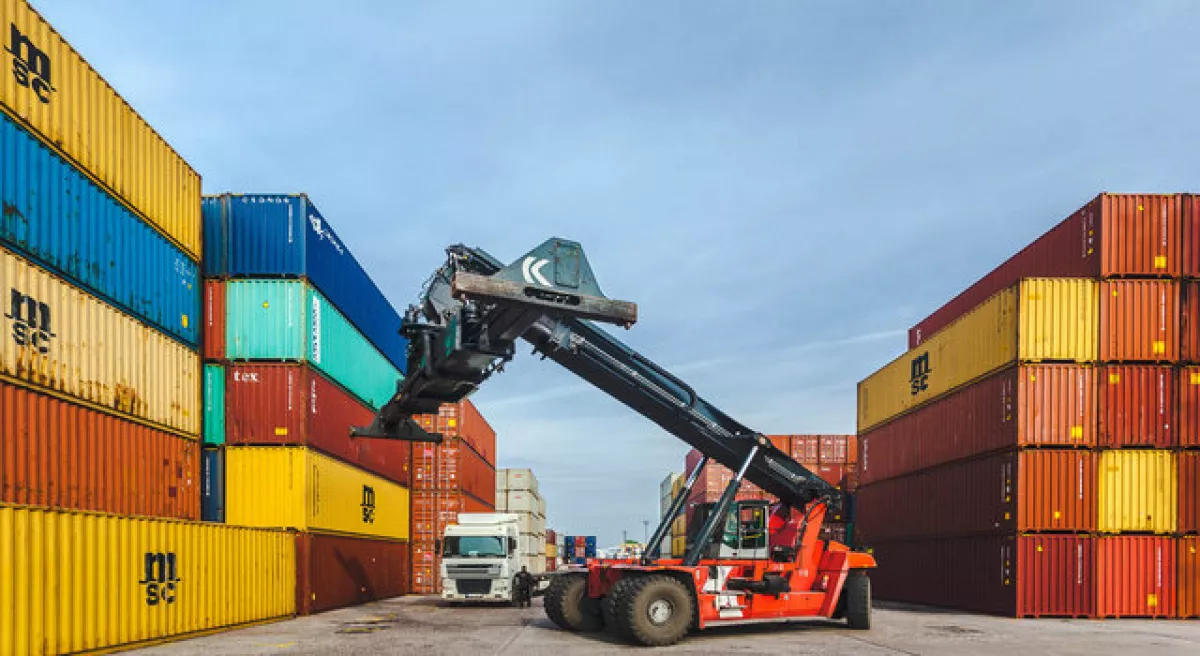
Thanks to its advantageous geographic location and developed logistics and transport networks, Azerbaijan also plans to expand its dry port infrastructure. The country’s first classical dry port, the Absheron Logistics Centre, was commissioned in August 2018. Located along the “Great Silk Road” in the Lokbatan settlement of the Garadag district and internationally certified, this 65.7-hectare hub provides container, railcar, customs, brokerage, terminal, and transport services, as well as cargo storage facilities.
“Modernising ports, streamlining procedures, and attracting investors are turning the Caspian region into a key link of the Middle Corridor, while Azerbaijan is transforming from a simple transit point into a logistics centre that generates added value,” recently noted Nijat Asgarov, Director of International Transport at the Absheron Logistics Centre. According to him, the Absheron dry port model goes beyond traditional warehouse logistics, offering services such as consolidation, packaging, labelling, small-scale production functions, and on-site storage of goods.
Azerbaijan appears set to advance further this relatively new trend in its national transport and logistics system: the development of dry ports was discussed last week in Baku during a seminar organised by the Asian Development Bank (ADB) and Azerbaijan Railways (ADY).
“Azerbaijan needs to develop a network of dry ports to accelerate the decarbonisation of the transport sector, not only at the level of ADY but across the entire country’s transport sector,” stated Kangbin Zheng, Head of the ADB energy team, during a presentation on a joint decarbonisation project at the seminar.
The expert noted that, according to preliminary ADB estimates, trucks in Azerbaijan travel an average of around 240 kilometres, and this distance could be reduced: 40 kilometres to a dry port, with the remaining 200 kilometres transported by rail. Moreover, even this 40-kilometre segment could be covered by electric vehicles. According to the team leader, electric trucks could be owned either by ADY or by third-party logistics companies, enabling an effective solution for the “last mile” when transferring cargo from roads to railways.

Notably, decarbonising the country’s transport sector is by no means the main reason for accelerating the development of dry ports. Far more important is the development of this trend in terms of building the infrastructure of the Zangezur Corridor. Recently, Arif Agayev, Deputy Chairman of ADY, reported that the agency has completed design work for the reconstruction and modernisation of railway infrastructure in the Nakhchivan Autonomous Republic (NAR): “Construction has now begun at the border with Armenia, on the territory of the Salamlig station in the Ordubad district. These works cover a railway line with a total length of 188 km.” According to the Deputy Chairman, after the completion of major repairs and reconstruction in NAR, the cargo handling capacity of the railway will reach 15 million tonnes.
Following the implementation of the Trump Route for International Peace and Prosperity (TRIPP) project, the connection of the Nakhchivan railway with the Horadiz–Aghband line in southwestern Azerbaijan, the subsequent link to the under-construction Kars–Igdir–Aralık–Dilucu line spanning 224 km, and the modernisation of the Julfa railway hub with access to Iran, Nakhchivan is poised to become the largest regional transport hub. In this context, plans to establish a dry port in Nakhchivan are a crucial step for expanding cargo flows and streamlining logistics operations within the Middle Corridor system. The NAR dry port is also expected to serve as an international digital logistics centre, optimising connectivity between the Caspian region and the Mediterranean, and potentially, via the Julfa railway hub, with the Persian Gulf.







 editor@caliber.az
 +994 55 444-88-98
 Азербайджан, Баку, ул. Низами, 203, Af Business House, 5-й этаж