










EU rift deepens Two-speed Europe divides the continent
Europe is once again experiencing a wave of geopolitical convulsions. Against the backdrop of the continent’s obvious weakness in making significant decisions on the global stage, European Union leaders continue to search for a way out of the crisis—a crisis of ideas, political leadership, and, essentially, confidence in their own capabilities.
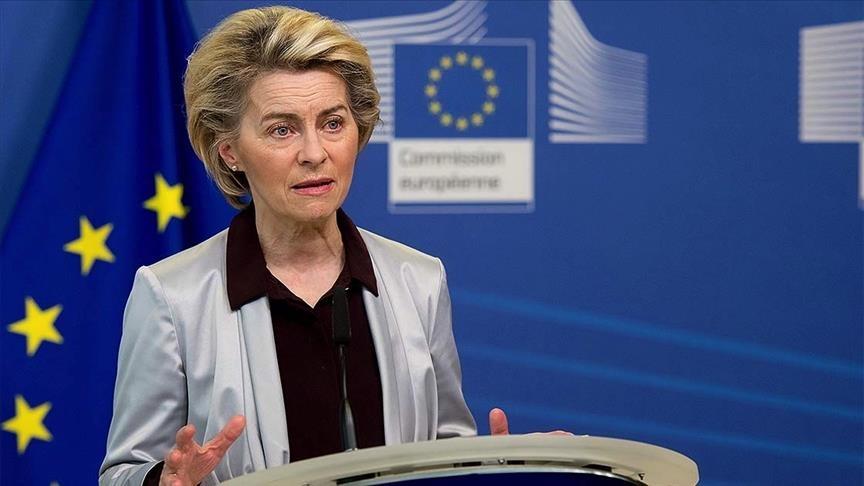
European Commission President Ursula von der Leyen has proposed the so-called “two-speed” Europe. This idea was not voiced spontaneously but came just ahead of an extraordinary EU summit scheduled for today, February 12, which, according to European Council President António Costa, will focus on strengthening the single market amid a complex geopolitical environment. He emphasised that the EU will continue to defend its own interests, protecting “itself, its member states, its citizens and its companies, against any form of coercion.”
There is nothing surprising in this development: it seems European leaders are seeking to formulate a unified continental stance ahead of the 2026 Munich Security Conference, in order to avoid another geopolitical slap similar to last year’s from the United States. However, in Munich 2026, Europe will first and foremost need to demonstrate the unity that the continent has long lacked.
This is the idea behind von der Leyen’s proposal: to allow the possibility of cooperation among smaller groups of countries if all 27 EU members cannot reach a consensus on economic policy. As she noted, in a situation where the European economy finds itself caught between the U.S. and China, countries willing to advance key initiatives should consider forming groups when a common decision cannot be achieved. She called these groupings small coalitions, intended to implement the EU’s ambitious economic programme, which, despite political disagreements within the Union, must still be brought to life.
Von der Leyen is well aware that achieving such unity across all 27 countries under current conditions is practically impossible. This raises the question: why was the initiative brought to an extraordinary summit in the first place? Is it solely due to the upcoming Munich Security Conference?
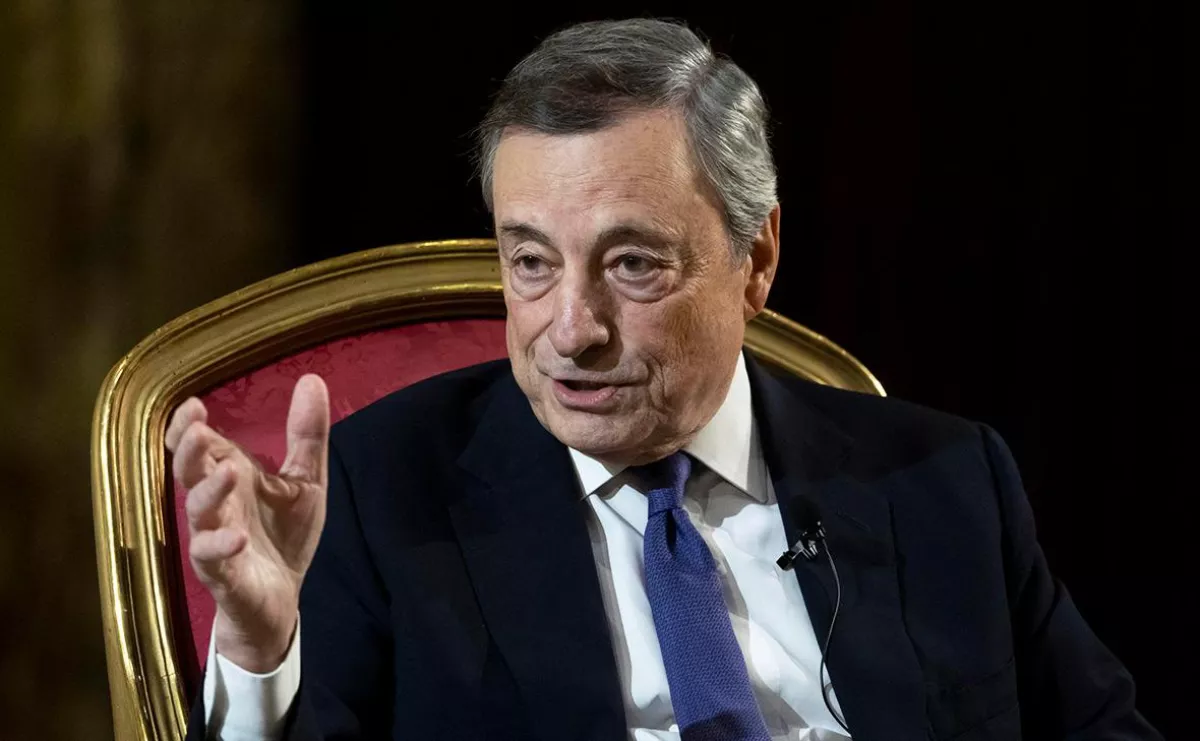
Obviously, there are additional factors at play. In particular, the position of Mario Draghi, voiced a few days ago, is significant. He is known not only as the former President of the European Central Bank and former Prime Minister of Italy, but also as a politician regarded in recent years as one of the continent’s intellectual pillars. At the same time, his rhetoric often differs from the “official line” coming out of Brussels.
Recently, Draghi called for “pragmatic federalism” within the EU—primarily in areas of joint projects, from energy to security. In his view, such an approach is the best way to prevent further decline of the European Union. Moreover, he once again revived the idea of transforming the EU into a “true federation.” Otherwise, Draghi warned, “Europe risks becoming subordinated, divided and de-industrialized.”
It is in this context that von der Leyen’s position emerges: she emphasised the need “to reach an agreement among all 27 member states” as a collective goal. However, the apparent recognition of the impracticality of her own call seems to have prompted her to advance the idea of a “two-speed Europe.” This involves, at certain stages, forming separate blocs or coalitions within the EU that do not include all member states. Such an approach effectively represents a departure from the originally enshrined—and so zealously guarded—Brussels principle of consensus.
The sensitivity of the issue is heightened by the fact that Mario Draghi is expected to take an active part in the summit, likely presenting positions that may diverge from von der Leyen’s line.
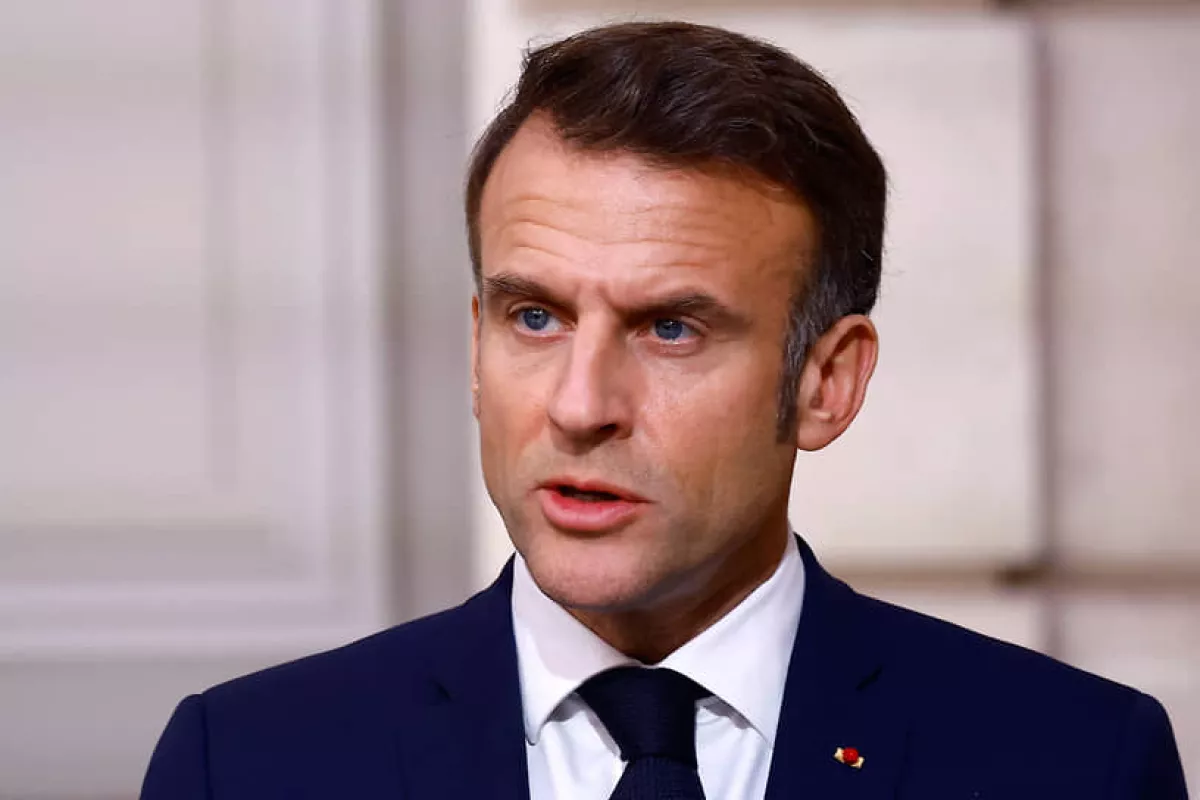
Against the backdrop of this “clash of approaches,” analysts are also paying close attention to statements by French President Emmanuel Macron. Traditionally, on the eve of EU summits, he puts forward programme-driven initiatives. This time, he once again stressed the need for Europe’s independence—primarily from the United States. However, Macron has moved away from his usual rhetoric of “strategic autonomy,” focusing instead on the need for an “economic revolution” that would allow Europe to become a “true global leader.”
At the opening of the special summit, he intends to insist on acknowledging that the continent is under threat. In this context, he emphasises the need for substantial economic reforms to reduce dependence not only on the United States but also on China. At the core of his position, moreover, is opposition to what he sees as the “openly anti-European” stance of the current U.S. administration, which “displays contempt for the EU and wishes for its disintegration.”
Some experts express doubts that even on key issues initiated by Brussels, it will be possible to unite as few as 9–10 countries into a stable coalition. According to certain analysts, the process is likely, at best, to result in the formation of a Franco-German core, with other countries joining in at various stages.
However, the question remains: are Berlin and Paris truly prepared to systematically advance decisions within a bloc-based model? This is especially uncertain given that even today, among the leading EU countries, divisions are emerging on highly sensitive issues—such as the potential resumption of diplomatic contacts with Moscow in the context of efforts to end the war in Ukraine. While France and Italy are open to the idea of deploying peacekeeping forces on Ukrainian territory, Germany maintains a firmly negative stance. At the same time, Hungary has filed a case with the EU Court in Luxembourg, seeking to annul the REPowerEU regulation, which mandates a cessation of Russian energy imports.
It thus becomes clear that the European Union continues to be shaken by internal geopolitical contradictions. It seems unlikely that the extraordinary summit will resolve the accumulated disagreements. Consequently, the Munich Security Conference is once again set to host European leaders more as a divided bloc than a consolidated one.







 editor@caliber.az
 +994 55 444-88-98
 Азербайджан, Баку, ул. Низами, 203, Af Business House, 5-й этаж