










Fuel as a target What’s behind the attacks on SOCAR facilities in Ukraine?
Ukraine’s fuel infrastructure remains one of the primary targets of Russian strikes, as evidenced by the recent drone attack using Shahed-type drones on a SOCAR Energy Ukraine petrol station located in the village of Nechayane, Mykolaiv region.
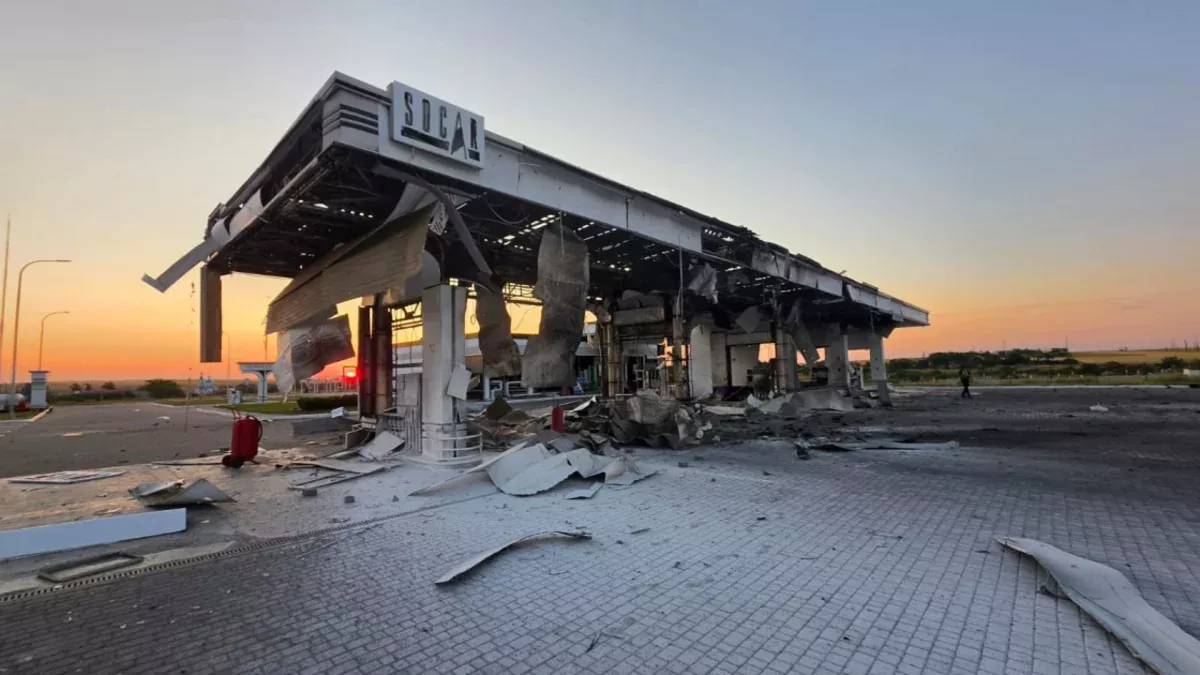
This time, thanks to the foresight of the company’s management, there were no casualties or injuries. However, administrative buildings and infrastructure were damaged. But this is only the external, visible layer of what happened. Beneath it lies a clear strategy aimed at pressuring Ukraine’s economy, logistics, and overall resilience. From this perspective, the SOCAR Energy Ukraine infrastructure was targeted quite deliberately rather than incidentally.
From the very first days of the full-scale war, the company has taken an active stance, supplying fuel to civilians, businesses, the agricultural sector, and emergency services. This has made it not merely a commercial structure, but an element of national resilience.
In this context, it is also important to note the following: petrol stations are not just about business. Filling stations are nodes through which the economy flows, and without which transport comes to a halt, logistics slow down, and mobility declines. In other words, they ensure the “on-the-ground” supply of fuel.
At the same time, petrol stations are highly vulnerable pieces of infrastructure, since the locations of fuel stations are publicly available, and rapid relocation is virtually impossible. This makes them “ideal” targets for drones, especially given the advancement of modern technologies. According to experts, contemporary unmanned aerial vehicles are increasingly equipped with machine vision systems, allowing them to identify targets without relying on GPS or the internet. This represents a qualitatively new level of threat. As a result, even a single precise strike can lead to a powerful explosion, destruction of the facility, and long-lasting consequences.

Against the backdrop of attacks on various fuel networks — WOG, UPG, and BRSM — the strikes on SOCAR stand out for a certain pattern and consistency. Last summer, as a result of explosions in the village of Berezyna in the Zhytomyr region, two SOCAR Energy Ukraine petrol stations were severely damaged. On the night of August 8, the company’s oil depot in the Odesa region was attacked by Shahed-type drones, leaving four people with serious injuries.
This gives grounds to speak not only about military logic, but also about a political and economic subtext. SOCAR is an Azerbaijani company operating in Ukraine, and therefore strikes on its facilities may be interpreted as exerting pressure not only on the Ukrainian side, but also indirectly on Azerbaijan. Such an interpretation inevitably takes the situation beyond the framework of the purely Ukrainian conflict, giving it a broader regional dimension.

However, despite the increasing intensity of attacks, Ukraine’s fuel market continues to function. As Economy Minister Oleksii Sobolev noted, there is no fuel shortage, supplies are ongoing, and logistics remain operational. But resilience does not mean the absence of problems, and today, the main risk is a potential rise in fuel prices, which may be driven by requirements to build up strategic reserves, increased security costs, and the destruction of infrastructure. Thus, attacks on petrol stations produce a delayed economic effect.
In addition, another concerning trend is the expansion of the geographic scope of strikes. If previously the main pressure was concentrated in frontline areas, today the attacks are moving deeper into the rear, and the list of regions where fuel infrastructure is being targeted continues to grow. In some of them, according to experts, there are virtually no intact oil depots left. The system is still functioning, but the cost of maintaining its resilience is increasing. And the longer this practice continues, the higher not only the economic but also the political consequences of such developments will become.







 editor@caliber.az
 +994 55 444-88-98
 Азербайджан, Баку, ул. Низами, 203, Af Business House, 5-й этаж