










Georgia–Russia: Is a new Treaty of Georgievsk taking shape? Article by Vladimir Tskhvediani
At a recent briefing at the government administration, Georgian Prime Minister Irakli Kobakhidze spoke positively for the second time since the beginning of August about the historical significance of the Treaty of Georgievsk, concluded in the summer of 1783 between the Kingdom of Kartli-Kakheti and the Russian Empire. The fact that this long-ago historical event was invoked in such a context suggests that a new “epochal agreement” may be in the making between present-day Georgia and Russia.
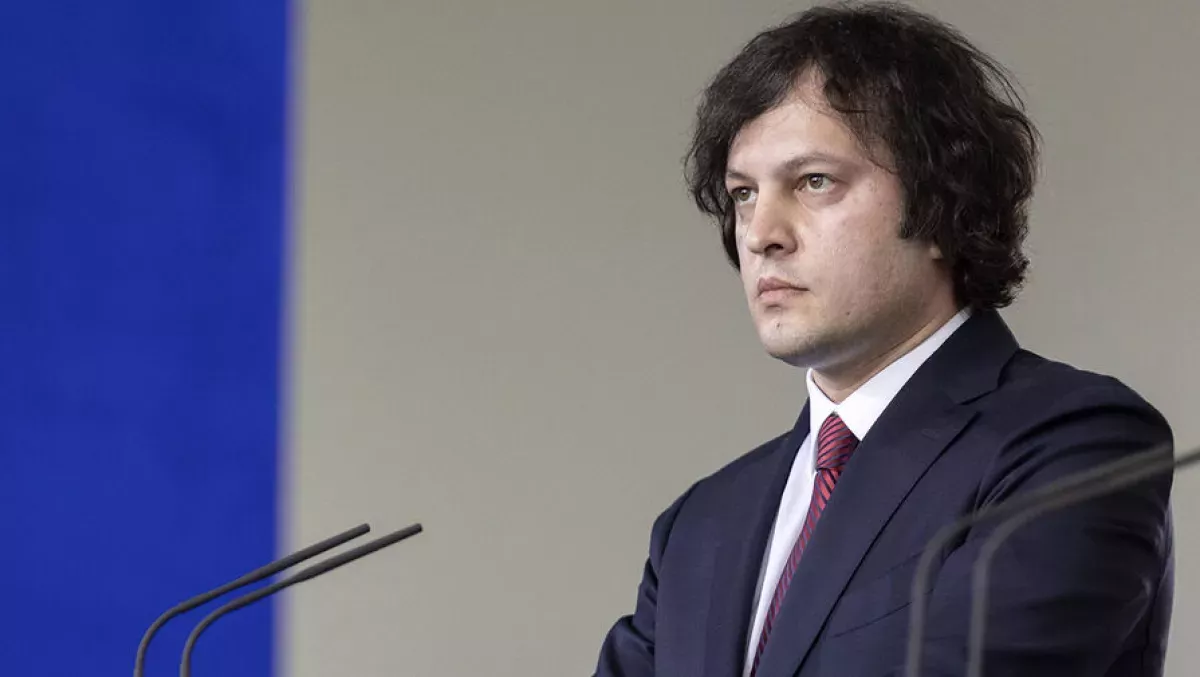
At the same time, Irakli Kobakhidze emphasized that the Treaty of Georgievsk was consistent with Georgia’s “European choice”: “Irakli II made a fundamental decision based on religion and faith, and this was his civilizational choice. Today, we remain committed to this civilizational choice, we want to be part of the traditional Western Christian world, and this is one of the foundations of our aspiration to join the European Union.”
Seen in this context, it becomes clear that today’s politicians’ references to an event that took place 243 years ago are concerned not so much with the past as with the present and the future. In other words, the debate is about whether the Treaty of Georgievsk could be repeated, and what such an agreement would mean for Georgia — a blessing or a curse.
The idea that a “Treaty of Georgievsk 2.0” is in the works was also voiced by Mamuka Pipia, the leader of the pro-Russian party Solidarity for Peace: “We are working in this direction, and very soon a statement regarding ‘Georgievsk’ will come from Moscow. The time has come to take care of the country’s real salvation and a new ‘Georgievsk 2.0.’ This time, on equal terms.”
At the same time, he agreed with Prime Minister Irakli Kobakhidze’s assessment of the 1783 Treaty of Georgievsk as an agreement that played an important role in preserving Georgian statehood and Christianity. However, he disagreed with the claim that the move was connected to preserving Georgia’s European path.
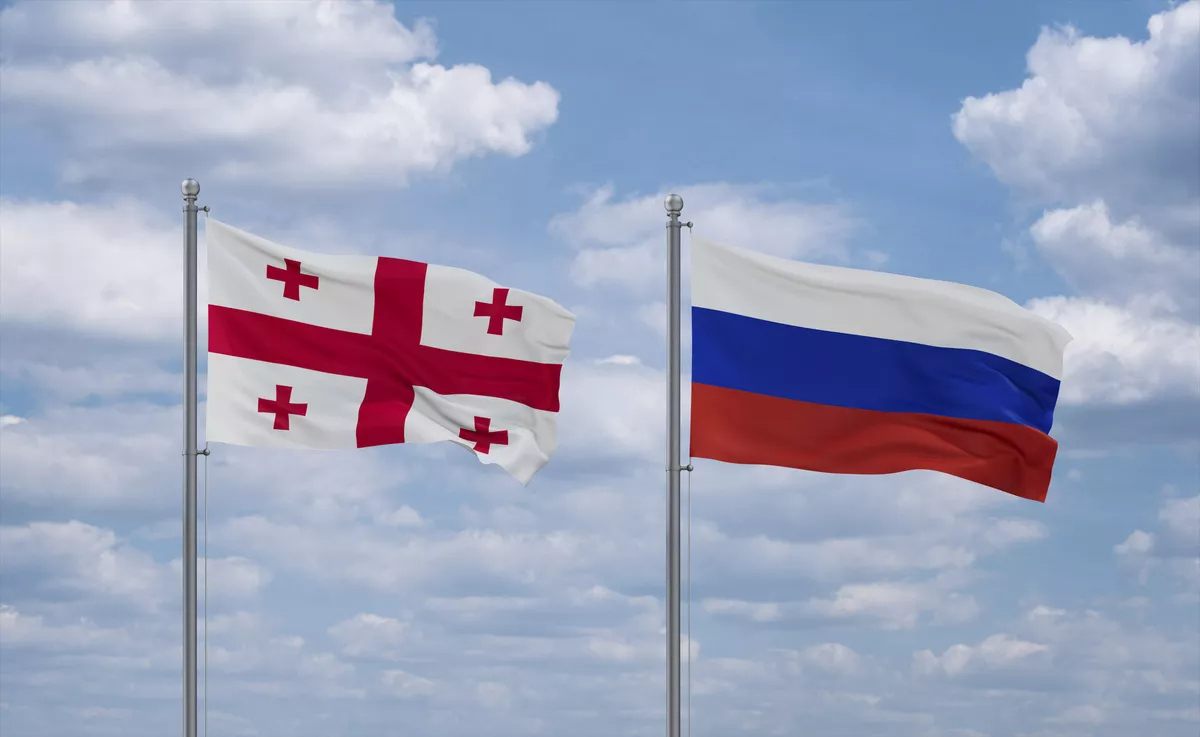
In turn, Russian Telegram channels have also reported on possible behind-the-scenes proposals from Georgia to the Russian authorities that, allegedly, could form the basis of a “Treaty of Georgievsk 2.0.” According to INSIDER-T, for example, the proposals reportedly involve Georgia’s full geopolitical loyalty to Russia’s foreign policy.
“The Georgian authorities have reportedly made a behind-the-scenes offer to the Kremlin: Tbilisi guarantees Moscow full geopolitical loyalty in exchange for Russia publicly renouncing the annexation of Abkhazia and ‘South Ossetia’ … As part of the deal, Moscow would have to officially and publicly pledge never to ‘incorporate Abkhazia and South Ossetia into the Russian Federation.’ In return, Tbilisi is offering Moscow a complete reversal of its course and the status of a ‘new Trojan horse’ for Russia on the international stage, including blocking anti-Russian initiatives in Western institutions. As a bonus, Georgia is ready to facilitate the maximum expansion of parallel imports and create a protected financial and logistics hub for Russia in the Caucasus,” INSIDER-T writes.
Most likely, however, the INSIDER-T channel has downplayed the actual demands Tbilisi may be making of Moscow. For the Georgian authorities, a commitment not to incorporate Abkhazia and South Ossetia into the Russian Federation would clearly be insufficient at this stage. The minimum requirement for a new Treaty of Georgievsk would be the restoration of Georgia’s territorial integrity.
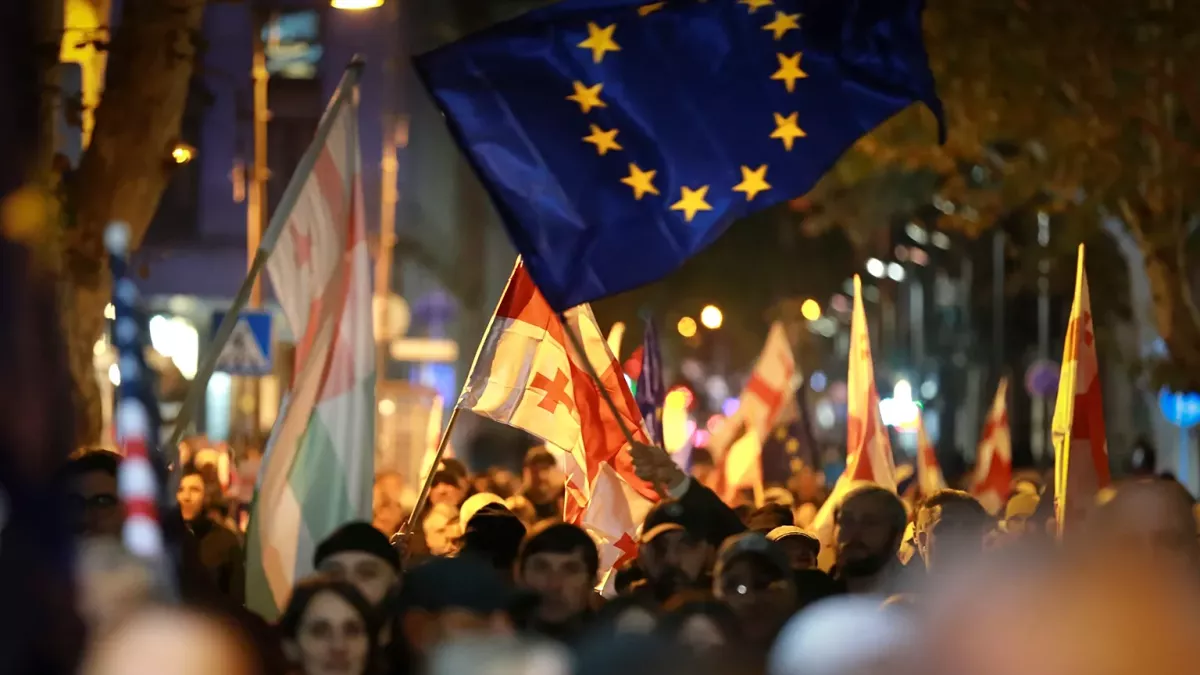
In turn, opposition representatives also claim that the ruling Georgian Dream party is preparing to conclude a “Treaty of Georgievsk 2.0” with Moscow, but they view such a prospect in strongly negative terms. Their statements suggest that, much like the 1783 Treaty of Georgievsk, a new agreement would lead to the loss of Georgia’s independence and its annexation by Russia. They also point to the Russian Empire’s failure to honor its obligations under the Treaty of Georgievsk — from its failure to provide military assistance during Agha Mohammad Khan Qajar’s campaign to the abolition of the rule of the Bagrationi dynasty in Georgia.
At the same time, it is worth bearing in mind that a genuine economic and logistical alliance with Georgia is far more important to Russia today than the patronage of the small Kingdom of Kartli-Kakheti was to the Russian Empire under Catherine II — a kingdom that did not even have access to the sea. Like other European colonial powers of the era, Russia, guided by the “law of the strong,” did not always respect the sovereignty of weaker states. Even autonomous entities within the empire that had become politically expendable were abolished, including the autonomy of Hetmanate Ukraine and the Zaporozhian Sich, with its system of internal self-government.
At the same time, when Qajar launched his campaign against Georgia in 1795, the Russian Empire had little capacity to focus on Caucasian affairs: together with Prussia and Austria, it was engaged in the partition of Poland. Under such circumstances, it would have been naive in the 18th century to assume that, in the long run, the Russian Empire would preserve the internal self-government of the Georgian polities that had come under its control.
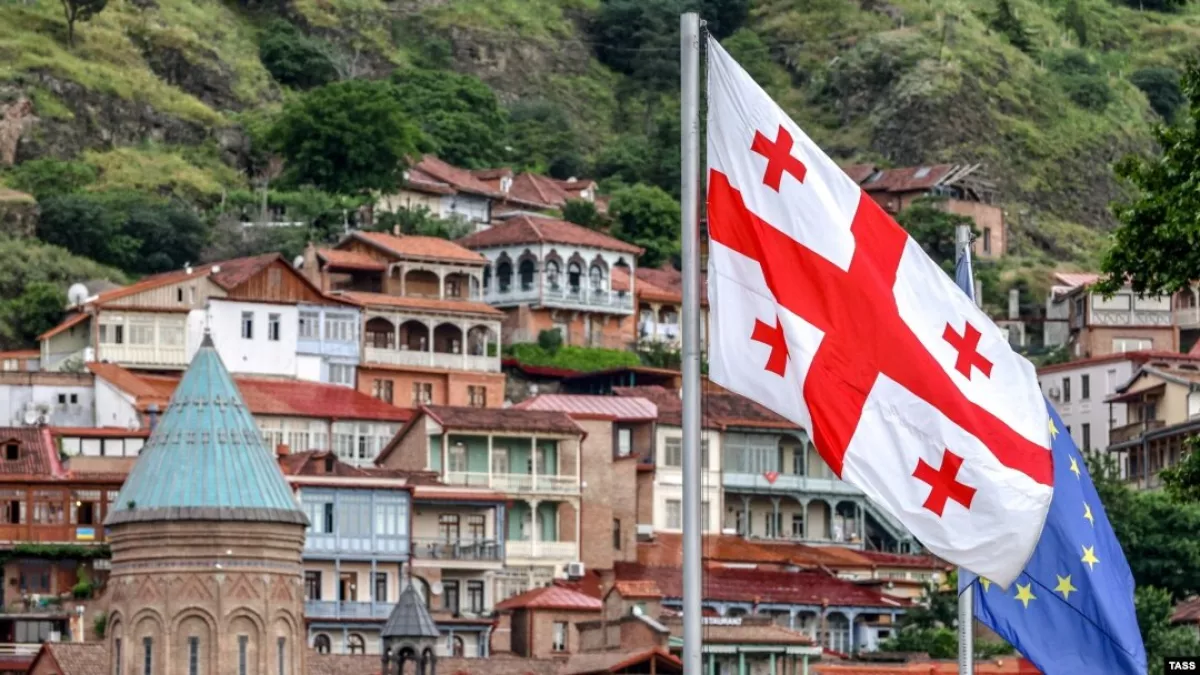
It is all the more strange to hear such accusations from the pro-European opposition, which itself seeks to transfer Georgia’s state sovereignty to Brussels. In this respect, its representatives today resemble the “pro-imperial” Georgian nobility of past centuries. At the same time, Catherine II’s Russia was itself one of Europe’s colonial empires, actively expanding its territories. In this sense, Irakli Kobakhidze’s references to Georgia’s “European choice” in the context of its alliance with 18th-century Russia are not so far removed from historical reality.
Today, however, the situation is fundamentally different: the war in Ukraine has brought a significant part of Russian territory under attack — something that was simply inconceivable in Catherine’s time. Thus, a “Treaty of Georgievsk 2.0” in itself does not pose a threat of Georgia being absorbed by present-day Russia. At the same time, another question remains open: Would other geopolitical players allow the “logistical unblocking” of Russia on the southern flank of its de facto confrontation with the West, even at the cost of restoring territories to the Georgian state?
By Vladimir Tskhvediani, Georgia, exclusively for Caliber.Az







 editor@caliber.az
 +994 55 444-88-98
 Азербайджан, Баку, ул. Низами, 203, Af Business House, 5-й этаж