










Germany’s AfD paradox: The more pressure, the stronger it gets Limansky’s analysis
In Germany, calls to ban the right-wing populist party Alternative for Germany (AfD) have resurfaced as the party tops several opinion polls. At the same time, the European Parliament has launched an investigation into the Europe of Sovereign Nations alliance of far-right factions, of which the AfD is a member. But can political and legal pressure halt the rise of far-right sentiment?
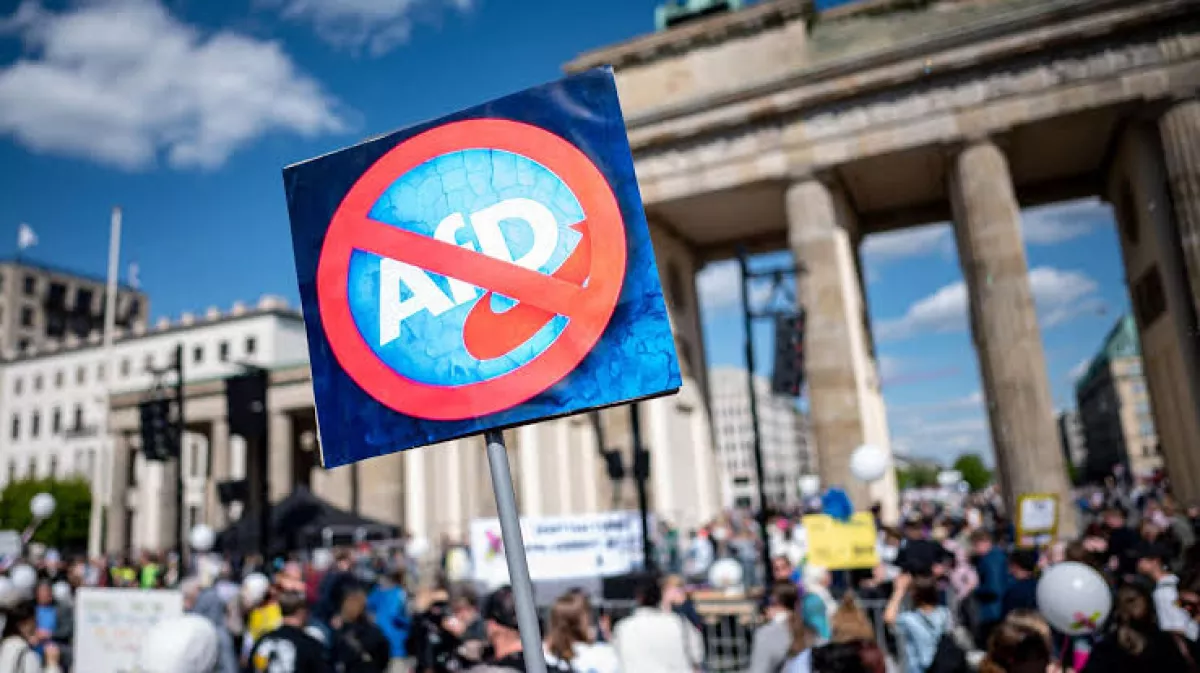
A questionable alternative
Germany is once again embroiled in controversy over the Alternative for Germany (AfD) party. A public petition has been launched on an online platform calling for the party to be banned.
Discussions about outlawing the AfD have been ongoing for years, accompanied by a series of political initiatives. In October 2025, the parliamentary groups of the Christian Democratic Union (CDU), the Greens, the Social Democratic Party (SPD), and the Free Democratic Party (FDP) in the Schleswig-Holstein state parliament introduced a proposal calling for a federal ban on the AfD. The SPD's Working Group on Migration and Diversity has also supported such a move.
The right-wing populists' main electoral asset—one that continues to attract growing support among German voters—is their anti-immigration and Islamophobic rhetoric, which nevertheless remains within the bounds of German law.
The latest wave of alarm among the political establishment has been driven primarily by the AfD's rapidly growing popularity. In just a few years, the party has evolved from a political fringe movement into one of the country's leading forces. Today, the AfD tops opinion polls with 27–29% support, widening its lead over the governing conservatives of the CDU, who are polling at 20–22%.
The petition calling for the ban of the far-right AfD has already gathered 1.3 million signatures. However, the authority to decide whether the party should be banned rests solely with Germany's Federal Constitutional Court.
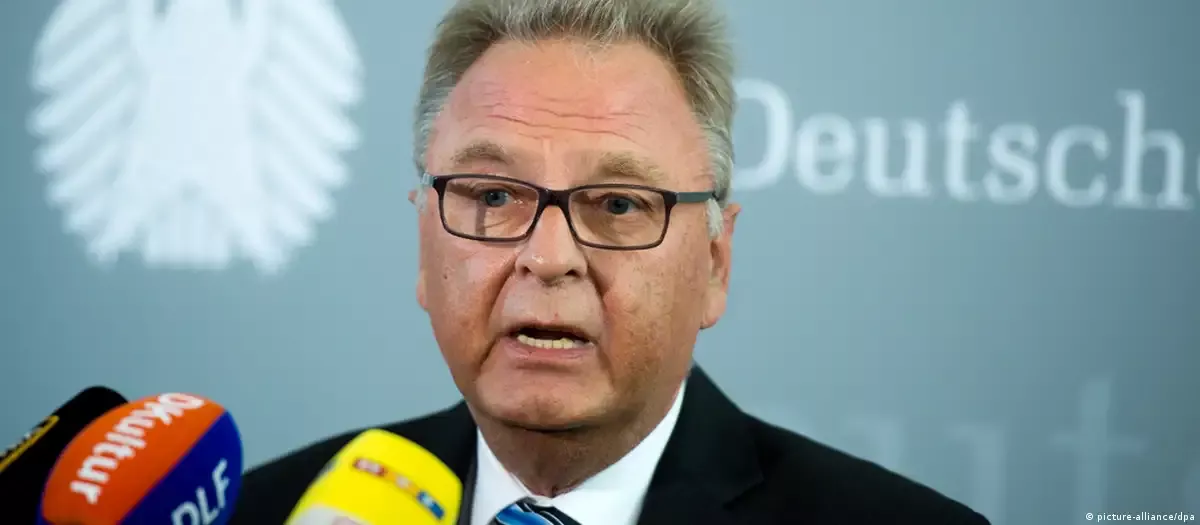
As early as January 2024, former President of the Federal Constitutional Court Hans-Jürgen Papier criticised attempts to ban the Alternative for Germany (AfD). He argued that such a move is difficult under current legislation: even the openly neo-Nazi National Democratic Party of Germany (NPD) was not successfully banned in the past and still exists today. According to him, the debate around a ban would only create an aura of “martyrdom” for the AfD.

Incidentally, at the time, the head of government from the CDU, Friedrich Merz, also did not support banning the parliamentary far-right party.
Civilised extremists?
Previously, the AfD was under observation by the Federal Office for the Protection of the Constitution (BfV) as a “confirmed extremist organisation.” However, a court in Cologne recently prohibited the German domestic intelligence service from classifying the AfD in this category.

At the same time, Interior Minister Alexander Dobrindt stated that he personally still considers the AfD a right-wing extremist party. In some federal states, the AfD remains classified as a “confirmed extremist organisation” (Saxony-Anhalt), while in others it is labelled a “suspected extremist organisation” (Mecklenburg-Western Pomerania).
Overall, the AfD seeks to maintain an image of “civilised” right-wing politics. Nevertheless, the party periodically finds itself at the centre of scandals due to links with openly radical figures.
In 2024, several AfD politicians were reported to have attended a meeting with right-wing extremists where a “master plan for remigration” was discussed, including proposals targeting German citizens with migrant backgrounds. Notably, the meeting—where deportations were discussed—was also attended by a member of the CDU and representatives of the ultra-conservative “Values Union,” which is close to the CDU.
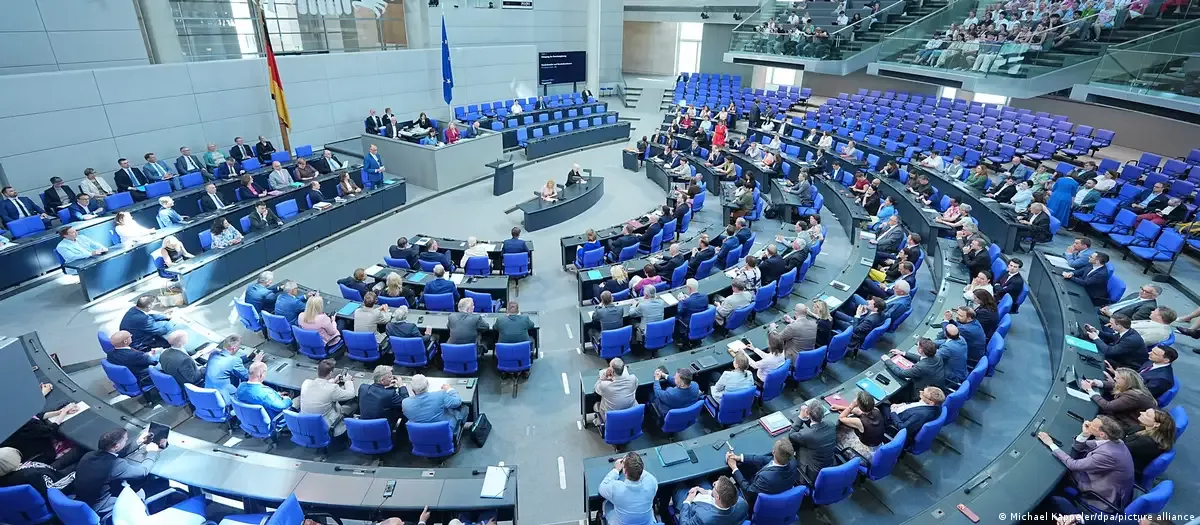
In order not to cede further ground to the Alternative for Germany (AfD), the ruling Christian Democratic Union (CDU) is itself beginning to move to the right. Otherwise, not only a significant part of the conservative electorate but also individual Christian Democratic politicians could follow the AfD. Recently, for example, a CDU deputy in the state of Mecklenburg-Western Pomerania has already switched to the Alternative for Germany.
The governing coalition has launched a campaign titled “Against Polarisation”. Officially, its goal is to neutralise political extremes. In practice, however, it is not about eliminating the underlying social causes of the crisis, but rather about partially adopting elements of the far-right opposition’s agenda.
As Interior Minister from the CSU, Alexander Dobrindt stated, the fight against polarisation means “bringing a significant majority back to the centre through sensible policies.” This includes, for example, abandoning the liberal migration policy associated with Angela Merkel, a process that German law enforcement authorities are already actively pursuing. The Interior Minister also stated that he intends to “reorganise migration” not only in Germany but across the EU as a whole.
This so-called “migration turn” resulted, among other things, in the adoption in February 2026 of a new Asylum Law. It represents the most significant tightening of refugee legislation in the past 30 years. At the same time, the right-leaning CDU was supported even by the traditional “defenders of migrants” from the Social Democratic Party (SPD). The German Interior Ministry, led by the conservative Dobrindt, is also pushing for the introduction of border controls on Germany’s frontiers with other EU states. Only recently, such measures would have been unthinkable for both CDU/CSU and SPD alike.
However, as can be seen, the tightening of migration policy has by no means increased the approval ratings of the ruling “black-red” coalition. The popularity of the Alternative for Germany (AfD) continues to grow. Clearly, the issue is not limited to refugees and labour migrants, which are the most visible trigger for the average German voter, but also reflects a deeper systemic crisis of the current neoliberal capitalist model.
To the benefit of the establishment, the AfD does not actually offer broader social support to large segments of the population. The party’s economic programme is in many respects similar to the liberal approaches of the ruling centre-right coalition and is oriented towards supporting big business rather than workers and those in need. At the same time, the “Alternative” intends to use even harsher methods to divert ordinary Germans’ attention away from social cuts, shifting focus onto migrants and the struggle against “enemies of the nation” both domestically and abroad.
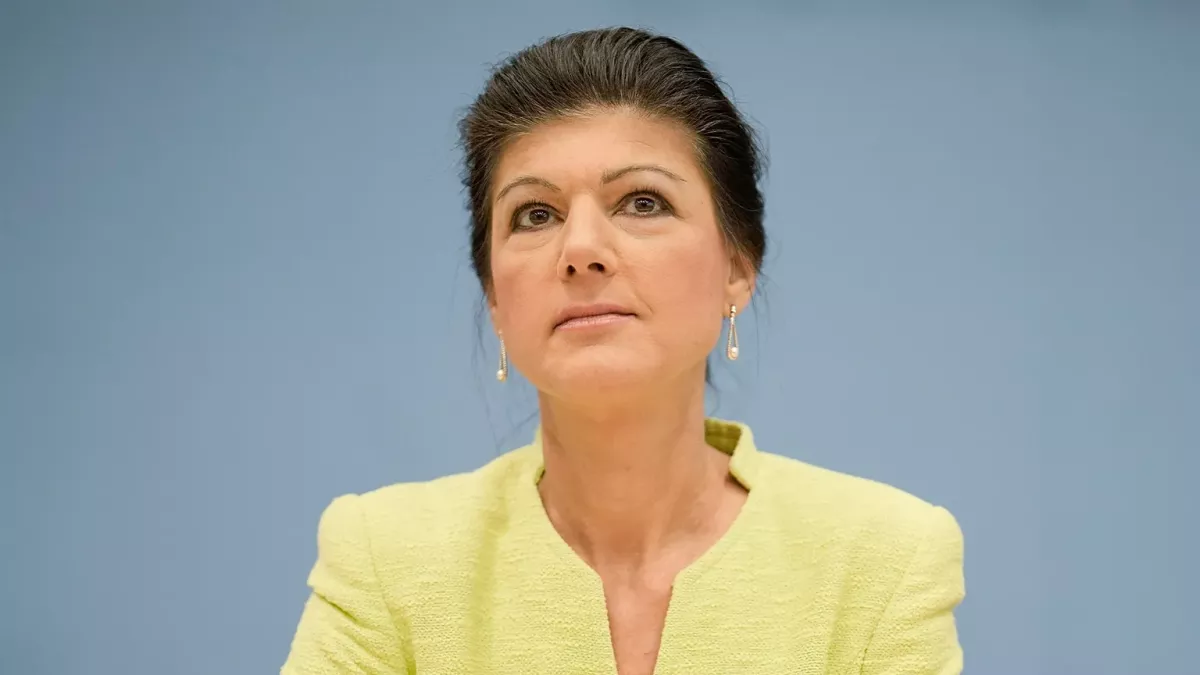
The German Interior Minister has also accused certain left-wing actors of “using AfD arguments.” The Left Party is engaged in an uncompromising struggle against right-wing extremism and its rhetoric. Therefore, the reference is likely to the left-populist party Alliance Sahra Wagenknecht. Wagenknecht broke away from The Left precisely due to disagreements over migration policy.
Today, Sahra Wagenknecht opposes a ban on the AfD and even proposes that the right-wing populists hold joint debates with her party during the election campaign.

On July 4 in Erfurt, an AfD conference took place, which political opponents sought to block. Peaceful protests were supported by the co-chair of the Alliance 90/The Greens, Felix Banaszak, who equated the AfD with National Socialists. He even stated that the far-right conference was not coincidentally scheduled for July 4, when the 2nd NSDAP party congress took place in Thuringia 100 years ago.
AfD supporters, in turn, accuse their opponents of “left-wing extremism” and of intending to use violence against political adversaries.
However, there is also a view that in the event of a ban on the parliamentary Alternative for Germany, the activity of more radical nationalist groups could increase. Against the backdrop of severe economic problems, far-right extremists are increasingly resorting to violence.
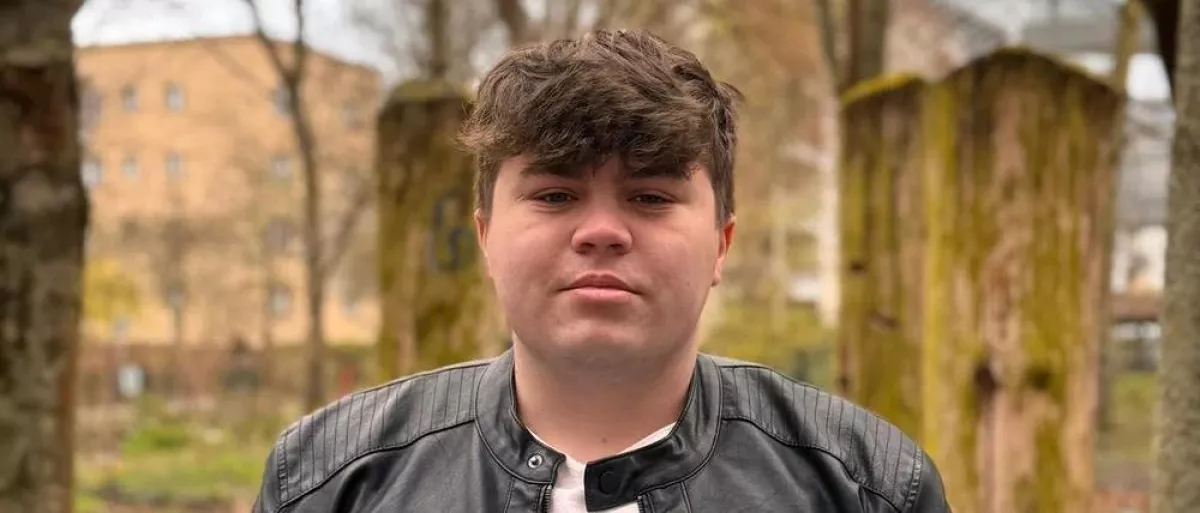
For example, on July 1 in Lichtenberg, an activist of the Left Party, Lasko Schleunung, was injured after being struck on the head with a bottle. He had previously been beaten and received death threats. In early July in Cottbus, far-right groups carried out two attacks using Molotov cocktails.
Police have opened a case on suspicion of attempted murder. In the spring, in the same city—which is considered one of the hotspots of right-wing radicalism in Brandenburg—neo-Nazis drew a swastika on a synagogue.
…
Today, the confrontation between Germany’s ruling political elite and the AfD is of a rather technical nature, regardless of the rhetoric about “defending democracy” used to frame it. Moreover, the current governing coalition itself is beginning to implement some proposals of right-wing populists in order to avoid transferring power to less predictable and less experienced politicians. Only in an extreme, “firefighting” scenario would the elites allow the far right to come to power, as has happened once before in history. For now, however, the threat of a ban and the accompanying noise around the Alternative for Germany serve as a convenient distraction from real social problems and effectively become a false “alternative” for ordinary German citizens.







 editor@caliber.az
 +994 55 444-88-98
 Азербайджан, Баку, ул. Низами, 203, Af Business House, 5-й этаж