










Hamas plays on Washington’s nerves The group rejects disarmament
Hamas will not lay down its weapons, will not relinquish control over the Gaza Strip, and will not allow external control over it, including by the International Stabilization Forces (ISF), the movement’s leader, Khaled Mashal, stated in a video address to the Istanbul conference “Pledge to Jerusalem”, held on December 6.
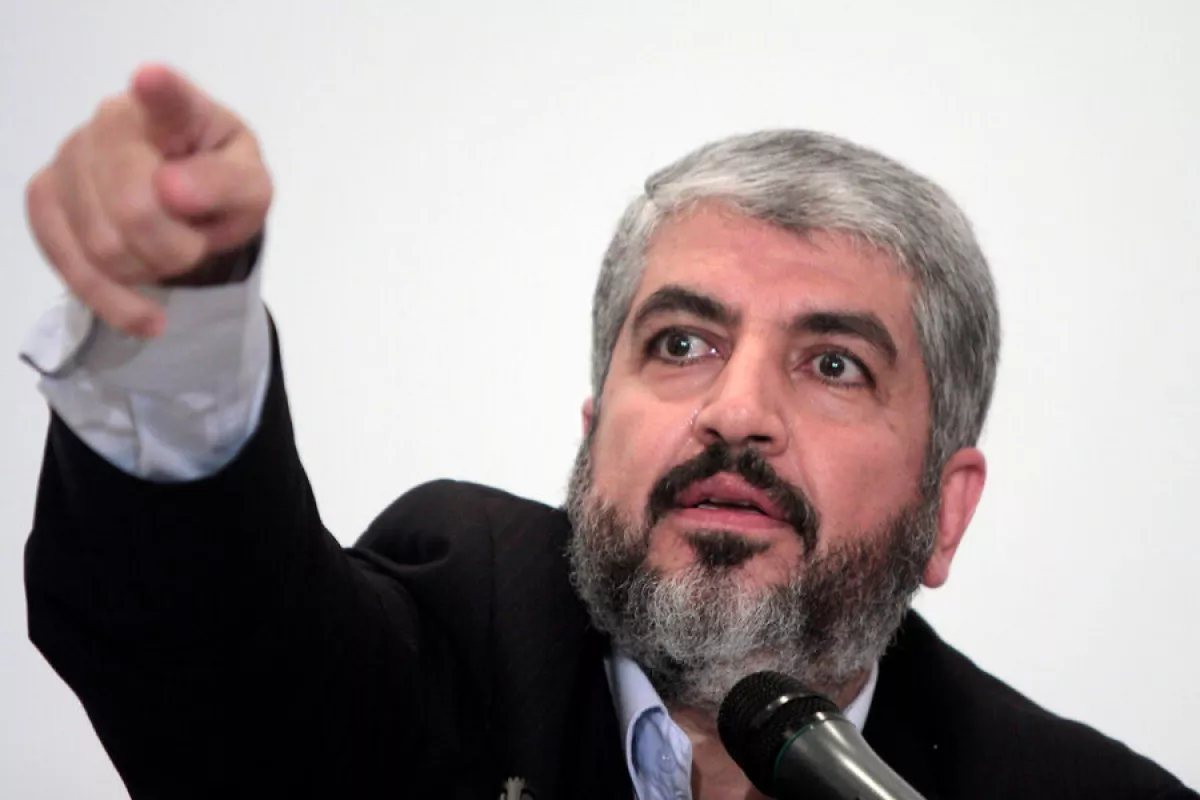
The Israeli Ministry of Foreign Affairs, which published the video of Mashal’s speech, sharply criticised his position, calling it a “direct contradiction of the core terms of the peace plan itself.” “Hamas is making a mockery of US President Donald Trump’s peace plan,” the ministry said.
Meanwhile, Hamas has allowed for the possibility of “freezing or storing” its arsenal to prevent further escalation, an official representative of the organisation, which still controls nearly half of the Gaza Strip, told the Associated Press.
Hamas leadership member Basem Naim clarified in comments to the Associated Press that the movement is ready to halt the use of weapons for the duration of a truce, but rejects the U.S. proposal to deploy international stabilisation forces in the Palestinian territories. According to him, Hamas is prepared to “freeze or store” its arsenal as part of a ceasefire agreement with Israel in order to “avoid further escalation”. He added that the group retains its “right to resist,” but is considering the laying down of arms as an element of a process aimed at establishing a Palestinian state.
“We can talk about freezing or storing or laying down, with the Palestinian guarantees, not to use it at all during this ceasefire time or truce. We are welcoming a U.N. force to be near the borders, supervising the ceasefire agreement, reporting about violations, preventing any kind of escalations," Naim said. "But we don’t accept that these forces have any kind of mandates authorizing them to do or to be implemented inside the Palestinian territories.”
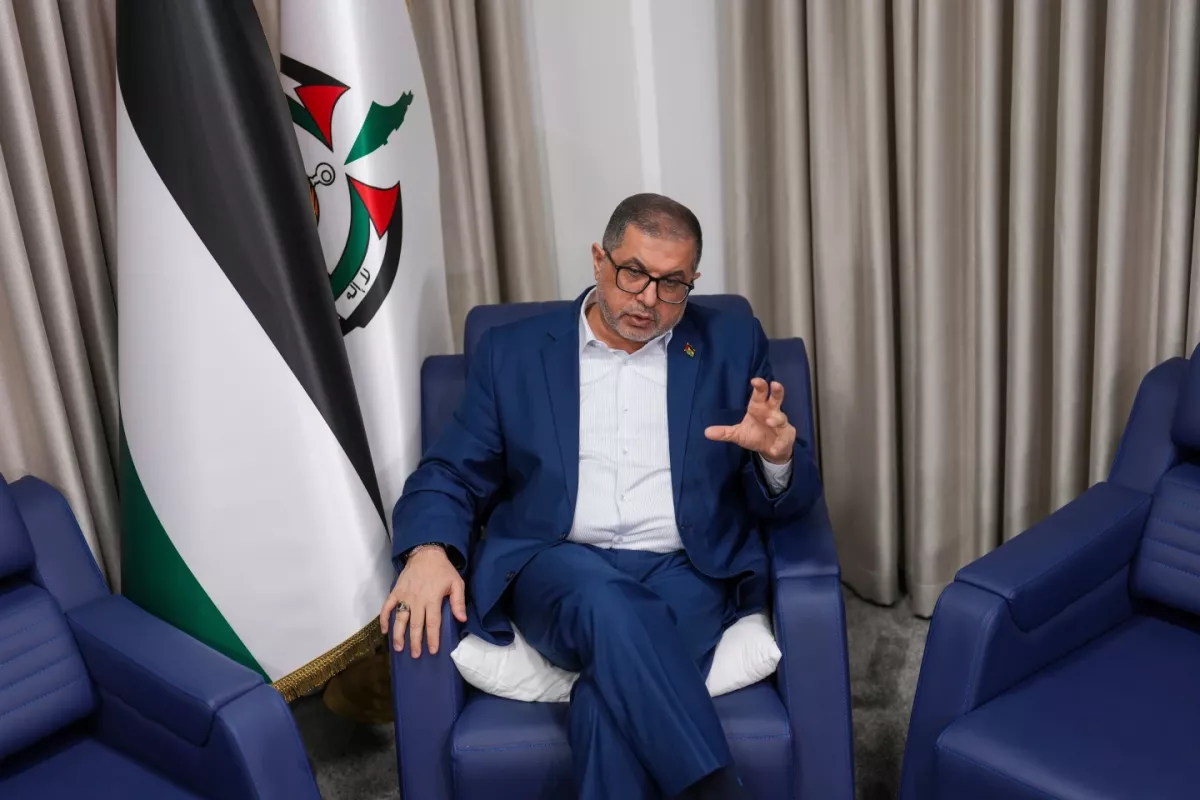
Naim also said that Hamas and the Palestinian Authority have made progress in establishing a technocratic committee to manage Gaza’s civil affairs. It is expected that this body will be headed by a minister originally from Gaza, and Hamas representatives have named him as Health Minister Majed Abu Ramadan.
Earlier, Israel stated that it would not allow the presence in Gaza of either Hamas or representatives of the security or administrative structures of the Palestinian Authority, which retains power in the Israeli-occupied West Bank.
Naim acknowledged that Palestinians had “paid a heavy price” for Hamas’s attack on Israel on October 7, but emphasized that the movement does not regret what happened. “History didn’t start on Oct. 7,” he said. “Oct. 7 for us, it was an act of defense. We have done our duty to raise … the voice of our people.”
Israel has occupied and blockaded the Palestinian territories since 1967, suppressing protests against the occupation. In 2005, Israeli troops withdrew from the Gaza Strip; however, the air, sea, and land blockade of the area remained in place. This meant full control over the flow of goods, severe restrictions on residents’ freedom of movement, a ban on sailing more than a few kilometres from the coast, and the complete absence of air connections between Gaza and the outside world. Under the blockade, which Egypt also joined, the unemployment rate reached 45%, according to the World Bank.
The West Bank of the Jordan River remains under Israeli occupation, where similar restrictions are in force. In addition, Palestinian territories in the West Bank are being actively settled by Israeli settlers, who often take control of water sources and other vital resources.
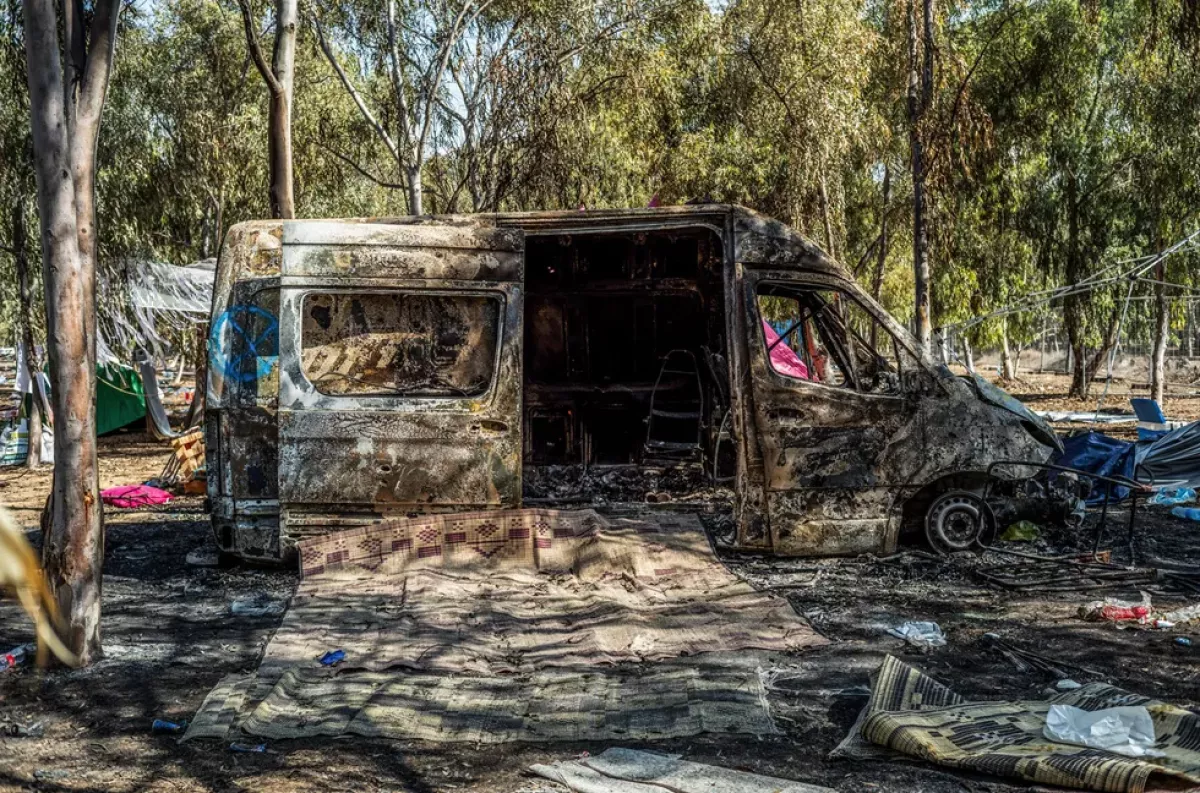
On October 7, 2023, fighters from Hamas’s elite Nukhba unit broke out of Gaza into Israel, seized the headquarters of a border division, killed, according to Israeli figures, about 300 military personnel, and also shot dead 800 civilians. A total of 251 people were taken hostage.
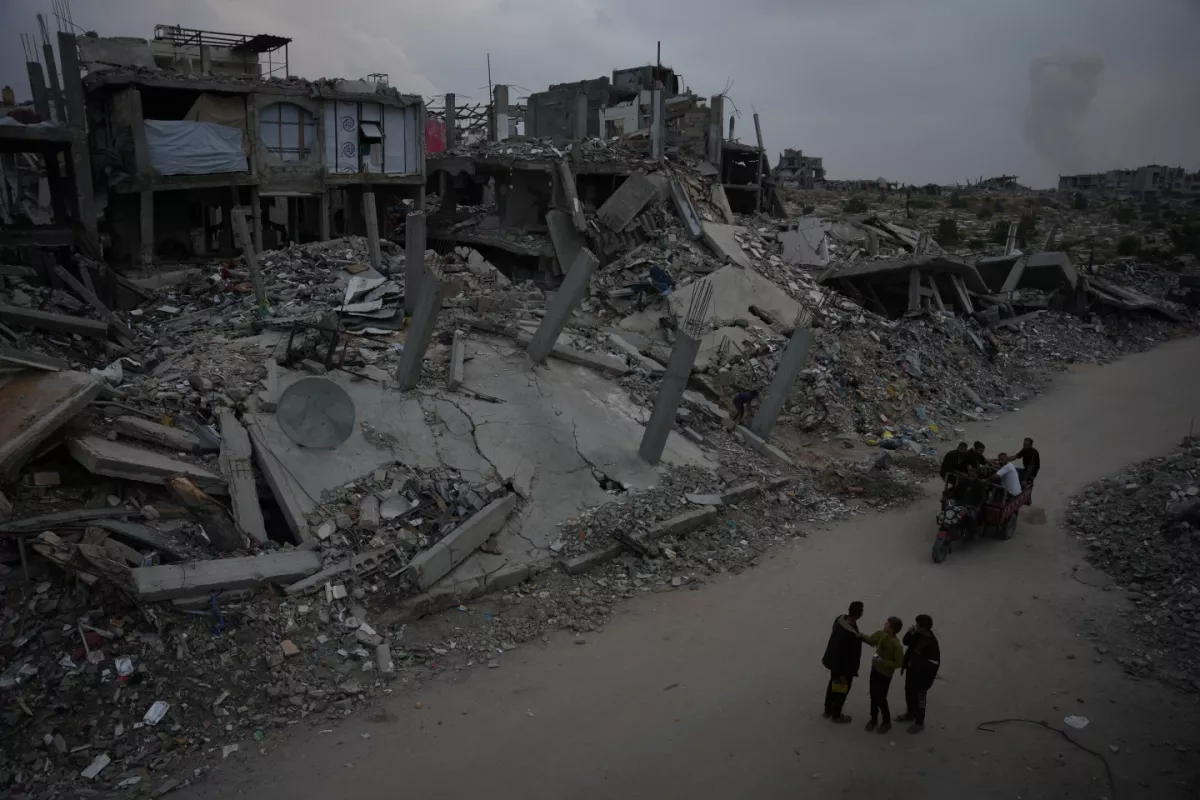
In response, Israel launched a large-scale military operation against Hamas. According to Gaza’s Ministry of Health, more than 70,000 people out of the enclave’s roughly two million residents were killed during the fighting, which lasted two years. Among the dead were both Hamas militants and civilians. The authorities in the enclave publish nominal lists of those killed, which ensures international confidence in these figures—just as there is trust in Israel’s data on its own losses.
On October 10, 2025, Israel and Hamas ceased hostilities under an agreement signed with U.S. mediation and pressure. On October 13, Hamas released the last 20 remaining living hostages. On the same day, the Israeli authorities released about 1,900 Palestinian prisoners, many of whom had been held without trial and were effectively also hostages.
At present, a formal truce brokered by U.S. President Donald Trump is in effect in Gaza. In practice, however, Israel continues to carry out strikes on the enclave, though with lower intensity than before October 10. For its part, Hamas periodically attacks Israeli armoured vehicles, using mobile units emerging from a network of underground tunnels. The IDF controls 53% of the territory of the enclave, while 47%, including Gaza City, remains under Hamas control. About 97% of the enclave’s population lives in the areas controlled by Hamas.
Trump’s plan provides for the disarmament of Hamas and the deployment of units of the ISF in Gaza, which are to monitor compliance with the ceasefire. It also includes the withdrawal of the Israeli army from the enclave and the formation in Gaza of a government of Palestinian technocrats not affiliated with either Hamas or the Palestinian Authority. This government would be responsible for the reconstruction of the Strip, most of whose infrastructure has been destroyed. Funding, according to the plan, would be provided by the wealthy monarchies of the Persian Gulf. The new governing body would be run by a Council subordinate to the Trump administration. Finally, if reforms are carried out in the Palestinian territories, this, in the U.S. view, could create conditions for the emergence of a Palestinian state.
That was the plan. And today, Hamas rejected it. But why has Hamas become so emboldened?
The reason is that part of the U.S. population and even some of the president’s fellow party members are expressing dissatisfaction with various aspects of his policy. Trump promised to curb rising prices and improve the state of the economy, but there have been no tangible results so far. Some Republican congressmen have announced their intention to leave Congress, which could theoretically lead to the loss of the Republican majority. Republicans have also lost a number of local elections to the Democrats. In short, troubling signals for the White House are multiplying.
Against this backdrop, the ceasefire in Gaza—however limited its outcome may be—remains one of Trump’s few achievements. Faced with Hamas’s refusal to comply with Washington’s and Tel Aviv’s demand for disarmament, the U.S. president could have given Israel the green light to resume large-scale hostilities. However, this would inevitably have led to a sharp rise in Palestinian casualties and would have triggered mass protests within the United States itself. In such a scenario, Trump would have lost a key foreign-policy trump card, which is critically important amid a general decline in public support.
This is apparently precisely what Hamas and the forces associated with it, including Lebanon’s Hezbollah, are counting on. Hezbollah also concluded a similar ceasefire agreement with Israel last autumn through U.S. mediation—and, like Hamas, refuses to disarm. All of them are part of the pro-Iranian “Axis of Resistance,” a coalition waging a struggle against Israel and the United States for influence in the Middle East. Hamas and the other members of the Axis proceed from the assumption that Trump will not risk reigniting a war in the region and will continue to restrain Israel from launching attacks on Gaza, Lebanon, and Iran.
Whether these calculations will be justified or prove to be a strategic mistake—only time will tell.







 editor@caliber.az
 +994 55 444-88-98
 Азербайджан, Баку, ул. Низами, 203, Af Business House, 5-й этаж