










How Azerbaijan is turning cotton into high-value products White gold revolution
Last year, Azerbaijan achieved record-breaking cotton harvests, with an average yield of 35.84 centners per hectare (c/ha) — the highest in the sector since the country regained its independence. In 2025, cotton fibre production rose by more than a third, while cotton yarn output increased by nearly a quarter.
These figures reflect a new trend in Azerbaijan’s agricultural sector: a gradual shift from exporting raw materials to processing cotton and producing finished goods. To support this transformation, Azerbaijan is actively cooperating with Uzbekistan, China, and Türkiye, seeking investments and modern technologies to boost raw cotton production and further develop the country’s value chain.
According to the State Program for the Development of Cotton Growing in Azerbaijan (2017–2022), approved eight years ago, raw cotton production was expected to reach 500,000 tonnes per year. Unfortunately, this target was not met by 2022. In recent years, Azerbaijani cotton farmers have faced significant challenges due to adverse climate conditions, including a severe shortage of fresh water for irrigation, especially during the summer months. Rising costs for field management also took a toll: fertiliser, pesticide, and fuel prices increased, while labour expenses grew.
According to the State Statistics Committee, 276,100 tonnes of raw cotton were harvested in 2023, marking a 14.4% decline compared to the previous year. In 2024, cotton was sown on roughly 100,000 hectares, but heavy rains during the harvest season—from late summer to early autumn—significantly reduced yields. Overall, in recent years, the average yield nationwide has remained around 28–30 centners per hectare.
Against this challenging backdrop, 2025 marked a significant breakthrough for Azerbaijan’s cotton sector. “Last year, over 360,000 tonnes of cotton were harvested, the highest figure in more than thirty years,” stated Tahir Rzayev, Chairman of the Committee on Agrarian Policy of the Milli Majlis, during a recent parliamentary session.
According to final data from the Ministry of Agriculture of Azerbaijan, 360,047 tonnes of high-quality raw cotton were harvested from just over 100,468 hectares of cotton plantations. The average yield reached 35.84 centners per hectare, the highest since Azerbaijan regained its independence.
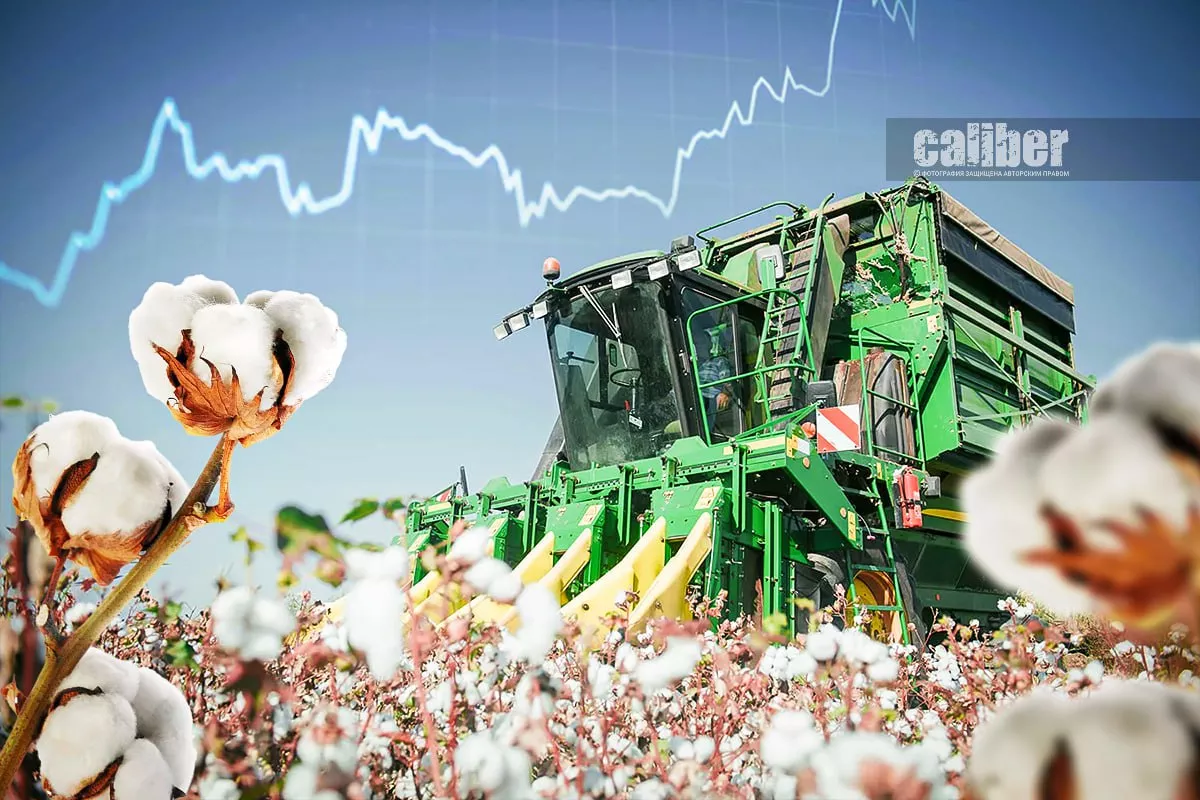
Favourable weather conditions played a key role in this record harvest: spring rains supported the vegetative growth of cotton crops, while a warm and generally dry autumn allowed the harvest to be gathered with minimal losses. Although irrigation remains challenging in the southern and central regions, the Ministry of Agriculture and the state leasing agency have actively implemented economical pilot irrigation systems in several agro-parks and large farms over the past few years, helping to address water shortages.
The use of modern harvesting combines has also increased significantly, alongside the introduction of high-yield American, Turkish, and Greek cotton varieties and advanced agronomic techniques.
In 2025, cotton was planted across 16 districts, but roughly 86,000 hectares were concentrated in nine key cotton-growing districts — Aghjabadi, Beylagan, Barda, Bilasuvar, Imishli, Neftchala, Saatli, Sabirabad, and Salyan — where modern agricultural technologies were primarily applied. These measures helped boost yields in leading farms and agro-parks in the country’s central regions. The highest average yield was recorded in Beylagan at 41.88 centners per hectare, while even the lowest yields in Saatli — 36.06 centners per hectare — remained well above the national average.
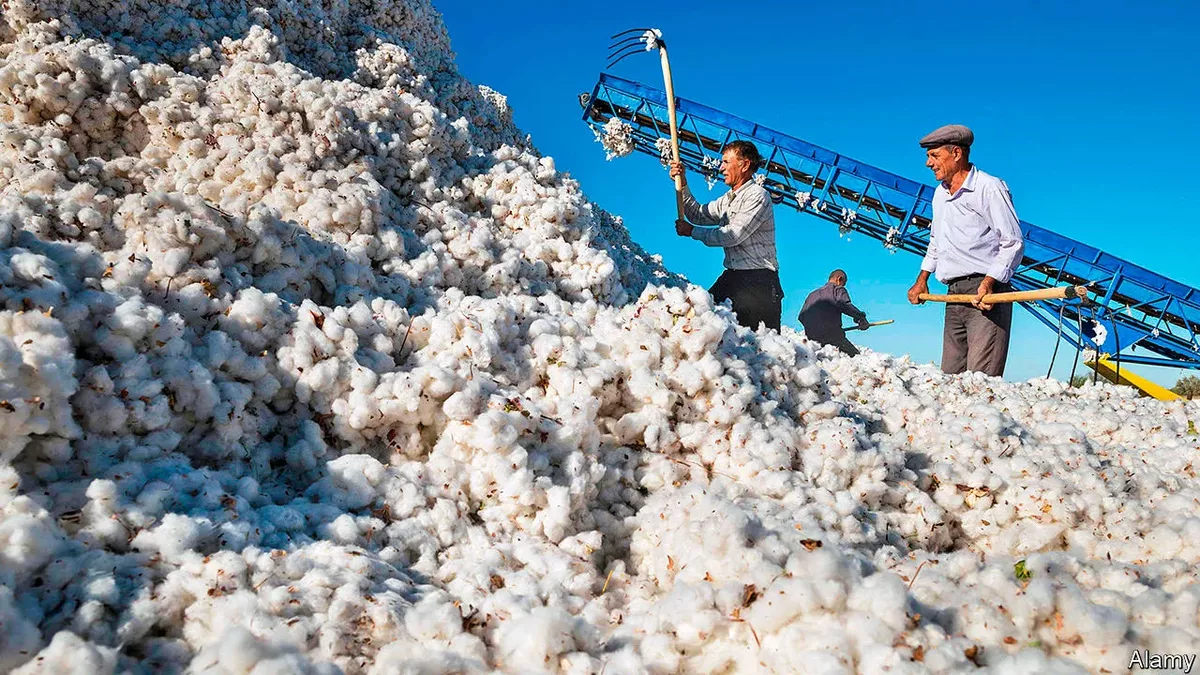
An important factor behind the sector’s improved performance is Azerbaijan’s contract-based system of cotton cultivation. Under this system, farmers enter into agreements with processing companies, which provide advance payments, seeds, fertilisers, agricultural machinery for soil preparation, agronomic services, and mechanised harvesting. In return, farmers commit to grow the crop and deliver it to the company’s collection point at a pre-agreed contract price.
Between 2021 and 2022, the purchase price for raw cotton was increased several times, and today it stands at 800 manats ($470) per tonne for first-grade cotton. While this system is less flexible than auction-based market sales, it eliminates financial risks for farmers during planting and guarantees a reliable market for their produce.
Cotton cultivation in Azerbaijan is also subsidised by the state. According to the Council on Agricultural Subsidies, in the 2025 fiscal year, farmers delivering cotton from plots equipped with modern irrigation systems received a subsidy of 210 manats ($123) per tonne, while plots irrigated by traditional methods received 195 manats ($115) per tonne. The Council has announced that in 2026, these payments will increase slightly: 215 manats ($126) per tonne for plots with efficient irrigation and 200 manats ($117) per tonne for plots without.
The Ministry of Agriculture and other relevant authorities are focused on consolidating this year’s achievements and further increasing raw cotton production. Unlike previous years, the key driver of the sector is no longer external raw material markets, but the domestic processing cluster, designed to produce high value-added products for export.
This trend is reflected in the statistics. According to the State Customs Committee, between January and November 2025, over 105,980 tonnes of cotton fibre were exported from Azerbaijan, generating $151.101 million, an 11.1% decline. However, this drop in fibre exports does not indicate a reduction in the production of processed cotton goods. In fact, raw cotton production in 2025 reached nearly 96,965 tonnes, a 32.6% increase.
Moreover, data from the State Statistics Committee show that between January and November 2025, 76,860 tonnes of cotton fibre were produced domestically, up 34%, while 19,740 tonnes of cotton yarn were manufactured, 23% higher than two years earlier.
Thus, processing is not only maintaining its pace but actually growing, although the direction of sales is shifting, as cotton fibre and yarn are increasingly in demand on the domestic market for fabric production and garment manufacturing. This internal demand is met by textile enterprises in Sumgayit and Mingachevir, garment factories in Baku and the Saatli district, as well as smaller sewing workshops in Ganja, Yevlakh, Lankaran, Bilasuvar, Lachin, and Khankendi.
Moreover, in recent years, Azerbaijan has been attracting business from China, Uzbekistan, Türkiye, and Pakistan into its domestic spinning, textile, and garment industries, including agro-industrial clusters being developed in the Karabakh region and the industrial zone of the Alat Free Economic Zone.
The Azerbaijan–Uzbekistan business track has been particularly effective. In July 2024, Azerbaijani company TST Textile Group and Uzbek company Tukımachı Sanoat Tekstıl signed a contract to cultivate cotton in the Imishli Agro-Park and produce cottonseed oil. Overall, between 2025 and 2029, the Uzbek investor plans to invest 92.5 million manats ($54.4 million) in building facilities for yarn, textile, and garment production in the Mingachevir Industrial Park. In addition, a large garment factory in Khankendi, built by Uzbek investors, currently employs over 200 people.
Meanwhile, Chinese business circles are participating in the modernisation of Azerbaijan’s cotton sector: in the Ujar district and at the Shirvan experimental station, Chinese innovations have been introduced, including high-efficiency cotton cultivation methods, and Chinese investment in the textile industry is also expected.
Through the efforts of the Turkish–Azerbaijani Businessmen and Industrialists Association (TÜİB), a textile sector project has been developed, which is expected to create 5,000 to 10,000 jobs in the Karabakh region as part of the development of the textile industry. The Turkish company Koçaklar Textil is also planning to build textile factories in Sumgayit Chemical Industrial Park (SCHIP) in partnership with Azerbaijani enterprises.
In this way, the domestic cotton sector is being reoriented towards producing higher value-added products, which over time are expected to replace raw material exports and account for the “lion’s share” of the country’s cotton-related exports.







 editor@caliber.az
 +994 55 444-88-98
 Азербайджан, Баку, ул. Низами, 203, Af Business House, 5-й этаж