










If NATO no longer exists Imagining a post-Alliance world
World events that stir the imagination increasingly justify the use of artistic fiction in political analysis. Let us imagine that growing U.S. claims over Greenland lead to the collapse of NATO. What consequences would such a turn of events have?
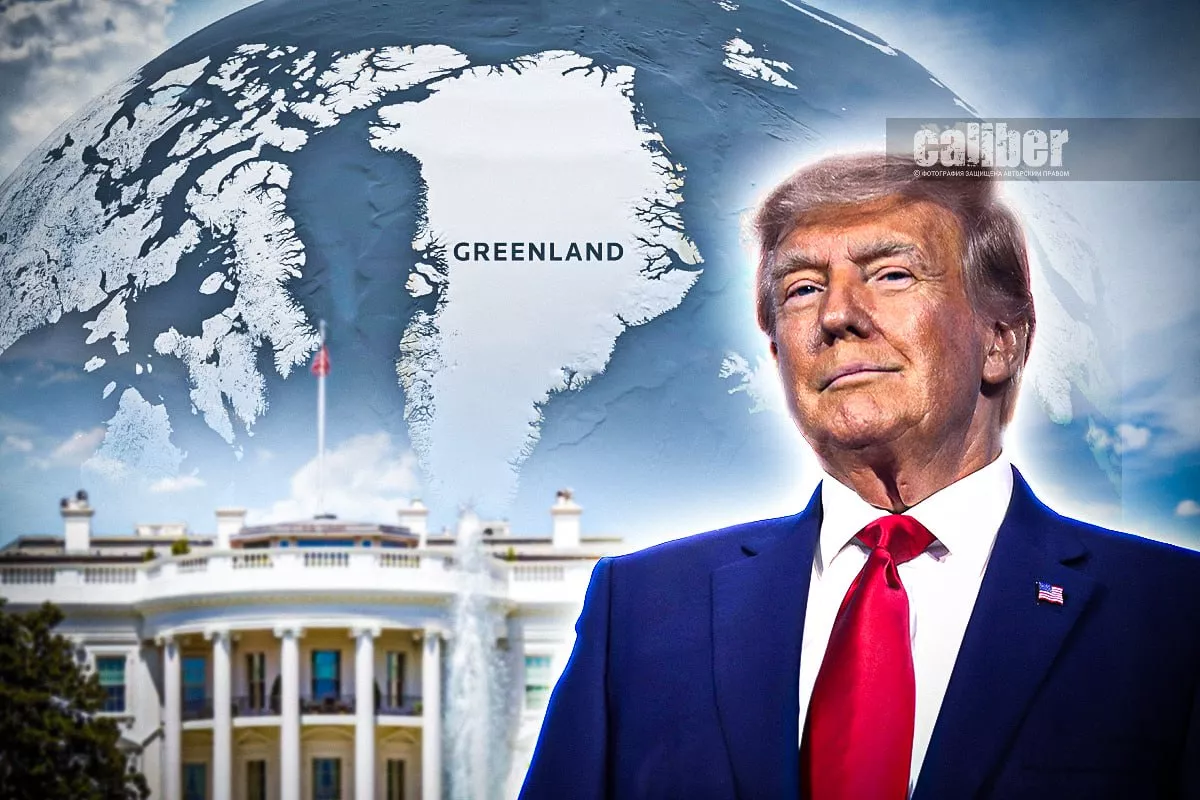
In an era when what seemed impossible just yesterday is now unfolding in real time, new analytical genres are gaining traction among experts. Rather than relying on dry texts with rigid formulations (although, regrettably, analytical rigour itself has long become a global luxury), political analysts are increasingly turning to freer, more literary forms to comprehend and articulate reality. In some cases, this literary turn makes their work resemble fantasy — or “speculative fiction,” as prominent American foreign policy expert Jeremy Shapiro described his recent article in Foreign Affairs.
In his piece titled “How Greenland Falls: Imagining a Bloodless Trump Takeover,” Shapiro uses literary devices to outline one possible trajectory of the international situation surrounding Greenland. In this scenario, by early 2028, the United States establishes control over Greenland “less by force than by function, through investments, contractors, and legal ambiguities.”
Such “speculative fiction” is probably not to everyone’s taste. Human consciousness, in general, feels more comfortable imagining the future not as a revolutionary break from the present, but as a gradual adaptation of it. This tendency is typical even among political analysts and scholars (after all, they are human too). Hence the widespread inclination, even among professional forecasters, to base their expectations of the future on an extrapolation of the dominant trends of the here and now.
In most circumstances, such extrapolation ultimately produces reasonably sound results. Today, however, as a system of international relations undergoing profound transformation is rocked by turbulence and driven toward extremes, “most circumstances” are increasingly rare. We are living through exceptional times, defined by extraordinary events and historical processes. Accordingly, they can — and should — be understood through unconventional lenses as well, including that of “speculative fiction.” It is no accident that similar genres have long been employed as analytical instruments in the field of strategic foresight.
We, too, will draw on elements of “speculative fiction” to explore possible scenarios that are now being discussed with growing frequency by European and American policymakers. Any resemblance to reality, as the saying goes, is purely coincidental.
Let us imagine: NATO no longer exists
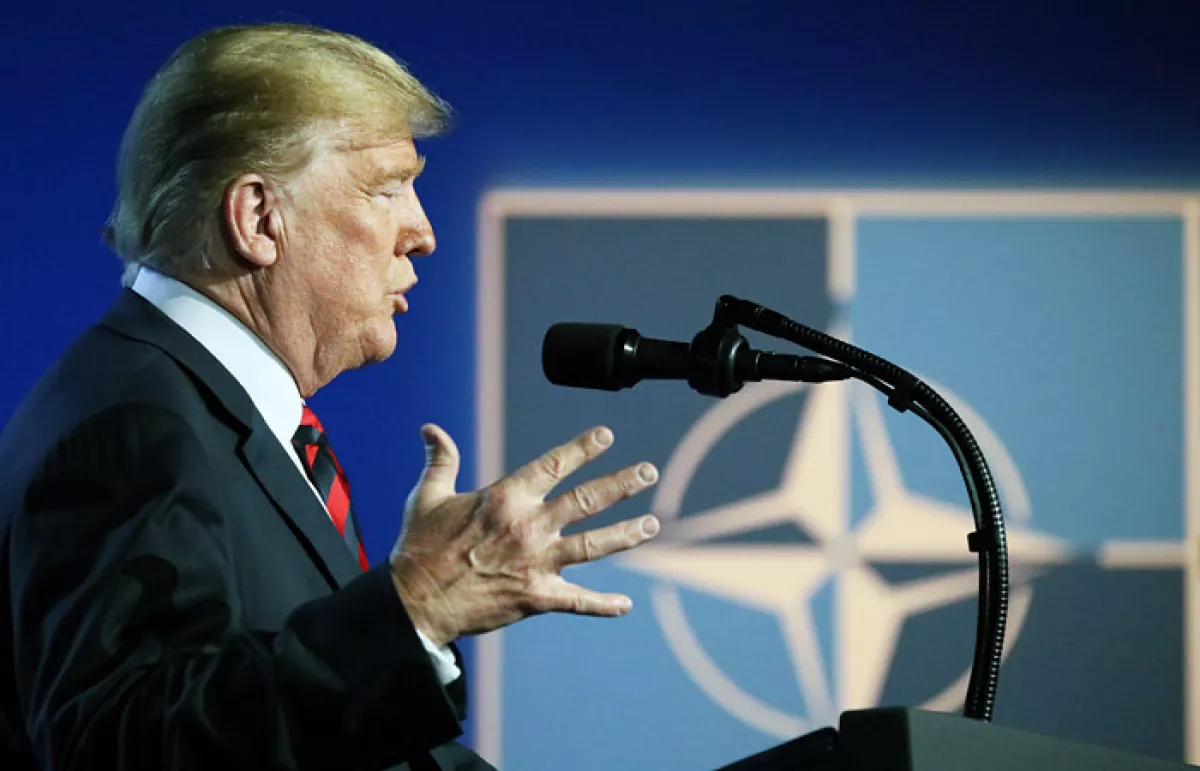
Against the backdrop of the Trump administration’s claims over Greenland, the argument is now being voiced increasingly loudly that any use of force by Washington against a territory under Danish sovereignty would spell the end of the North Atlantic Alliance. As EU Commissioner for Defence Andrius Kubilius and Danish Prime Minister Mette Frederiksen have put it, a military intervention by the United States would bring NATO to a complete standstill.
It is difficult to disagree with this assessment. Both the United States and Denmark are members of NATO — arguably the most well-known and successful military alliance in history. Such alliances are created to enhance the defence and security of their members in the face of shared external threats. Put simply, they exist in opposition to states or blocs of states perceived by the allies as threats to their security. And the more powerful and tangible the external threat, the more tightly allies tend to rally around one another, finding stronger incentives to expand and deepen their cooperation.
If members of a military alliance come to regard one another as security threats, the alliance is effectively finished. Under such conditions, the very notion of collective security becomes untenable, as genuine cooperation is no longer possible — particularly at the scale and intensity of military-political coordination in which NATO has traditionally taken pride.
To be sure, serious internal disagreements within NATO are not unprecedented. Over its nearly 77-year history, the Alliance has weathered numerous crises and internal rifts. Yet direct military confrontation between member states — culminating in the annexation by one of them of another’s territory — would represent a truly unprecedented development. Moreover, this would not involve just any two of NATO’s 32 members: one of the states drawn into such a conflict would be system-defining for the Alliance as a whole.
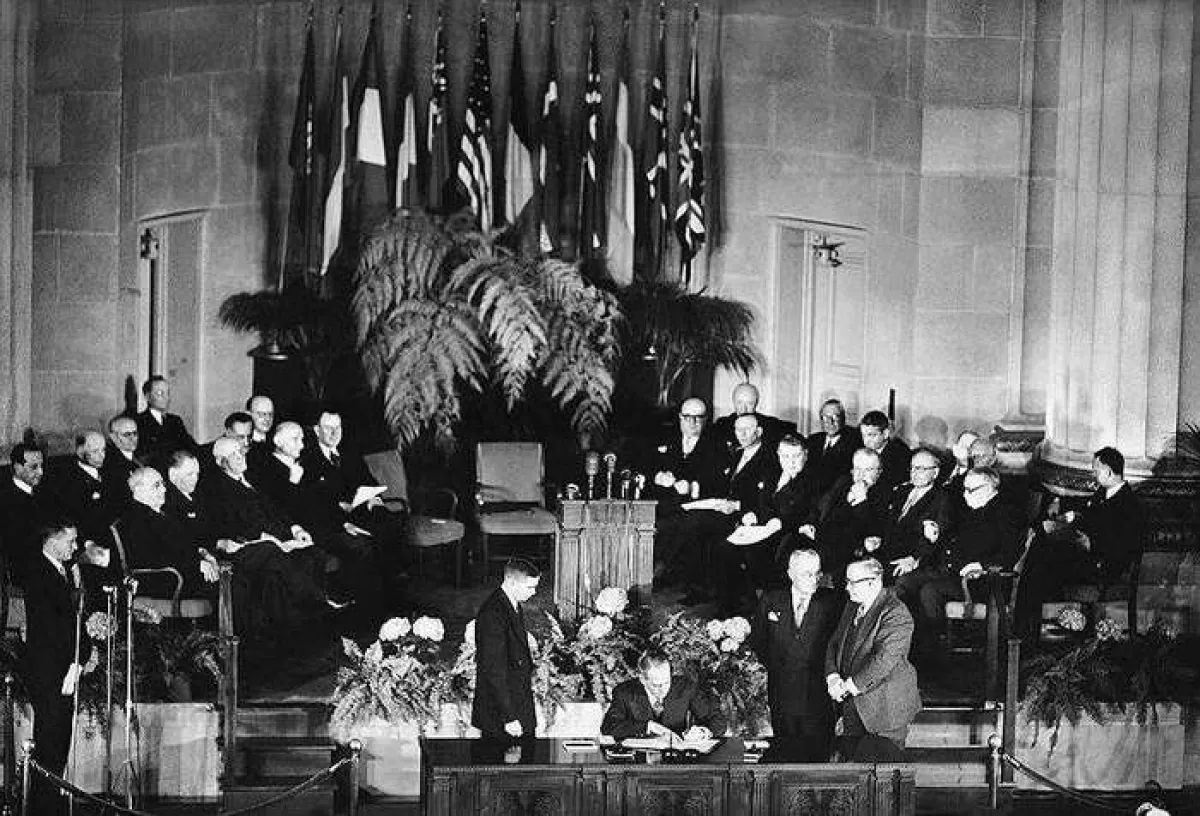
To put it somewhat simplistically, NATO has, in essence, depended on the United States politically — and even more so militarily — since its founding in 1949.
Given these circumstances, the collapse of NATO as a result of escalating confrontation between the U.S. and Denmark (which, at least publicly, enjoys the support of nearly all other member states) does not seem like an entirely far-fetched scenario. One can imagine it without resorting to “speculative fiction.” And that is exactly what we will do. Let us suppose that by the end of 2026, tensions and conflicts have escalated to the point where the North Atlantic Alliance is no longer able to fulfil its founding functions.
We will set aside the finer details for now and focus on the broader picture: NATO no longer exists. The Alliance has ceased to exist as a geopolitical reality. For some in the world, this would spark unbounded euphoria; for others, it would trigger mourning and apprehension of even greater upheavals. But what would such a turn of events mean in practical terms? What consequences could we already begin to anticipate today?
The rise of European strategic autonomy?
Europe would undoubtedly be the first to feel the repercussions of NATO’s collapse. For the continent, it would shatter the deeply ingrained sense of stability and normalcy in both regional and global security. The very notion of a “rules-based international order,” so frequently invoked by Western politicians, would effectively cease to exist.
NATO’s European members would lose not only the institutions and legal frameworks underpinning their collective defence, but — most importantly — the protective American security umbrella.
This vacuum would create a powerful new impetus for closer military cooperation across Europe, primarily within the framework of the European Union. France and several other EU capitals would speak with renewed urgency about the vital need for European strategic autonomy. And, for tangible reasons, the prospects of moving this agenda beyond mere political slogans toward actionable policy would be significantly higher.
For some European countries that had previously been sceptical of the idea, the incentives would suddenly become far more compelling. They would come to see that Washington was no longer the primary guarantor of their security. Beyond that, in certain European capitals, the United States itself might begin to be regarded as a potential — or even real — threat.
This would drive many countries to explore informal counterbalancing coalitions aimed at minimising their vulnerability to Washington. In this process, the mental maps, political habits, and ingrained assumptions about Europe’s natural place in the world — held by both elites and broader populations — would undergo profound shifts.
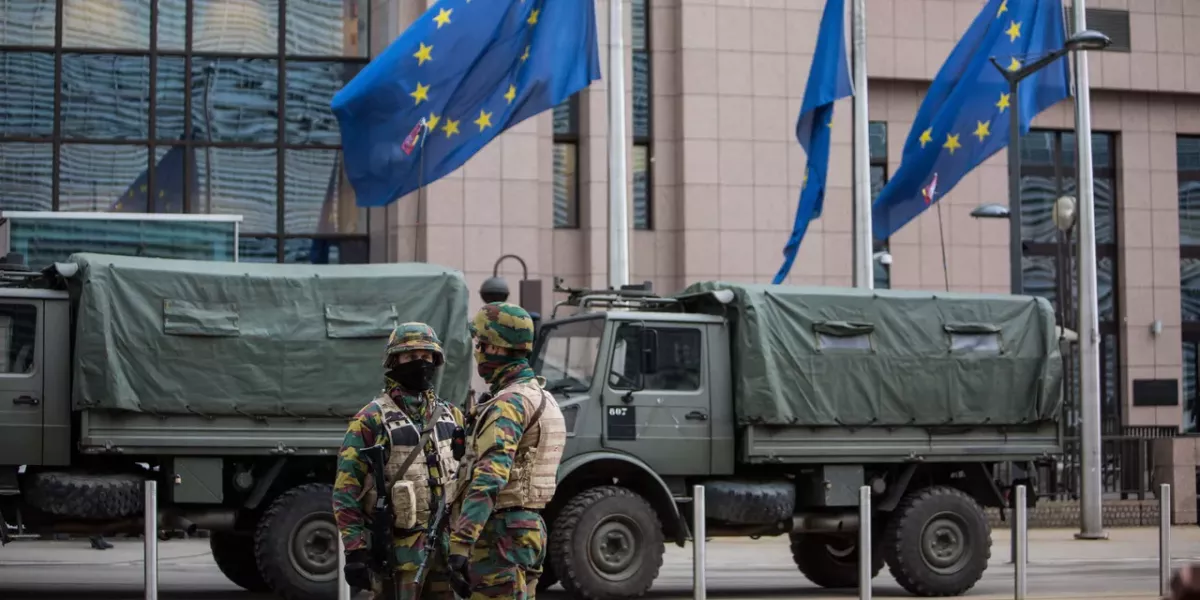
Yet would these shifts and motivations be sufficient to allow European strategic autonomy to fully take root, or to replace NATO with a fully institutionalised system of European defence? The answer is decidedly no. Europe remains burdened with deep structural contradictions, subjective disagreements, and persistent mutual distrust, all of which sharply limit the prospects for a truly autonomous European defence project.
The value of the large-scale American military and political presence in Europe after World War II was not limited to the security umbrella it provided against external threats. Perhaps even more important was its role in neutralising tensions among the Europeans themselves. And if this stabilising factor were to disappear, the sharpness of intra-European contradictions would inevitably reemerge — especially in light of the uncertainty and nonlinearity generated by the ongoing transformative processes throughout the international system.
This does not mean that defence and defence-industrial cooperation within the EU—or in broader European coalitions—would have no prospects in the event of NATO’s collapse. There are prospects, and in certain areas they even appear promising. But there is no realistic possibility of replacing NATO with a fully integrated European collective defence framework based on strategic autonomy. Even if NATO were to disappear, such a purely European structure would remain unattainable for the same reasons that past attempts—such as creating a fully operational Western European Union—failed. The principal obstacle remains intra-European contradictions: the incompatibility of many interests and the mutual distrust that intensifies during times of crisis.
Are the U.S. leaving Europe?
Without NATO and the American presence at its core, any new momentum toward European defence autonomy would likely yield progress only in limited sectors of military and defence-industrial cooperation. Even if some European states begin to perceive the United States as a potential source of threat, others would continue to prioritise security through engagement with Washington. For these countries, cooperation with the U.S. would remain far more consequential than alliances with European neighbours.
Therefore, there is little reason to anticipate a breakthrough in establishing a pan-European defence architecture. In the absence of NATO, many European states would rely on bilateral security arrangements, which they perceive as more concrete and effective than any new multilateral framework. Consequently, the main European outcome of NATO’s collapse would not be strategic autonomy or unity based on it, but rather the fragmentation of what NATO had previously held together.
The United States would likely reinforce this dynamic itself. Despite the stated and logically understandable shift of American military focus from Europe to the Asia-Pacific, no administration — whether Trump’s or its successors — intends to abandon Europe outright. In the context of evolving U.S. strategic priorities and intensifying competition with China, it is crucial not to confuse a rational effort to enhance geopolitical efficiency and reduce costs with a retreat from European interests.
Should NATO cease to exist, Washington would have even greater incentive to safeguard its key interests and positions in Europe while shedding peripheral obligations. This strategy would be pursued primarily through the prioritisation and deepening of bilateral relationships with select European states.
At the same time, Washington’s ability to incorporate Europeans — whether collectively or as individual states — into its designs for countering China would be diminished without NATO. In recent years, this dimension has been integrated into the Alliance’s official documents and discourse, though it was largely absent before. Notably, China was mentioned in NATO’s Strategic Concept for the first time only in 2022, immediately labelled as a “systemic challenge.”
If the Alliance ceases to exist, the concerns expressed by member-state leaders at that time — that “The People’s Republic of China’s (PRC) stated ambitions and coercive policies challenge our interests, security and values” — would begin to resonate differently across various parts of Europe, taking on diverse shades depending on local perspectives.
Western-Russian relations
The collapse of NATO would, of course, have profound implications for Western-Russian relations. Much of what has occurred within NATO — both in reality and in our “speculative fiction” scenario — has been possible precisely because Moscow has ceased to serve as a genuinely unifying threat for the Alliance.
For this reason, attempts by many European states to reboot NATO in the twenty-first century along its traditional anti-Russian, military-political lines were unrealistic from the outset. Although the war in Ukraine has indeed revived old fears of Russian expansionism in many EU countries — and the seriousness of these fears should not be underestimated — the geopolitical realities of today remain markedly different from those of the Cold War era.
Without NATO, consensus in the West on the level and nature of the Russian threat would diminish even further. Divergences would be evident not only between the United States and the EU, but within Europe itself. The aforementioned fragmentation of the European security space would quickly manifest both in overall policy toward Moscow and in concrete military planning.
But would Europe be calmer or safer after NATO’s collapse? Highly unlikely. Military-political confrontation between a smaller, ad hoc group of European states and Russia would likely be far more unpredictable — and therefore more dangerous — than a confrontation along the established NATO-Russia framework.







 editor@caliber.az
 +994 55 444-88-98
 Азербайджан, Баку, ул. Низами, 203, Af Business House, 5-й этаж