










Iran’s low-altitude trap Jaljaleh as a response to technological lag
Over the past six months, Iran has been undergoing a period of military re-evaluation — an inevitable process following any major setback on the battlefield. The June war with Israel became a deeply painful lesson for Tehran, demonstrating just how difficult it is to fight while relying on outdated concepts. Twelve days of fighting revealed the extent to which Iranian weaponry is powerless against Israel’s advanced technological capabilities. It is precisely this sobering experience that has pushed the Islamic Republic to reconsider its entire approach to defence, rather than merely increasing the quantity of familiar armaments.

One of the outcomes of this reassessment is the Jaljaleh aerial mine. At first glance, it may seem like yet another experimental device, but there is already a growing sense that this is not a one-off attempt but a new concept for ultra-low-altitude defence. The system is designed to intercept targets flying at altitudes of up to 350 metres: this includes low-flying ground-attack aircraft, helicopters, UAVs, and even loitering munitions. It is intended to operate in a range that has proven highly vulnerable not only for Iran. Below 350 metres, traditional air-defence systems lose effectiveness, allowing the enemy to bypass radar coverage, manoeuvre through terrain folds, and deliver precision strikes.
Jaljaleh emerges as a more affordable and flexible way to close this gap. For drones flying at altitudes of 50–150 metres, such mini air-defence systems become a real threat. Similarly, helicopters forced to descend for landing or to carry out combat tasks risk entering the mine’s engagement zone.
For Iran — a country whose territory includes vast stretches of deserts and semi-deserts — this approach is especially practical. The mine can be deployed in areas where positioning full-scale batteries is difficult, dangerous, or economically unjustified. It functions as a concealed barrier, creating a hazardous aerial corridor over a designated zone. If the enemy attempts to use low altitude to bypass air-defence systems, they risk encountering a dense network of such munitions. This gives defenders an element of surprise and reduces the need for expensive missiles or complex technical systems.
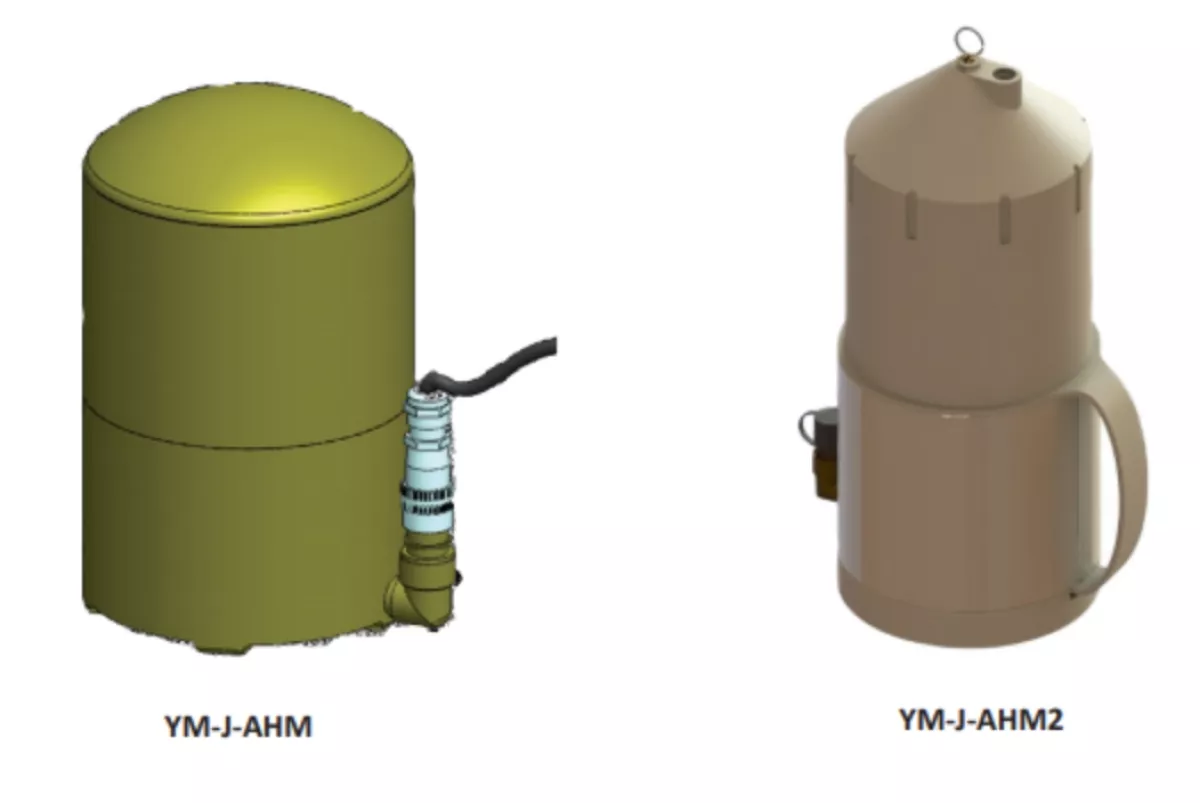
The Jaljaleh concept did not emerge from nothing. In 2024, the Islamic Revolutionary Guard Corps demonstrated a new type of jumping mine. At the time, it was noted that the mine could engage targets at a distance of around 300 metres and accelerated to nearly 2,000 metres per second in its terminal phase. Iran had also previously developed YM-J-AHM series mines, designed to disrupt amphibious landings and counter low-flying targets. The new system expands these capabilities. Its maximum ascent reaches 350 metres, and the lethal radius of each submunition is roughly fifteen metres.
The Iranian side has not disclosed the design of the fragmentation elements. Such secrecy, however, is typical of Iran’s defence industry, which often conceals even basic specifications to complicate external assessments of its capabilities and vulnerabilities.
At the same time, the target-recognition system raises many questions. It remains unclear how the mine determines that the object in front of it is an enemy platform. Unofficial sources mention laser sensors that detect movement and transmit a signal to the warhead. What remains unknown is how reliably such a system can operate without the risk of accidental activation — a critically important factor if these mines are to be considered as an export product.
It is reasonable to assume that they could be purchased by Russia to counter UAV threats both along the front line and around strategic facilities (oil refineries, hydroelectric plants, etc.) deep in the rear. Deploying mines around strategic sites appears cheaper and simpler than building a fully layered air-defence system at every vulnerable location. This could strengthen the protection of oil refineries, power stations, logistics hubs, and other sites that have become increasingly exposed due to the expanding capabilities of drones.

However, a potential buyer must be confident that the system does not pose a threat to its own aerial assets. Iran will need to provide a reliable identification method; otherwise, potential clients are unlikely to adopt such a weapon.
The very publication of information about Jaljaleh in the media was hardly accidental. Iran rarely showcases its developments at an early stage. Displaying such a weapon could be an attempt to attract the attention of potential buyers and build the country’s image as a provider of affordable yet technologically advanced solutions. In today’s international environment, systems like these are valuable not only for states engaged in conflicts but also for countries seeking to establish additional defensive layers against potential future threats.
As we can see, Iran is betting on asymmetric systems that can influence the course of a conflict not through quantity, but through novel approaches. Yet Jaljaleh is not a revolutionary weapon. It will not alter the balance of power in the region. However, it may become an element that strengthens Iran’s defensive capabilities while simultaneously opening new export opportunities.
In an era when drones have become a primary tool of pressure, any development that complicates an adversary’s operations in the air acquires particular value. Iran is attempting to occupy this niche, and its first steps suggest that this strategy may be more carefully considered than it initially appears.







 editor@caliber.az
 +994 55 444-88-98
 Азербайджан, Баку, ул. Низами, 203, Af Business House, 5-й этаж