










Migration, radicalism and the rise of antisemitism in Germany Expert opinions on Caliber.Az
The number of antisemitic incidents in Germany remains at a record high. This is stated in the annual report of the Federal Association of Departments for Research and Information on Antisemitism (RIAS).
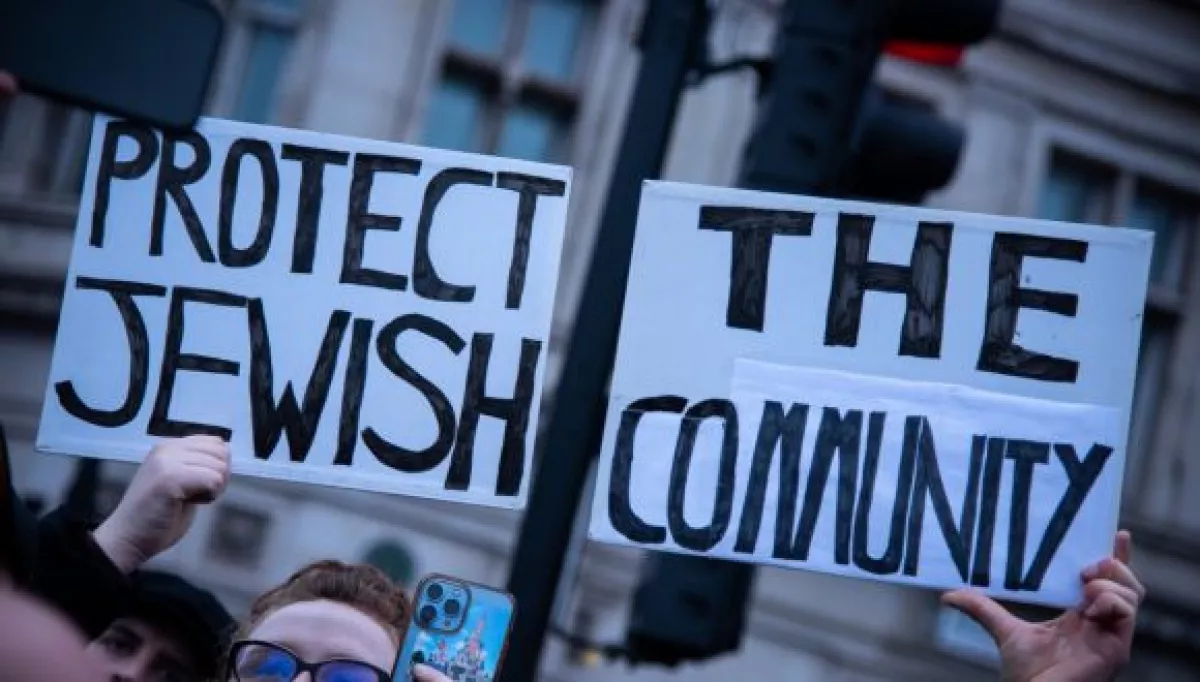
According to the report by RIAS, in 2025, a total of 8,725 antisemitic incidents were recorded in Germany, averaging 24 cases per day. The figure slightly exceeds the 2024 level, when 8,627 incidents were registered, and is almost twice as high as in 2023. For comparison, 1,957 such cases were recorded in 2020. This is the highest level since systematic monitoring began in 2018.
As noted in the report, the level of antisemitism has remained consistently high since October 2023, when the war in Gaza began. At the same time, 68% of all documented cases are linked to Israel. Over the year, 178 attacks, 257 threats, and four cases of extreme violence were recorded, including a terrorist attack on Berlin’s Memorial to the Murdered Jews of Europe.
According to RIAS, many incidents occurred in everyday life, with victims often targeted and accused of the actions of the Israeli government. In Kehl, for example, four members of the Jewish community were insulted and spat on near a synagogue, while in Hesse, a rabbi was pushed in a supermarket in front of his children and had his phone taken away.
RIAS also reported a sharp increase in online aggression. More than a quarter of all incidents took place on the internet, and 43% of documented threats, including death threats, were posted online.
The report notes that antisemitic incidents committed by right-wing extremists reached a record level of 807 cases. These include Holocaust glorification, the spread of conspiracy theories, and calls for violence against Jews.
As stated by the Federal Government Commissioner for Jewish Life in Germany, Felix Klein, “the RIAS annual report shows that antisemitism appears to be on the rise in Germany without any sign of slowing down.”
What explains this significant rise in antisemitic sentiment in Germany? What factors have contributed to the deterioration in attitudes toward the Jewish community? Is it possible to reverse this trend?
These questions were commented on for Caliber.Az by well-known foreign political analysts.

Analyst, publisher, and editor-in-chief of the magazine Neue Zeiten and the YouTube channel Neue Zeiten TV (Germany), Alexander Cherkassky, noted that following the events of October 7, 2023, antisemitism has risen sharply across the Western world and beyond, which has been reflected in an increase in aggressive actions against Jewish communities in Germany and other countries.
“In my view, there are several reasons for this. There is a targeted propaganda campaign carried out by a number of organisations which, I believe, are funded by states such as Qatar. This is part of a broader strategy to spread the ideology of the Muslim Brotherhood worldwide. Protest actions held in Germany and other countries, according to several experts, were directly supported financially and organisationally by structures linked to Qatar,” the expert stated.
He further argued that part of the European and global left-wing political spectrum is involved in this process, as the developments fit into a so-called anti-colonial discourse, within which Jews are portrayed as “white colonisers.”
“At the same time, longstanding centuries-old antisemitism also plays a role. It is precisely the combination of these factors that has led to the surge in antisemitic sentiment we are witnessing today. Traditional right-wing antisemitism has also not disappeared.
Currently, the greatest threat to Jewish communities comes from Islamists and their left-wing ideological allies.
As for solutions to the problem, they remain the same — work in the media space and effective counter-propaganda,” Cherkassky concluded.

Israeli analyst and journalist, host of the Telegram channel “Kolya Khadashot,” Mikhail Gurevich, notes that German police, unfortunately, do not provide detailed statistics on who exactly commits antisemitic crimes.
“However, there is some data available on ideological views and citizenship. If we speak about citizenship, the vast majority are holders of German passports, although many of them are children of migrants and second-generation residents born already in Germany. If we look at the ideological component, the picture is different.
Some incidents are linked to right-wing radicalism and classical antisemitism, which most often manifests itself in graffiti and online publications. Left-wing radicalism, in turn, is closely connected to Middle Eastern issues and is mainly expressed during protest actions. In addition, there is everyday antisemitism, often accompanied by physical violence — attacks on rabbis, knocking off kippahs, and similar acts.
It appears that many of those who commit such actions associate their hatred of Jews with the Middle East conflict and attitudes toward the State of Israel. In most cases, this involves migrants from Türkiye and Middle Eastern countries. Developments in the region have only intensified such sentiments.
Unfortunately, many migrants arriving from the Middle East do not understand that they are leaving societies that have experienced serious difficulties due to wars, internal conflicts, and economic problems. Instead, some believe their countries prospered before the arrival of Western colonisers who allegedly destroyed this order. As a result, they come to the West with the belief that they are owed some form of compensation for historical events. In this context, antisemitism is often not perceived as something unacceptable.
To a large extent, they justify it through Israel’s actions, drawing parallels with European policies in the Middle East. In this way, antisemitic views are legitimised and reproduced in new environments.
It should also be noted that German law enforcement authorities do not respond sufficiently effectively to cases of radical propaganda in certain mosques. This is one of the differences between Germany and some Islamic countries, whose authorities consider excessive radicalism a threat to national security. In Germany, Islam is often treated in the same way as Christianity or Judaism: if the state does not control sermons in churches, why should it do so in mosques?” the expert explained.

He added that, as a result, various Islamist groups gain additional influence, which contributes to a further rise in antisemitism.
“Therefore, the claim that this is solely about Germans’ attitude toward the Jewish community would only be partially correct. The current surge in antisemitism, observed not only in Germany, has led to a situation where, for many people, these views are gradually ceasing to be a social taboo. Conspiracy theories are increasingly being perceived as almost official explanations of historical processes.
Can this trend be reversed? Yes, it can. But it depends both on Israel and on the countries where these processes are taking place.
Joint efforts are needed. Perhaps there are certain questions for Israel as well—for example, regarding the need to explain its actions or due to the harsh statements of individual politicians. However, it is difficult to imagine that the statements of politicians from other states would automatically shape attitudes toward an entire people. Unfortunately, in the case of Israel, this is what happens.
It is necessary to explain to migrants and refugees from Middle Eastern countries that the reasons for their relocation to Germany are not only external circumstances but also problems within their own societies, including the prevalence of antisemitic views.
It is also necessary to work with religious institutions and take into account the specifics of each situation, without applying a one-size-fits-all approach. There are special state structures for this purpose.
Otherwise, the danger will not be limited to the Jewish community alone. History has repeatedly shown that when a country begins to persecute Jews, it is often a sign of deeper societal problems and a warning signal for the future,” Gurevich concluded.







 editor@caliber.az
 +994 55 444-88-98
 Азербайджан, Баку, ул. Низами, 203, Af Business House, 5-й этаж