










Peace talk or political posturing? The controversial picks of Armenia’s ruling party
Recently, the leadership of Armenia’s ruling Civil Contract party made a highly controversial decision by approving the inclusion of Andranik Kocharyan, Chairman of the Standing Parliamentary Committee on Defence and Security, and Sasun Mikaelyan, the leader of the terrorist organisation Yerkrapah, on its electoral list for the 2026 parliamentary elections.
This move clearly goes beyond a routine internal party decision. Coming against the backdrop of official Yerevan’s repeated declarations about a “new era of peace”, its stated recognition of Azerbaijan’s territorial integrity, and its proclaimed readiness to sign a comprehensive peace agreement, the decision appears—at the very least—deeply contradictory. To understand why, one needs only recall the political and ideological backgrounds of the individuals in question.
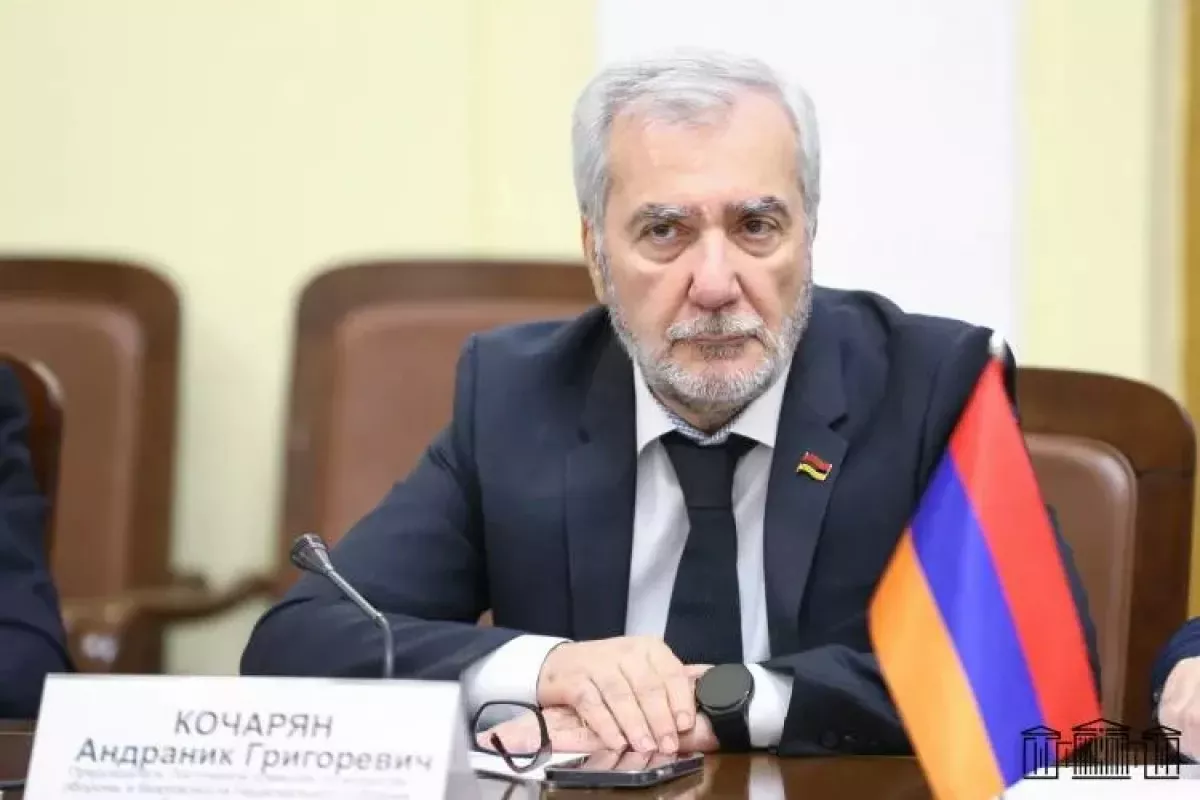
So, let us begin with Andranik Kocharyan. He is not merely a member of parliament, but the chairman of the Standing Parliamentary Committee on Defence and Security, and therefore directly influences the formation of Armenia’s military and political discourse. For this reason, his public statements carry particular weight.
In April last year, Kocharyan spoke of the need to “clarify and record the names of all victims of the Armenian genocide in the Ottoman Empire”, once again reviving a mythologised narrative that has long served as an instrument of political pressure and historical revisionism. At the same time, he presents himself as a supporter of the normalisation of relations between Armenia and Türkiye and the opening of the land border.
This inevitably raises a legitimate question: Is genuine reconciliation possible while simultaneously promoting an overtly confrontational historical narrative?
Equally revealing is another of his statements—this time directed at Azerbaijan. In a last year’s interview with the Armenian service of Radio Free Europe/Radio Liberty, Kocharyan claimed that Baku must first prove that “peace prevails over its objectives” before Armenian Foreign Minister Ararat Mirzoyan participates in COP29. The very idea that Azerbaijan “owes” anyone anything in establishing peace in the region is not only provocative but outright absurd.
It is worth recalling some obvious facts. It was not Azerbaijan that occupied the territories of a neighbouring state for nearly three decades. It was not Azerbaijan that reduced towns and villages to ruins. It was not Azerbaijan that subjected cities to rocket attacks during the 44-day war, resulting in civilian deaths and injuries. All these crimes were committed by Armenia, which makes Kocharyan’s lecturing tone, at the very least, hypocritical.
In this light, Kocharyan exemplifies a recurring pattern within the new Armenian political elite—publicly speaking of peace while remaining, at heart, bound by old myths and revanchist impulses.
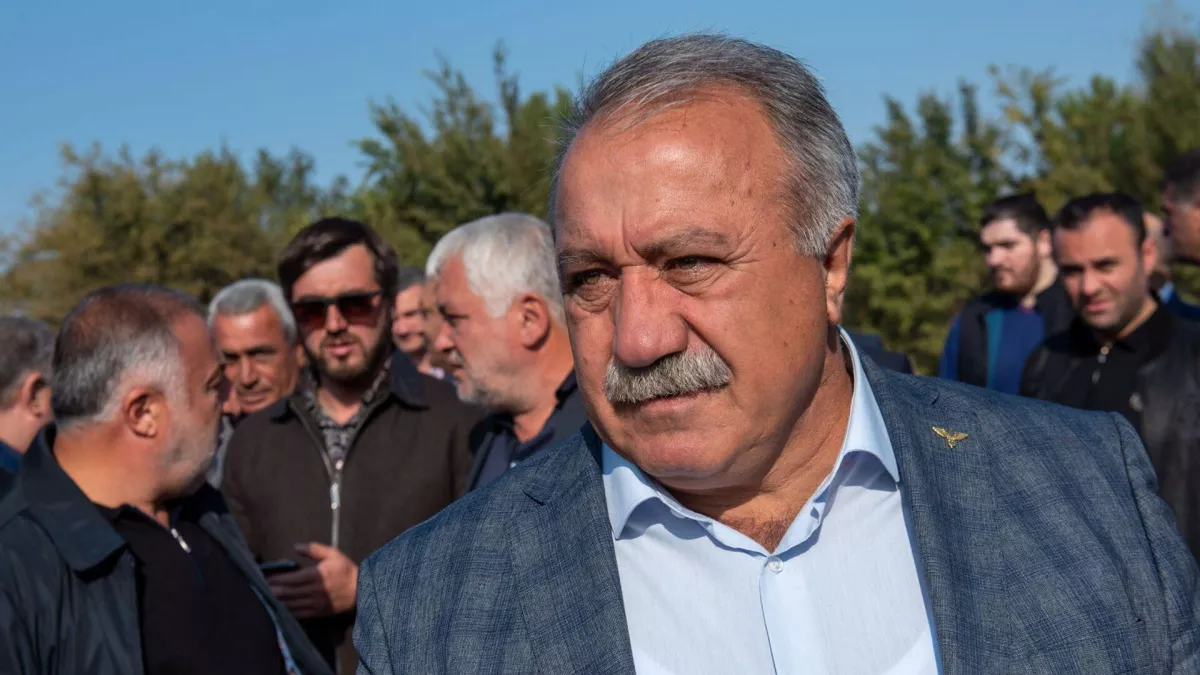
Even more controversial is the inclusion of Sasun Mikaelyan in the Civil Contract list—an active member of parliament and head of the organisation Yerkrapah, a structure openly rooted in militarist and terrorist ideology.
Yerkrapah was established in the early 1990s as an association of participants in the war against Azerbaijan and, for many years, was regarded as the “personal army” of Vazgen Sargsyan. Following his assassination in a 1999 parliamentary terrorist attack, the organisation was led by Manvel Grigoryan—an infamous figure in Armenian history, widely seen as a symbol of corruption and moral decay. He openly admitted that for years he had kept an Azerbaijani boy in slavery. This alone illustrates the “value system” that Yerkrapah has historically fostered and continues to represent.
Notably, Sasun Mikaelyan himself, a veteran of the First Karabakh War, has repeatedly demonstrated an aggressive stance. In 2023, he stated that “Shusha must be liberated not in words, but in action.” This statement came after the Second Karabakh War, at a time when the region was gradually entering a phase of post-conflict settlement.
Since then, much has changed. Azerbaijan conducted a brilliant one-day counter-terrorist operation in Karabakh, fully restoring its sovereignty and territorial integrity. Armenian illegal armed formations were disarmed, and the separatist project was definitively ended. Moreover, Nikol Pashinyan publicly acknowledged the new realities and repeatedly emphasised the urgent need to sign a peace agreement.
However, current personnel decisions reveal that revanchist and radical sentiments remain strong within the ruling elite. In this context, the inclusion of Andranik Kocharyan and Sasun Mikaelyan on the Civil Contract electoral list is neither accidental nor a mere technical step. It serves as an indicator that official Yerevan finds it easier to speak of peace than to consistently abandon a confrontational ideology.







 editor@caliber.az
 +994 55 444-88-98
 Азербайджан, Баку, ул. Низами, 203, Af Business House, 5-й этаж