










Sovereignty as strategy: Aliyev’s messages from Shusha
The city of Shusha, liberated from occupation and now proudly flying the Azerbaijani flag, has once again become a venue where not only assessments of current developments were voiced, but also a strategic vision for the region’s future was articulated. The 4th Global Media Forum, held on July 13–14, reaffirmed the special status of Azerbaijan’s cultural jewel as a political and intellectual platform.
President of Azerbaijan Ilham Aliyev’s address at the Shusha Global Media Forum, along with his detailed answers to participants’ questions, once again underscored an undeniable fact: official Baku is not merely responding to ongoing changes, but is consistently—and at times preemptively—shaping its own long-term agenda. The central message delivered by the Azerbaijani leader in Shusha crystallized into a clear conclusion: following Azerbaijan’s victory in the Patriotic War of autumn 2020, the region entered a fundamentally new stage of development. The political configuration that had defined relations in the South Caucasus for decades has become a thing of the past. The OSCE Minsk Group is no more, the old perceptions and stereotypes about Azerbaijan have faded, the key regional actors have changed, and so too have the rules of the game. Today, new realities have taken shape in the region, based not only on international law as codified in legal texts, but also on the indisputable principle of territorial integrity and recognition of the actual balance of power.
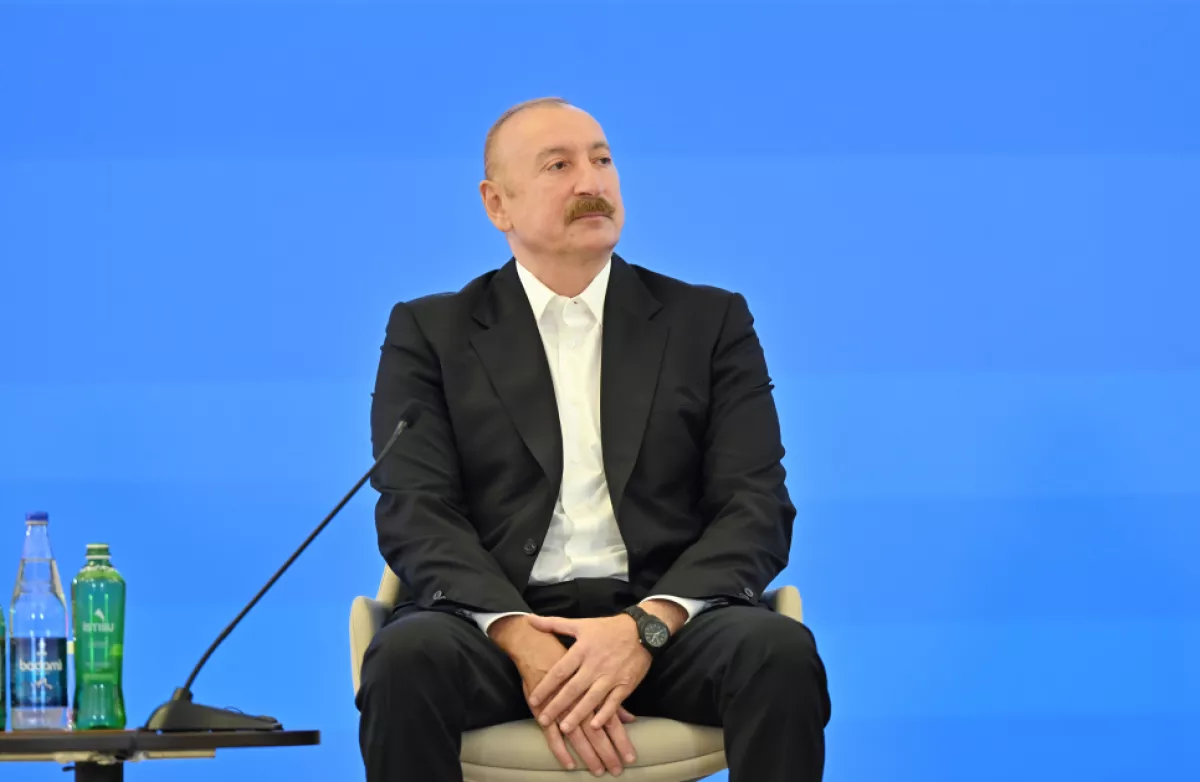
This is precisely why President Aliyev's remarks should be viewed in a much broader context than that of conventional textbook theories. They are neither an emotional reaction to current events nor an attempt at political polemics. Rather, they represent the articulation of a strategic concept that the Azerbaijani state has been consistently implementing for many years—calmly, confidently, and without resorting to strident ideological slogans.
In recent years, virtually all regional and global players have, in one way or another, adjusted their approaches to the South Caucasus. Armenia is no exception, as evidenced by the outcome of the country's most recent parliamentary elections, in which the majority of voters rejected revanchism and cast their ballots in favor of peace.
Yet there are still forces that continue to view the region through the prism of perceptions formed several decades ago. It was precisely to them that an important message from Shusha was addressed: any attempt to build a modern policy on outdated geopolitical frameworks is destined to fail.
Over the past decades, Azerbaijan has succeeded in building one of the most balanced systems of international relations across the post-Soviet space. Baku has effectively developed cooperation with its brotherly ally Türkiye, the European Union, the countries of Central Asia, the Turkic and Islamic worlds, China, the United States, and many other partners, without seeking to pit one center of power against another. The Azerbaijani state has always placed—and continues to place—one overriding criterion above all else: the country's national interests. It is precisely this pragmatic, flexible, and at the same time resolute policy that has enabled Azerbaijan to navigate the most complex geopolitical crises of recent decades without suffering strategic setbacks.
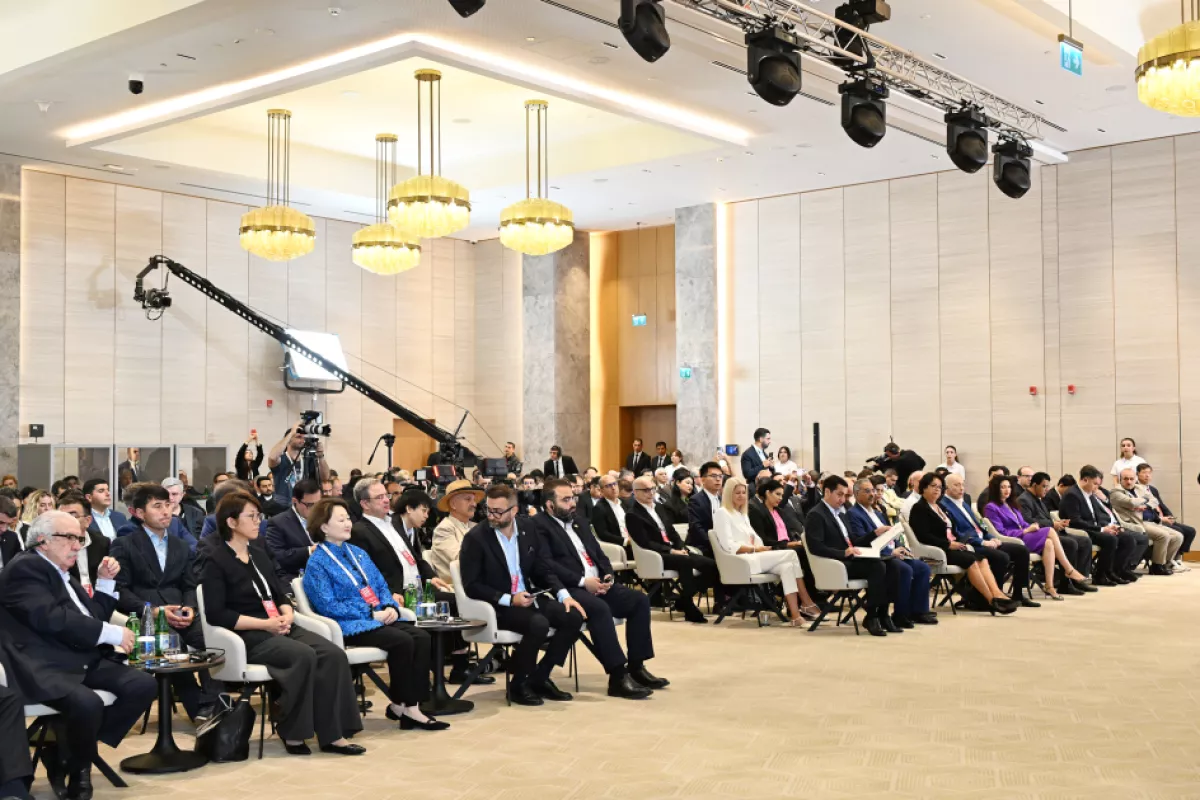
President Aliyev's address in Shusha once again underscored that Azerbaijan neither seeks to establish spheres of influence beyond its borders nor attempts to impose its own model of development on its neighbors. Instead, it consistently upholds the right of every sovereign state to determine its own foreign policy, alliance framework, and avenues of international cooperation. This principle extends far beyond the South Caucasus. State sovereignty is universal in nature, and the modern international system cannot develop on a stable footing if some countries claim the right to restrict the foreign policy choices of others.
Today, Azerbaijan advances this position not from the standpoint of abstract theory, but on the basis of tangible political experience, economic achievements, the successful implementation of major infrastructure projects, and the restoration of its own territorial integrity. For this reason, President Ilham Aliyev's remarks in Shusha should be viewed not as a declaration of intent, but as a recognition of the South Caucasus' new geopolitical architecture. The sooner external actors fully acknowledge this reality, the greater the opportunities will be for mutually beneficial cooperation and lasting peace.







 editor@caliber.az
 +994 55 444-88-98
 Азербайджан, Баку, ул. Низами, 203, Af Business House, 5-й этаж