










The Armenian diaspora is ageing, but not changing A crisis of identity and influence
Recently, a Forum of the Armenian diaspora was held in Paris. The event, which brought together more than 150 diaspora representatives from dozens of countries, took place under the slogan of mobilisation. The very framing of the issue — mobilisation, while implicitly suggesting a manipulated sense of emergency in which Armenia is allegedly in need of rescue — in fact accurately describes the condition of the diaspora itself and its existential crisis. However, more on that later. For now, let us examine what the delegates of the assembly, so to speak, concluded.
The delegates spoke about the need to “give new impetus to the political agenda” of the diaspora amid a crisis in its relations with Armenia, which has intensified since 2018. It was noted that the former formula “Armenia–Artsakh–Diaspora” has lost its coherence, while the “Karabakh issue itself has gradually narrowed into a predominantly humanitarian agenda.”
At the same time, contradictions surrounding the role of the church and national institutions are intensifying, which, according to participants, creates risks for “national identity” and social cohesion. All of this points to deeper processes of transformation that affect not only politics, but also the diaspora’s sense of self.
In the final declaration, key priorities were outlined: the need to “internationalise the Artsakh issue” and defend the “right of its population to self-determination,” the demand for the release of “prisoners,” the “protection of refugee rights,” and the promotion of recognition of the “Armenian genocide.” The participants described the Armenian government’s policy as “anti-national” and leading to a “loss of sovereignty.”
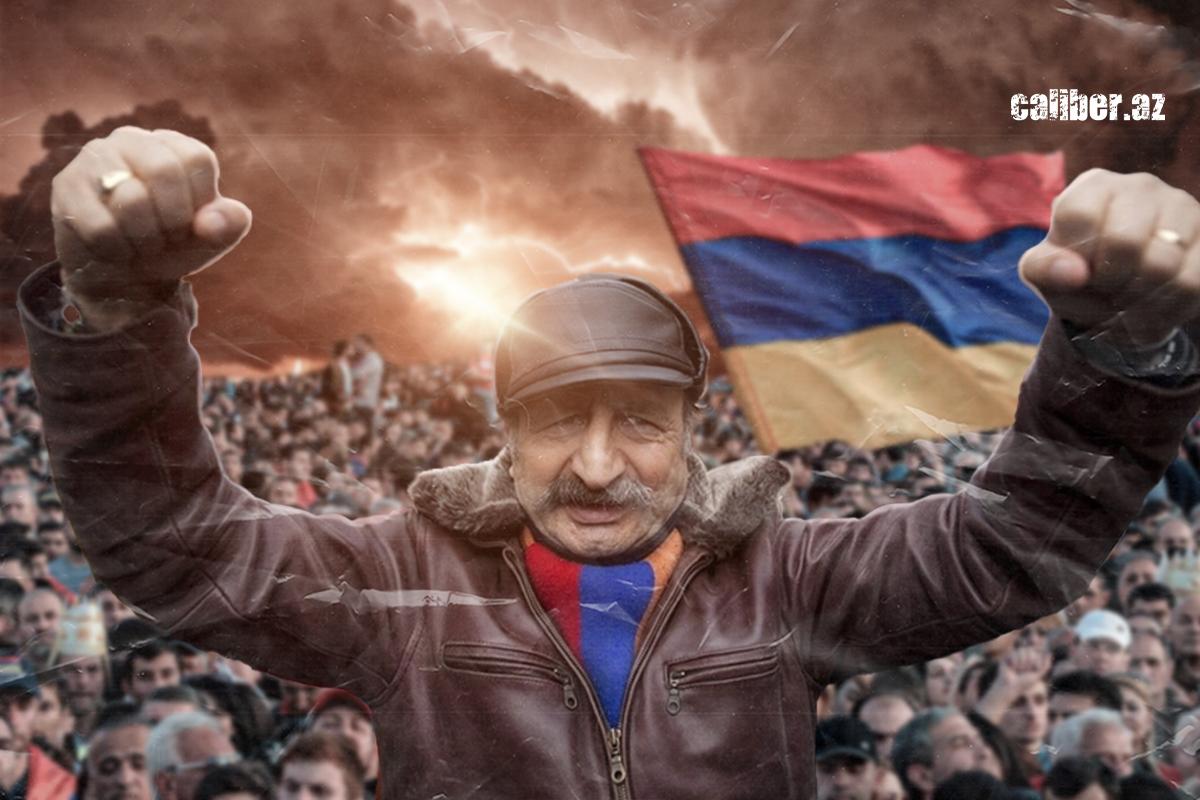
All of this looks like a rather weak attempt to project influence mainly through declarative means. However, it is important to note that among the final statements there was one that stands out for its purely practical nature: the forum included a direct call for Armenian citizens living abroad (who, of course, hold Armenian passports — ed.) to come to the elections and “vote against the current government.” And this is perhaps the only attempt to influence the country’s political situation.
In any case, achieving this would be quite difficult, since Armenian legislation establishes two filters for the participation of Armenian citizens living abroad: first, citizens of Armenia residing abroad for 10 years or more are deprived of voting rights; and second, voting is only possible at polling stations located within the country. These two barriers significantly reduce the likelihood of a large-scale “import” of protest votes.
All Armenian citizens living abroad who wish to prevent the Civil Contract party from winning would therefore have to purchase airline tickets to Yerevan and back, which, when reviewing a family summer budget, would most likely seem like a rather foolish idea. The only exception would be if the diaspora (or someone else) were to cover the costs of transporting these individuals.
Let’s try to make a rough calculation. According to estimates by the Migration and Citizenship Service of the Armenian Ministry of Internal Affairs, as of February 11, a total of 2,489,031 citizens are eligible to vote in the upcoming parliamentary elections scheduled for June 7, 2026. Let us round this figure to 2.5 million and assume that voter turnout will be 80%, i.e. around 2 million people.
Let us further assume — and this is not difficult to imagine — that the competition will be for every single percentage point. In that case, the diaspora would need to mobilise around 20,000 people (based on one per cent of the vote).
Multiplying this by an estimated $1,000 per person for travel, accommodation, and “compensation” for the inconvenience, we arrive at a total of $20 million. Could the diaspora spend this amount to secure just one per cent of the vote? Theoretically, yes, but it seems difficult to believe in practice.
However, if one adds the direct interest of certain states, the sums involved could be significantly higher, and consequently so could the percentage of votes influenced. One can conclude that, while this scenario is difficult, it is in principle feasible. All that remains is, as they say, to follow developments.
If we turn to more conceptual issues, it must be acknowledged that the diaspora shows no willingness to change, even slightly, in the new circumstances. The “Artsakh” project has fallen into oblivion, while Armenia’s ruling party is demonstrating a consistent trend towards renouncing territorial claims and normalising relations with Azerbaijan and Türkiye.

These factors are dismantling the familiar system of existence of the Armenian diaspora, which has long perceived itself as the perpetual nurturing “mother” of “miatsum.” The child has grown up and now seeks to break away. Yet the “mother” does not want to let it go, as she knows nothing else — she is unable to think about the child’s future, its talents, or its prospects. What matters to her most is the sense of an eternal mission of nurturing; the very idea of letting the child go and allowing it to set out on its own independent path fills her with alarm.
Residents of Armenia, living at the very edge of geopolitical reality and in close proximity to Azerbaijanis, are increasingly adapting to life in a more pragmatic and mature environment, while parts of the diaspora attempt to maintain their traditional influence over the country’s political and identity discourse. Despite its significant financial resources, the diaspora is often perceived as being more attached to past narratives than to present realities, whereas many people in Armenia itself appear more focused on moving beyond long-standing illusions and building a more realistic future within the country.







 editor@caliber.az
 +994 55 444-88-98
 Азербайджан, Баку, ул. Низами, 203, Af Business House, 5-й этаж