










The Veștea mission: ten days to steer Romania out of crisis Article by Matanat Nasibova
Against the backdrop of an ongoing domestic political crisis in Romania, which has led to serious government upheavals following the resignation of Prime Minister Ilie Bolojan, the country’s President Nicușor Dan has decided to appoint Adrian Veștea, a representative of the National Liberal Party (PNL), to this high office. The previous candidate, Eugen Tomac, stepped down due to his inability to secure a parliamentary majority.
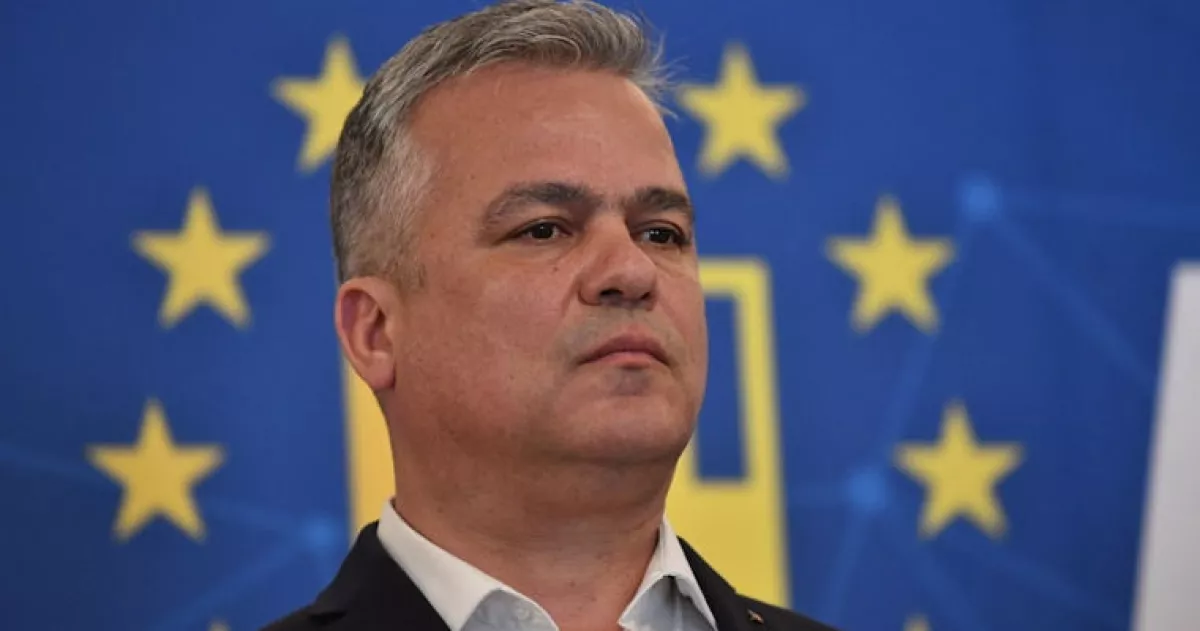
Thus, Adrian Veștea has been given 10 days to form a government and obtain a vote of confidence in parliament. However, whether he will be able to gather a majority in the national legislature remains unclear. One thing, however, can be stated with absolute certainty: in the person of the president, the new prime minister has gained significant support.
In particular, while advocating for Veștea, President Nicușor Dan described him as a firmly pro-Western politician with extensive experience, calling the appointment “the right political decision” necessary to overcome the government crisis.
“Adrian Veștea is a man of high values, a man ready for dialogue. And finally, a man who has long worked with budgets and is accountable for them. Therefore, I am convinced that he will successfully handle this task,” the Romanian president stated.
Such a presentation did not go unnoticed by leading global media outlets. The Reuters news agency, in particular, noted that Dan is seeking to put an end to a political crisis that has led to a paralysis of legislative activity, threatened access to EU funds, and pushed the national currency to record lows.
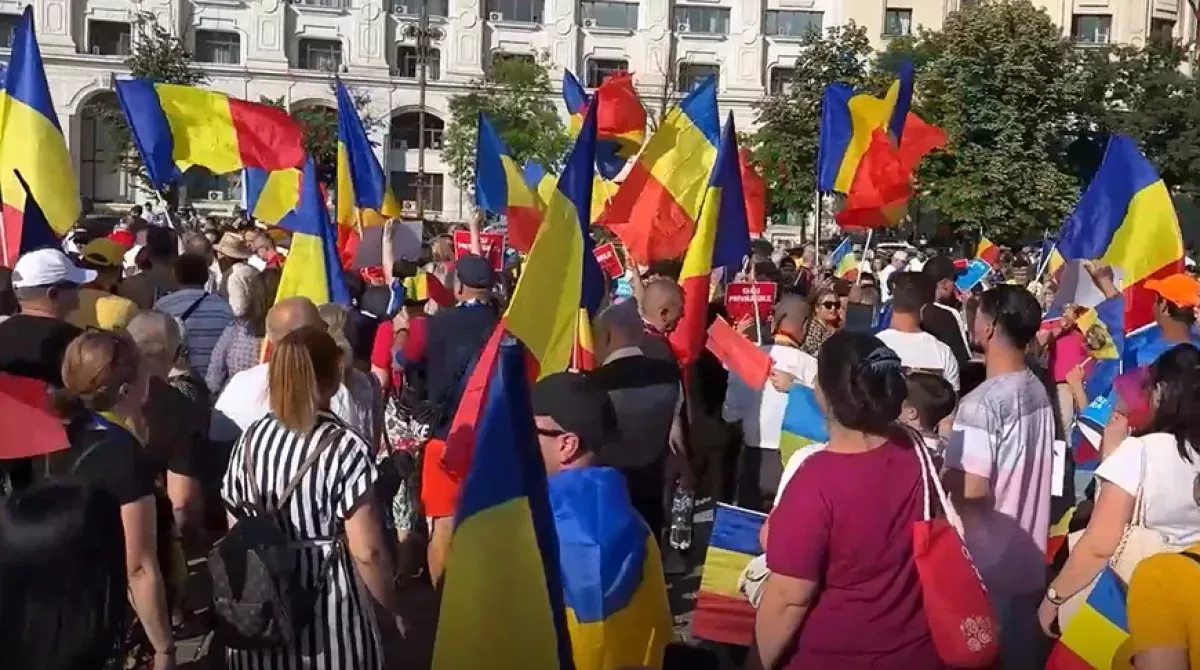
In this context, it is worth noting that the catalyst for the current political crisis in Romania was the unpopular measures introduced by the Bolojan cabinet, including tax increases, a freeze on pensions and salaries, and cuts in public spending. It is sufficient to recall that, against this backdrop, mass protests took place across the country several times last year.
Thus, in June 2025, street demonstrations were held in 40 cities under the slogans “Freedom! We do not want tax increases!”, directed against the government’s economic policy. However, despite the wave of protests, on January 1, 2026, sweeping changes took effect, including tax hikes — for example, an increase in local property taxes of up to 80%.
This occurred against the backdrop of high annual inflation, which at the time had already reached 9.6%, becoming a record level within the EU. Romanian media unanimously reported that, in terms of price growth, the country remained in first place in the European Union. The analytical portal InPolitics.ro, in turn, wrote that 2025 had become a year of painful revelations, bitter conclusions, and general chaos in both the political and economic spheres.
Given that strict austerity proved politically toxic and led to Bolojan’s resignation, it can be assumed that Adrian Veștea will need to adopt a flexible approach to key economic issues. In particular, he will have to implement a government programme focused on reforms and create an investment-friendly business environment in the country in order to attract foreign capital.
In addition, Veștea will need to make efforts to ensure Romania’s accession to the Organisation for Economic Co-operation and Development (OECD), as this is one of the country’s key strategic objectives and is considered vital for its long-term development.
He will also have to clarify the situation regarding the €16.68 billion preferential loan from the European Commission under the SAFE programme, the disbursement of which has encountered internal legal obstacles. Furthermore, in a very tight timeframe — by August 31 — Romania must fully absorb substantial European funds. Within the current financial cycle and recovery programmes, the country is among the main beneficiaries within the EU. These are the core priorities, and decisive action in these areas could help pull the country out of its economic crisis.
As for the foreign policy dimension, there are no major dilemmas. In particular, certain issues on the Bucharest–Washington track, caused by Romania’s presidential campaign in late 2024 and early 2025 — which was marked by the annulment of election results over alleged foreign interference, followed by US warnings of possible consequences should Bucharest deviate from its pro-Western course — have now been resolved.
Romania continues to stand as one of the most reliable US allies on NATO’s eastern flank, providing its territory and infrastructure for the protection of regional interests. In particular, in 2026, Romania officially confirmed the deployment of US troops and military equipment, including at the strategic Deveselu base.
In addition, given its geographical location and the current tensions in Eastern Europe, Romania serves as the alliance’s main staging ground for operations in the Black Sea basin.
With regard to Brussels, it can be said that no objections to Adrian Veștea’s candidacy are expected, since, as already noted, he is a politician with clearly pro-European views. This factor is highly likely to secure him the goodwill of the European Union.
However, even with the support of the Romanian president, Washington, and the EU, Veștea will have to exert maximum effort to secure a parliamentary majority and obtain approval for his cabinet, as not all political actors in the country welcome his nomination for the post of prime minister. For instance, representatives of the AUR party have already voiced criticism, arguing that such a nomination only deepens the political crisis.
Whether Adrian Veștea has sufficient personal political capital to overcome the existing obstacles in Romania’s domestic political landscape remains to be seen.







 editor@caliber.az
 +994 55 444-88-98
 Азербайджан, Баку, ул. Низами, 203, Af Business House, 5-й этаж