










Trump’s red code Cold War ghost at Mount Rushmore
On the day marking the 250th anniversary of the United States’ independence, Donald Trump addressed the nation at Mount Rushmore — a site long regarded as a symbol of American statehood and national myth. One might have expected such a speech to contain bold statements on the international agenda, especially in light of recent developments in the Middle East. However, the foreign policy context was outlined in a notably sparse manner.
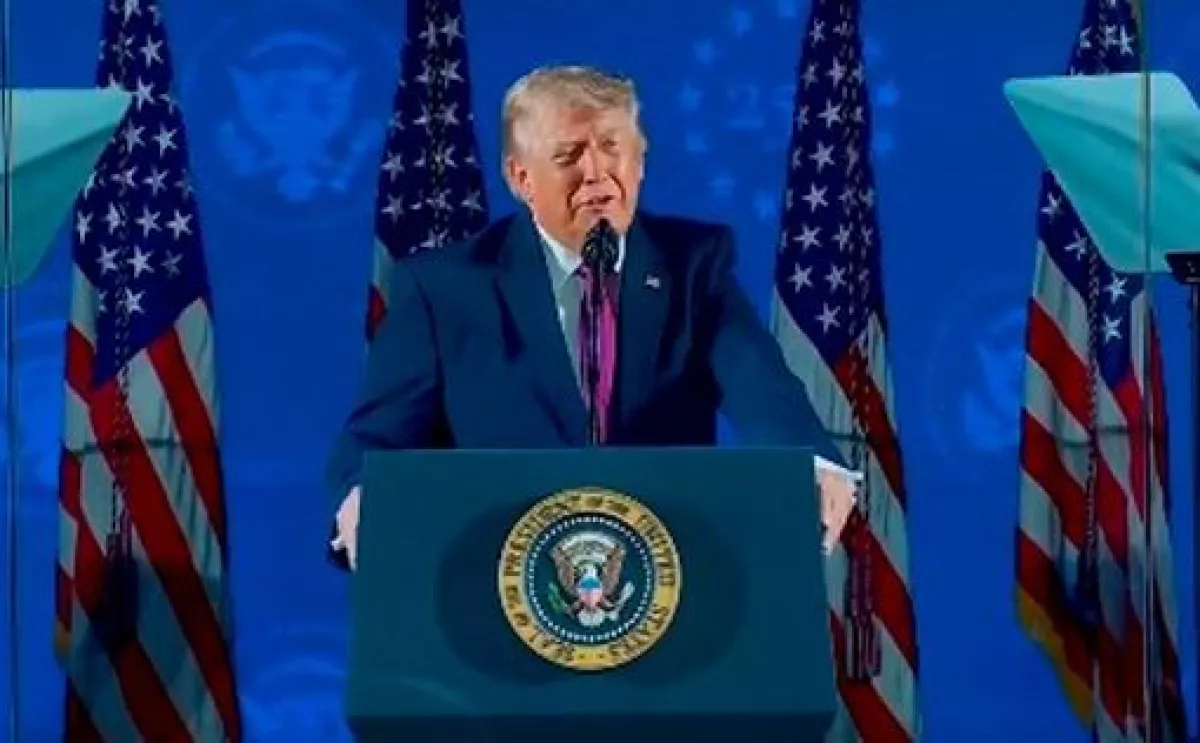
In essence, the only country to receive a separate mention was Iran. Even then, it appeared only episodically in the speech — as an example of the successful application of American power. Trump once again claimed the destruction of Iran’s military capabilities, but this topic was not developed in the context of strengthening American global influence.
The President structured his speech around historical reminiscences and national memory. Astronauts took the stage, along with the families of fallen American service members, Vietnam War veterans, and even participants of the Second World War. The latter were already over a hundred years old and were brought in wheelchairs. The entire scenario was designed to emphasise generational continuity, military valour, and the exceptionalism of American history.
What stood out most, however, was something else. Throughout the speech, Trump repeatedly made jibes at… communists. Moreover, these remarks often appeared without any clear logical connection to the preceding argument. He could be speaking about economic achievements, space exploration, or patriotism, and then suddenly insert a remark such as “the communists don’t want to admit this” or “the communists don’t like this.” Such digressions were heard three or four times during the 40-minute address.
Of course, the reference here is not so much to communists in the classical sense of the term. In the American political lexicon of the right wing, the term “communist” has long since become a catch-all label for a significant part of the left spectrum — from progressive Democrats and advocates of an expanded role of the state to socialists. This rhetoric draws on entrenched associations with the Soviet Union, the Cold War, and 20th-century authoritarian regimes. For a conservative audience, such terminology remains emotionally resonant and politically effective. Moreover, it helps exert influence on undecided voters in domestic political competition.
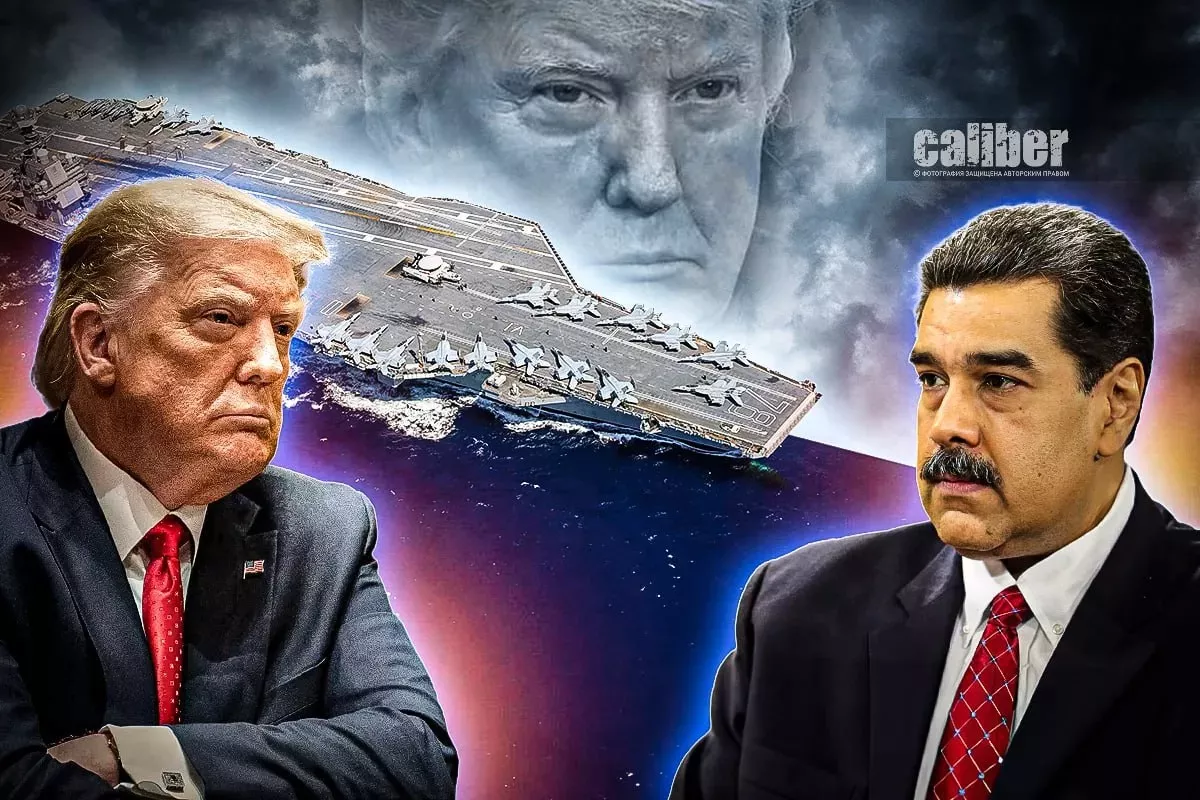
However, such a persistent focus on the anti-communist theme may also carry a broader geopolitical meaning. Washington may be gradually returning to a more familiar strategic paradigm. Islamist radicalism as an image of America’s adversary has certainly not disappeared, but after the ambiguous outcomes of the recent confrontation with Iran, the Trump administration is likely less inclined to make the fight against fundamentalism the central pillar of its foreign policy agenda. It is far more convenient to rely on a direction where more tangible results can be demonstrated.
In this context, the example of Venezuela is particularly telling. Despite the continued rule of Nicolás Maduro’s party, American pressure — both sanctions-related and diplomatic — has significantly complicated the position of the socialist regime and forced parts of the Venezuelan elite to seek more pragmatic forms of engagement with the outside world. Washington continues to view Caracas as one of the key vectors of its influence in Latin America.
Anti-communist rhetoric may also indicate an intention to untangle the Gordian knot of resistance to US influence in Cuba. Under Trump, relations with Havana have already tightened significantly compared to the Biden administration period; the island is effectively under a state of pressure, and analysts expect the Cuban leadership to make substantial concessions, including the removal of key and even symbolic figures such as Raúl Castro from decision-making processes.
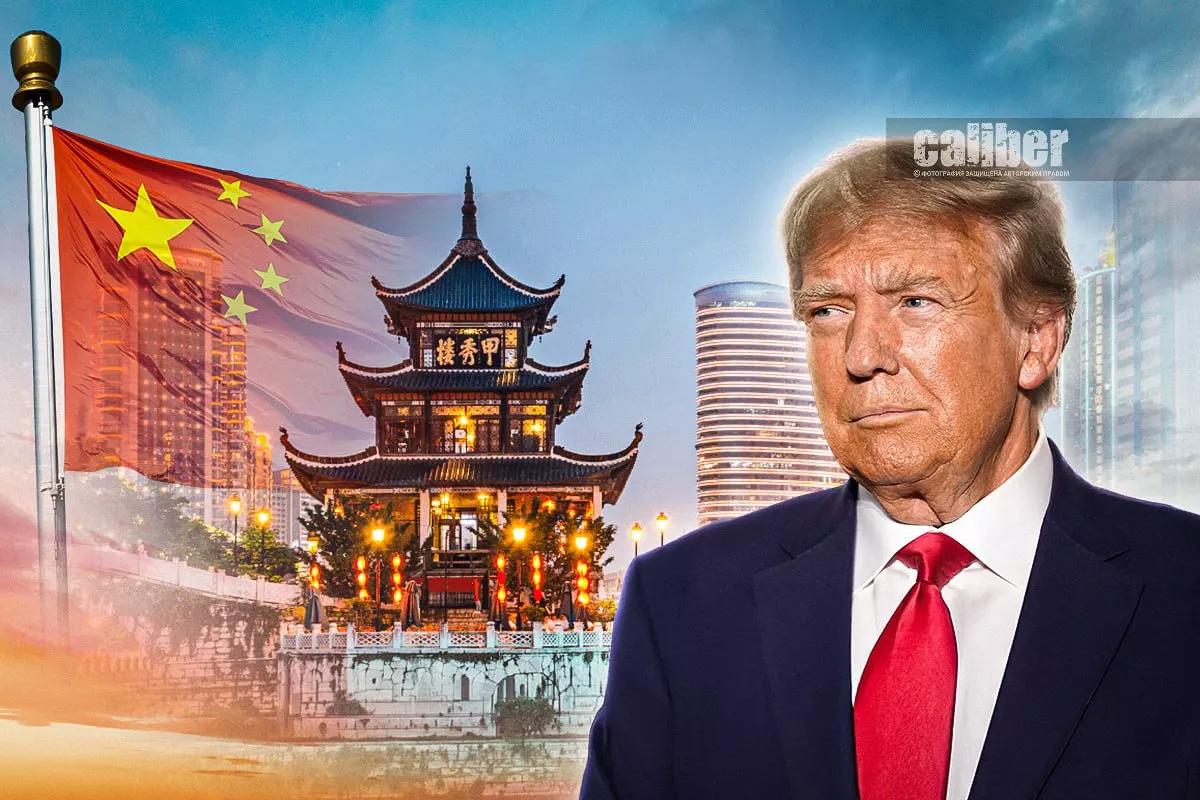
Finally, in the broadest geopolitical context, such statements may well be directed at the United States’ main strategic rival — the People’s Republic of China. It is precisely the rivalry with Beijing that is becoming the long-term axis of American foreign policy, regardless of the party affiliation of the administration in power. If the confrontation with terrorism defined the early decades of the 21st century, then competition with China increasingly resembles a new version of a global superpower standoff.
In this sense, Trump is seeking not only to mobilise American society for a technological leap, industrial revival, and the pursuit of new heights in scientific progress. He is simultaneously shaping a broader public psychology, preparing Americans for a prolonged strategic competition with the Middle Kingdom — economic, technological, ideological, and, in the worst-case scenario, military confrontation.
The audience at Mount Rushmore responded to the President with enthusiastic applause. But the key question remains: did the entire American nation applaud along with them?







 editor@caliber.az
 +994 55 444-88-98
 Азербайджан, Баку, ул. Низами, 203, Af Business House, 5-й этаж