










Will Armenia & Azerbaijan bridge the divide or spark a new conflict? Yerevan-Moscow tension over airport control
A fragile détente hangs over the South Caucasus. While overt hostilities have subsided, a tense stalemate persists between Armenia and Azerbaijan. Both Baku and Yerevan remain entrenched in their positions on a peace deal. Diplomatic efforts to bridge the divide have yielded limited progress, hampered by historical grievances, and incompatible demands, coupled with the outcome of the Karabakh war.
Behind the scenes, a flurry of military activity underscores the underlying precariousness though recent high-level meetings signal both sides' commitment to bolster their respective positions. Armenia’s arms race mentality further complicates the peace process, raising concerns about potential miscalculations and escalation.
Meanwhile, certain nations from both near and far regions navigate a delicate balancing act. While expressing support for a negotiated settlement, they with vested interests risk exacerbating tensions through their strategic calculations. Achieving lasting peace demands a nuanced equilibrium, intertwining the resolution of fundamental security issues with the cultivation of trust and the promotion of compromise.
Until Armenia displays a genuine willingness to move beyond entrenched positions, the simmering tensions in the South Caucasus threaten to erupt, potentially drawing in external actors and jeopardizing regional stability. The clock is ticking for a diplomatic breakthrough to prevent history from repeating itself. The stalemate persists between Armenia and Azerbaijan, raising concerns over renewed tensions. In the absence of a peace treaty with Azerbaijan, Yerevan’s outright preparations for revenge are confirmed by its searches for bolstered defense ties with recent meetings with France, Greece, Iran, and India, just to mention a few.
Shadowy soldiers in Armenia amid Yerevan-Moscow stand-off
Unverified reports have sent shivers down spines across the South Caucasus, alleging the arrival of battle-hardened mercenaries from war-torn Syria, Iraq, and even distant India to Armenia. These mercenaries are said to be massing along Armenia's border with Azerbaijan, stoking fears of a potential new chapter in their long-standing conflict.
All these developments in the South Caucasus are surrounded by an emerging discourse within Russian political circles suggesting that actions taken by the Pashinyan government may have implications for Armenian statehood. Such discussions are indicative of potential challenges and uncertainties surrounding Armenia's sovereignty, warranting careful consideration of the underlying factors at play.
Pundits share the overall conclusions that tensions keep escalating between official Yerevan and Moscow, and the Kremlin's warnings are becoming more assertive. Russian Foreign Minister Sergei Lavrov recently underscored the dwindling patience within the Kremlin, stating that "Armenia must make a clear choice between aligning with Russia or the West, and our actions will be based on that decision".
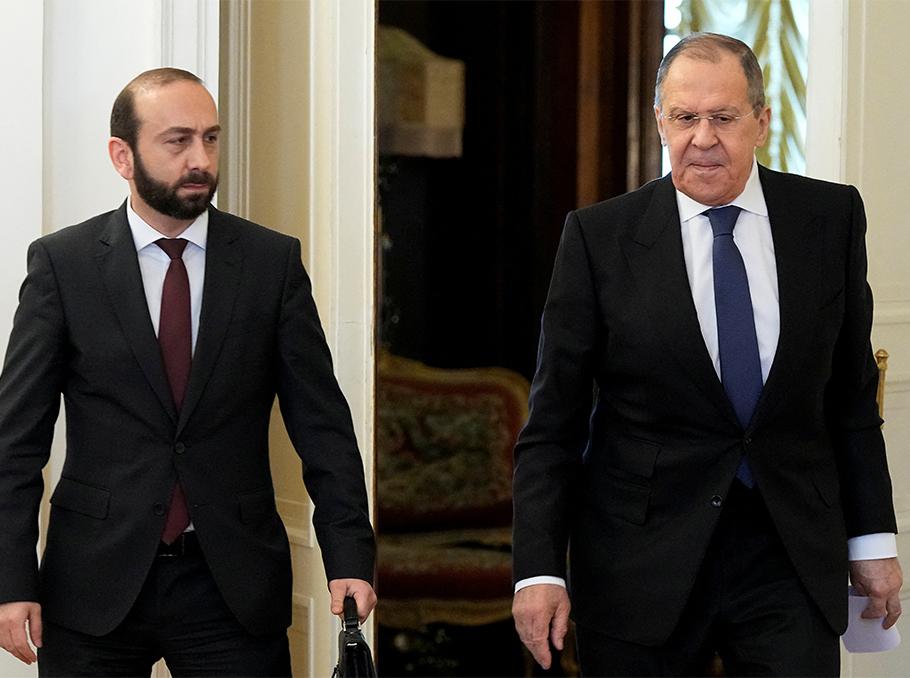
This statement reflects the increasingly firm stance adopted by Russian authorities in response to Armenia's evolving foreign policy dynamics. Russian Foreign Ministry Spokesperson Maria Zakharova, in response, cautioned Yerevan against missteps driven by false assurances from the USA and Western allies. Drawing parallels with the situation in Ukraine, she highlighted the potential repercussions for official Yerevan's actions.
These statements constitute an overt warning, signaling Russia's readiness to take decisive measures concerning Armenia. However, given the ongoing conflict in Ukraine, the Kremlin's capacity for flexible maneuvering vis-à-vis Yerevan is somewhat constrained. Nevertheless, there appears to be a sense within official Yerevan that seeking refuge under the "security umbrella" of the West might offer a viable path forward.
Call for termination of Russian security oversight at Zvartnots airport
Otherwise, the persistence of the Pashinyan government in its diplomatic overtures against Russia, despite acknowledging the absence of concrete security assurances from the USA and its Western allies, would seem improbable. Nonetheless, official Yerevan has already formally requested the withdrawal of the Russian border guards from Armenia's Zvartnots airport, indicating a significant shift toward irreversible confrontation with Russia.
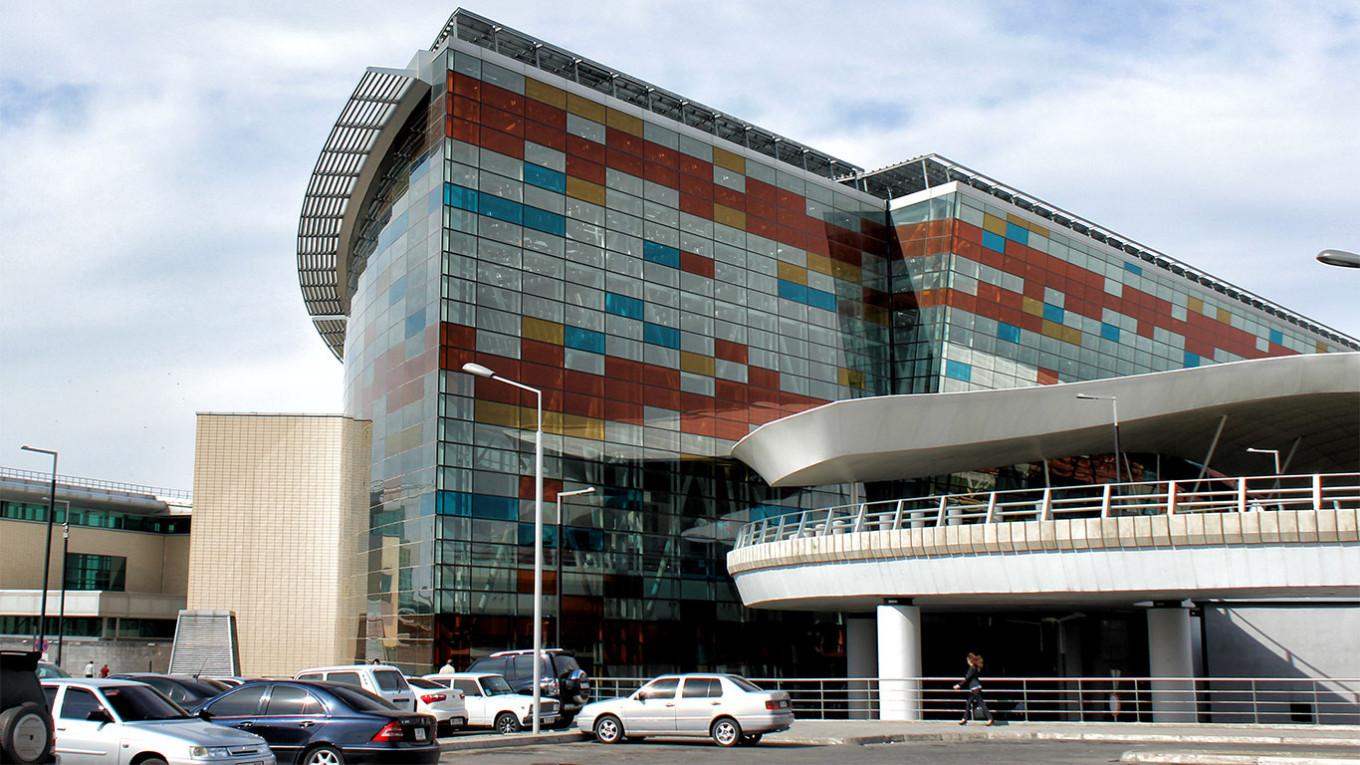
Armenian Security Council Secretary Armen Grigoryan and Foreign Minister Ararat Mirzoyan have offered justifications for Armenia's decision to have its own border guards assume responsibilities at the Yerevan airport. They argued that Armenia possesses the necessary capabilities for this task, citing close cooperation with the European Union as a key factor.
Minister Mirzoyan highlighted the deepening dialog with the EU across various sectors, asserting that this strengthened relationship obviates the need for Russian border guards at the Yerevan airport. He emphasized Armenia's capacity to independently safeguard its borders in this context.
These statements introduce contradictory perspectives on the matter. While it's common for nations to prioritize the operation of their own military personnel at critical points like airports and borders, the rationale behind official Yerevan's decision appears enigmatic. The divergence in statements from Armenian officials hints at underlying complexities and potential strategic maneuvers, suggesting a nuanced interplay of factors behind the scenes.
The situation is quite the spectacle: Russian border guards are stationed not only at Yerevan airport but also along Armenia's borders with Türkiye and Iran. Yet, the official stance from Yerevan is a peculiar one. They're clamoring for the removal of Russian guards solely from the airport, claiming Armenia is perfectly capable of fending for itself.
But hold on a moment! This raises some eyebrow-raising questions. If Armenia's got it covered, why the selective demand for removal? Shouldn't they be kicking up a fuss about the Russian soldiers safeguarding Armenia's borders with Türkiye and Iran as well? After all, if Armenia is truly standing tall as an independent state, shouldn't Armenian border guards be patrolling all its borders? It's a perplexing puzzle that begs for a clearer picture from Pashinyan's government.
Official Yerevan appears to be dodging these pertinent questions, opting instead to maintain a shroud of silence over the conflicting points. Delving into these matters would not only shine a light on Pashinyan's administration but also expose the covert machinations orchestrated by the USA, the EU, and France in Armenia.
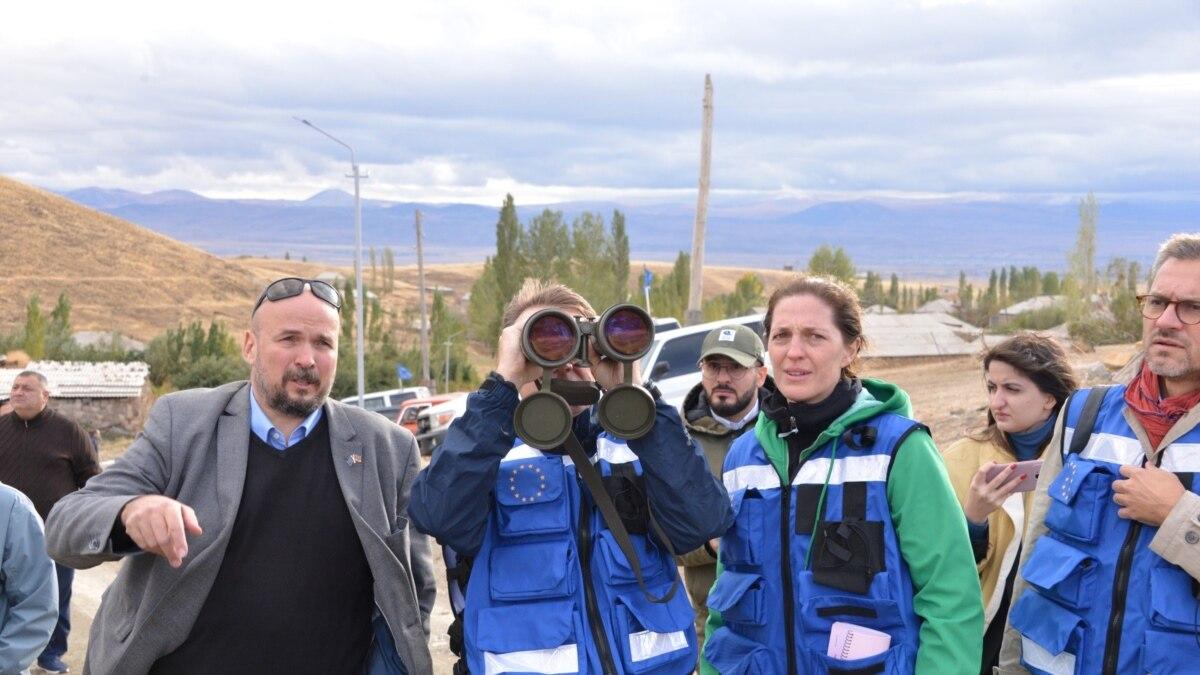
It's apparent that official Yerevan, purportedly guided by French directives, is gearing up for potential conflict. However, lacking confidence in the readiness of the Armenian army and recognizing public apprehension toward war, the Pashinyan government is resorting to recruiting armed mercenaries from various countries. This strategy, compounded by the presence of Russian border guards, may already be causing complications for official Yerevan.
On the flip side, the operation of the EU's "civilian intelligence-surveillance mission" in Armenia has led to complications regarding the presence of Russian border guards at the Yerevan airport. The increased presence of French and German reconnaissance personnel in Armenia has begun to cast Russian border guards in an undesirable light, as they inadvertently aid the Kremlin in gathering information on the identities and numbers of Western intelligence officers in the region.
This development doesn't bode well for the interests of both Pashinyan government and Western political circles. Maintaining secrecy around the activities of Western intelligence officers, who are presumed to be operating against Russia, is of utmost importance. Consequently, the West has demanded the immediate withdrawal of Russian border guards from the Yerevan airport by Pashinyan's administration. The impending reaction from Russia remains uncertain, but the situation certainly holds intrigue.







 editor@caliber.az
 +994 55 444-88-98
 Азербайджан, Баку, ул. Низами, 203, Af Business House, 5-й этаж