










A pragmatic reset? What Pashinyan’s Russia visit signals
Following the parliamentary elections, Armenian Prime Minister Nikol Pashinyan made his first foreign trip to Russia, where he took part in the international industrial exhibition “Innoprom-2026” in Yekaterinburg and held talks with Russian Prime Minister Mikhail Mishustin.
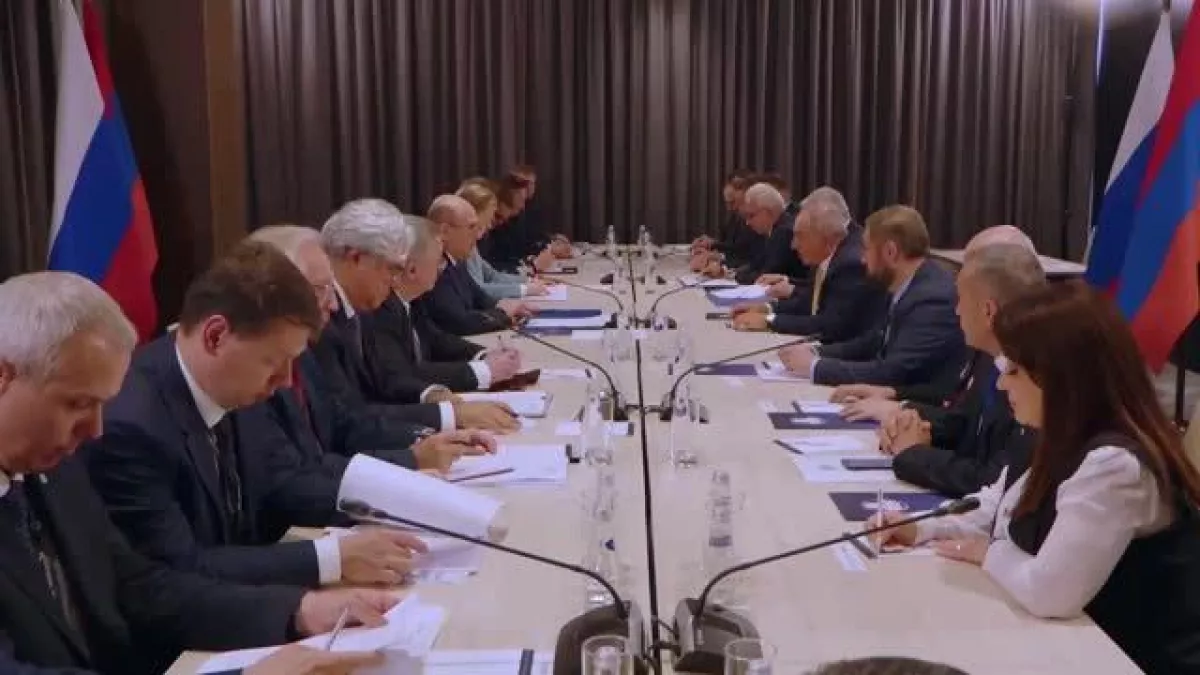
The meeting agenda was extensive. Pashinyan reaffirmed Armenia’s interest in continuing its participation in the Eurasian Economic Union and expressed readiness to engage in constructive discussions on the unresolved issues that have accumulated.
For its part, the Russian side expressed hope for the steady development of bilateral relations following the formation of Armenia’s new government. An additional signal came from Rosatom’s announcement of its intention to build a new nuclear power plant in Armenia — a project that, if implemented, would become one of the largest components of long-term Russian-Armenian cooperation.
It should be recalled that the visit took place against the backdrop of far from smooth relations between the two countries. In recent months, several sensitive issues have emerged on the bilateral agenda: restrictions imposed by Russia’s Federal Service for Veterinary and Phytosanitary Surveillance (Rosselkhoznadzor) on the supply of certain Armenian goods, political debates over the prospects of Armenia’s European integration, as well as ongoing disagreements over regional security issues, particularly Yerevan’s participation in the Collective Security Treaty Organisation (CSTO).
Against this background, it is noteworthy that the Russian delegation included the heads of Rosatom, Russian Railways (RZD), and Rosselkhoznadzor. Such a composition indicates that Moscow sought to focus not so much on political declarations as on concrete practical issues — transport, energy, trade, and sanitary controls.
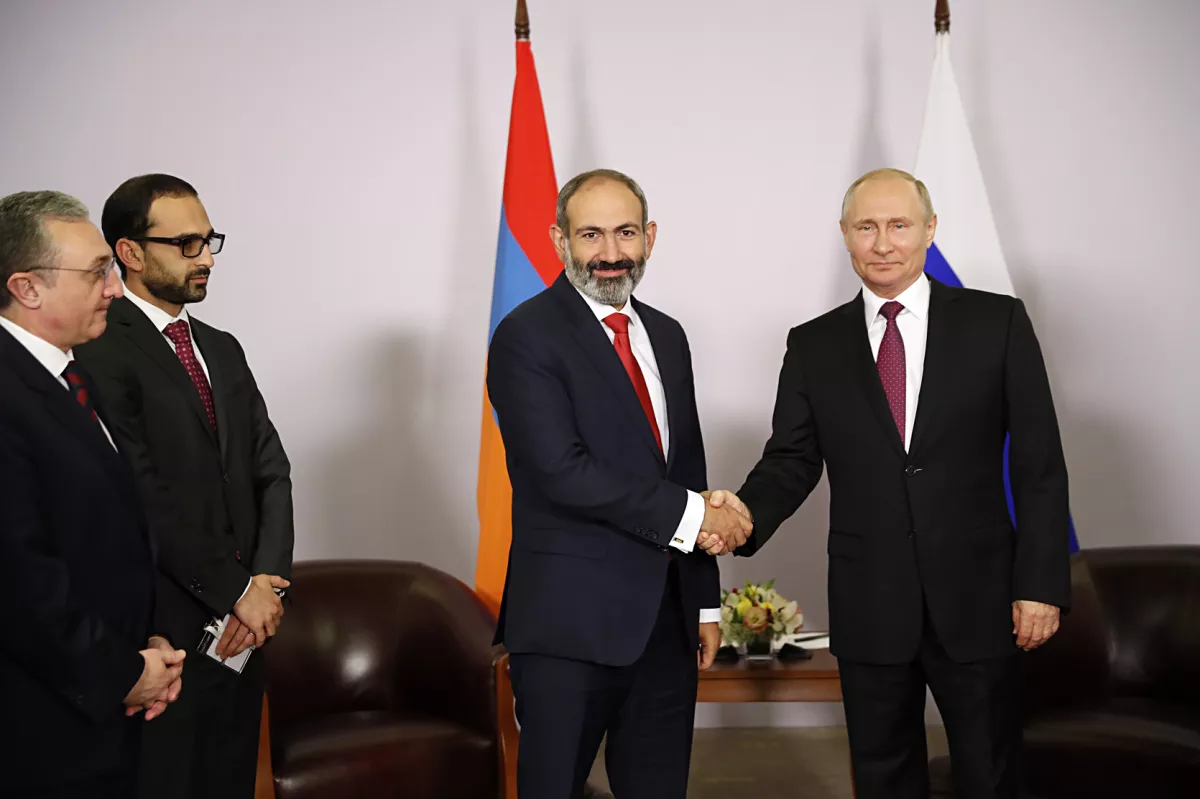
The fact that Pashinyan chose Russia for his first foreign visit after the elections also deserves attention. This has already become an established political tradition. After the events of 2018, the prime minister’s first trip abroad was to Sochi, where he took part in a meeting of the Supreme Eurasian Economic Council and met with Vladimir Putin. Following the snap elections in 2021, Russia was again his first foreign destination — that time, talks with the Russian president were held in Moscow.
However, the current visit differs from previous ones. Its format was deliberately focused on practical cooperation and did not include a meeting with Vladimir Putin — the talks were held at the level of the two countries’ prime ministers. Looking for an unambiguous political message in this would be an oversimplification. Rather, Moscow and Yerevan appear to have consciously opted for a restrained approach. After a period of mutual cooling, accompanied by sharp public rhetoric, a high-profile meeting between the leaders could have created inflated expectations or, conversely, triggered new rounds of speculation. Contacts at the prime ministerial level, on the other hand, allowed the sides to address outstanding issues without excessive political symbolism.
Moreover, the tradition of choosing Russia as the destination for the first foreign visit no longer appears as unconditional as it did several years ago. Whereas it was once automatically perceived as confirmation of the special nature of allied ties, today it reflects more a mutual need to maintain working channels of interaction.
Russian-Armenian relations are gradually moving toward a more pragmatic format, where the key factor is the ability to resolve concrete issues in trade, transport, energy, and investment. How sustainable this format will prove remains to be seen in the coming months — depending on whether Moscow and Yerevan can translate their agreements into practical solutions on the most sensitive issues of the bilateral agenda.







 editor@caliber.az
 +994 55 444-88-98
 Азербайджан, Баку, ул. Низами, 203, Af Business House, 5-й этаж