










Armenia and Russia align policies What Pashinyan brought back from St. Petersburg?
Armenian Prime Minister Nikol Pashinyan’s recent visit to Saint Petersburg, where he participated in the session of the Supreme Eurasian Economic Council and an informal CIS summit, as well as held a face-to-face meeting with Vladimir Putin, received only moderate coverage in the Armenian media. Yet the statements Pashinyan made in Russia’s northern capital sent a very positive signal for the entire South Caucasus.
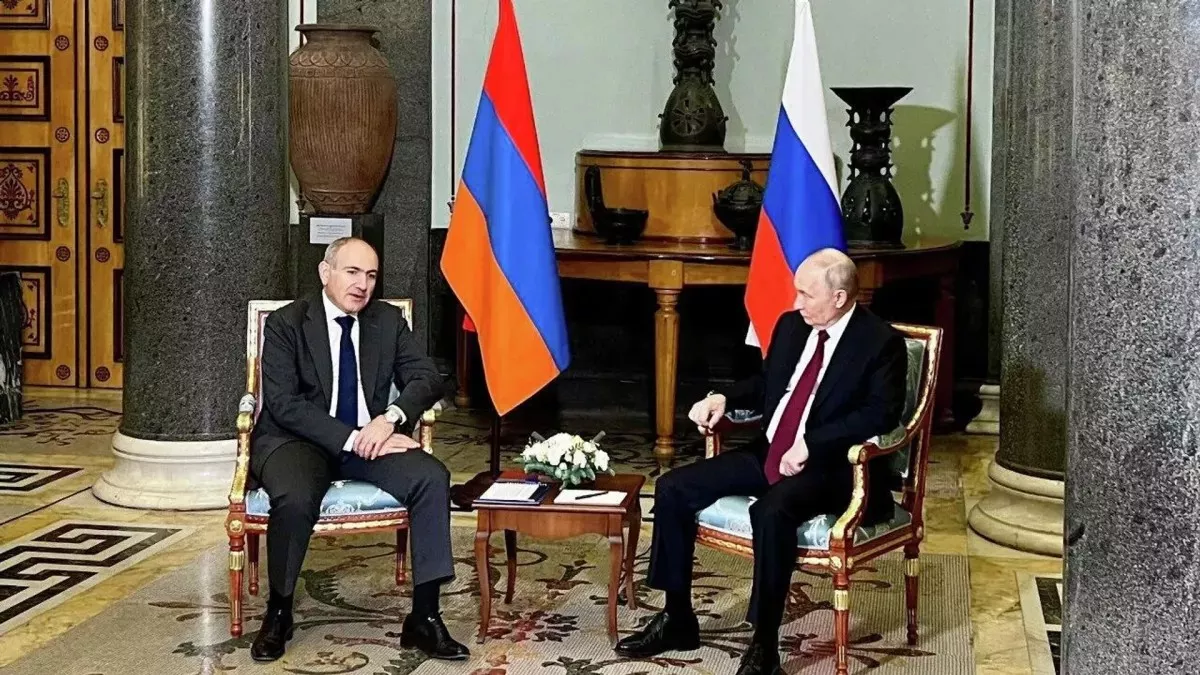
Several factors suggest a notably optimistic outcome. First, the Armenian prime minister confirmed that Yerevan’s current foreign policy aligns fully with the region’s new geopolitical security architecture, which is based on the Armenian–Azerbaijani settlement process. This alignment demonstrates Yerevan’s commitment to the Washington agreements, which also encompass the implementation of the Trump Route for International Peace and Prosperity (TRIPP), a project that has attracted interest from Russia as well.
In mid-December, Mikhail Kalugin, Director of the 4th Department for CIS Countries at the Russian Foreign Ministry, stated that “We are ready to hold consultations with our Armenian partners on both the parameters of this initiative and Russia’s possible involvement.” However, the Armenian side responded to this Kremlin initiative rather cautiously. In particular, Vice Speaker of the National Assembly Ruben Rubinyan stated that “there have been no discussions with Russia regarding participation in the project.”
In a similar vein, the Chairman of the Parliamentary Committee on Foreign Relations, Sargis Khandanyan, noted that the involvement of third parties in the project would be discussed later: “TRIPP is a bilateral project. Negotiations are taking place between the Republic of Armenia and the United States, and questions about involving any other parties will be addressed later.” Thus, it can be said that Armenia has shifted responsibility on this matter to the United States, and, as a result, the issue remains in limbo.
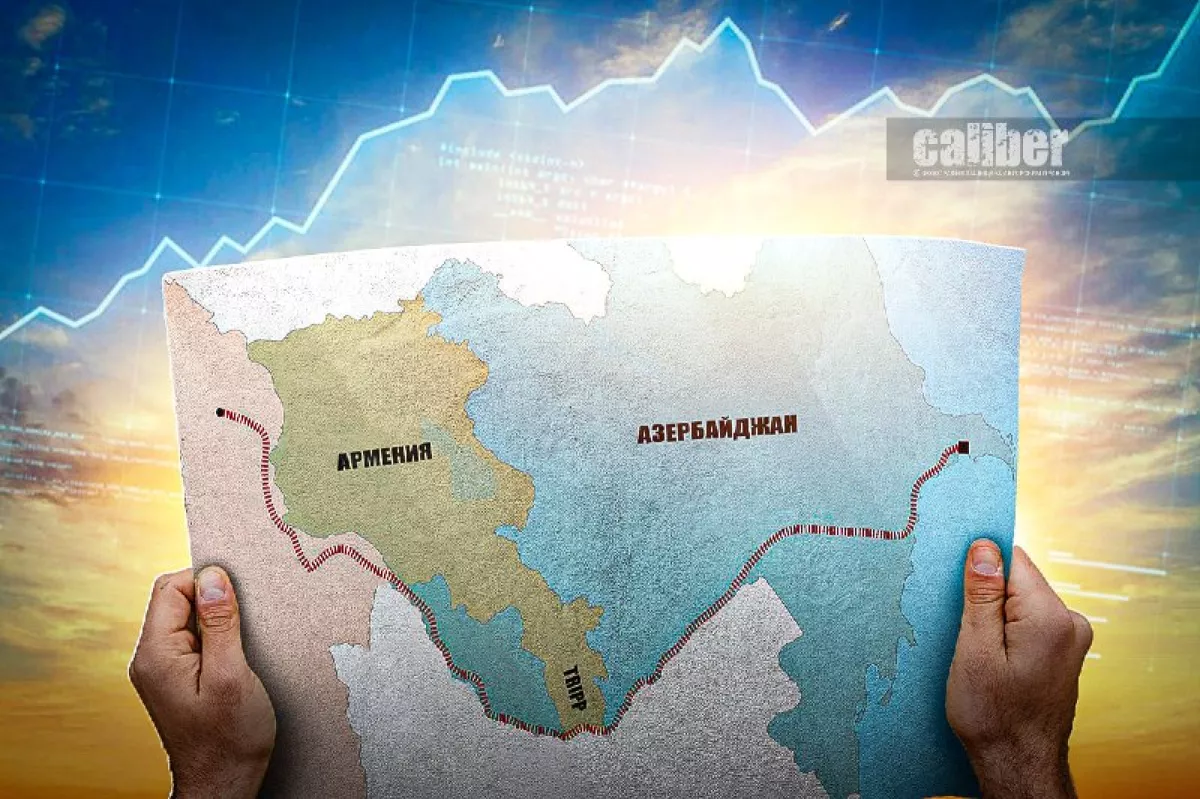
However, it is quite reasonable to assume that this topic was discussed in detail during the meeting between Putin and Pashinyan. It is likely that the Armenian leader, in turn, shifted the responsibility to Washington on this sensitive issue, where the participation of any third country is possible only with the consent of the United States.
Moreover, there is a possibility that the talks between the two leaders also touched upon the continued presence of the Russian military contingent in Armenia and the potential removal of Russian border guards from the TRIPP route, given that such precedents already exist: in 2024, at Yerevan’s request, they left the territory of Zvartnots Airport as well as the only border crossing with Iran near Agarak. Considering the new realities in the South Caucasus in light of the implementation of the Washington agreements, it is possible that in the near future the presence of Russian border guards in Armenia will be completely phased out.
At the same time, it is quite telling that the Armenian prime minister addressed the political dimension of Armenian-Russian relations specifically through the lens of the regional peace process: “peace will open new opportunities for the further development of bilateral relations between Armenia and Russia.”
He also emphasised that “we are also conducting very constructive bilateral negotiations with the United States regarding the start of the implementation and construction of the TRIPP road. These are truly very significant and substantive changes in our region. There are also many nuances here concerning our bilateral relations with the Russian Federation.”
Pashinyan’s statements appear to send a clear message to the Kremlin that the peace agenda has found its concrete expression precisely within the Washington track.
The Armenian leader also made sure to note that the implementation of the Washington agreements is economically advantageous for Russia itself: “This has already happened, as trains are now arriving from Russia to Armenia via the territory of Azerbaijan, which I believe is truly a historic event.”
Thus, the Armenian prime minister has placed the economic component at the forefront of the Armenian-Russian agenda, which, under the current circumstances, is of considerable significance for Moscow.
In conclusion, it appears that official Yerevan intends to continue pursuing its policies independently of the Kremlin. How this stance aligns with Russian expectations will become evident through Moscow’s subsequent actions, both toward Armenia specifically and the South Caucasus more broadly.







 editor@caliber.az
 +994 55 444-88-98
 Азербайджан, Баку, ул. Низами, 203, Af Business House, 5-й этаж