










Armenian–EU provocation and Zaluzhnyi’s re-emergence Caliber.Az weekly review
The Caliber.Az editorial team presents the latest edition of the programme Events with Murad Abiyev.
Azerbaijan – Armenia
US President Donald Trump has thanked Azerbaijan’s President Ilham Aliyev for supporting his nomination for the Nobel Peace Prize. “I am deeply appreciative of your kind recognition, which inspires us to sustain our important mission. As President of the United States, I remain committed to ending conflicts across the globe and to securing peace and prosperity for all people. With your ongoing partnership, we will achieve the impossible,” the American leader wrote, among other remarks, in his letter.
The OSCE Minsk Group has ceased to exist. More precisely, its official functioning ended on September 1, 2025, following a joint request by the foreign ministers of Azerbaijan and Armenia to the OSCE Chairperson-in-Office. By December 1, as had been announced in September, the OSCE Secretariat completed all procedures related to the closure of the structure. In other words, not a trace of the Minsk Group remains. This is a major diplomatic victory for Azerbaijan. Armenia has agreed to put a full stop to one of the two points symbolically maintaining the conflict. The crucial task that remains is the removal of territorial claims against Azerbaijan from Armenia’s constitution. The difficulty lies in the fact that this time, the will of the leadership alone is not enough—national consent is required, since the issue will be put to a nationwide referendum.
Assistant to the President of Azerbaijan and Head of the Foreign Policy Affairs Department of the Presidential Administration, Hikmet Hajiyev, is on a visit to Doha, where he is taking part in an international forum. Hajiyev, together with Armenia’s Security Council Secretary Armen Grigoryan, participated in a panel discussion dedicated to the peace process between Armenia and Azerbaijan.
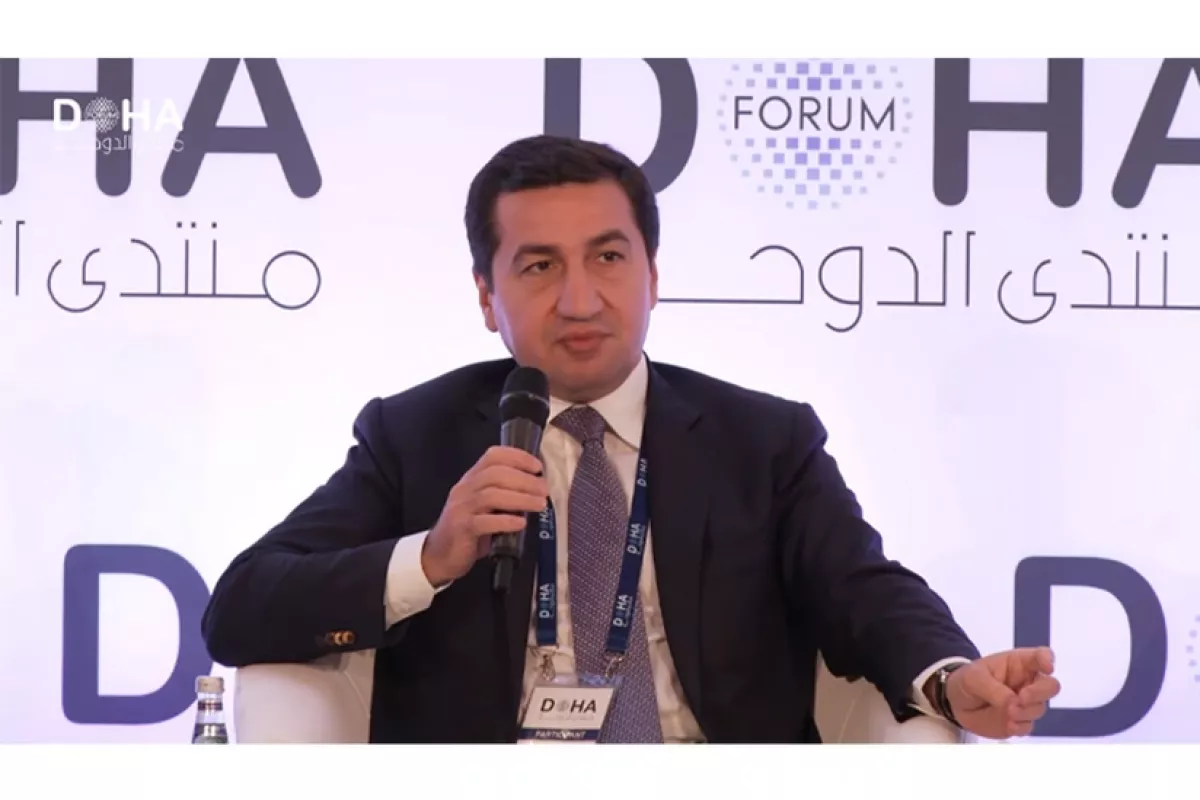
In his remarks, Hajiyev stressed that Baku and Yerevan are striving to avoid a scenario in which, after signing agreements, the parties retreat into a comfort zone. According to him, both sides understand that achieving sustainable peace requires continuous and intensive work. Hajiyev also underlined that Azerbaijan is making every possible effort to advance the peace agenda in relations with Armenia. At the same time, the presidential aide called on the international community to refrain from statements that could harm the peace process.
However, the Armenian leadership continues to take actions that hardly align with the spirit of peaceful settlement. On December 2, Armenia and the European Union signed the Strategic Partnership Agenda. This fairly detailed, 64-page document outlines the framework for future cooperation and, more importantly, EU assistance to Armenia across a wide range of areas. We would not have focused on this document were it not for the fact that it mentions Azerbaijan five times. And while two of these references concern support for the peace process and do not raise particular questions from the Azerbaijani side, the remaining three are striking in their blatancy.
To begin with, the document reaffirms the EU mission on the border with Azerbaijan and defines its purpose as “observing and reporting on the security situation along the border with Azerbaijan, contributing to human security in conflict-affected areas in Armenia, and to building confidence in support of peace and stability in the region.” The parties then commit to “work towards maintaining the EUMA presence for as long as necessary.”
Notably, the EU mission should ideally be dissolved—or at the very least withdrawn from the border—immediately after a peace agreement between Azerbaijan and Armenia is signed and enters into force. This requirement stems from the provision that neither side may deploy third-party forces along their shared borders. To demonstrate its adherence to the peace process, Yerevan could have at least included a reference to this condition in its agenda with the EU. Instead, the mission’s role is presented as though the issue has no connection to the peace process at all.
However, this is not the most scandalous element of the document. Azerbaijan is mentioned twice in the context of the counterterrorism operation of September 20, 2023. I will cite just one of these points, as they are similar. It reads: “Specific attention will also be paid to addressing the needs and supporting the socio-economic inclusion of Karabakh Armenians displaced following Azerbaijan’s military operation.”
In other words, the counterterrorism operation is directly cited as the reason for the voluntary relocation of Armenians from Azerbaijan’s Karabakh region to Armenia in September 2023. Yet it is well known that Baku carried out a highly precise military operation in which not a single civilian was harmed. Armenians chose to leave Karabakh partly of their own accord and partly under pressure from the leaders of the separatist regime, who apparently hoped to turn these people into a political resource inside Armenia. And now this country — Armenia — which, incidentally, had been paying salaries to those very separatists and is therefore itself implicated in the relocation of Armenians holding Armenian passports, is effectively accusing Azerbaijan of ethnic cleansing, together with its European partners.
In this context, the key question is who exactly initiated the inclusion of such wording — Yerevan or Brussels. Whatever the case, this step will hang as a serious weight of mistrust on the peace process. It turns out that even after Armenia removes territorial claims against Azerbaijan from its constitution — if this happens at all — it may still continue to exploit the myth of ethnic cleansing. This also raises the question of how such a position aligns with the initialled peace treaty, which states that both sides will withdraw all past claims against each other and will not initiate new ones.
Let us assume that Pashinyan’s government — if he wins the elections — will indeed refrain from raising this issue. The problem, however, is that by leaving this topic suspended in Armenian public discourse, Pashinyan is planting a time bomb. Future governments may return to the issue — moreover, they may cite it as grounds to annul the peace agreement with Azerbaijan. All of this seriously undermines the foundations of the peace process.
Ukraine – Russia
Against the background of the slow but steady advance of Russian forces in Ukraine, the peace process appears to have entered yet another dead end. US President’s Special Envoy Steve Witkoff and Donald Trump’s son-in-law Jared Kushner held talks with Vladimir Putin, after which the latter’s aide, Yury Ushakov, told journalists that it was impossible to speak of any serious progress in the negotiations. Moreover, this was expressed in such deliberately refined diplomatic language, and with such carefully measured intonation, that no one could be left in any doubt: there truly is no progress.
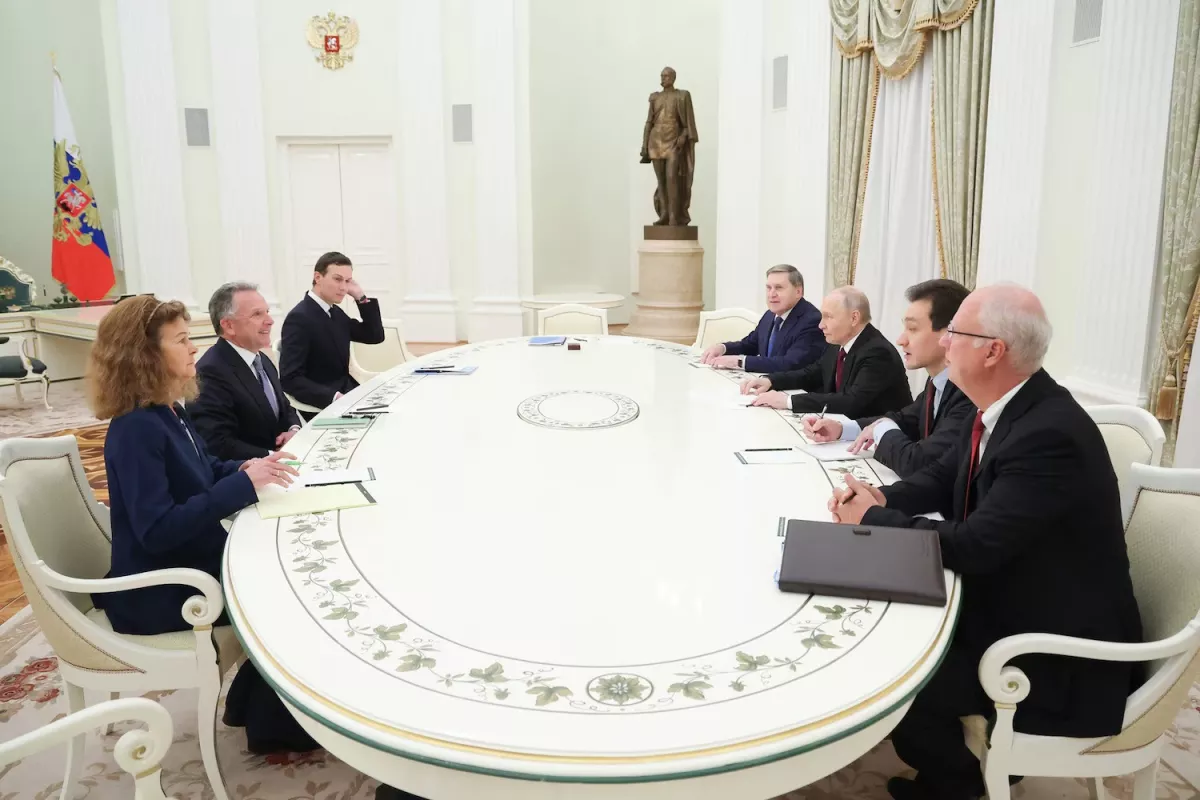
At the same time, the parties spent a full five hours at the negotiating table. Something, so to speak, must have captured their mutual interest. It is also possible that the sides were not discussing Trump’s proposals and the related details per se, but rather an issue that they consider a necessary precondition for discussing anything else. And this issue most likely concerns the figure of Ukrainian President Volodymyr Zelenskyy. This is the focal point on which both the Russian and American presidents appear to agree. Both the Kremlin and the White House, it seems, believe that Zelenskyy must go.
And then—almost as if by magic—the former Commander-in-Chief of the Ukrainian Armed Forces and current Ukrainian Ambassador to the United Kingdom, Valerii Zaluzhnyi, reappears in the public arena. Just a few days ago, he posted two updates: one very long, and one very short.
Let us start with the short one. On his Facebook page, Zaluzhnyi shared a photo with his wife, both dressed in winter clothing and standing against a backdrop of Ukrainian-language signs. The photo carried an expressive caption: “Home is best.”
Now to the longer publication. The former Commander-in-Chief released an extensive article in which he raises conceptual questions about the aims and strategy of the war, as well as Ukraine’s failures. Drawing on the works of renowned military theorists and adding his own analysis, Zaluzhnyi identifies what he sees as Ukraine’s fundamental mistake: the absence of a political objective in the war. In his view, the Russian side does possess such an objective — not territorial gains or other officially declared goals, but the deprivation of Ukraine’s sovereignty. To achieve this objective, Moscow has employed two military strategies in succession: first, a strategy of annihilation, and then one of attrition.
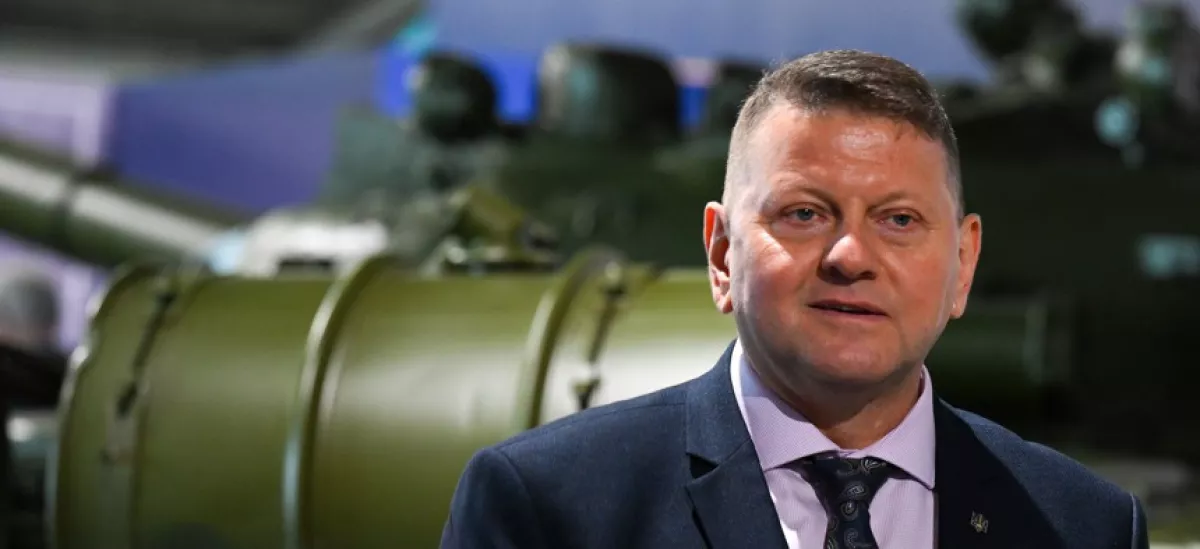
Zaluzhnyi recalls that, despite the enemy’s vastly superior forces during the initial phase of the war, it was precisely at that stage that the Ukrainian army achieved its greatest successes. He even describes Ukraine’s ability to repel Russia’s initial military strategy — the attempt to annihilate the Ukrainian Armed Forces — as a victory in itself. In other words, Zaluzhnyi subtly, as sports commentators might say, reminds readers that it was he who commanded the armed forces during that period, and therefore, quite fairly, implies that he is the architect of that victory.
However, while Ukraine succeeded in countering Russia’s strategy of annihilation, it proved unable to offer anything substantial in response to Moscow’s shift to a strategy of attrition. Ukraine was unprepared for this due to a range of political, economic, and military factors. Here, Zaluzhnyi makes sure to mention corruption several times — almost in passing — creating a resonant backdrop to the corruption scandals initiated by US-supervised anti-corruption agencies. These scandals, it should be recalled, severely damaged Zelenskyy’s image, as they targeted two of his closest associates: his friend and trusted financial operator Timur Mindich, and the head of the Presidential Office, Andriy Yermak.
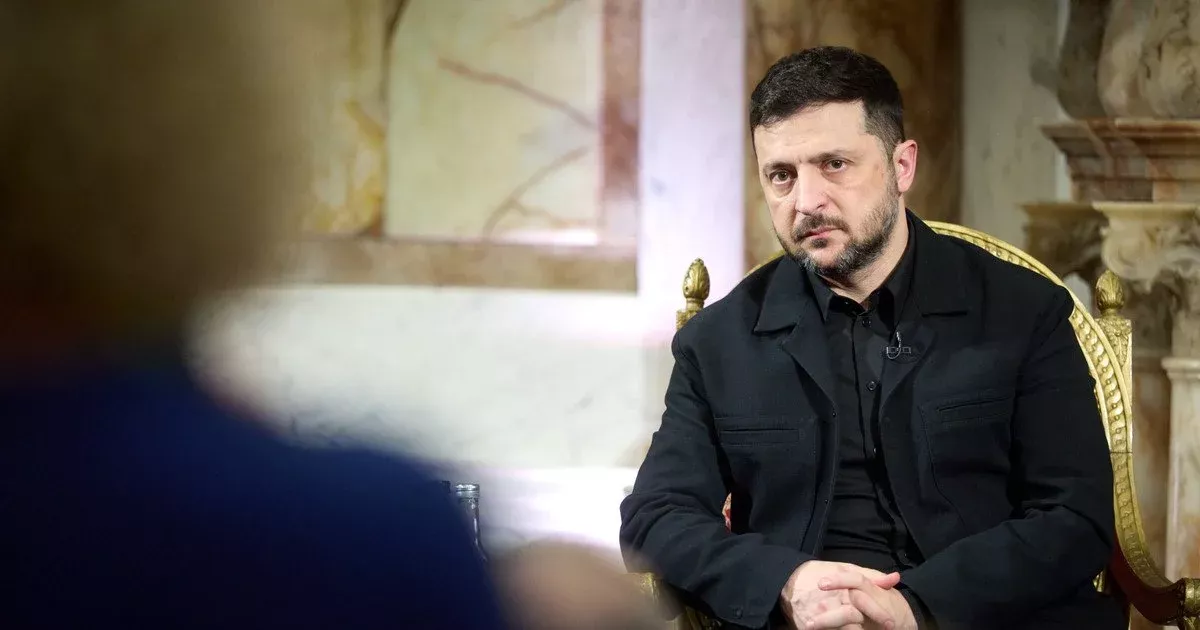
Zaluzhnyi then argues that Russia’s decisive blow within the framework of a war of attrition will be the outbreak of a civil war in Ukraine — a development that, in turn, would clear the path towards Moscow’s ultimate political objective: stripping the country of its sovereignty. In other words, Zaluzhnyi not only accuses Zelenskyy of pursuing a strategy that leads to defeat, but also warns that the country is on the brink of civil war.
He then gently approaches the essence of his proposals. He states that war does not always end with the victory of one side and the defeat of the other. “So, when we talk about victory, we must honestly say this: victory is the collapse of the Russian Empire, and defeat is the complete occupation of Ukraine due to its collapse. Everything else is just a continuation of the war.”
With this, Zaluzhnyi cautiously puts forward the option of a long-term cessation of hostilities, explaining that this is, historically, one of the most common ways wars come to an end.
Thus, it appears that the West — in this case, the United States, with the United Kingdom obliged to follow its lead — is placing its bet on Zaluzhnyi as the main contender for the Ukrainian presidency. What remain are the technical questions surrounding a ceasefire with Russia. After all, Zaluzhnyi is currently proposing the same thing as Zelenskyy: freezing the conflict. It is still unknown whether he would agree to surrender the parts of Donbas that Ukraine continues to hold — a key demand of Moscow.
However, if Zaluzhnyi seeks a rapid end to the war, he will most likely agree to it. The simple reason is that only he — as the “victor” of the early phase — possesses the public legitimacy to make concessions. By contrast, if he comes to power and continues resistance, any future defeats will be directly associated with him, quickly washing away his aura of a wartime hero. It is possible that the parties will find some acceptable wording for future compromises. Yet one thing is beyond doubt: the decision to replace Zelenskyy has already been made.
Still, Zelenskyy is not the final piece in this story. The coming weeks will show whether he still has any trump cards left in his deck, as Donald Trump likes to say.







 editor@caliber.az
 +994 55 444-88-98
 Азербайджан, Баку, ул. Низами, 203, Af Business House, 5-й этаж