










Azerbaijan and Armenia move beyond decades of distrust From gunfire to the “Bridge of Peace”
Establishing a de facto peace between countries that have long been in conflict is a complex and multidimensional process. It involves restoring trade and economic ties, and—perhaps even more importantly—rebuilding trust between the societies of the two states, trust that was lost or severely undermined during the confrontation.
In the context of the now-past Armenian–Azerbaijani conflict, the task of fostering dialogue between the public in Armenia and Azerbaijan has been taken on by the “Bridge of Peace” initiative. Its foundation was laid in November of last year, when representatives of Azerbaijani civil society visited Yerevan. This was followed by a visit of an Armenian delegation to Baku, during which the process was given concrete structure: it was decided that meetings in this format would continue, discussions were held on informing civil society representatives over the next six months, expert cooperation and media interaction were planned, and preparatory work on implementing projects in specific areas was confirmed.
As Farhad Mamedov, Chairman of the South Caucasus Research Center, who participated in the meeting with the group of Armenian civil society representatives during their visit to Baku on November 21–22, noted, “The initiative envisions future meetings not only with the five members of the group but also with a larger number of civil society representatives.”
The agreements reached at that time are now being put into practice. On February 13, an Azerbaijani delegation of 19 people arrived in Armenia to participate in a bilateral “round table” meeting. One particularly noteworthy point is that the Azerbaijani representatives traveled to the neighbouring country not by air, as had been done previously, but via the delimited and demarcated section of the land border near the Azerbaijani village of Ashaghi Askipara and the Armenian village of Voskepar. This border crossing was seen by participants as an important practical step toward building trust and a clear indication of progress in the normalization process between the two countries.
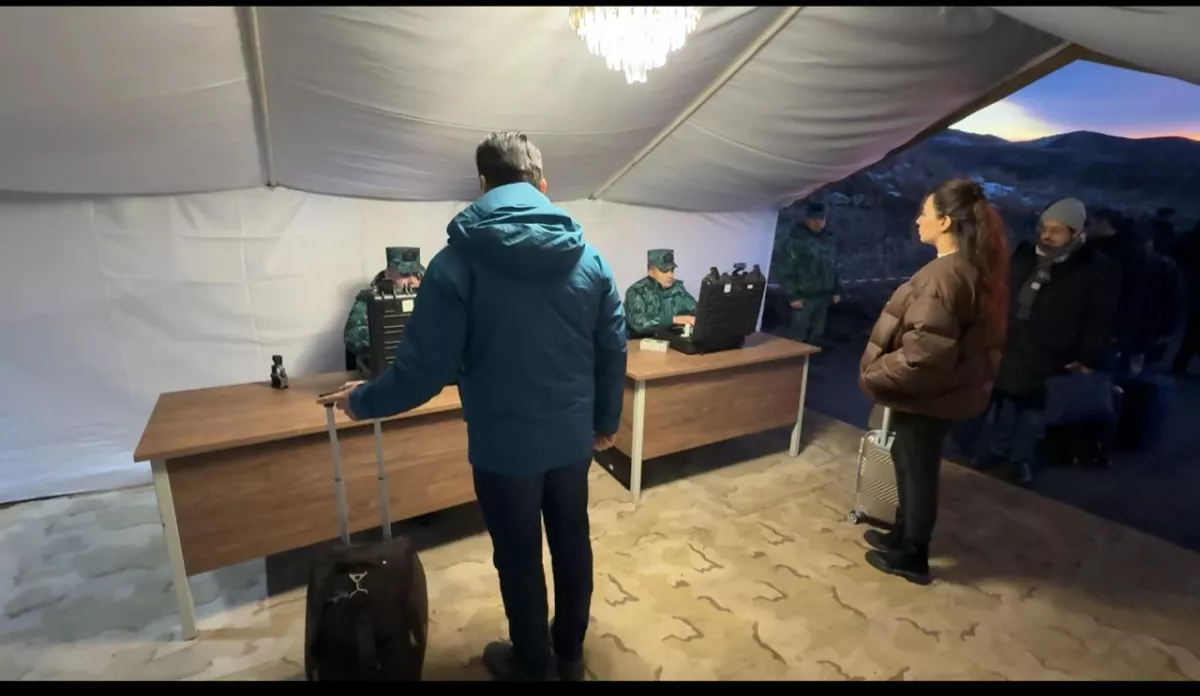
This development is yet another indicator of the establishment of de facto peace between the two countries, made possible solely thanks to the peace agenda put forward by Baku immediately after the post-conflict period began in the region, consistently promoting initiatives aimed at peace. Following the historic Washington summit, Azerbaijan continued to take concrete steps toward implementing the agreements formalized at the “number one office in the world.”
In particular, Azerbaijan lifted the ban on transporting goods to Armenia through its territory, facilitating the delivery of grain to the neighbouring country from Kazakhstan and Russia. Additionally, Azerbaijan began supplying fuel to Armenia, which had a significant impact on the Armenian economy. This was confirmed by the Armenian Minister of Economy, Gevorg Papoyan, who stated on public television that Armenia would save around 16 billion drams (approximately $26 million) thanks to the import of Azerbaijani fuel.
In turn, Armenian Prime Minister Nikol Pashinyan, in his speech at the meeting of the Supreme Eurasian Economic Council in expanded format in Saint Petersburg, expressed gratitude to President Ilham Aliyev for these steps.
“I express my appreciation to the President of the Republic of Azerbaijan for the decision to unblock cargo transit to Armenia through Azerbaijani territory, as well as for creating conditions for the start of bilateral trade. This is one of the first major achievements in establishing peace and stability in the region,” said the Armenian leader.
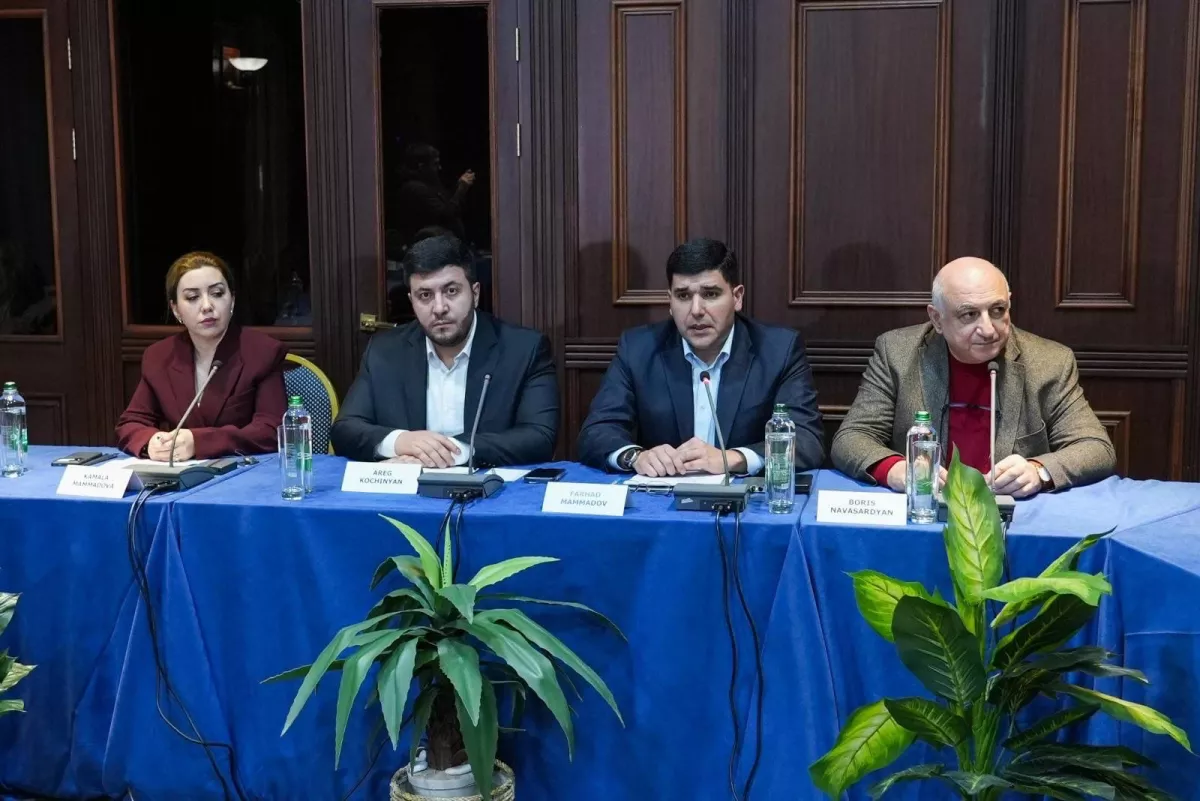
Thus, in both the political and economic aspects of the normalization process between the two countries, certain successes have already been achieved. As for overcoming the psychological barrier and building trust between the societies of Azerbaijan and Armenia, this mission is being successfully carried out by the “Bridge of Peace” initiative, as evidenced by the outcomes of the two-day “round table.”
On February 14, as part of the “Bridge of Peace” initiative, Armenian Security Council Secretary Armen Grigoryan met with representatives of civil society from both Armenia and Azerbaijan. He emphasised that bilateral contacts in this format play an important role in strengthening mutual trust and developing good-neighbourly relations, and he also answered participants’ questions.
Also on February 14, Deputy Minister of Foreign Affairs of the Republic of Armenia, Vahan Kostanyan, took part in the discussions. During the sessions, participants addressed issues stemming from the peace agenda established at the Washington Summit on August 8, 2025, as well as the role of civil society in enhancing mutual understanding and trust.
In conclusion, it is worth recalling the words of Azerbaijani President Ilham Aliyev from his interview with France 24: “[…] the signing of this historic document at the White House, in the presence of the President of the United States, who, by the way, also signed the Joint Declaration as a witness, means that the conflict is over and that we have entered a period of peace, which I hope will last forever. Since that time, more than six months have passed, and we have a very quiet situation on the border with Armenia. No more shootings, no victims, no wounded.”







 editor@caliber.az
 +994 55 444-88-98
 Азербайджан, Баку, ул. Низами, 203, Af Business House, 5-й этаж