










Azerbaijan and Saudi Arabia cement strategic “green” alliance From wind turbines to battery storage
In recent years, Azerbaijan’s energy strategy has been steadily shifting towards renewable energy sources (RES). To harness the country’s considerable green potential, a modern regulatory framework has been established, fiscal incentives for investors have been introduced, and partnerships have been forged with leading international companies.
Saudi Arabia has emerged as one of Azerbaijan’s key partners in this transition. Saudi firms are actively investing in Azerbaijan’s renewable energy sector, as well as in seawater desalination projects. Looking ahead, cooperation is expected to expand into battery energy storage systems and the production of “green” fertilisers.
On January 8, with the participation of the Azerbaijani President Ilham Aliyev, a ceremony was held at Gulustan Palace to mark the launch of the 240-MW Khizi–Absheron Wind Power Plant, developed by ACWA Power—an important milestone in Azerbaijan’s green energy agenda.
“It is a significant day in the life of our country today. We celebrate the commissioning of the ‘Khizi-Absheron’ Wind Power Plant. This is a milestone occasion. The plant that will enhance the energy capacity of our country is commencing its operation. I am confident that the 240-megawatt plant will contribute to the overall development of our country. I remember quite vividly that exactly four years ago, in January 2022, we laid the foundation of this plant in this very hall,” said President of Azerbaijan Ilham Aliyev. “I would like to express my gratitude to all the people and companies that have contributed to the construction of this plant, first and foremost to the investor ‘ACWA Power’ and its managers. This is the first renewable power plant built by ‘ACWA Power’ in Azerbaijan, but not the last one. The company has bigger plans, and the Government of Azerbaijan fully supports these plans.”
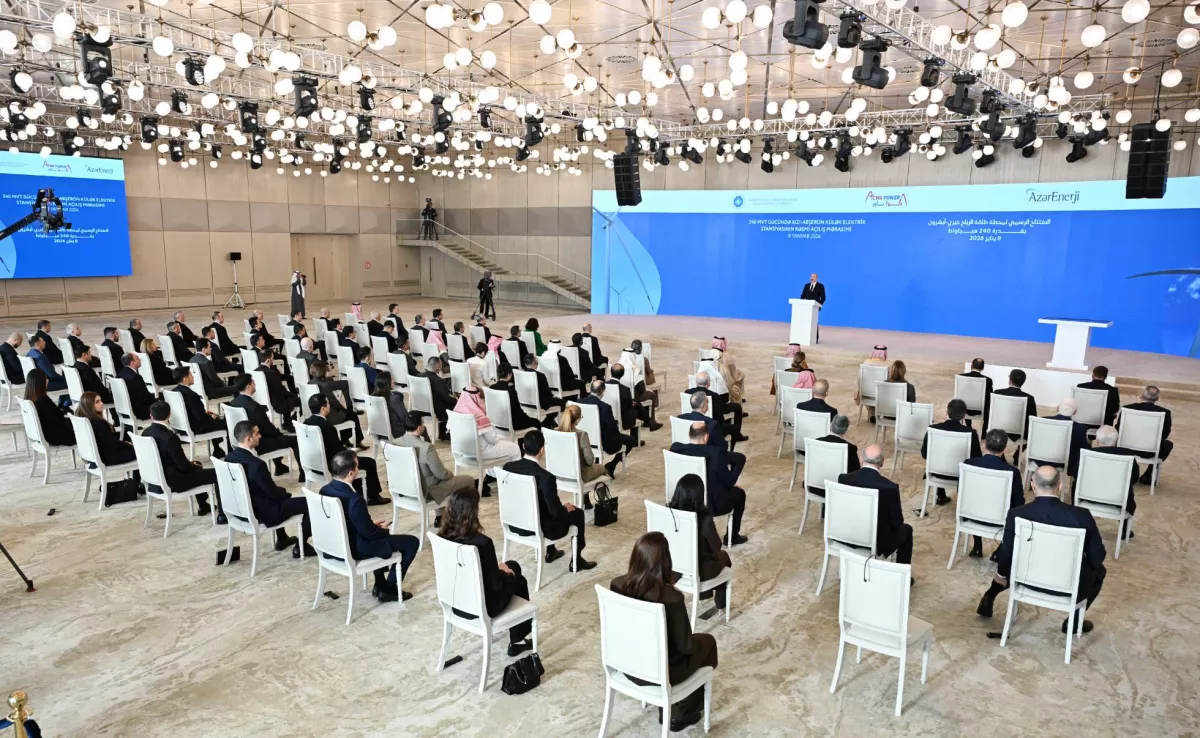
Notably, four years ago, ACWA Power Azerbaijan Renewable Energy invested $340 million in the Khizi–Absheron Wind Power Plant project. The Chinese company PowerChina Huadong Engineering Co., Ltd was selected as the project’s general contractor, while financing was provided with the support of the European Bank for Reconstruction and Development (EBRD) and the OPEC Fund.
During the construction phase, 37 wind turbines, each with a capacity of 6.5 MW, were installed. Of these, 12 turbines were located in the village of Pirekeshkul in the Absheron district, and 25 turbines in the village of Sitalchay in the Khizi district. Once the plant reaches its design capacity, the wind farm is expected to generate around 1 billion kWh of electricity annually, saving up to 220 million cubic metres of natural gas and preventing the release of more than 400,000 tonnes of carbon dioxide into the atmosphere each year.
For the construction of the wind power plant, 14.2 hectares of land were allocated in the Absheron district and 22.6 hectares in the Khizi district—around 37 hectares in total. In addition to wind turbines and transmission infrastructure, the site includes monitoring and measurement stations as well as bird protection systems. The project is being implemented under the build–own–operate (BOO) model.
Speaking at the opening ceremony of the Khizi–Absheron Wind Power Plant, Nasser Al-Qahtani, Assistant Minister of Energy for Electricity Affairs of the Kingdom of Saudi Arabia, noted that this flagship renewable energy project reflects the strength and depth of the Azerbaijan–Saudi partnership.
“Our cooperation extends well beyond individual projects toward broader, system-level collaboration,” he said.
The assistant minister emphasised that the existing framework agreements set out a long-term pathway for expanding additional wind power capacity, including both onshore and offshore projects, supported by battery energy storage systems to enhance the flexibility and resilience of energy infrastructure.
Looking ahead, Azerbaijan plans to develop sustainable energy systems that extend beyond electricity generation to include power transmission, grid integration, and capacity-building. In this context, Nasser Al-Qahtani recalled plans to expand a 200 MW wind power project with integrated battery storage, the ongoing assessment of offshore wind potential in the Caspian Sea, as well as the prospect of partnership in regional power interconnection initiatives, including a “green” corridor that could strengthen regional energy security and enable the export of clean energy to larger markets.
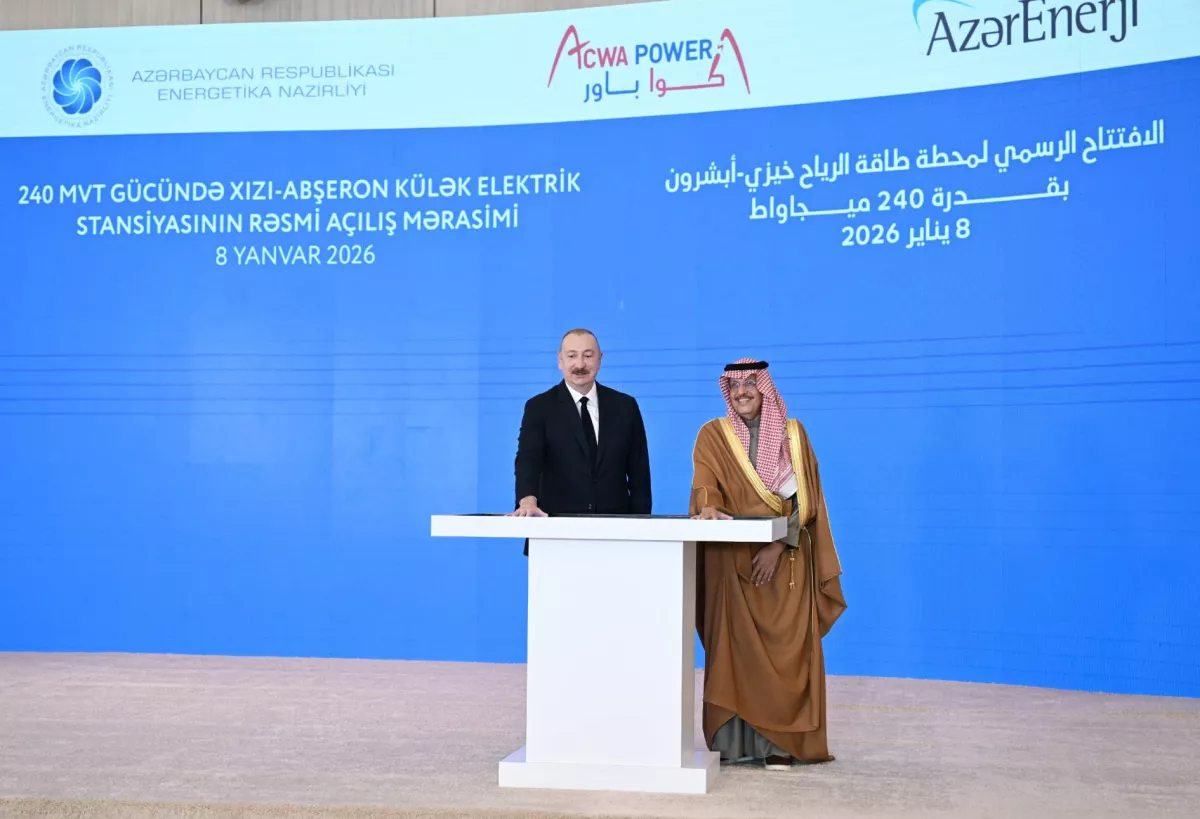
Indeed, between 2023 and 2025, Azerbaijan–Saudi cooperation in the field of green energy expanded markedly. Several agreements and memoranda were signed between ACWA Power and Azerbaijan’s Ministries of Energy and Economy, covering a wide range of sector-specific initiatives. These include plans for the joint development of renewable energy projects in wind and solar power generation, the production of green hydrogen, seawater desalination, as well as the production and subsequent export of “green” fertilisers—primarily urea—under the low-carbon/green fertilisers project. In this context, it is hardly surprising that ACWA Power Azerbaijan Renewable Energy became the first foreign company in Azerbaijan to receive an investment promotion document in the renewable energy sector.
Some of these initiatives are already at the implementation stage. In particular, under a public–private partnership (PPP) model, ACWA Power, together with Türkiye’s IC İçtaş İnşaat, is implementing a project to build a seawater desalination plant at the Sumgayit Chemical Industrial Park. The facility will have a daily capacity of 300,000 cubic metres of water. The investment is being made by the established consortium, construction is scheduled to last 2.5 years, and the project is designed for a 27.5-year operational period, after which the plant’s management will be transferred to the Azerbaijan State Water Resources Agency (ADSEA).
Last year, Azerbaijan launched construction of large-scale “green” energy storage facilities based on Battery Energy Storage Systems (BESS). ACWA Power also plans to participate in these initiatives, having signed an implementation agreement with Azerbaijan’s Ministry of Energy in May 2024 for the creation of a 200 MW BESS facility.
At the same time, cooperation between the State Oil Company of Azerbaijan Republic (SOCAR) and ACWA Power is progressing very successfully. In April 2024, the two sides signed a cooperation agreement in the field of green fertilisers. The document provides for collaboration on the potential production and subsequent marketing of green fertilisers—primarily urea—within the framework of the Low-Carbon/Green Fertilisers project. SOCAR’s long-term project portfolio also includes agreements with its Saudi partner on joint initiatives in the production of green hydrogen.
According to current plans, investment cooperation between Baku and Riyadh is expected to expand further. In addition to energy, Saudi companies are set to be involved in infrastructure and reintegration projects on Azerbaijan’s liberated territories. There is already a successful track record of bilateral partnership in infrastructure projects: in the 2000s, Saudi investment funds financed several initiatives to modernise local road and water infrastructure. Overall, over the past years, Saudi companies have invested more than $370 million in Azerbaijan, and 26 Saudi firms are engaged in trade and financial transactions with the country.
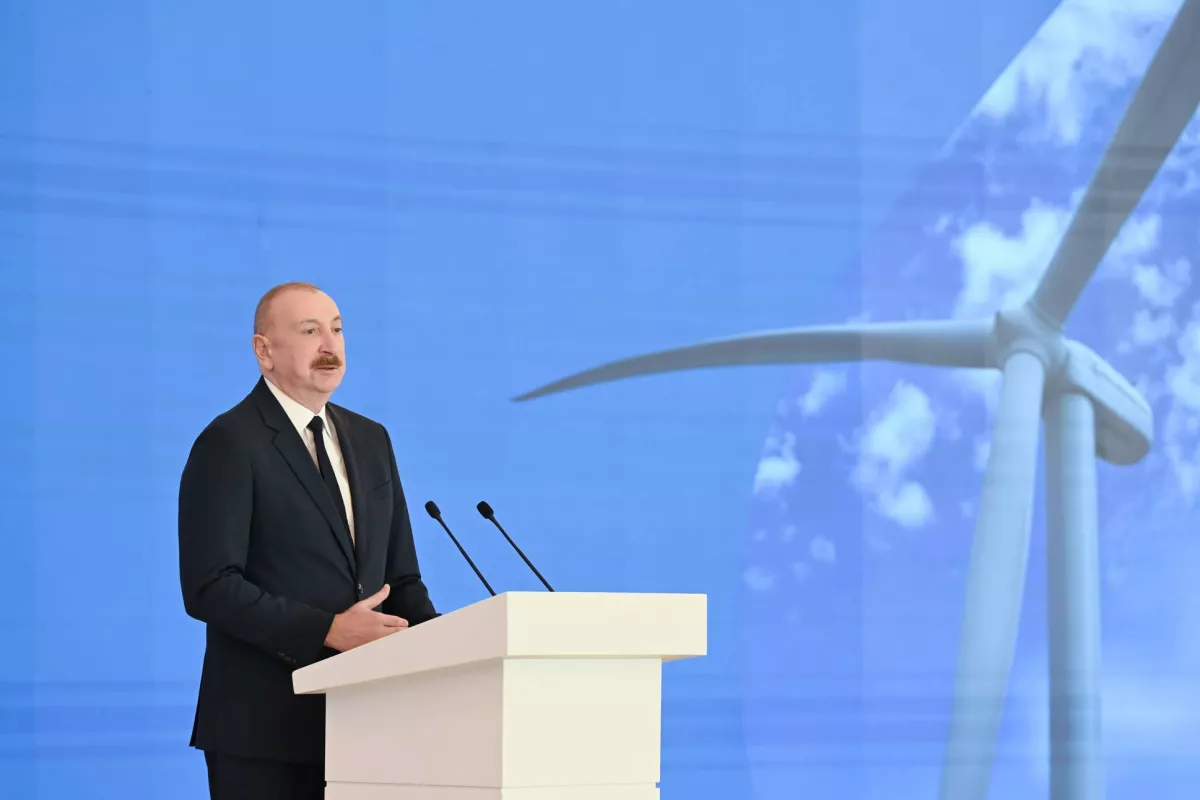
In his speech at the Gulustan Palace, the President of Azerbaijan noted that in the coming years, the construction of renewable energy plants in the country will gain significant momentum, with foreign investors playing a major role.
“As for generation capacities, it is sufficient to note that based on the signed contracts, wind and solar power plants with a total capacity of 6 gigawatts will be built by 2030, and overall, 8 gigawatts by 2032,” stated Ilham Aliyev.
The president emphasised that a 230 MW solar power plant was recently commissioned, and in January this year, the Khizi–Absheron Wind Power Plant with a capacity of 240 MW began operations. Additionally, in the liberated territories, three solar power plants are under construction in the Jabrayil district, with a combined capacity of 340 MW. Further large-scale “green” power plants are planned for Bilasuvar, Neftchala, the liberated territories, and the Nakhchivan Autonomous Republic.
In his address, the president also praised the work of Azerbaijani energy specialists involved in developing the renewable energy sector. Over the past five years, largely through Azerenergy JSC and using state funding, approximately 40 small hydroelectric plants have been built or rehabilitated in Karabakh and East Zangezur, bringing their total capacity to over 300 MW. For the first time in Azerbaijan’s history, a BESS energy storage system is being established, with the first project rated at 250 MW, implemented at the country’s expense by the national energy operator.
Overall, over the past 20 years, the country’s generating capacity has roughly tripled compared to all previous periods, and today the installed capacity of the national power system stands at around 10,000 MW.







 editor@caliber.az
 +994 55 444-88-98
 Азербайджан, Баку, ул. Низами, 203, Af Business House, 5-й этаж