










Azerbaijan and Vietnam expand economic horizons Trade, technology, tourism
In recent years, Azerbaijan has been actively diversifying its trade partnerships, focusing on major markets such as China, Southeast Asia, and the broader Asia-Pacific region. Among its most promising new partners is Vietnam, where a notable breakthrough in bilateral business cooperation is beginning to take shape.
During 2025, key meetings—including the Intergovernmental Commission (IGC), the Azerbaijan-Vietnam Joint Business Council, and a dedicated business forum—resulted in agreements to expand mutual investments and establish joint ventures (JVs). Momentum in this area appears to be building: a recent meeting at Azerbaijan’s Ministry of Economy with the leadership of Vietnamese automaker VinFast explored opportunities for joint electric vehicle production, signalling potential new avenues for industrial cooperation.
Today, Vietnam exemplifies dynamic industrial growth and rapid modernisation. With a population of 101.5 million, it has earned its place among the new “Asian Tigers.” According to the International Monetary Fund (IMF), Vietnam’s GDP surpassed $484 billion in 2025, growing at a rate of 6.5%.
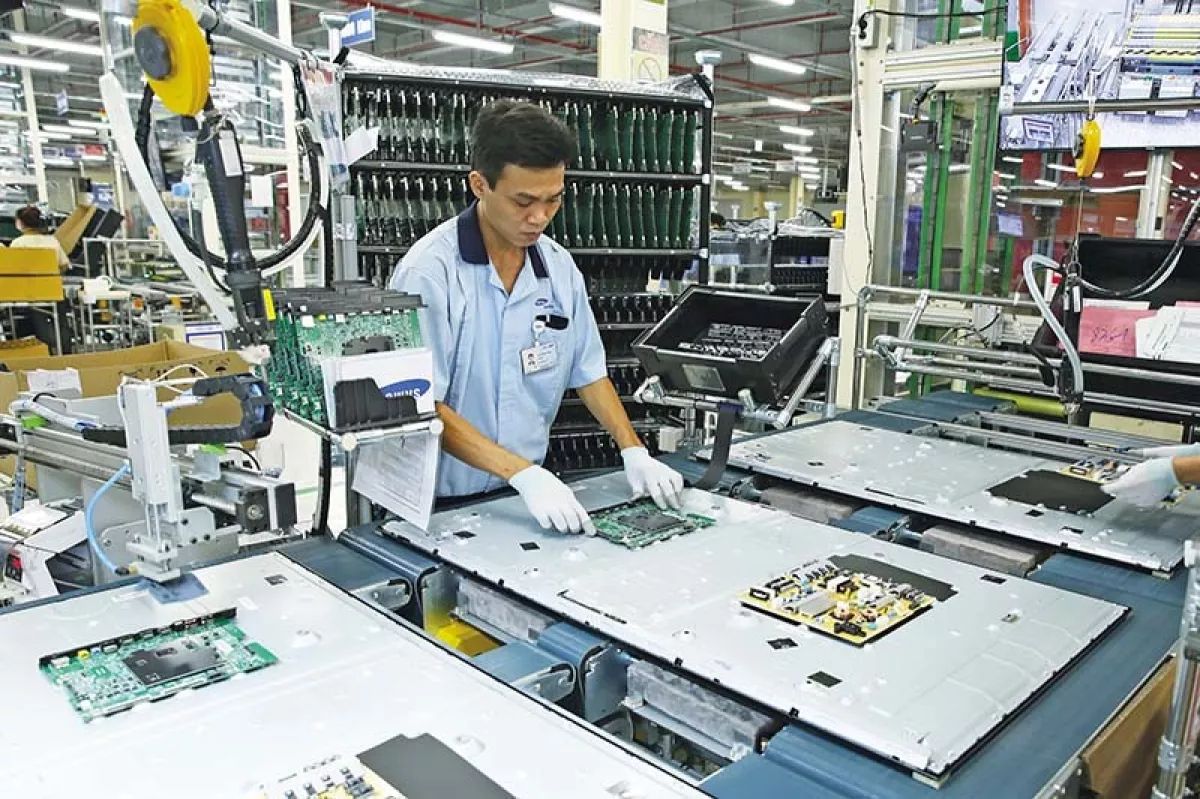
The country’s economic expansion is driven largely by joint ventures with Japan, China, South Korea, Singapore, and countries in Europe and North America. Exports of industrial and agricultural goods have become the backbone of Vietnam’s economy. Vietnam produces electronics and electrical equipment, computer hardware, and mobile devices, while also manufacturing branded clothing, footwear, and accessories, alongside a diverse array of agricultural products.
Moreover, alongside Vietnam’s industrial growth, global interest in the country as a trade and economic partner has increased significantly. Azerbaijani businesses, in particular, have been steadily building mutually beneficial ties with the Vietnamese market. The numbers highlight this progress: in 2009, Azerbaijan-Vietnam trade amounted to a modest $12.6 million. By January–November 2025, bilateral trade had reached $141.8 million—7.3% higher than the same period in 2024—and over the past 16 years, trade has grown more than elevenfold.
In recent years, Vietnam has exported computers, smartphones, electronics, and components to Azerbaijan, alongside agricultural products such as seafood, tropical fruits, canned goods, and rice. Vietnamese exports also include fabrics, clothing, footwear, and accessories. Meanwhile, Azerbaijan’s exports to Vietnam have been led by crude oil and petroleum products, though they have gradually diversified to include energy and electrical equipment, precision instruments, tobacco raw materials, and food products.
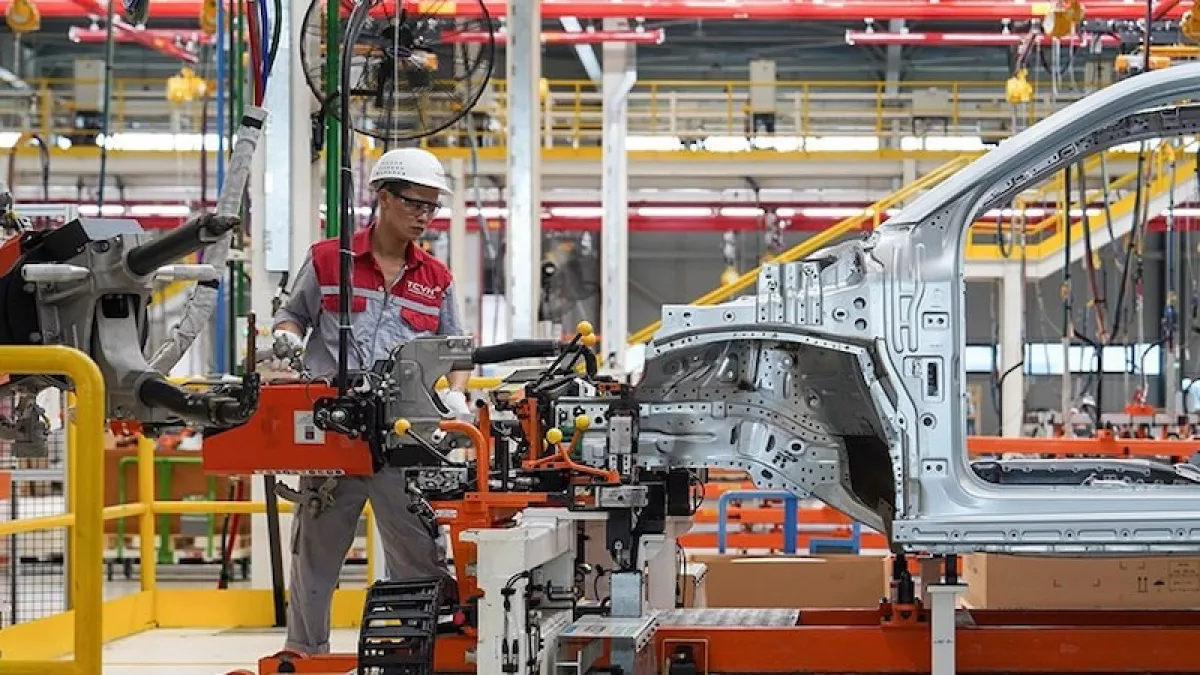
An important sector of Vietnam’s industry is automobile manufacturing, where global brands such as Toyota, Hyundai, and Mitsubishi have a strong presence, and licensed assembly of Hyundai buses has been established. At the same time, the fastest-growing segment in the “Land of the Lotus” is the country’s only domestic passenger car brand, VinFast, founded in 2017.
At VinFast’s Haiphong factory, both electric scooters and internal combustion engine (ICE) vehicles—including crossovers, sedans, and hatchbacks produced under license from General Motors and BMW—are assembled. However, the company’s primary focus is on electric vehicles. In 2025, VinFast set a new record in the Vietnamese automotive market, manufacturing 175,099 electric cars. Experts note that consumer preferences in Vietnam are clearly shifting toward electric transport, positioning the country as one of the fastest-growing EV markets in Southeast Asia.
Notably, VinFast—currently Vietnam’s market leader—is looking to expand its electric vehicle exports and may establish large-scale assembly operations in other regions, including post-Soviet markets. Azerbaijan could potentially benefit from this strategic expansion.

On January 15, Azerbaijan’s Minister of Economy, Mikail Jabbarov, held talks with a delegation led by Le Thi Thu Thuy, Chairwoman of the Vietnamese company VinFast. During the meeting, information was provided on Azerbaijan’s favourable business environment, established legal and institutional mechanisms for investors, tax and customs incentives, industrial zones, and investment attraction tools.
The discussions focused on prospects for joint ventures in the automotive sector, as well as the exchange of technologies and expertise in this field. “We exchanged views on cooperation between business communities to diversify economic relations with Vietnam, priorities for sustainable development, and Azerbaijan’s favorable business climate,” Minister Jabbarov wrote on his social media page.
Azerbaijan holds promising prospects for cooperation with Vietnam in vehicle assembly. The country offers the largest consumer market in the South Caucasus, along with experience, skilled personnel, and technological capacity to support such initiatives.
Currently, Azerbaijan has three passenger car manufacturing plants. Since 2010, budget cars have been assembled at the NAZ-Lifan plant in the Nakhchivan Autonomous Republic using affordable Chinese components. In 2018, Azermash JSC launched production of the Khazar car line in the Neftchala industrial district, utilising parts supplied by Iran’s IranKhodro JSC. The most promising project is the Azerbaijani-Uzbek joint venture in the Hajigabul industrial district, where Chevrolet vehicles have been assembled over the past four years.
Notably, the automotive sector is far from the only area where Azerbaijan and Vietnam could establish fruitful cooperation. Following the strategic cooperation agreement and last year’s meetings of the Intergovernmental Commission, the Joint Business Council, and the business forum, Baku and Hanoi are exploring opportunities to expand investments and create joint ventures across multiple sectors.
According to the Azerbaijan Export and Investment Promotion Agency (AZPROMO), the textile industry is of particular interest. Virtual meetings have already been held between Azerbaijani and Vietnamese companies to discuss the export and production of cotton products, as well as other forms of collaboration in this field.
In the renewable energy sector, a memorandum signed last year between Azerbaijan’s State Agency on Alternative and Renewable Energy Sources (BOEMDA) under the Ministry of Energy and Vietnam’s ROX Group outlines cooperation in areas such as energy storage systems (BESS), standalone and grid-connected solar power, onshore and offshore wind energy, and the production of “green” hydrogen and ammonia.
A key area of cooperation between Azerbaijan and Vietnam is tourism. Since November 2018, Azerbaijani citizens have been able to visit Vietnam using a 30-day e-visa. In addition, Vietjet Air operates several charter flights between the two countries, although their frequency remains limited.
Last year, the Vietnam National Administration of Tourism and the Azerbaijan Tourism Bureau (ATB) held discussions on deepening cooperation in the travel sector, strengthening direct contacts between travel agencies in both countries, and exploring the possibility of establishing regular direct flights between Baku and Hanoi.







 editor@caliber.az
 +994 55 444-88-98
 Азербайджан, Баку, ул. Низами, 203, Af Business House, 5-й этаж