










“Azerbaijan will become an attractive destination for investment” US analyst on Caliber.Az
In a wide-ranging interview with Caliber.Az, American political analyst and publicist Samson Katsman discusses the evolving role of Azerbaijan in US foreign policy, the dynamics of the South Caucasus, and broader geopolitical challenges facing Washington.

— Since August 8, we have seen an active expansion of US–Azerbaijan partnership. Why is the South Caucasus of interest to the United States? How do you assess the prospects for cooperation between Washington and Baku? To what extent could this cooperation go beyond the TRIPP format, and in which areas could it develop? Could the White House’s policy towards the South Caucasus change after Donald Trump leaves office?
— The South Caucasus is of interest to the United States in many respects, above all from a geopolitical standpoint. In terms of energy security, it is a strategic region at the crossroads of Europe and Asia and an important transport hub through which oil and gas supply routes pass, bypassing Russia and Iran.
Washington is interested in strengthening ties with all three South Caucasus countries, supporting their sovereignty, and ensuring regional stability. US policy is aimed at expanding its presence in the region in order to limit the influence of Russia and Iran, support a pro-Western orientation, and build pragmatic and friendly relations with Azerbaijan.
These relations are bilateral in nature: the United States is interested in the South Caucasus, and the South Caucasus is interested in the United States. Unlike Russia and Iran, Washington is genuinely interested in peace, which would be followed by investment and economic growth. US influence in the region is not based on fuelling old conflicts.
It is evident that the countries of the South Caucasus are also keen not to miss this window of opportunity and to integrate into global markets.
Cooperation between the United States and Azerbaijan will not be limited to the TRIPP framework. With the establishment of a solid and long-term peace in the South Caucasus, Azerbaijan will become an attractive destination for investment. It can be stated with a high degree of confidence that this vector of US policy will remain unchanged under any administration in the White House.
I would also note that, in the context of developing Azerbaijani–American relations, the full repeal of the notorious Section 907 — which prohibits direct economic and military assistance to Azerbaijan — is of great importance. Certain efforts in this direction are already under way.
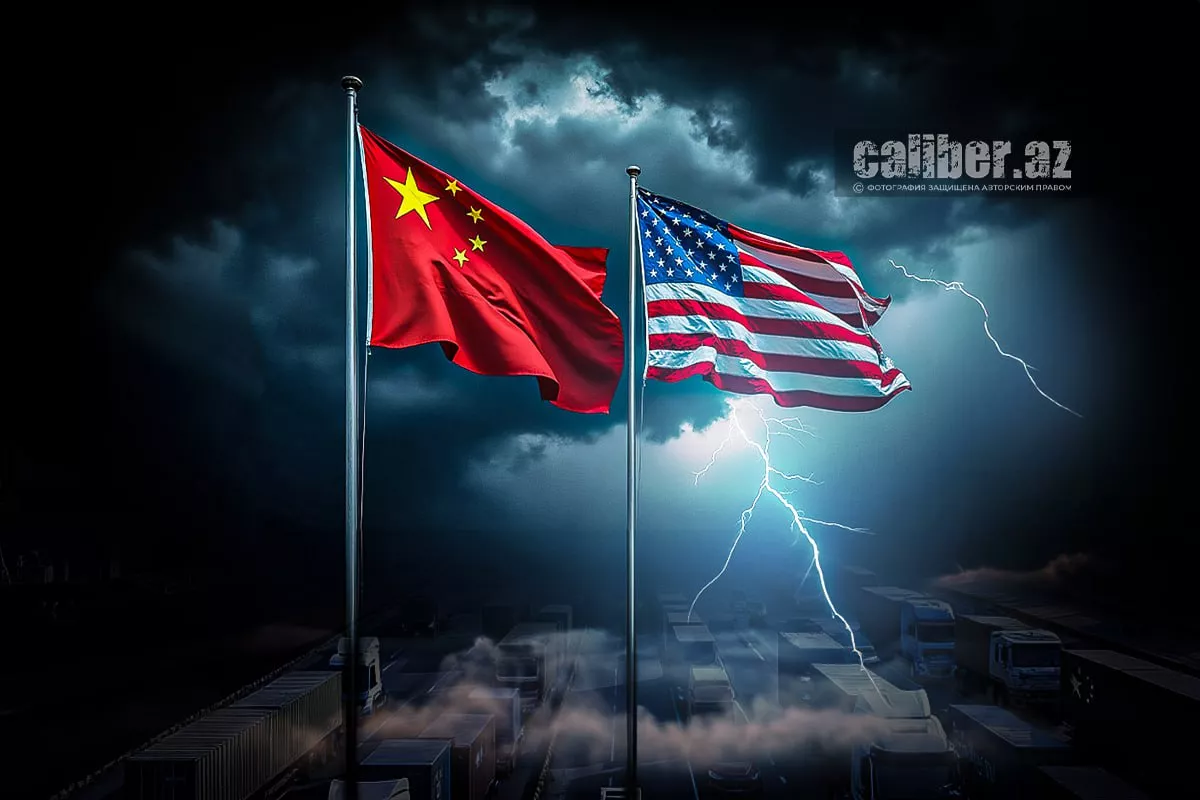
— Azerbaijan actively cooperates with both the United States and China, has agreements with both sides, and ambitious plans to develop these relationships. What are the United States’ plans with regard to China? Do they still take the form of confrontation, or have recent contacts between the two countries’ leaders clarified many outstanding issues and reduced this confrontational tension? At least, Donald Trump has spoken of progress. Do US and Chinese interests overlap in the area of the Middle Corridor?
— Let us look at the long-term perspective. The United States and China are not only the world’s two largest economies; they are also two geopolitical rivals. Their confrontation has not yet entered a hot phase largely because a relative balance of power is still being maintained. Apparently, the leadership of the Chinese Communist Party remains interested in preserving economic ties with the United States, which would inevitably suffer in the event of an armed conflict.
Will this balance—above all in military capabilities—be preserved on both sides? In terms of the total number of naval vessels, China has already surpassed the United States and now possesses the world’s largest navy. The US still leads in aircraft carriers and nuclear-powered attack submarines, while Beijing is rapidly increasing the number of destroyers and frigates, seeking dominance in the South China Sea. China’s plans regarding Taiwan have not disappeared.
Thousands of Americans die each year from fentanyl overdoses, with the drug being smuggled into the United States from Mexico. US authorities accuse China of involvement in supplying the chemicals necessary for fentanyl production to Mexican drug cartels. Therefore, regardless of how the conversation between Trump and Xi Jinping ends, all these issues remain firmly on the agenda.
As for the intersection of American and Chinese interests in the Middle Corridor, all participating countries have considerable room for manoeuvre to maintain a balance in their relations with both the United States and China, preserve their neutrality, and fully capitalise on their transit potential.
— What will US policy in the Middle East look like in the near future? Washington finds itself in a difficult position: on the one hand, it is Israel’s closest ally; on the other, several European countries have adopted an actively anti-Israeli stance, which also creates certain nuances, including for the swift search for consensus among all parties in the Middle East…
— Europe’s position on the Middle East is to a large extent shaped by the influence of both far-left forces and internal pressure from millions of migrants who, having arrived in countries that granted them asylum and refuge and provided favourable conditions and opportunities for social advancement, not only took this for granted but also became a factor shaping the foreign policies of European states—particularly their anti-Israeli stance. In essence, they have imposed “their own rules on someone else’s monastery”. The situation in the United States today is different.
US policy in the Middle East will be determined both by Israel’s recent victory over Iranian proxies—Hamas and Hezbollah—and by Türkiye’s emerging ambitions to play the role of a Mediterranean hegemon. The United States will have to take steps to prevent a possible escalation. We will be watching how events unfold.







 editor@caliber.az
 +994 55 444-88-98
 Азербайджан, Баку, ул. Низами, 203, Af Business House, 5-й этаж