










Between two poles: China seeks balance in ties with the Nordic countries Article by Matanat Nasibova
China's relations with Denmark, Sweden, Norway, and Finland can be described as a form of "pragmatic balancing" or "engagement at two poles", as they represent a complex relationship in which deep economic cooperation is closely intertwined with geopolitical disagreements. This dynamic largely stems from Beijing's growing regional and global ambitions, which have raised serious concerns in Nordic capitals, particularly amid China's expanding military presence in the Arctic and its increasingly close ties with Russia.
Against this backdrop, it is particularly telling that Beijing officially describes itself as a "near-Arctic state" and has demonstrated a strong interest in Nordic technologies, especially in green innovation, port logistics, and maritime transport. While this has created opportunities for cooperation, it has also heightened concerns across the Nordic countries over industrial espionage. As a result, they have tightened oversight of critical infrastructure and strategic supply chains, restricting Chinese companies' access to sensitive sectors.
Moreover, all of these countries are NATO members, meaning that their policies are closely aligned with the broader European strategic approach and the Washington Declaration. Their position increasingly centres on the need for "de-risking"—reducing dependence on China—a course that runs counter to Beijing's ambitions to expand its influence in the region.
Against the backdrop of these political and economic realities, the Chinese foreign minister's tour of the Nordic countries, which began today, July 2, has attracted close attention from international media and global policymakers alike. This suggests that the significance of the visit should be viewed within a much broader geopolitical context.
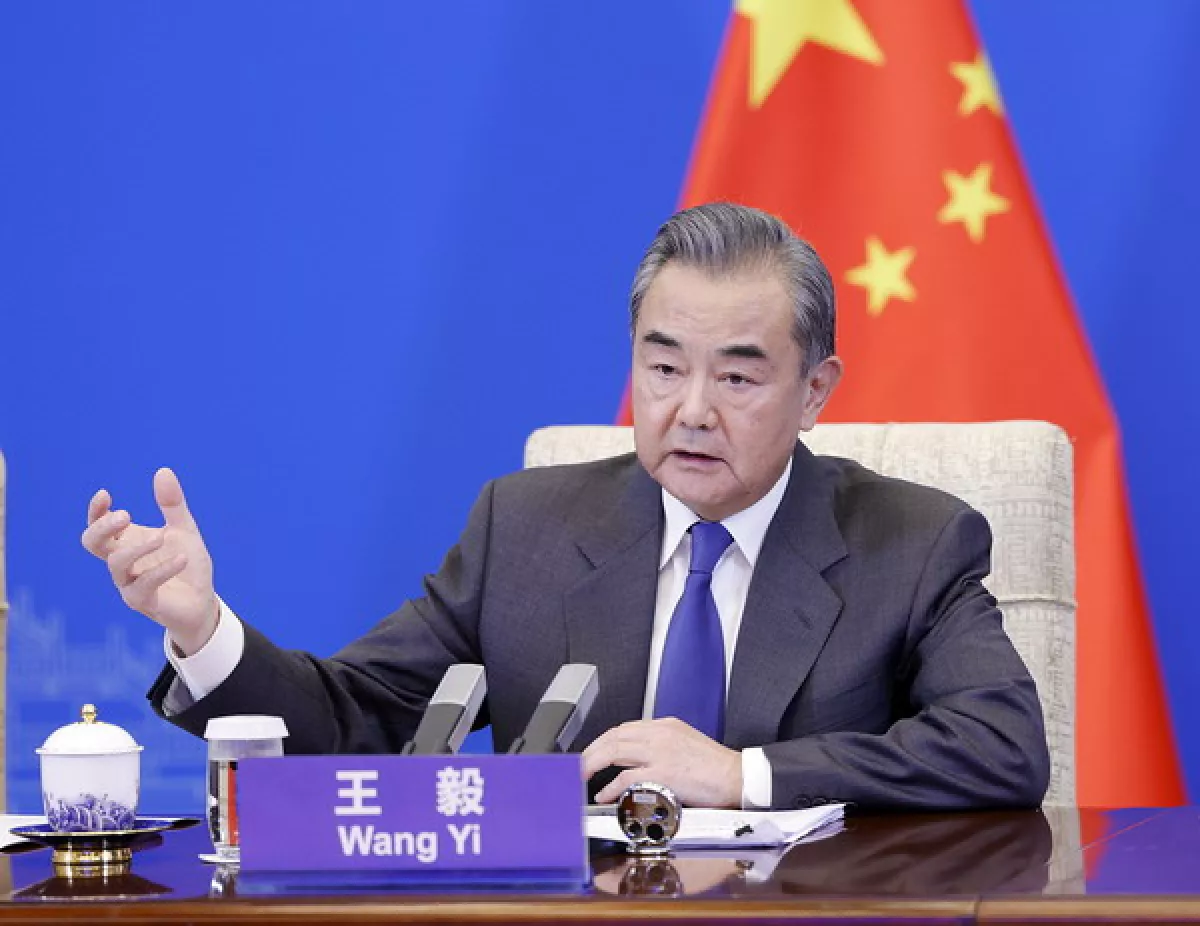
First and foremost, against the backdrop of persistent disagreements with Europe, Beijing is seeking to maintain dialogue with countries that play a direct role in shaping the European Union's foreign policy. Finland, for instance, having recently joined NATO, has emerged as one of the Alliance's key states on its northern flank—a development that has not gone unnoticed in Beijing. In this context, Foreign Minister Wang Yi's visit is likely aimed at gaining a better understanding of how the security architecture in Northern Europe is evolving and what implications these changes may have for China.
Secondly, Arctic-related discussions are expected to feature prominently on the agenda, as the region remains an area of strategic interest for Beijing. Norway, Denmark through Greenland, Finland, and Sweden may differ in their respective approaches to Arctic affairs, but all are active participants in the Nordic debate over China's growing presence in the region.
Thirdly, the Chinese foreign minister's Nordic tour appears intended to ease the crisis of confidence that has emerged following a series of arrests across Northern Europe involving both local citizens and foreign nationals suspected of conducting industrial and military espionage on behalf of China. At the same time, Beijing is seeking to preserve a pragmatic dialogue with these countries despite the growing security concerns.
The visit also serves as a message to Brussels that, notwithstanding numerous disagreements—including ongoing trade disputes—China remains open to dialogue. This interpretation is supported by the fact that Beijing's relations with Copenhagen, Helsinki, Oslo, and Stockholm are largely viewed through the prism of the European Union. Although Norway is not an EU member, it is deeply integrated into the European market and typically takes part in the same discussions on technological, trade, and infrastructure-related dependencies.

In simple terms, the Chinese foreign minister’s visit to Scandinavia and Finland forms part of Beijing’s broader strategy to prevent the consolidation of an anti-China line in Europe. This trend is largely driven by growing mistrust in European capitals towards Beijing, rooted in its close partnership with Moscow, even though China’s stated position on the Russia–Ukraine war is based on the concept of an “objective and impartial” approach. This approach combines support for Ukraine’s territorial integrity with consideration of Russia’s security concerns.
This stance is reflected in the 2023 document, “China’s Position on the Political Settlement of the Ukraine Crisis”, which calls for respect for the sovereignty of all countries and the resumption of direct dialogue. In addition, just days ago, China's Deputy Permanent Representative to the United Nations, Sun Lei, stated that Beijing is urging Moscow and Kyiv to resume negotiations aimed at ending the war: "That is why we strongly call for an end to the conflict as soon as possible. We also strongly call for negotiations to resume, for genuine political will to be demonstrated, and for everything to be done to eradicate the root causes of this conflict through full and unconditional adherence to the principles of the UN Charter."
In conclusion, it can be noted that the Chinese foreign minister’s tour of the Nordic countries is aimed at alleviating concerns among these states, as well as within the European Union as a whole, regarding Beijing, while simultaneously preserving mutually beneficial trade and economic ties. This fully aligns with China’s concept of realpolitik, in which national interests, economic advantage, and stability consistently take precedence over ideological differences.
Taking into account reports in several media outlets that Wang Yi’s visit is taking place at the invitation of the foreign ministers of the four countries—Lars Løkke Rasmussen, Maria Malmer Stenergard, Elina Valtonen, and Espen Barth Eide—it can be assumed that the stated objectives are likely to be achieved.







 editor@caliber.az
 +994 55 444-88-98
 Азербайджан, Баку, ул. Низами, 203, Af Business House, 5-й этаж