










Europe seeks new routes as Kazakhstan explores solutions Azerbaijan at the heart of energy logistics
The ongoing Russia–Ukraine war, now in its fourth year, has had a significant negative impact on the transport and energy routes passing through Russia that connect Central Asian countries to Europe. In particular, Kazakhstan has been facing repeated disruptions in the stable operation of the Caspian Pipeline Consortium (CPC) for several years.
Recently, for instance, Ukrainian maritime drones damaged the mooring equipment at the CPC terminal in Novorossiysk. According to Reuters, in response, Kazakhstan plans to increase oil transit via Azerbaijan, sending about 188,000 metric tons of oil through the Baku–Tbilisi–Ceyhan (BTC) pipeline in December, which is 30% more than the previous month.
Amid the ongoing war in Ukraine and the increasing sanctions pressure from Western countries on the Russian energy sector in recent years, the EU has been seeking to fundamentally change transit routes for hydrocarbon supplies fundamentally. As the transshipment of raw materials along the Northern Route has declined, the attractiveness of transporting Kazakh oil through Azerbaijan has increased significantly. This involves an energy corridor that has been in operation for more than a quarter of a century, running from Central Asia across the Caspian Sea and then through Azerbaijan. In particular, the activities of the Transport Corridor Europe-Caucasus-Asia (TRACECA), initially aimed at transshipping hydrocarbons, fuel, and petroleum products, have experienced periods of growth and decline but have never been completely interrupted.
After the 2015–2016 energy crisis, which caused a significant drop in oil prices, the transshipment of Kazakh crude via the TRACECA route through Azerbaijan and Georgia to Europe became less profitable. As a result, Kazakhstan’s oil sector focused on transit operations through the 1,511-kilometre Caspian Pipeline Consortium (CPC) pipeline running through Russian territory, with an annual capacity of 67 million tonnes of crude. The importance of this pipeline is highlighted by the fact that it carries around 80% of all oil exports from Kazakh fields and accounts for over 1% of global oil transport. With the outbreak of the hot phase of the conflict in Ukraine, from March to August 2022, Russian authorities repeatedly halted operations on sections of the CPC, undertaking lengthy repair works, including at the Novorossiysk oil terminal—the system’s end point.

In the following years, the terminal was repeatedly targeted by drones, the most serious incident occurring on 29 November this year. During the attack by Ukrainian maritime drones (unmanned boats), the offshore mooring facility VPU-2 was put out of operation, forcing the Novorossiysk port terminal to suspend operations. Subsequently, oil shipments through the terminal were resumed via another offshore mooring facility, allowing exports to continue, albeit at reduced capacity. It should be noted that the third VPU is currently undergoing scheduled maintenance.
At the end of 2022, Kazakh President Kassym-Jomart Tokayev instructed an increase in oil transportation via the Trans-Caspian corridor. In early 2023, KazMunayGas JSC and Azerbaijan’s state oil company SOCAR signed an agreement to transport over one million tonnes of Kazakh oil through the Baku–Tbilisi–Ceyhan (BTC) pipeline system.
Since April 2023, oil primarily extracted from the Tengiz field—1.392 million tonnes—as well as crude from other Kazakh producers, has been shipped via tankers through the BTC system, exceeding the corresponding 2022 figures by 5.5 times. In 2024, the transit of Kazakh oil via BTC reached 1.4 million tonnes, slightly below the planned target of 1.5 million tonnes. According to Kazakhstan’s Ministry of Energy, the 2025 shipment plan via BTC remains at the 2024 level—1.5 million tonnes of oil.
“In total, since 2023, 3.4 million tonnes of Kazakh oil have been exported to the global market through the BTC pipeline, and this volume is planned to reach 7 million tonnes per year by 2027, with the possibility of further increases on mutually beneficial terms,” said Parviz Shahbazov, Azerbaijani Minister of Energy, during the 21st session of the Azerbaijan–Kazakhstan Joint Intergovernmental Commission on Trade and Economic Cooperation held in Baku in October this year.
Kazakhstan has also expressed its intention to increase oil transit volumes via the BTC pipeline. According to Sanzhar Zharkeshov, Vice Minister of Energy of Kazakhstan, discussions are ongoing to establish the full logistics chain—from Kazakh oil fields to Baku and then to the final destination in Ceyhan. Pricing aspects, including transit tariffs from the Azerbaijani side, are also under consideration. All these intentions are reflected in the protocol following the joint session of the intergovernmental commission.
“The BTC route has strategic significance for Kazakhstan, as it contributes to the diversification of export routes and reduces dependence on specific supply directions. We expect a response from Azerbaijan, where interest is also high, and we are ready to work on implementing this route,” added the vice minister.
However, given the increasingly complex situation at the Novorossiysk port, plans for the phased diversification of Kazakh oil transit are likely to be adjusted. In response, Kazakhstan’s Ministry of Energy has urgently stepped up its plans to redirect export volumes through alternative routes.
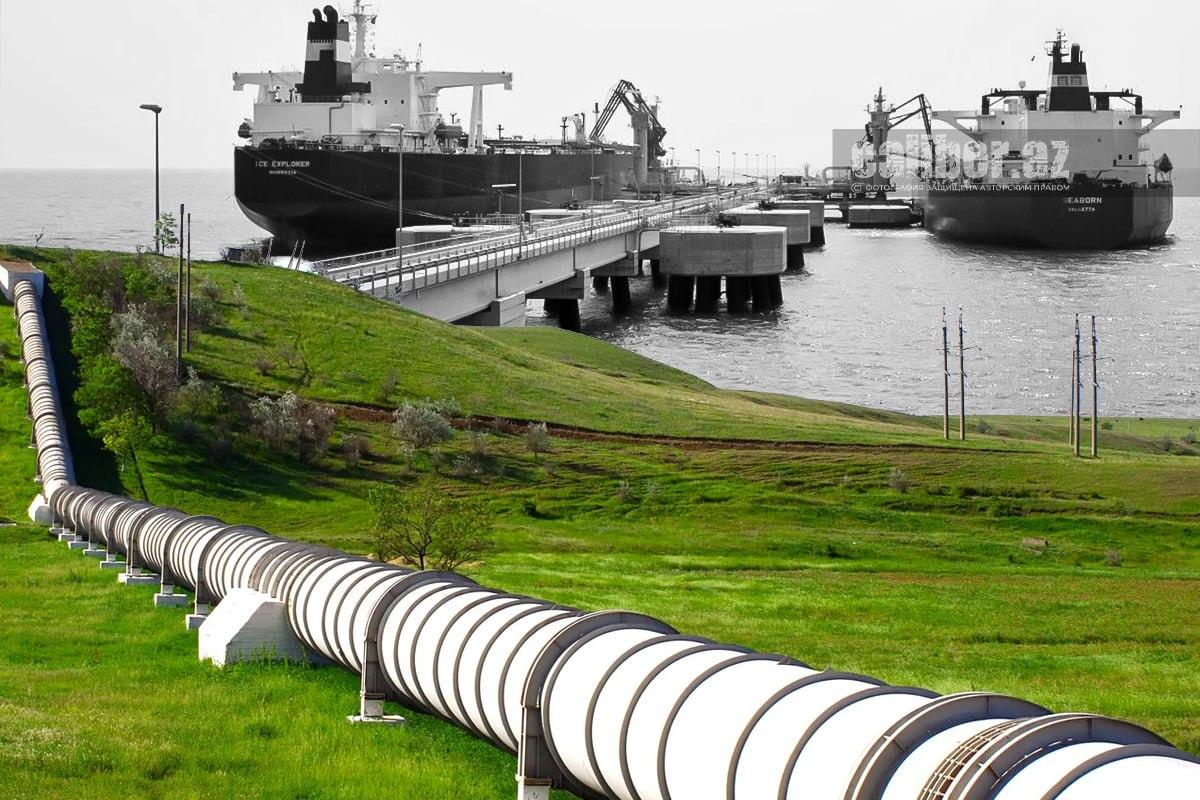
According to Reuters data published on December 4, Kazakhstan plans to increase oil transit volumes via the Baku–Tbilisi–Ceyhan (BTC) pipeline in December. Confidential sources indicate that tanker shipments from the Caspian port of Aktau to the BTC system are expected to reach around 188,000 metric tonnes of oil (47,000 barrels per day) this month, approximately 30% higher than in November. Of this total, 170,000 tonnes will come from Tengizchevroil’s Tengiz field, while 18,000 tonnes will be supplied from the Kashagan field.
Notably, Kazakhstan remains heavily dependent on the Russian CPC pipeline system. From the start of 2025 through November 21, over 65.5 million tonnes of Kazakh oil were exported via this route, more than 9 million tonnes higher than during the same period last year. Clearly, diverting such volumes to alternative pipelines—either toward China or via the BTC route—remains unfeasible.
At the same time, as part of its oil export diversification strategy, Astana is ready to expand cooperation with Baku on alternative routes. Last year, SOCAR and KazMunayGas agreed to continue discussions on potentially transporting Kazakh oil via the currently inactive Baku–Supsa pipeline, which has a capacity of 5 million tonnes per year. Estimates suggest that Kazakh shipments through this route could reach around 3 million tonnes annually.
According to Kazakh Minister of Energy Erlan Akkenov, using the Baku–Supsa pipeline is more expensive than shipments via the Russian route. “In this case, oil must be loaded onto tankers at the port of Aktau, unloaded at the port of Baku, and then reloaded into the Baku–Supsa system before reaching the Black Sea,” he explained. The minister noted that this double loading and unloading makes the route more costly for Kazakh shippers, which is why the matter is still under discussion.







 editor@caliber.az
 +994 55 444-88-98
 Азербайджан, Баку, ул. Низами, 203, Af Business House, 5-й этаж