










Farewell to a “Hearth” of hatred Moscow mourns its man
On April 5, in Armenia, Zori Balayan passed away at the age of 91 — a man whose name is inextricably linked to the incitement of interethnic hostility, ethnic cleansing, and terror against peaceful Azerbaijanis. On April 7, a memorial service was held at the Surb Hovhannes Mkrtich Church in Yerevan’s Kond district, with the funeral scheduled for today. What draws particular attention is the kaleidoscope of figures who attended the farewell ceremony: former Armenian President Robert Kocharyan, the last head of the puppet separatist regime in Karabakh Samvel Shahramanyan, deputies from the opposition bloc “Armenia,” Catholicos of All Armenians Garegin II, and other personalities well known to Baku for their roles in the occupation and plundering of Azerbaijani territories. It is clear why — for all of them, Balayan was a key ideological inspirer.
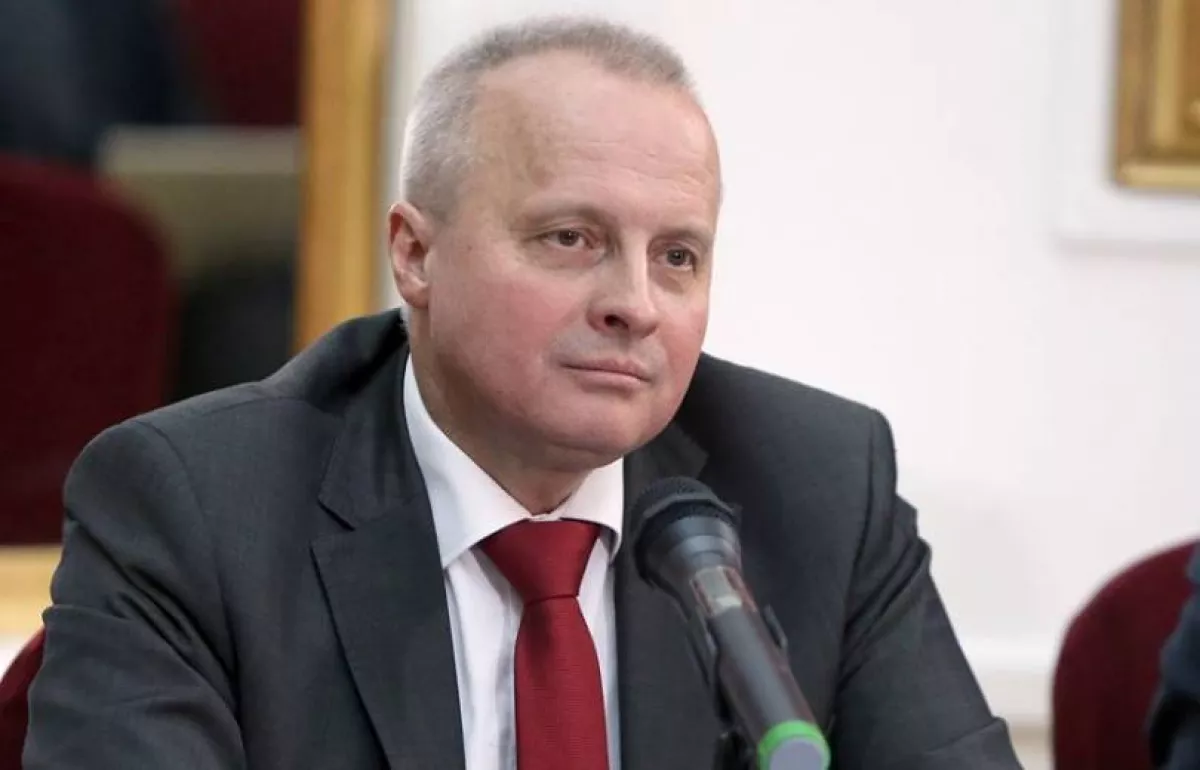
However, the most notable participant in the ceremony was the current Ambassador of the Russian Federation to Armenia, Sergei Kopyrkin.
The presence of an official representative from Moscow at the funeral of one of the main architects of Armenian separatism and ethnic hatred toward Azerbaijanis is a fact that cannot be reduced to mere protocol, given the deceased’s record — the very record that, in Yerevan, is often referred to euphemistically as that of an “outstanding publicist.”

Zori Balayan was born in 1935 in Khankendi — the administrative centre of the then Nagorno-Karabakh Autonomous Region of the Azerbaijan SSR. After receiving a medical education in Ryazan, he worked for many years as a doctor in Kamchatka, before moving into journalism and literature.
He gained wide notoriety with the publication in 1981 of his infamous essay Hearth (Ochag) as a standalone book, in which Balayan laid out the ideological foundation for the future Armenian separatism in Karabakh. He claimed that Karabakh and Nakhchivan were “ancient Armenian lands” and openly referred to Azerbaijanis as “enemies” of Russia and Armenia. The book is filled with insulting epithets directed at the Azerbaijani people — “barbarians,” “vandals,” “wild nomads.” It was a manifesto of ethnic hatred clothed in literary form.
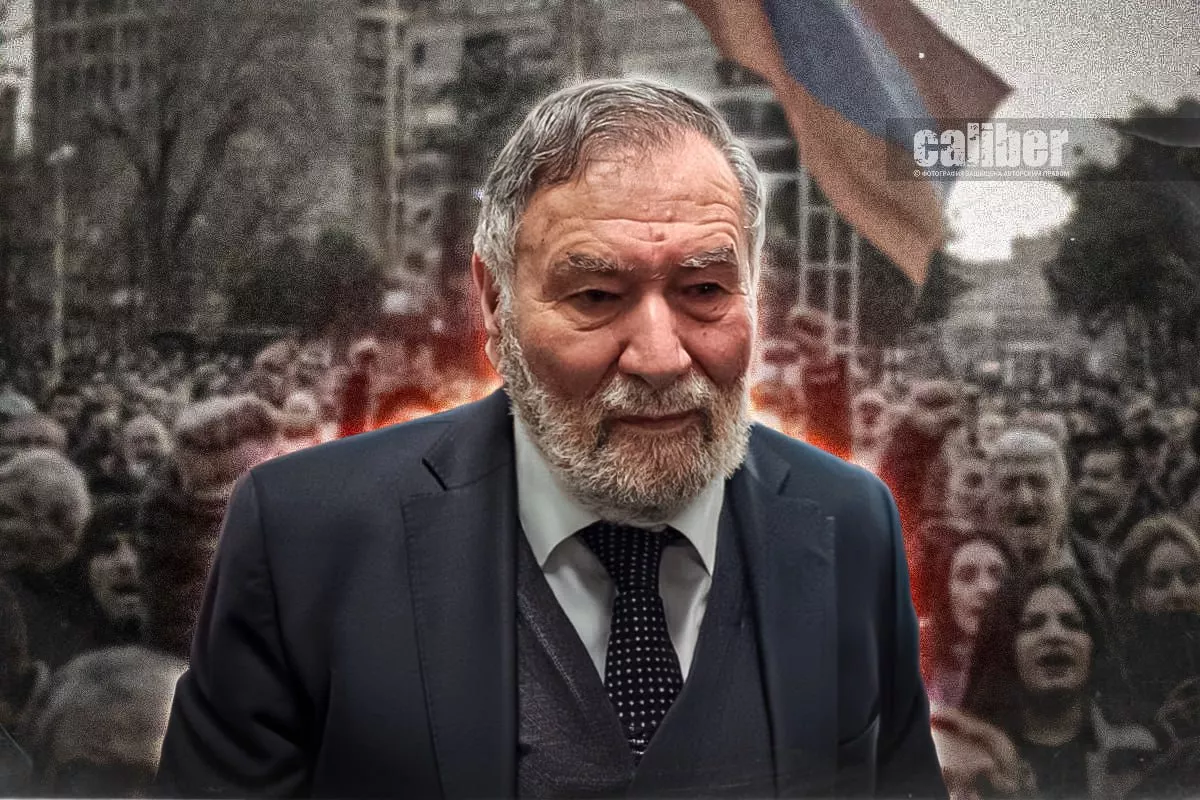
When, in 1988, Armenians living in the Nagorno-Karabakh Autonomous Region began their separatist push to break away from Azerbaijan, Zori Balayan became one of the central figures of this movement. Together with the poetess Silva Kaputikyan, on February 26, 1988 — immediately after the NKAO regional council adopted an illegal resolution on “reunification” with Armenia — he went to Mikhail Gorbachev to persuade the General Secretary to legitimise the annexation of Azerbaijani lands.
As Alexander Khinshtein, then a deputy of the Russian State Duma and now governor of Kursk Oblast, wrote in Literaturnaya Gazeta in 2018, “Arguably, the main ideologues of transferring the NKAO from Azerbaijan to Armenia were Silva Kaputikyan and Zori Balayan, who, as usual, were recipients of every award imaginable, including the Armenian SSR State Prize and the Komsomol Prize named after N. Ostrovsky. It was precisely their intense activity — open letters, angry articles, storming of high offices — that largely gave rise to the Armenian-Azerbaijani conflict, which has yet to be resolved almost 30 years later. Gorbachev’s meeting with Kaputikyan and Balayan on February 26, 1988, would become a turning point, an event of truly historic scale, provoking the first bloodshed.”
Balayan was not merely a theorist confined to an office; he was a practitioner of separatism — a man who turned nationalist ideology into concrete political actions that led to the expulsion of more than one million Azerbaijanis from their homes. His role in the events of the First Karabakh War went far beyond propaganda.
According to testimony given at a trial in 1998, Balayan, while in contact with Armenian intelligence services, was the instigator of a terrorist attack that took place on July 3, 1994, in the Baku metro, between the Ganjlik and 28 May stations. The explosion killed 12 people and injured 42. Based on this testimony, the General Prosecutor’s Office of Azerbaijan opened a criminal case against Balayan, and in 1999, Interpol issued an international warrant for him as a particularly dangerous criminal. In 2005, he was detained by Italian police at the port of Brindisi at Azerbaijan’s request.
After five hours in police custody, Zori Balayan and the captain of the ship Kilikia, Karen Balayan, on which the Armenian separatist ideologue had arrived in southern Italy, were released following intervention by the Armenian Ministry of Foreign Affairs and embassy. Nevertheless, the very fact of his detention speaks volumes.
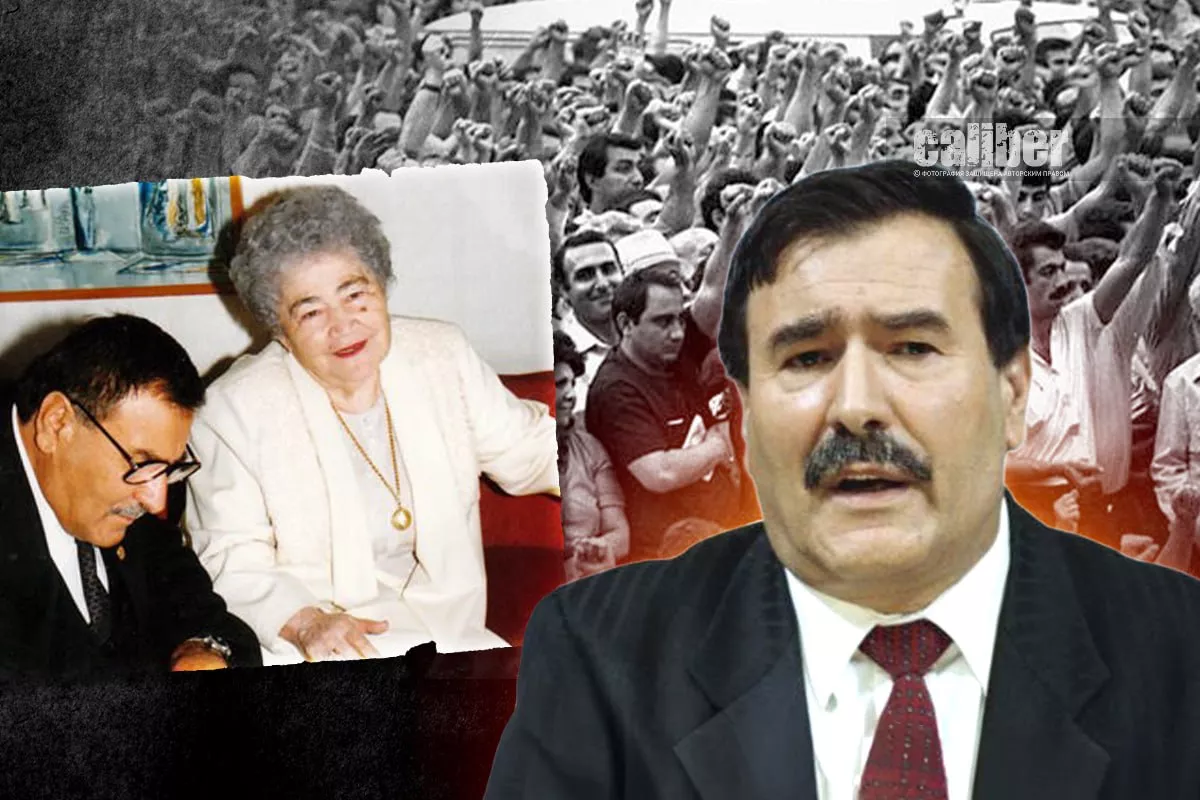
Particular attention should be paid to the open letter Balayan addressed to Russian President Vladimir Putin in October 2013 — on the 200th anniversary of the Treaty of Gulistan. In this extensive twenty-page text, he effectively called on Moscow to recognise Karabakh as part of the Russian state. Citing the 19th-century treaties of Gulistan and Turkmenchay, this separatist ideologue constructed a fantastical argument that the Karabakh issue was “Russia’s problem” and that the region rightfully belonged to Moscow. Balayan urged Putin to personally visit Karabakh and to “touch with his own hands” Armenian churches there.
Notably, many Armenian analysts observed that Balayan had, in effect, proposed “handing over” Karabakh to Russia, having spent years feeding his compatriots the idea of miatsum — reunification with Armenia — only to ultimately suggest giving it to an entirely different recipient. For him, however, the logic was simple: he had spent his life seeking a patron for the separatist project and was willing to find one in any office — whether in Yerevan or in Moscow.
In April 2022, Prime Minister Nikol Pashinyan stated that 3,825 Armenian servicemen had died as a result of the 44-day war. However, the Armenian opposition repeatedly claimed that actual losses exceeded official figures, citing numbers between 5,000 and 7,000. And this is only for the most recent war. All of them became victims of the very ideology that Zori Balayan had instilled in the Armenian masses since the early 1980s.
Yet, at the memorial service for such a figure, the Russian Ambassador Sergei Kopyrkin appeared — for a man who for decades stoked ethnic hatred against an entire people and who was at the roots of the occupation of the internationally recognised territories of a sovereign state.
One could, of course, argue that Kopyrkin attended the service within the bounds of general diplomatic propriety — to express condolences on the passing of a “public figure.” But diplomatic etiquette has its limits, and those limits are defined precisely by the record of the deceased. The ambassador of a major power cannot fail to understand the political signal he sends by appearing at the funeral of the ideologue of ethnic cleansing. His presence alongside Kocharyan, under whose presidency the occupation of Azerbaijani territories reached its peak, and alongside Shahramanyan — the last head of the separatist entity that ceased to exist after Azerbaijan’s counter-terror operations in September 2023 — is a highly telling image. Kopyrkin voluntarily, consciously, and publicly placed himself on the same level as these figures.
However, there is another, perhaps more precise, perspective. Balayan was an agent of Russian influence in the South Caucasus throughout his life — from the Soviet era, when, as a correspondent for Literaturnaya Gazeta, he dealt with matters far removed from literature, to that very letter to Putin in 2013, in which he explicitly proposed incorporating Karabakh into Russia. All of his activities — inciting separatism, ethnic cleansing, undermining Azerbaijan’s territorial integrity — fit entirely within Russia’s strategy of maintaining instability in the region and preserving leverage over the post-Soviet republics.
Kopyrkin was not merely saying farewell to a “publicist.” He was conducting the funeral service for a loyal instrument of Russian interests, a man who spent his entire life working to ensure the South Caucasus remained a conflict zone and Armenia a hostage of Moscow.
And in this sense, there is nothing surprising about the ambassador’s presence at the ceremony. Moscow is mourning its man, its agent. The one who, at the right moment, wrote the right letters to the right recipients, who stoked the right conflicts, and cultivated the right hatred. Ambassador Kopyrkin, by attending the memorial, merely confirmed what Baku has always known: for Moscow, Balayan’s values — separatism, territorial claims against neighbours, and the instrumentalisation of ethnic hatred — were never unacceptable.
Azerbaijan will not forget Balayan’s crimes. Neither his Hearth, soaked in hatred toward an entire people, nor his role in unleashing separatism that claimed thousands of lives, nor his involvement in terrorist attacks against civilians. And Azerbaijan will remember who attended his memorial.







 editor@caliber.az
 +994 55 444-88-98
 Азербайджан, Баку, ул. Низами, 203, Af Business House, 5-й этаж