










Investing in connectivity: BSTDB expands role in Azerbaijan’s transport and energy sectors Overview by Khazar Akhundov
In recent years, international financial institutions (IFIs) have significantly reshaped their country strategies in Azerbaijan. This trend is most clearly reflected in the activities of the Black Sea Trade and Development Bank (BSTDB), which has increasingly shifted its focus toward green energy projects, the development of transport corridors, the expansion of capital mobilisation through the issuance of securities denominated in the national currencies of member states, as well as trade finance for small and medium-sized enterprises (SMEs). These new directions in BSTDB’s cooperation with Azerbaijan were discussed in Baku at the 28th Annual Meeting of the Bank’s Board of Governors on July 1.
The BSTDB began full-scale operations in 1999, with the primary objective of supporting economic development across the Black Sea region. Azerbaijan currently holds a 5% share in the Bank’s capital. Since the start of its operations, the institution has extended loans worth approximately €520 million to Azerbaijan for more than 40 projects. Overall, the Bank’s exposure in the country accounts for up to 10% of its total loan portfolio.
The main share of the bank’s portfolio in Azerbaijan consists of loans to financial institutions (49.37%): beneficiary local banks provide these credit lines to the private sector, predominantly in the non-oil sector. This is followed by the energy sector (35.88%), where two loans have been extended to subsidiaries of the State Oil Company of Azerbaijan (SOCAR) – SOCAR Trading and SOCAR AQS – as well as a loan for the development of the “Shah Deniz” gas field project. The remaining share is allocated to the real estate sector (7.04%) and the consumer sector (3.99%).
In light of changes in the global economic environment, the bank’s areas of interest have recently expanded to include initiatives in such fields as waste-free production, digital transformation, the development of IT start-ups, and the formation of an Industry 4.0 base, among others. The bank’s financial focus is also directed toward renewable energy (RES) and energy efficiency projects, as well as the utilities and water supply sectors. At the same time, one of the bank’s key priorities is financing projects aimed at modernising transport infrastructure and supporting Azerbaijan’s logistics initiatives within the Middle Corridor – a strategically important route for the countries of the Caspian region, China, and Europe.
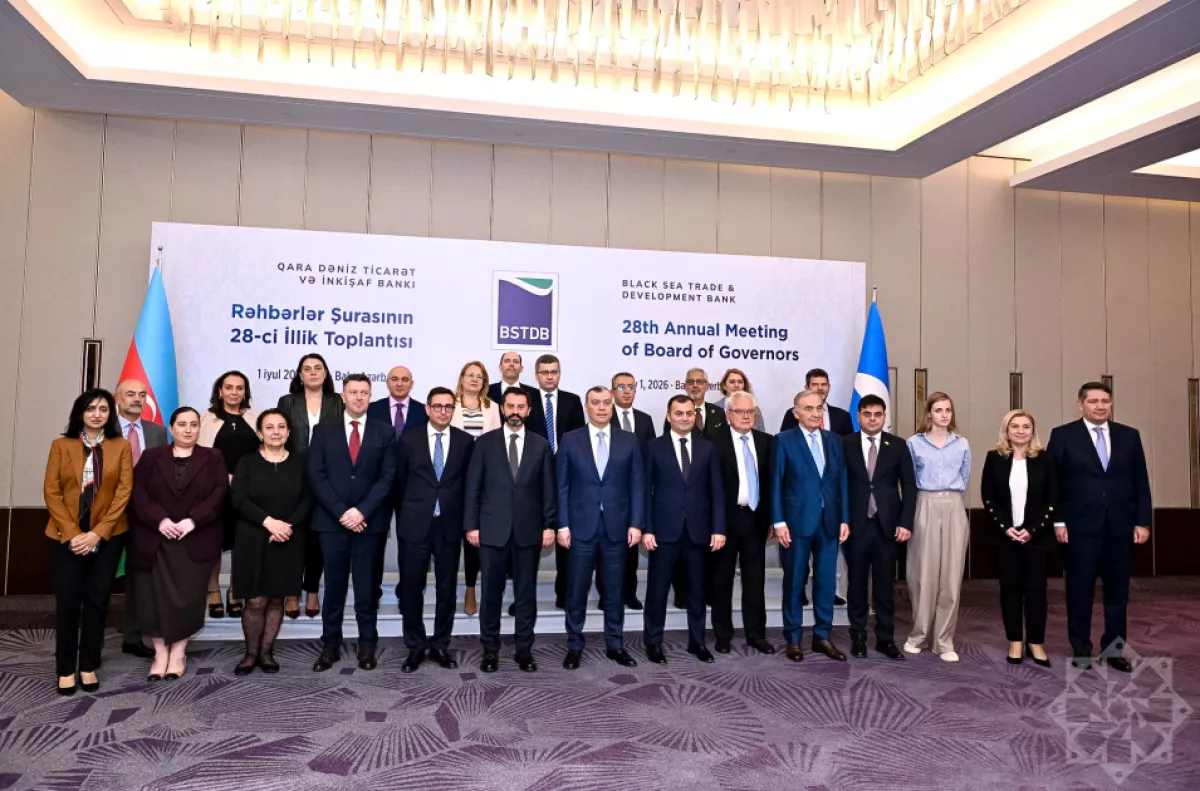
Prospects for regional cooperation with the bank were discussed in Baku, where the Annual Meeting of the Board of Governors of the bank commenced under Azerbaijan’s chairmanship. During the meeting, the results of the bank’s activities were reviewed and the Black Sea Trade and Development Bank’s (BSTDB) financial statements for 2025 were approved.
As Azerbaijani Minister of Finance Sahil Babayev noted during the event, “Last year, the Black Sea Trade and Development Bank approved 31 new projects worth a total of more than €668 million, which is about 81% more compared to the previous year. Despite a challenging geopolitical and economic environment, the bank has demonstrated resilience, expanded its operational activities, and continued to fulfil its development mandate across the region.”
According to him, alongside the growth of the operational portfolio to approximately €1.5 billion and strong financial performance, this highlights the importance of the institution and its effectiveness as a regional development bank.
The event featured presentations, business discussions, and bilateral (B2B) meetings between representatives of businesses and financial institutions. Today, on July 2, a business forum will also take place on the theme “Connecting Markets, Diversifying Economies: Azerbaijan as a Regional Hub,” dedicated to the country’s economic development priorities, opportunities for local businesses, and issues of regional connectivity.
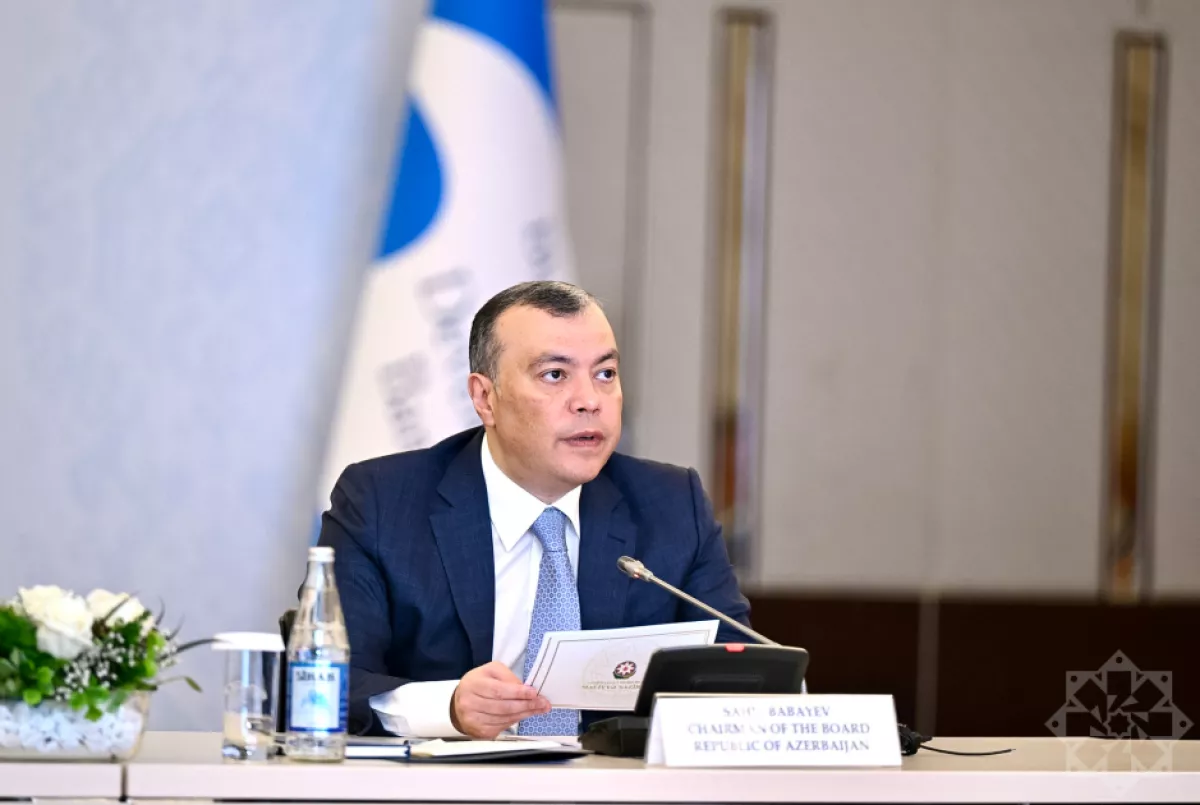
“Azerbaijan intends to expand cooperation with the BSTDB, placing special emphasis on financing regional infrastructure projects,” the Minister of Finance said. “Today, discussions are under way on expanding transnational and regional projects in Azerbaijan, the South Caucasus, and the Black Sea region. This involves broader support for transport corridor and energy projects, as well as financing various private initiatives in Azerbaijan and other countries, particularly small and medium-sized enterprise (SME) projects.”
The minister also emphasised that, as a major hub of the Middle Corridor connecting Europe and Asia via the Caspian Sea, Azerbaijan expects further expansion of cooperation with the BSTDB, including in transport connectivity and infrastructure initiatives, energy security, partnerships in renewable energy (RES), and the development of the financial sector.
“Financial support for small and medium-sized enterprises through local banks is one of the key areas. During today’s sessions, discussions focused on increasing financing for the private sector, particularly support for SMEs in Azerbaijan and other member states,” said Minister Sahil Babayev, noting that cooperation with this institution in this direction is expected to expand in the near term.
As part of the diversification of the bank’s country strategy, the BSTDB plans to expand its network of partner banks in Azerbaijan, which serve as an important channel for providing loans to micro, small and medium-sized businesses, as well as supporting foreign trade participants through trade finance mechanisms. The bank has also prioritised lending to local banks in domestic currencies. The emphasis here is placed on optimising credit support for private sector projects and on the de-dollarisation of the country’s lending sector.

It is worth recalling that the BSTDB became the first global international financial institution (IFI) to issue bonds in Azerbaijan in the local currency. In 2019, the bank placed corporate manat-denominated bonds worth AZN 10 million (approximately $6 million) on the Baku Stock Exchange, with the aim of supporting private sector financing. In the bank’s medium-term plans, the issuance of manat-denominated bonds totalling around AZN 50 million (approximately $30 million) is also envisaged. In addition, repeat transactions with traditional partner banks are planned, along with the attraction of new local credit institutions in order to expand trade finance for SMEs.
During the meeting in Baku, President of the Black Sea Trade and Development Bank Serhat Köksal noted that issuing instruments in the national currencies of member states is a strategic priority for the bank. “This simultaneously contributes to three objectives: the development of domestic capital markets, the creation of natural hedging mechanisms for local currency lending, and the reaffirmation of our commitment to the economies of member countries as a regional institution. Our previous manat-denominated transactions have enabled the BSTDB to become one of the few supranational issuers present in the Azerbaijani market, and this experience has proven highly successful both in terms of investor interest and the execution of the placements themselves,” he said.
On the sidelines of the event, new vectors of cooperation with Azerbaijan were also discussed. In this context, the head of the BSTDB noted that the bank is currently financing a number of projects in the country, and that ahead of the meeting an agreement had been reached on cooperation between the BSTDB and “Azerbaijan Airlines” (AZAL).
He also said that, in the near future, the bank plans to finance the construction of solar power plants in Azerbaijan. In addition, the country’s credit portfolio also includes a number of projects in the logistics, tourism, and education sectors.







 editor@caliber.az
 +994 55 444-88-98
 Азербайджан, Баку, ул. Низами, 203, Af Business House, 5-й этаж