










Israel — US — Iran: The end or just another pause? International panorama on Caliber.Az
The two-week ceasefire between the US–Israel bloc and Iran has left many people in a strange state of mind—naturally, depending on their position in this conflict. Both sides have declared victory, yet neither has fully achieved its objectives—at least not in this round of confrontation.
Why is it more accurate to call this a “round”? Because the negotiations between the Iranians and the Americans, set to begin today in Islamabad, are unlikely to produce any meaningful breakthrough. The demands of both sides are fundamentally irreconcilable. The United States will insist on zero uranium enrichment, the dismantling of Iran’s ballistic missile programme, and most likely an end to its support for proxy armed groups. It is hard to imagine that Iran, even after being severely strained by the war, would agree to such terms.
Iran’s demands are equally unacceptable for the United States. It is hard to imagine that the administration of Donald Trump—having repeatedly criticised the Iranian regime and ultimately opted for a full-scale war against it alongside its ally—would agree to such terms. The closure of American bases in the Persian Gulf is out of the question, although this demand is most likely a political statement intended to demonstrate resolve and toughness.
The Strait of Hormuz remains a flashpoint. Over the past 24 hours, only a handful of tankers have managed to pass through it, while Tehran is now reportedly demanding payment for granting passage—something that has clearly irritated Donald Trump, as reflected in his recent post on Truth Social.
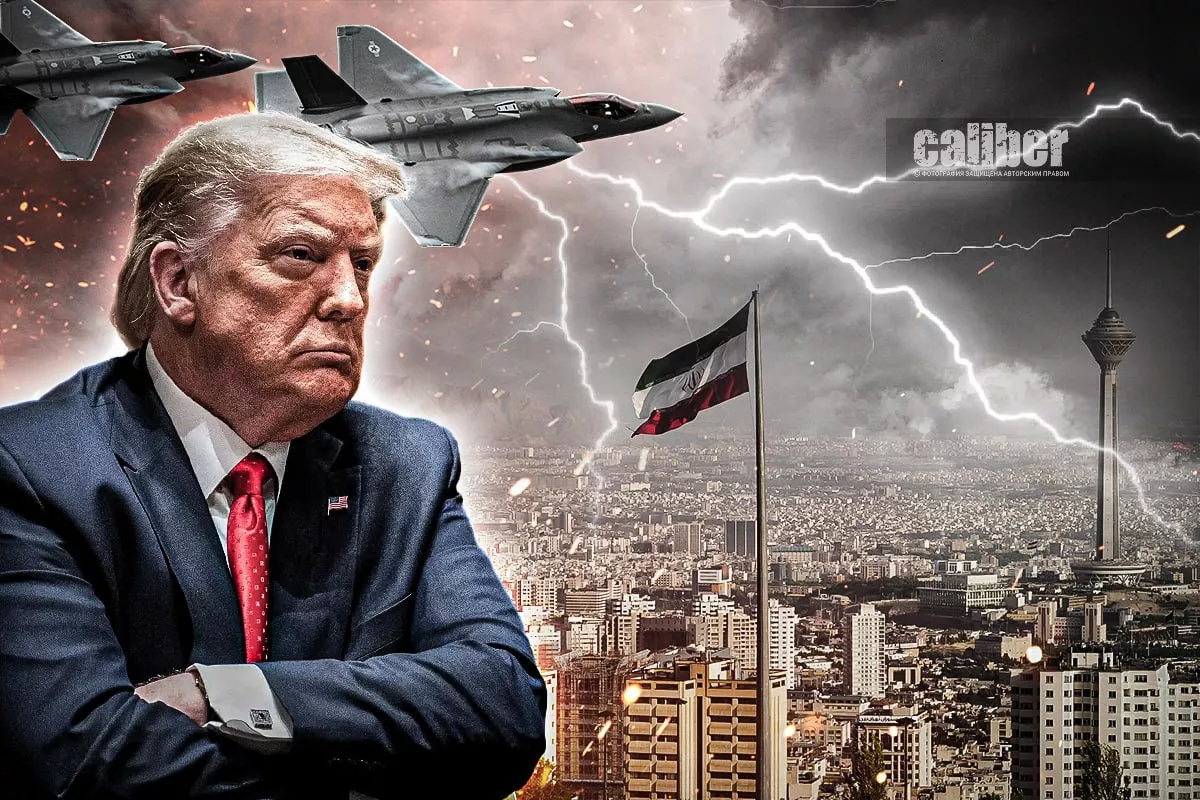
Today, the US and Iranian delegations are set to begin talks in Islamabad, the capital of Pakistan. The chances of any meaningful convergence between the two sides remain extremely low, and the deployment of additional US forces to the Middle East further suggests that Washington does not currently place much faith in a serious diplomatic resolution.
Given the past experience of US–Iran negotiations, it is clear that actions matter far more than words or bold statements. And the actions of the American side—reinforcing its military presence while maintaining already deployed forces in the region—indicate that Washington does not appear to believe strongly in the success of diplomacy in Islamabad. The talks are due to take place today. As is often the case, there may be statements about a “productive” or “constructive” dialogue—or perhaps not. In any event, unfortunately, the chances of a diplomatic settlement remain as close to zero as ever.
Israel is also continuing its military operations against Hezbollah in Lebanon, despite the fact that the first direct talks between Tel Aviv and Beirut are expected to begin in the coming days. The level of representation is, of course, not particularly high: both sides will be represented by their respective ambassadors to the United States, and the negotiations themselves will take place under ongoing Israeli fire.
Overall, there is little indication at this stage that even relative calm will return to the Middle East anytime soon.
By Riad Hamidov







 editor@caliber.az
 +994 55 444-88-98
 Азербайджан, Баку, ул. Низами, 203, Af Business House, 5-й этаж