










Leadership through stability and development How Azerbaijan turns economic strength into growth
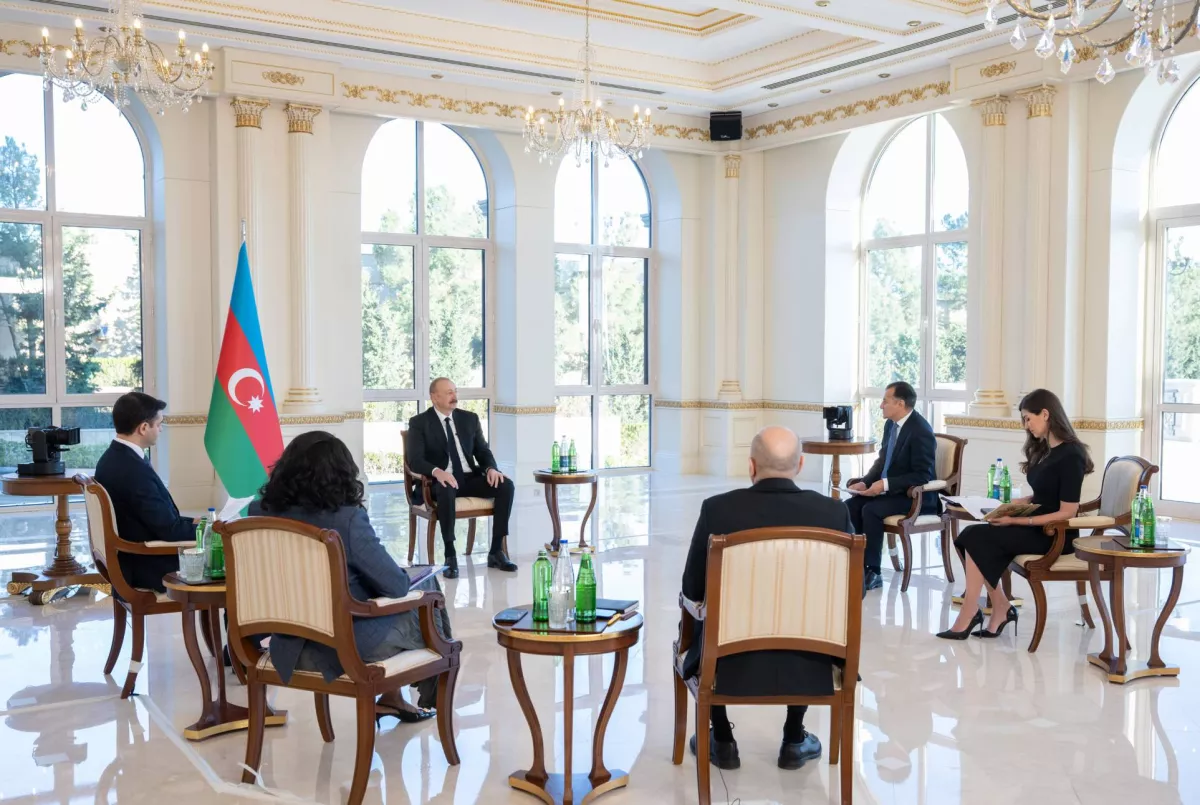
By successfully increasing foreign exchange reserves and maintaining macroeconomic stability, Azerbaijan consistently attracts foreign investment into non-oil sectors, promotes regional development—especially the territories liberated from occupation—and strengthens its position as a key economic leader in the South Caucasus. At the same time, the government’s long-standing policies have focused on enhancing the welfare and social well-being of the population. In a recent interview with local television channels, President Ilham Aliyev highlighted the country’s key socio-economic achievements over the past year.
For many years, the fundamental conditions for Azerbaijan’s economic development have been linked to its substantial energy and logistics potential, combined with stable macroeconomic indicators, a surplus in the balance of payments and trade, resilient monetary and credit parameters, and high levels of foreign exchange reserves. In particular, by steadily increasing strategic foreign exchange reserves, the country raised their volume to $83.6 billion last year, marking a 17.7% growth. These reserves remain significantly above internationally recognised benchmarks and are approximately 17 times higher than the external public debt.
Undoubtedly, this financial buffer has been a key factor in maintaining the stability of core macroeconomic indicators over the past year. Large reserves help sterilise excess money supply, support monetary stability, and keep inflation within the target range (4 ± 2%). This also includes sustaining a positive foreign trade balance and current account surplus, maintaining fiscal surpluses, low public debt, and an optimal monetary policy.
These achievements are confirmed by studies from various international donors and rating agencies. Just over a month ago, the international credit rating agency Moody’s upgraded the country’s sovereign credit rating to “Baa3,” granting Azerbaijan an investment-grade rating.
“Two major rating agencies upgraded our credit rating. There were Moody's and Fitch – upgraded to investment level, with a prognosis also upgraded from stable to positive,” President Ilham Aliyev said during a meeting with media representatives. “Today, our foreign debt is at historically low level, 6.3, 6.4, depending on calculations. And we can repay our foreign debt because the reserves exceed foreign debt 16 or 17 times [...] So, now our reserves change every day. Today, probably, they're 84 or 83. Tomorrow, it will be 85. Nevertheless, this is one of the highest per capita reserves in the world, which any country can have, 83, 84 billion U.S. dollars.”
The stability of macroeconomic indicators, combined with efforts to diversify the domestic economy, expand transport and logistics capabilities, and develop “green” energy, has strengthened Azerbaijan’s regional standing in recent years. In particular, President Ilham Aliyev highlighted that the historic meeting in Washington last August and the progress on a peaceful agenda with Armenia further reinforced regional stability and enhanced Azerbaijan’s attractiveness to investors. This has opened new opportunities to attract American and European investments not only in oil production but also in non-oil sectors, the digitalisation of the economy, and the development of the Middle Corridor, among other areas.
A similar positive impact was seen in Azerbaijan-China relations, which were elevated to a strategic level last year. Foreign direct investment (FDI) from China reached $950 million, with 88% directed toward manufacturing, green energy, joint ventures producing electric buses, elevators and escalators, solar panels, mining, high technology, and innovation. Notably, during the 1st International Investment Forum held in Baku last autumn, agreements on projects worth over $10 billion were signed.
Alongside the growth of foreign direct investment, the rising non-oil GDP and government revenue have significantly expanded opportunities for public investment. In the 2026 state budget, investment-oriented expenditures account for 34%—well above both the global average and that of other post-Soviet countries. Notably, the majority of public funding in recent years has been directed toward large-scale infrastructure, social, residential, and other projects aimed at revitalising the Karabakh and East Zangezur economic regions. Over the past five years, approximately 21.5 billion manat ($12.6 billion) has been allocated for these purposes, with an additional 13.5 billion manat ($7.9 billion) planned for 2026–2029.
“Today we have two so-called investment programs, one traditional and another for Garabagh and East Zangezur, and both are being implemented successfully with high level of performance,” President Ilham Aliyev said in an interview, describing the large-scale road construction, energy, water, and municipal projects carried out in recent years in the Karabakh region. “As infrastructure projects are implemented, of course, more funds will be allocated for the construction of houses. But everything is done in sequence and based on the Master Plan.”
The head of state emphasised that the main goal is, of course, to return former displaced persons. Currently, 70,000 people are already living in 32 towns and villages in the liberated territories, including workers, builders, and representatives of contracting companies. “This year we can increase the number of people living there several times. But I don't want to cite any figures yet, because it may be that the implementation of the work may be delayed in some cases. But I think that we can accommodate people in at least 30-50 villages, so 120,000, 130,000, or 140,000 people may live and work there by the end of this year,” the president added.
The president’s intensive visits to the regions and participation in numerous events demonstrate that regional development is a top priority of state policy. Between 2003 and 2025, the president visited the regions 656 times and took part in 2,918 events, including 158 trips to the liberated territories. In 2025 alone, there were 46 regional visits, 31 of which were to the liberated territories, and 207 events were held throughout the year.
Over the past 22 years, considerable attention has been given to the large-scale modernisation of education, healthcare, culture, sports, water supply, gas infrastructure, and transport, thereby creating a solid foundation for the socio-economic development of the regions and major cities. Specifically, between 2003 and 2025, Azerbaijan built or extensively renovated 3,600 schools, 3,500 medical facilities, hundreds of cultural and sports facilities, and established 10 higher education institutions. Gas coverage of settlements reached 73.5%, uninterrupted water supply increased to 77.8%, and water losses were reduced to 38.8%.
Another significant result of the country’s consistent state policy has been the measures to improve the welfare and strengthen the social well-being of Azerbaijan’s population. In recent years, steps to increase benefits and pensions, support families of martyrs and people with disabilities, as well as large and low-income families, have become a steady focus of budgetary policy.
Specifically, between 2003 and 2025, the minimum wage increased 44 times, the minimum pension 16 times, the average wage 14 times, and the average pension 23 times. In addition, families of martyrs and war-disabled individuals were provided with 16,000 apartments, 7,700 vehicles, and up to 500 high-tech prostheses, along with extensive social, psychological, and employment support.
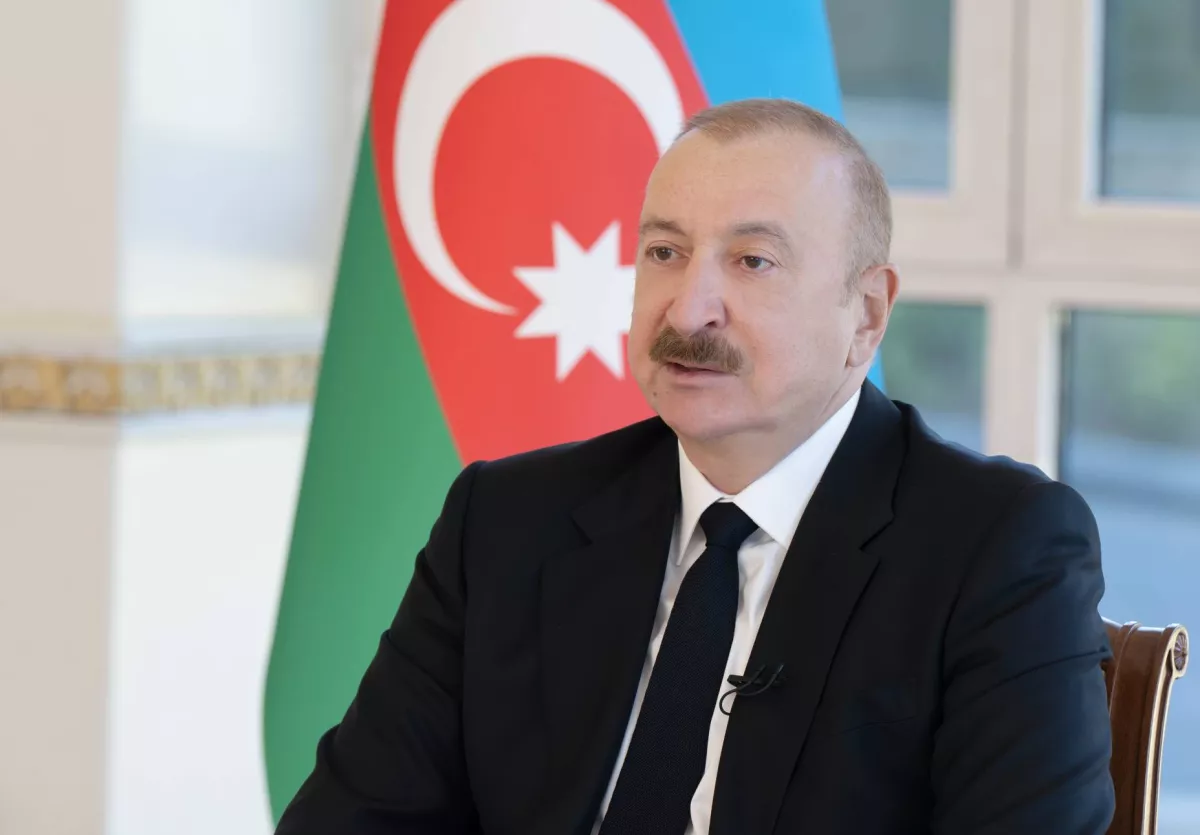
“I have been saying this for many years, and we see this in day-to-day work, that the people of Azerbaijan are at the center of our policy. This is not just a slogan. Our entire policy is both socially and investment-oriented,” President Ilham Aliyev emphasised in an interview. “ If we look at the statistics of the last 20 years, it is enough to say that the minimum wage in Azerbaijan has increased more than 40 times [...] In other words, salaries, pensions and benefits are regularly increased, and pensions are indexed.”
The head of state also noted that over the past seven years, five packages of social reforms have been implemented, covering 4 million people, with approximately 8 billion manat ($4.7 billion) allocated for their implementation. Last year alone, 1.4 billion manat ($823 million) of budget funds were spent on these measures.
Social spending will increase in 2026 as well. In particular, funding for labour pensions in Azerbaijan will rise by 782.4 million manat ($460 million), or 10.9%, compared to the approved 2025 figures. Approximately 81.2% of this amount, or 635.6 million manat ($374 million), will be allocated to pension indexation, while the remaining portion will go toward newly assigned and recalculated pensions.
Moreover, Azerbaijan has been implementing a self-employment programme for about nine years, covering more than 110,000 families, and employment projects continue. “The self-employment program virtually eliminates most of the unemployment, and people can provide for their families with the means given to them,” the head of state emphasised.







 editor@caliber.az
 +994 55 444-88-98
 Азербайджан, Баку, ул. Низами, 203, Af Business House, 5-й этаж