










On the trigger The Caribbean on the brink of war
Contrary to the optimistic forecasts of some analysts, the escalation between the United States and Venezuela is rapidly intensifying. According to The Wall Street Journal, Donald Trump told Nicolás Maduro in a phone conversation that Washington is considering every possible means of pressure — up to and including the use of force — if the Venezuelan president does not agree to step down voluntarily. Maduro, according to the source, proposed a scenario in which he would relinquish power in two to three years, but the United States rejected the offer. Almost immediately after the call, Trump announced the closure of Venezuelan airspace.
In response, Caracas held a large-scale air show over the weekend, showcasing military equipment from China, Russia, and Brazil. It remains unclear which of these systems had been purchased earlier and which were delivered after the escalation, when the Venezuelan president sought military and political assistance from a number of countries. According to media reports, amid the US military build-up in the Caribbean region, Maduro appealed to Russia for missiles, radars, and modernised aircraft; to China for expanded military co-operation; and even to Iran for military equipment, including “detection equipment”, GPS scramblers, and “almost certainly drones with 1,000 km range.”
According to experts, Caracas cannot realistically count on substantial support from these countries, if only because they themselves are in no condition to provide it. Iran is in a deep crisis, brought on both by the collapse of its proxy network in the Middle East and by Israeli and US strikes on its own territory. The water crisis that has erupted in the country likewise leaves little energy for foreign policy adventures. Russia is far too consumed by the war in Ukraine. For Beijing, it would also be reckless to get involved in a confrontation on the distant Atlantic coast of South America, especially at a moment when it has only just managed to avert the threat of a US–China trade collapse. Both Russia and China are seeking to secure major diplomatic and trade agreements with Trump, giving them little motivation to expend their military-political capital in far-off South America. Moreover, the intentions of the Americans — at least those they are projecting — are more serious than ever.
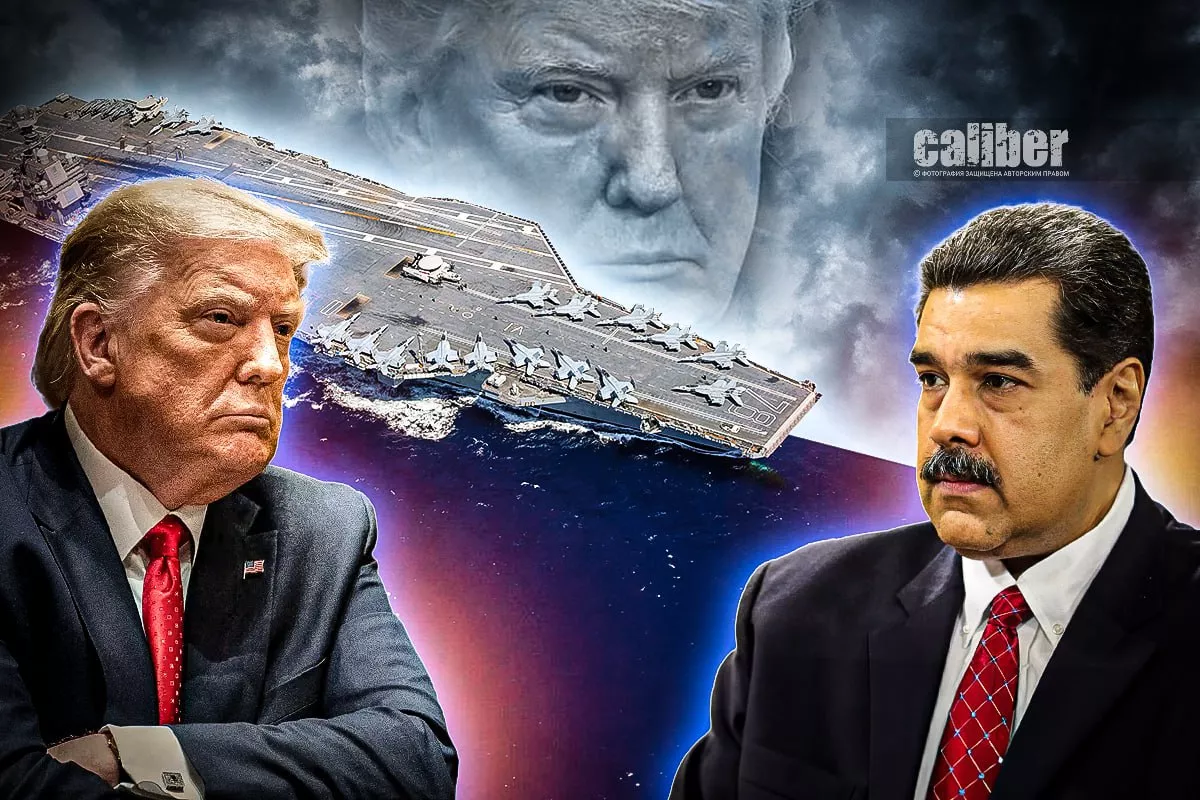
It should be recalled that the United States has been increasing its military presence in the region for several months. Since September, the US Air Force has carried out more than twenty strikes on Venezuelan vessels allegedly involved in drug trafficking. The US Navy forces deployed off the coast of the Bolivarian Republic include several destroyers, a helicopter carrier, amphibious assault ships, and even a submarine. In the Caribbean Sea, the American aircraft carrier Gerald Ford is positioned, carrying around four thousand service personnel, fighter jets, and attack helicopters. According to expert estimates, the total number of US troops in one way or another involved in operations off the Venezuelan coast exceeds ten thousand.
Thus, the Maduro government finds itself in an unenviable position. Venezuela is, in effect, left to face this struggle alone.
On the other hand, Trump has promised his voters not to drag the United States into foreign military conflicts. Until now, he has kept that promise, and a major military operation could seriously damage the president’s approval ratings. Public support in the US for military intervention appears to be low, judging by opinion polls. And Trump will undoubtedly take this into account.
To a large extent, Washington’s build-up of military force off the Venezuelan coast is therefore aimed at compelling Maduro to step down. Such an outcome would likely be the best possible scenario for the United States — not only because it would achieve its objective with minimal effort, but also due to the psychological blow it would deal to left-wing forces across Latin America.
The situation surrounding Venezuela shows that the United States is firmly determined to restore its military and political hegemony in the Western Hemisphere. The challenge, however, is that it needs to accomplish this with minimal cost; otherwise, the situation could spiral out of control both in Latin America and within the United States itself. It is quite possible that Nicolás Maduro now hopes to draw America deeper into this confrontation.







 editor@caliber.az
 +994 55 444-88-98
 Азербайджан, Баку, ул. Низами, 203, Af Business House, 5-й этаж