










“Aurora” and its guardians From Vardanyan to Darzi — and the Epstein connection
On February 17, 2026, the Baku Military Court delivered its verdict on Ruben Vardanyan: 20 years of imprisonment for war crimes, crimes against peace and humanity, terrorism, and financing of terrorism. The court decision closed a specific criminal case. However, alongside this, there is another story — not legal, but ethical and reputational — connected to people who shaped the global humanitarian agenda and claimed to serve as moral guides, yet turned out to be part of Jeffrey Epstein’s circle.
To understand what the so-called “Aurora” humanitarian initiative really is, it is important to pay attention to the image it has consistently cultivated around itself. It was founded in 2015 by Ruben Vardanyan, Noubar Afeyan, and Vartan Gregorian — as a structure designed to “support those who risk their own lives to save the lives of others…On behalf of the survivors of the Armenian Genocide and in gratitude to their saviors.” Its very name refers to Aurora Mardiganian — “a 1915 survivor who became a symbol of global testimony to the Armenian tragedy.” The foundation awards an annual prize of one million dollars, has established dialogue platforms, and has drawn into its orbit Nobel laureates, former presidents, and Hollywood stars. The initiative positioned itself as an ethical beacon — a structure vested with the authority to grant recognition.
It is this very composition of judges that deserves close scrutiny.
One of the key figures in the management of the Aurora Prize has been — and remains — Professor Ara Darzi, chairman of the Aurora Prize Selection Committee. A British surgeon, even a peer. A person entrusted with deciding who is worthy of the title of humanitarian hero. Meanwhile, the “Epstein files” contain correspondence that casts Darzi in a completely different light. In a letter from British media strategist Mark Lloyd — a consultant who has worked with the UN, UNESCO, and BBC Media Action — addressed to MIT Media Lab director Joi Ito, Darzi is listed first among the “dear friends” whom Lloyd proposed introducing to Ito in London.
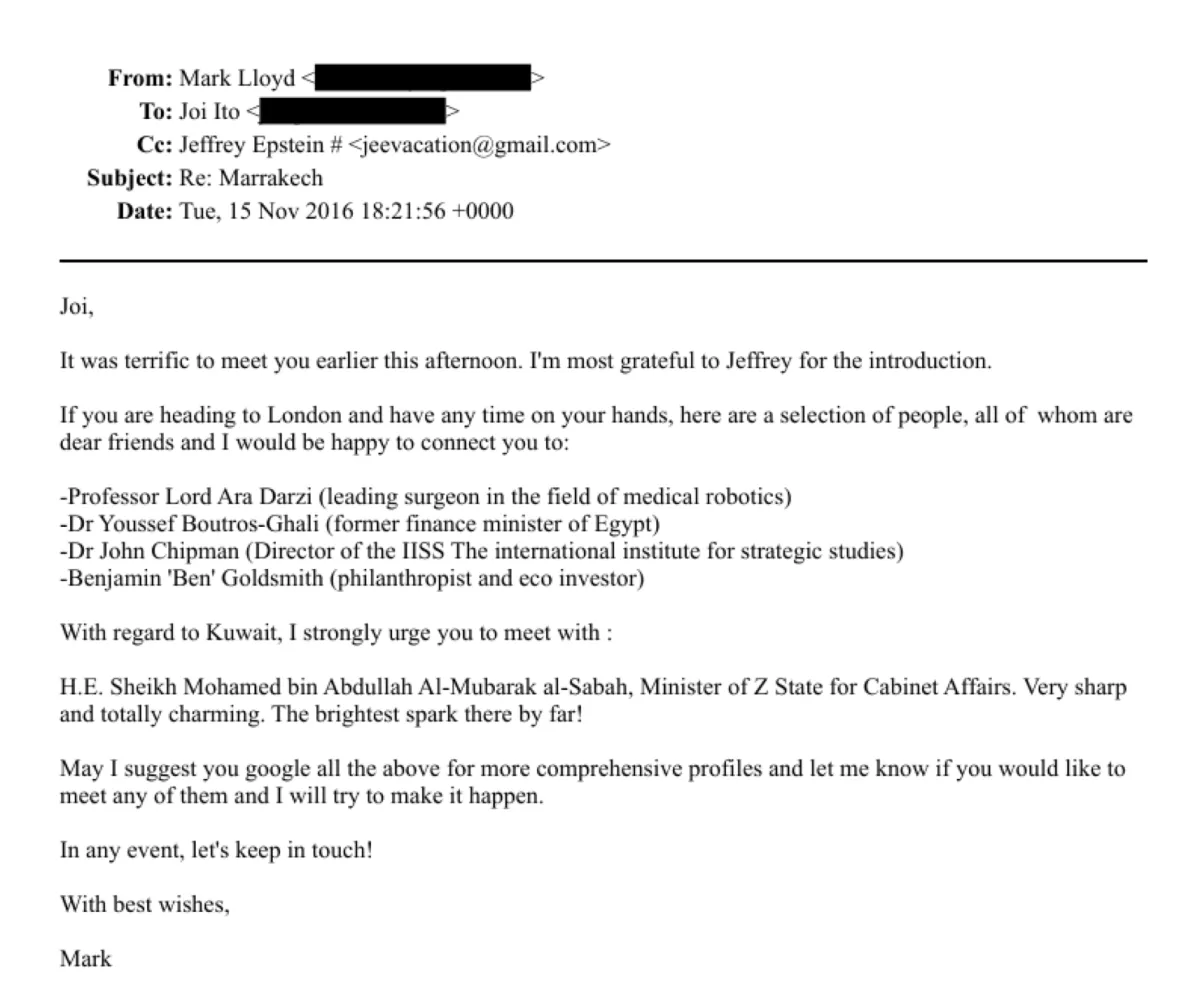
A crucial detail is that Jeffrey Epstein is copied on this letter and is directly named by Lloyd as the person who arranged their introduction: “grateful to Jeffrey for the introduction.” This means that Epstein was precisely the entry point through which this chain of communication was established, and Darzi existed organically within a network of people connected to the pedophile and sexual offender.
It would be incorrect to claim that merely being mentioned in such correspondence automatically implies complicity or awareness of Epstein’s crimes. That would be an excessive conclusion. However, this concerns the chairman of a committee entrusted with assessing the moral character of others — a person embedded in the personal communication networks of one of the most notorious and repulsive criminals of our time.
Equally revealing is the story of Vardanyan himself and his entry into Epstein’s orbit. The files contain a chain of correspondence in which Sergey Beliakov — former Deputy Minister of Economic Development of Russia, later head of the St. Petersburg International Economic Forum Foundation, and president of the National Association of Non-State Pension Funds — contacts Lesley Groff with a direct request to pass information to Epstein about his “current partner — Ruben Vardanyan,” attaching a link to Vardanyan’s biography. Groff confirms that the request was carried out.
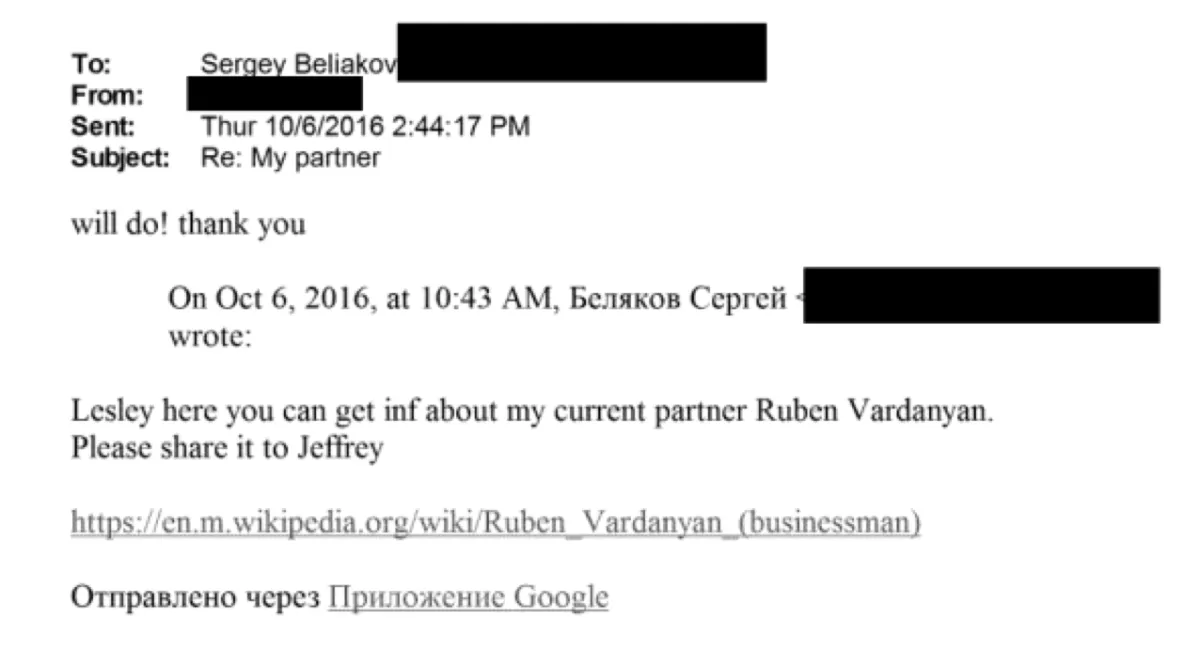
Notably, Lesley Groff had been Epstein’s assistant for over two decades and appears in federal documents as a person directly involved in the administrative management of his affairs: coordinating meetings, schedules, and corporate tasks. Correspondence through Groff meant direct access to Epstein’s inner circle. Beliakov fully understood this. Thus, Aurora’s founder, Vardanyan, was deliberately introduced into Epstein’s communication network by his business partner.
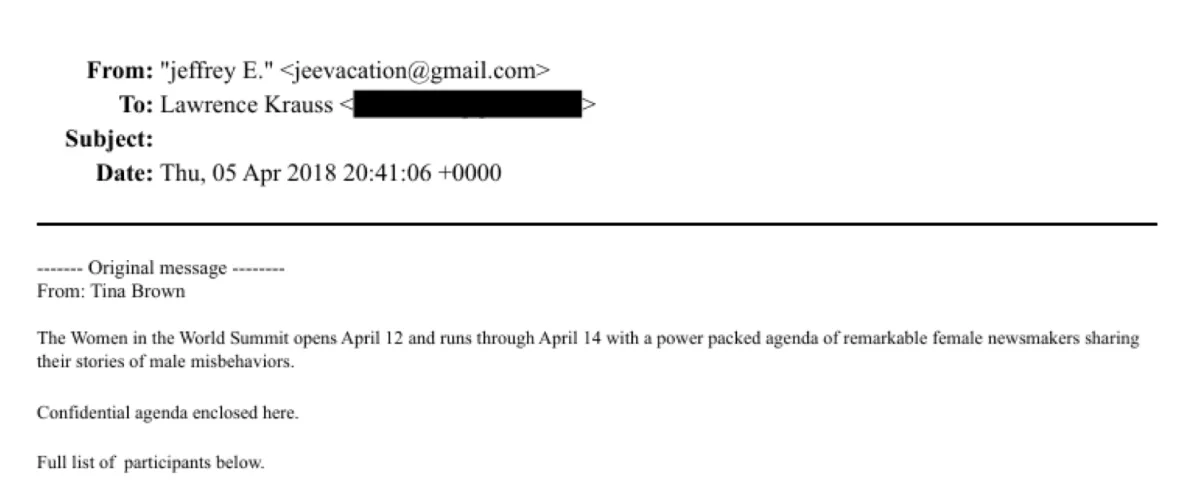
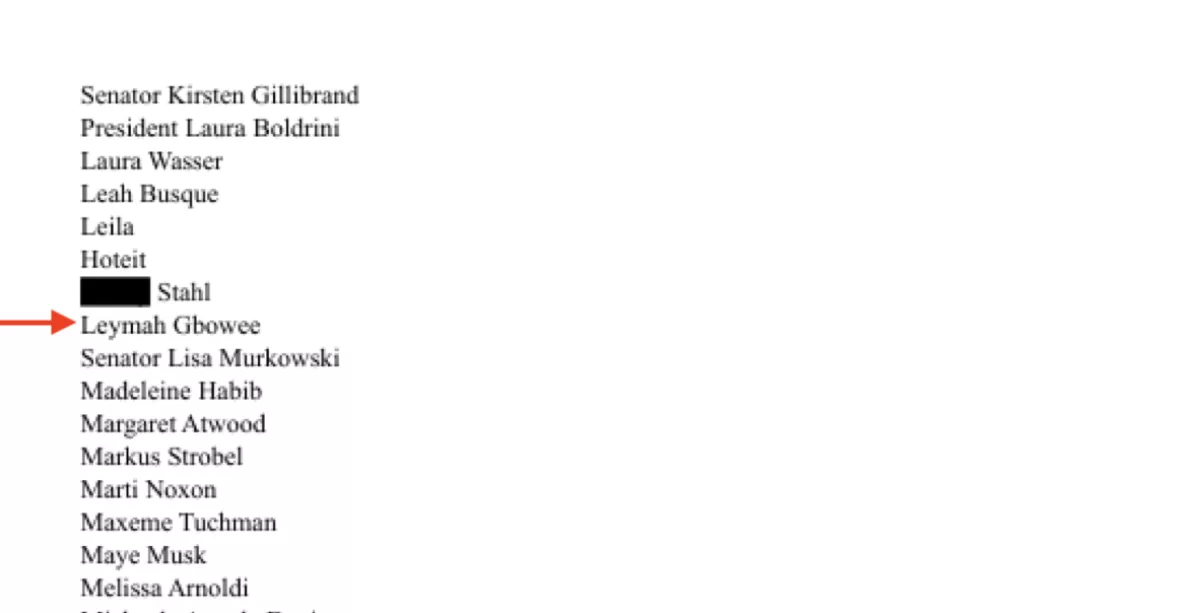
Another member of the Selection Committee — Nobel Peace Prize laureate Leymah Gbowee, a Liberian activist who gained international recognition as a leader of the women’s peace movement — appears in the “Epstein files” as a participant in the 2018 Women in the World Summit.
In addition, the archive contains an invitation addressed to Epstein for a separate event featuring her at the CORE club in 2011.
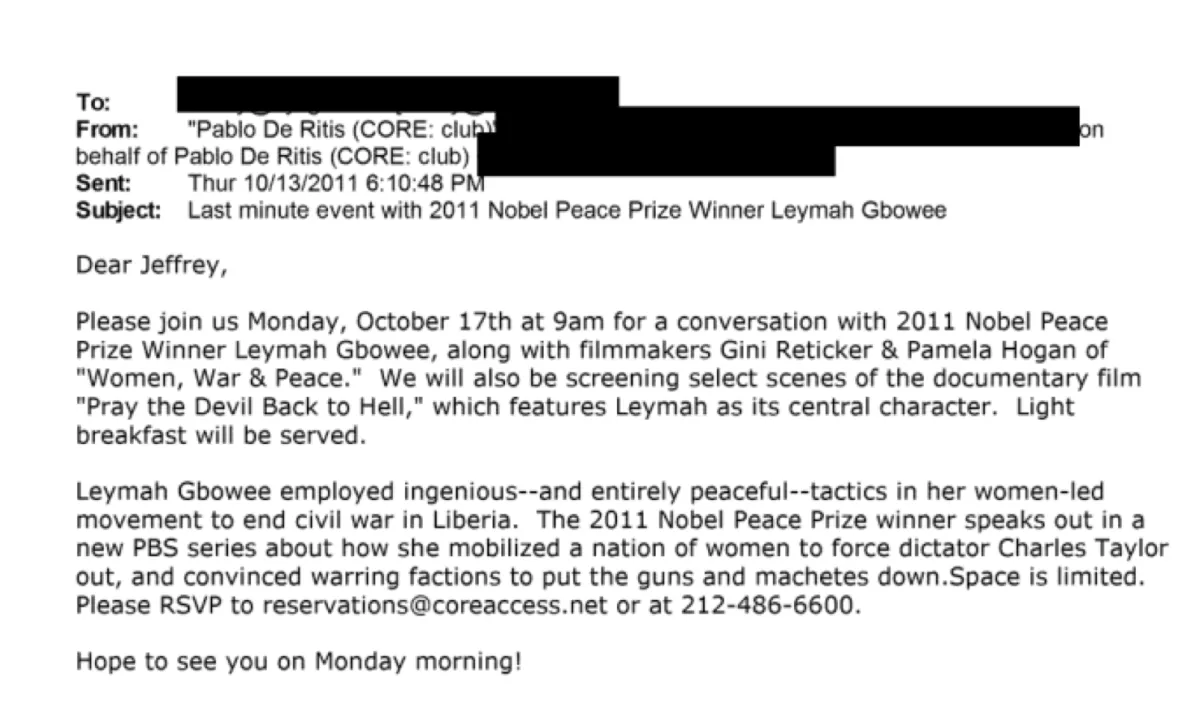
Taken together, these documents paint a clear picture: Gbowee was part of the cohort of public figures whose presence at events was of interest to Epstein, while the events themselves were used by him as a tool for building reputational capital and expanding his social network.
From the very beginning, the honorary co-chair of the Selection Committee was Hollywood actor George Clooney. In the “Epstein files,” his name appears 108 times.
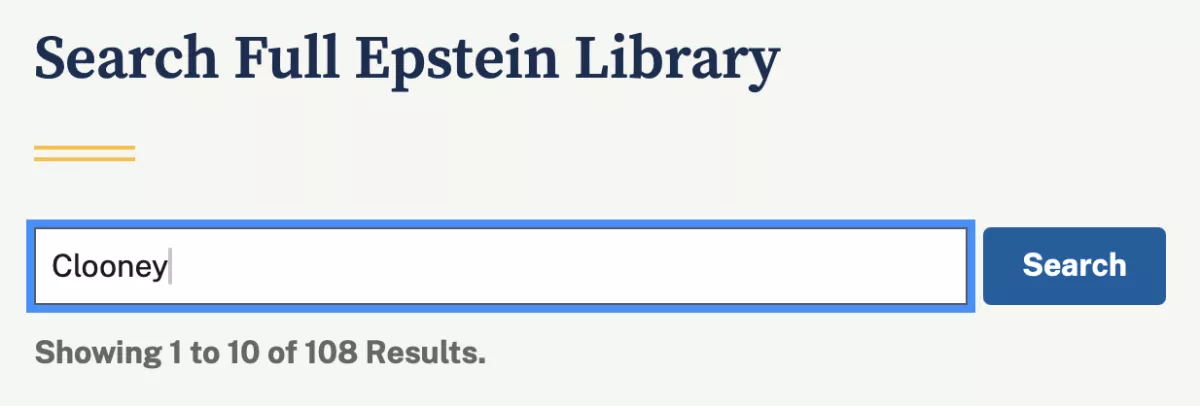
Epstein’s close acquaintance Peggy Siegal repeatedly wrote to him about her close connections with Clooney and invited him to private film screenings featuring the actor. The sheer number of mentions rules out coincidence.
A separate thread concerns Ghislaine Maxwell — Epstein’s closest associate, later convicted for organising the sexual exploitation of minors. Court documents from 2010–2011 record a telling episode. On June 29, 2010, a day before she was scheduled to testify, Maxwell’s attorneys informed the court that she had urgently flown to the United Kingdom due to her mother’s terminal illness and did not intend to return to the United States. Exactly one month later, on July 31, 2010, Ghislaine Maxwell was seen at the wedding of another member of the Aurora Prize Selection Committee — Chelsea Clinton. Yes, this refers to the daughter of former U.S. President Bill Clinton and former Secretary of State and presidential candidate Hillary Clinton.
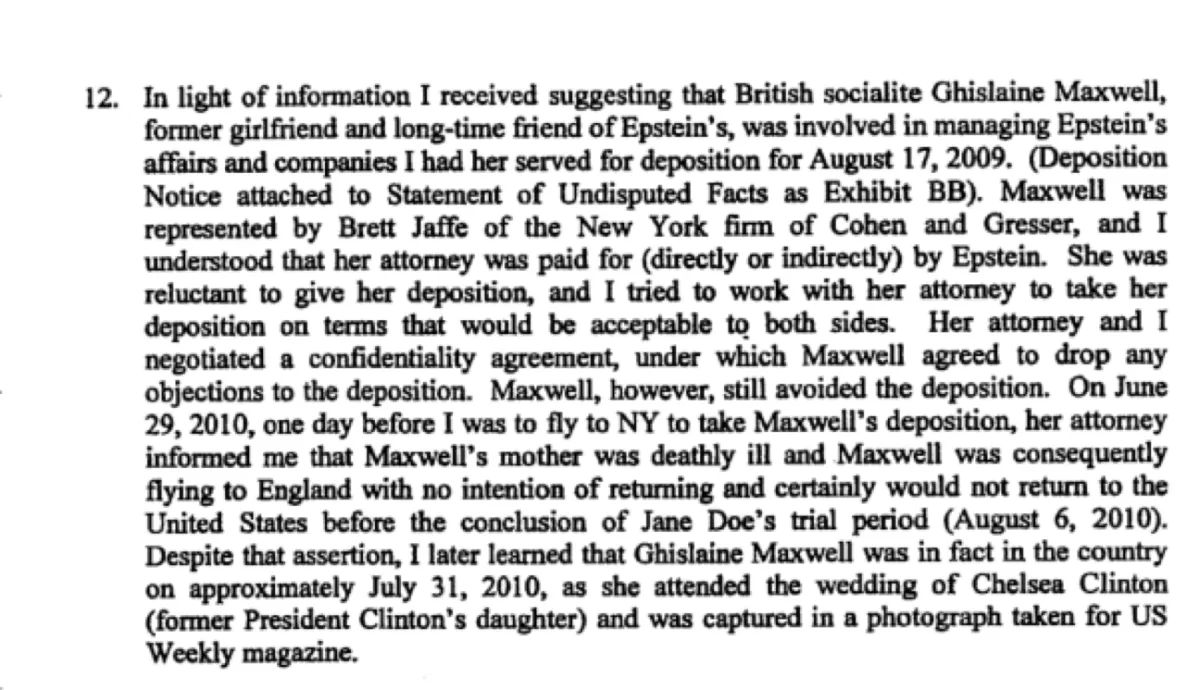
We do not pass judgments — that is the prerogative of the court, and the Baku court today fulfilled its function. Our task is different: to record the facts and raise the question they imply. The facts presented above are documented and easily verifiable. The founder of the foundation, Ruben Vardanyan, was convicted today of war crimes by the court of a sovereign state — and is directly mentioned in the Epstein files. The chairman of the Selection Committee appears in correspondence conducted through Epstein’s personal assistant. The honorary co-chair of the committee is mentioned in the same Epstein archive more than a hundred times. Epstein’s closest associate — later convicted — attended the wedding of a member of the Aurora Prize Selection Committee, despite her own statements to the court that she could not be in the United States.
An organisation that takes upon itself the authority to judge the humanity of others must uphold the standard it has set for itself. Judging by the facts presented, Aurora faces serious problems in this regard.







 editor@caliber.az
 +994 55 444-88-98
 Азербайджан, Баку, ул. Низами, 203, Af Business House, 5-й этаж