










Rice frenzy: From droughts in Asia to price tags in Baku Overview by Khazar Akhundov
Since 2023, the global rice market has been marked by pronounced price volatility, and the trend shows no signs of slowing. Futures prices rose again in February 2026, reflecting ongoing pressures. Rice, a water-intensive crop, is particularly vulnerable to drought, and recent climate challenges in India, Pakistan, China, and Vietnam have led to lower yields.
This year’s price increases are also driven by steadily growing demand in Asia and Africa, large-scale purchases in China, and a projected decline in U.S. rice production for the 2025–2026 season. Rice remains a staple of Azerbaijani cuisine, yet domestic production has not kept pace with consumption, leaving the country reliant on increasingly expensive imports.
According to the Food and Agriculture Organisation of the United Nations (FAO), production of most major cereal crops is expected to rise this season, but rice is projected to experience the slowest growth. In early February 2026, the FAO rice price index rose by 1.8%. While modest, this increase reflects underlying tensions in the global rice market.
Today, rice is a staple food for more than 3.5 billion people, most of whom live in Asia. Analysts at Fitch Solutions had predicted a shortage and rising prices for this essential commodity several years ago. The supply and price dynamics began shifting around 2023, when global rice prices started climbing due to reduced yields in India—the world’s largest rice producer—caused by adverse climate conditions. Indian authorities even imposed export quotas to stabilise domestic prices.
In recent years, irrigation shortages have affected rice fields not only in India but also in Pakistan, Iran, China, Vietnam, Indonesia, and other countries. This is a critical factor, as rice cultivation is highly water-intensive: on average, producing 1 kg of unmilled rice requires about 2.5 tonnes of water to maintain flooded fields.
Despite higher yields and increased supply in 2024, market volatility intensified again last year. Alongside climate-related challenges, disruptions were driven by logistics bottlenecks, shifting trade policies, and rising domestic purchases and stockpiling across Asia. Export restrictions were further influenced by tensions between India and Pakistan, instability in Iran, and broader geopolitical uncertainties in the Middle East.
In other words, the current volatility in the rice market is not caused by a dramatic drop in production but by temporary disruptions in international supply stemming from a mix of economic and political factors.
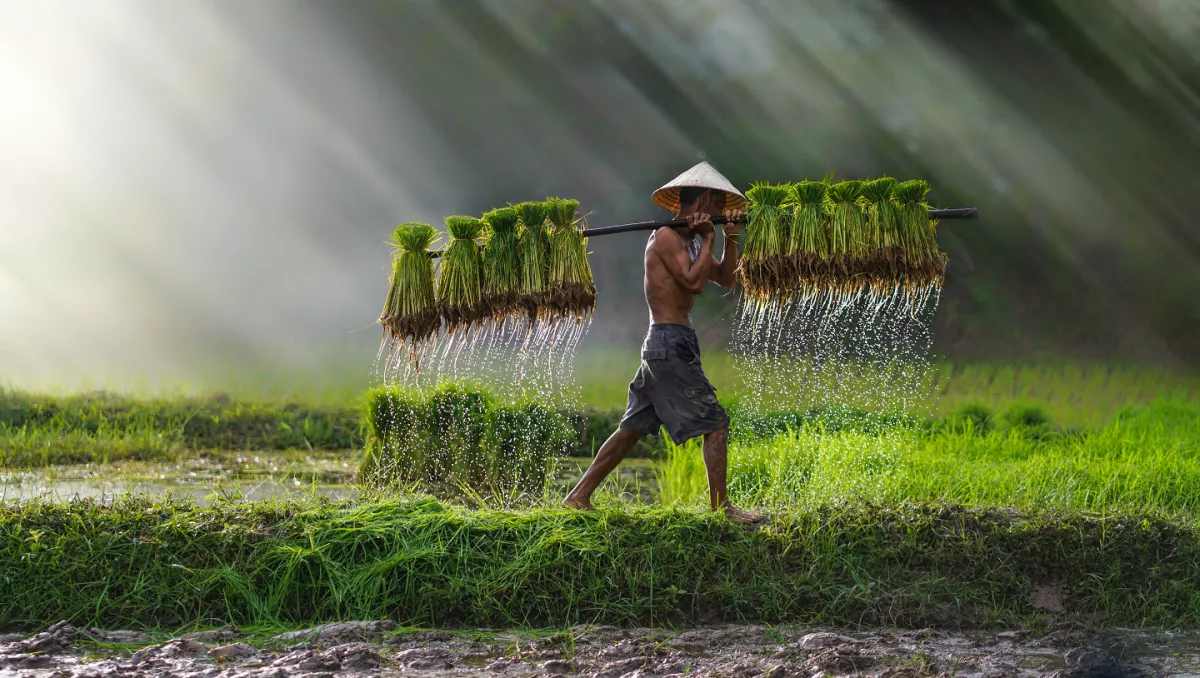
Another wave of rising rice demand emerged in December 2025. In Thailand, prices hit a seven-month high of $415 per tonne following an agreement with China to purchase 500,000 tonnes of Thai rice. Meanwhile, Indian rice prices climbed to $356 per tonne amid stronger demand from Asian and African buyers. In Vietnam, rice prices rose to $375 per tonne in December, driven by sharply increased demand from China, Indonesia, Bangladesh, and several African countries. In Japan, rice prices nearly doubled over the past year.
This trend has carried into January and February 2026. Currently, rice futures on global markets are trading just above $11 per “short hundredweight” (approximately 45.36 kg, used in the U.S. and Canada), near the highest level since September 2025. Price increases are attributed to sustained consumption in Asia and Africa, where rice remains a staple food, supporting the market. At the same time, the February 2026 WASDE report from the U.S. Department of Agriculture (USDA) projects a decline in U.S. rice supply for the 2025–2026 season due to steady domestic consumption and reduced exports.
Analysts emphasise that strong demand in key rice-consuming regions keeps prices high. At the same time, rising import dependence, higher transport costs, and currency fluctuations may further impact domestic rice prices in several developing countries.
Azerbaijan is among the markets that remain highly dependent on rice imports. For nearly a century, rice cultivation has been considered a priority in developing the agrarian sector of Azerbaijan’s southern subtropical region. Beyond Lankaran and Astara, this crop is grown in the Aghdash, Ujar, Salyan, Bilasuvar, and Zardab districts. The peak of rice production was reached in 1927, when the crop was cultivated on 54,000 hectares. However, in subsequent years, agricultural priorities in southern Azerbaijan shifted towards vegetable growing, viticulture, and citrus cultivation. During the 1990s and 2000s, rice production in the country remained very low due to numerous challenges faced by small and technologically underdeveloped farms.
An effort to reverse the trend came with the adoption of the “State Program for the Development of Rice Cultivation in Azerbaijan for 2018–2025,” approximately eight years ago. According to the plans of the Ministry of Agriculture, by 2025, Azerbaijan was expected to meet its main demand for paddy rice (unmilled rice) through domestic production. The program included the import of machinery—mostly of South Korean origin—and the implementation of various agrotechnical and irrigation initiatives.
Unfortunately, due to a combination of natural and structural factors, Azerbaijan has so far been unable to reduce its dependence on rice imports. In recent years, the country has faced intensifying desertification and shortages of irrigation water. Rice is a water-intensive crop, typically grown on large flooded paddies to reduce costs, which requires a coordinated irrigation system. When farmland is divided into small private plots, managing such a system becomes highly challenging.
The same challenges also hinder the adoption of modern agricultural technologies and mechanisation. Azerbaijan faces a shortage of specialised harvesting machinery, such as self-propelled tracked combines designed for waterlogged, heavy soils typical of rice paddies. There is also a lack of qualified personnel, including professional agronomists, to support the sector’s development.
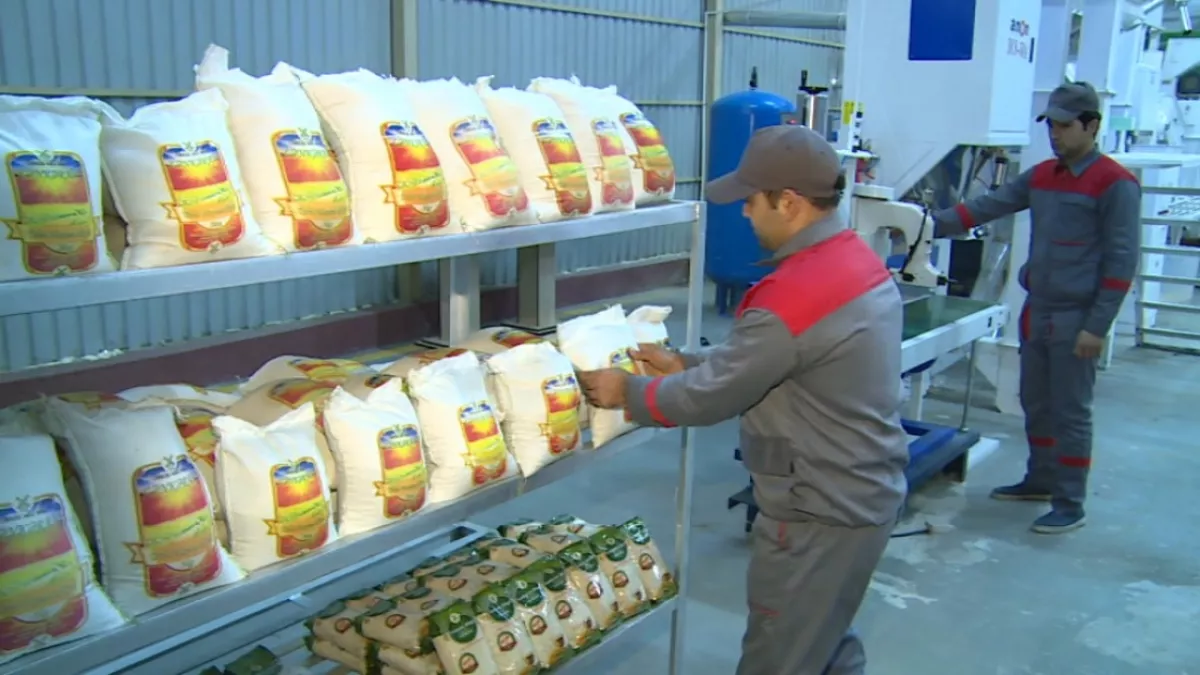
To encourage domestic rice cultivation, farmers in Azerbaijan receive a subsidy of 360 manats ($211) per hectare of sown area. In the Lankaran district, infrastructure has been established for research on rice breeding and seed production. Measures under the State Program have provided some momentum to the sector. However, the main objectives have not been fully achieved: increasing the sown area to 10,000 hectares and boosting yields more than 2.5 times—to 40 centners per hectare or more. In recent years, the country’s rice-growing area has grown only slightly, reaching approximately 4,700 hectares in 2024, according to the Public Union of Rice Producers and Exporters of Azerbaijan. Peak production in 2023 was estimated at around 20,000 tonnes of paddy rice, while final data for 2025 is not yet available.
Experts estimate that Azerbaijan consumes about 65,000–70,000 tonnes of rice annually, with imports covering over 70% of demand—mainly from Pakistan and India, and to a lesser extent from Iran, Thailand, Vietnam, and Russia. Notably, a decision by the Cabinet of Ministers of Azerbaijan on November 22, 2022, allowed duty-free imports of Pakistani rice until December 31, 2027, significantly increasing trade and helping to stabilise prices. The agreements also considered agricultural cooperation with Pakistani companies and specialists to support domestic rice cultivation. However, progress in this area has so far been limited.
Azerbaijan’s heavy reliance on rice imports is clearly reflected in rising retail prices. In 2023, one kilogram of imported long-grain rice in Baku supermarkets cost 3–3.5 manats (around $1.76–$2.06), while by 2026, prices have risen to at least 4.5 manats ($2.65) per kilogram. Premium Basmati varieties now sell for as much as 5 manats ($2.94) per kilogram.
This increase is driven not only by rising global rice prices but also by a decline in import volumes. According to the State Customs Committee of Azerbaijan, around 64,300 tonnes of rice were imported in 2024, compared with 54,900 tonnes in 2025. As expected, reduced supply has contributed directly to higher market prices.







 editor@caliber.az
 +994 55 444-88-98
 Азербайджан, Баку, ул. Низами, 203, Af Business House, 5-й этаж