










Catholicos, businessman, and doctor Armenian diaspora at a crossroads?
The Armenian diaspora is once again in turmoil. The latest surge of activity has been triggered by the Armenian Prosecutor General’s Office opening a criminal case against Catholicos of All Armenians Garegin II.
Notably, just one day before this development, Armenian diaspora social media pages and several Armenian media outlets circulated a joint statement by a “group of prominent representatives of the diaspora,” which described the Armenian authorities’ pressure on the clergy and alleged attempts to force Garegin II to step down as a direct threat to global Armenian unity.
After the Prosecutor General’s decision, a statement was published by the Coordinating Council of Armenian Organisations of France (CCAF). In the statement, posted by the council’s co-chair, Dashnak businessman Mourad Papazian, on his Facebook page, the organisation expressed regret and condemned“in the strongest possible terms the repressions against the Armenian Apostolic Church (AAC).” The CCAF called for an immediate review of the “illegal” decisions made against the Catholicos, six bishops — members of the Supreme Spiritual Council — and its secretary.
At first glance, this may seem like routine practice — the Armenian diaspora, as part of the global Armenian community, voicing its opinion on pressing issues concerning Armenia. For years, both the diaspora and successive Armenian governments have promoted the idea of the inseparable unity of the “spyurk” and the Armenian state. As a result, few pause to ask: what right do people living tens of thousands of kilometres away from Armenia have to impose their detached vision of reality on the citizens of the country regarding how they should live?
In this context, if Prime Minister Nikol Pashinyan’s government is indeed committed to building a renewed Armenia, it should seriously address the role of the Armenian diaspora — particularly its attempts to interfere in the country’s internal affairs.

At the same time, while highlighting what some describe as the diaspora’s disruptive actions, it is also important to acknowledge certain positive developments within diaspora circles. For example, Dr. Garo Armen — Chairman and CEO of Agenus Inc. and founder and Chairman of the Board of the Children of Armenia Fund (COAF), a U.S. citizen — issued a statement responding to the aforementioned joint declaration by “representatives of the Armenian diaspora.” In his remarks, he offered an extensive and substantive critique of the authors’ position.
Below are several excerpts from his address.
In his statement, Dr. Garo Armen sharply challenged the position of the diaspora signatories and offered a broader reflection on the role of the Church and the diaspora in Armenia’s future.
“The Armenian Apostolic Church is not a building and not a hierarchy. The Church is the people…Institutions survive only when they serve the people who sustain them. When the burden flows in only one direction-upward-faith turns into weight. That is why renewal and accountability strengthen the Church; they do not weaken it,” he said.
Addressing the issue of representation, Armen emphasized that the diaspora cannot be reduced to a small circle of prominent voices. “The diaspora is not a committee. It is millions of Armenians across dozens of countries, with different experiences, politics, and priorities. A small circle-however prominent-does not speak for the whole,” he noted.
He also criticized calls for diaspora Armenians to appeal to foreign governments for “political remedies and legal action” in response to developments in Armenia. “Diasporans have every right-indeed, an obligation-to advocate for Armenia’s security and future in the countries where they live. But internationalizing Armenia’s internal disputes in this way turns diaspora communities into instruments of pressure against the Armenian state,” Armen stated.
Overall, Garo Armen’s address was imbued with support for Prime Minister Nikol Pashinyan’s course toward renewing the Armenian state — not only at the political and economic levels, but also in terms of public consciousness and institutional accountability.
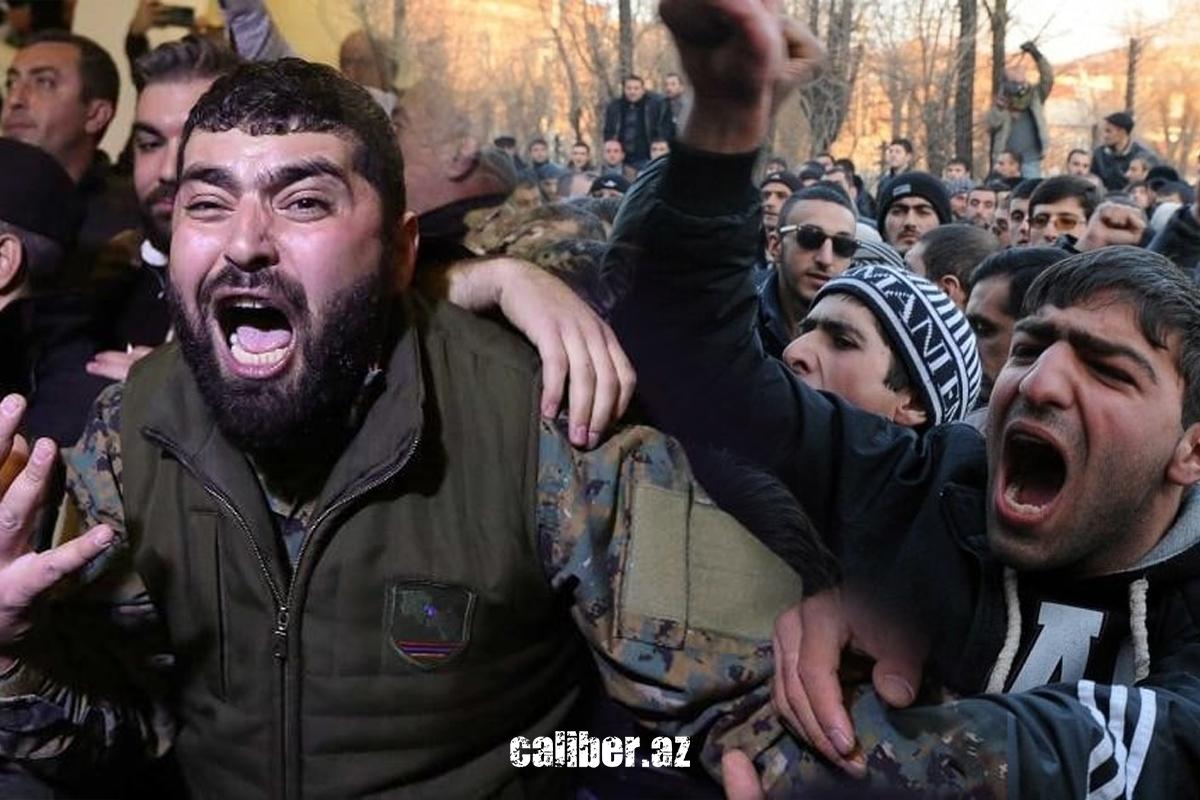
This signal from a fairly authoritative representative of the Armenian community abroad, firstly, demonstrates that doubts are beginning to emerge in the minds of some diaspora leaders regarding their previous hawkish positions, and secondly, inspires cautious hope that, over time, common sense will prevail in this environment and the structures of the Armenian diaspora will cease to see their mission as fuelling revanchist sentiments in Armenia.
For this to happen, Pashinyan must carry his declared peace agenda through to its logical conclusion and, above all, proceed with a referendum on amendments to Armenia’s Constitution, which, as is well known, contains territorial claims against Azerbaijan. It is precisely the unresolved nature of such issues that continues to feed revanchist sentiments both in Armenia and within the Armenian diaspora. Only a definitive clearing of Armenia’s official ideological space, combined with an understanding of the benefits of the country’s economic integration into the region, can, in the long term, eliminate the aspirations of the Armenian diaspora that are destructive for the South Caucasus.







 editor@caliber.az
 +994 55 444-88-98
 Азербайджан, Баку, ул. Низами, 203, Af Business House, 5-й этаж