










Pacific front: why Australia and Fiji forged a military alliance Article by Matanat Nasibova
The number of agreements signed recently between countries in the Indo-Pacific and Asia-Pacific regions that are concerned about China's growing global influence continues to rise steadily. Following Japan and India, which concluded a record number of memorandums of understanding, including in the field of defence, two more nations washed by the waters of the world's largest ocean—Australia and Fiji—have signed a landmark pact aimed at containing the People's Republic of China.

The agreements in question are the Ocean of Peace Alliance (Veitacini Treaty)—Fiji's first-ever formal defence alliance—and the Vuvale Union, a comprehensive economic partnership built upon the Status of Forces Agreement signed in October 2022. These new accords provide for mutual military assistance and large-scale investment between Australia and Fiji. According to the Australian government, they represent Canberra's fourth such agreement aimed at countering China's influence and form part of a broader strategy to strengthen regional security in coordination with the United States, New Zealand, and Papua New Guinea.
An analysis of the factors that prompted the two countries to take such a significant step points first and foremost to China's frequent military exercises and missile tests in the Pacific Ocean, which Canberra and Suva view as a direct threat to their security. Another major source of concern for both the Australian and Fijian authorities is Beijing's growing control over maritime trade routes, as well as its construction of airstrips and communications infrastructure in small island states.
In addition, Australia and Fiji share the view that China is interfering in their domestic affairs through the use of soft power. Canberra, for example, regards Beijing's attempts to finance political campaigns in the Commonwealth of Australia in order to gain access to high-level decision-making as a threat to its national security. Australian authorities are equally concerned about the potential spread of Chinese influence within Australian society through social media platforms and pro-China civic organisations.
For Fiji, meanwhile, the primary source of concern is Beijing's pursuit of strategic dominance. The government in Suva fears that China could establish permanent naval bases in close proximity to Fijian shores, a development that would significantly alter the region's security landscape.
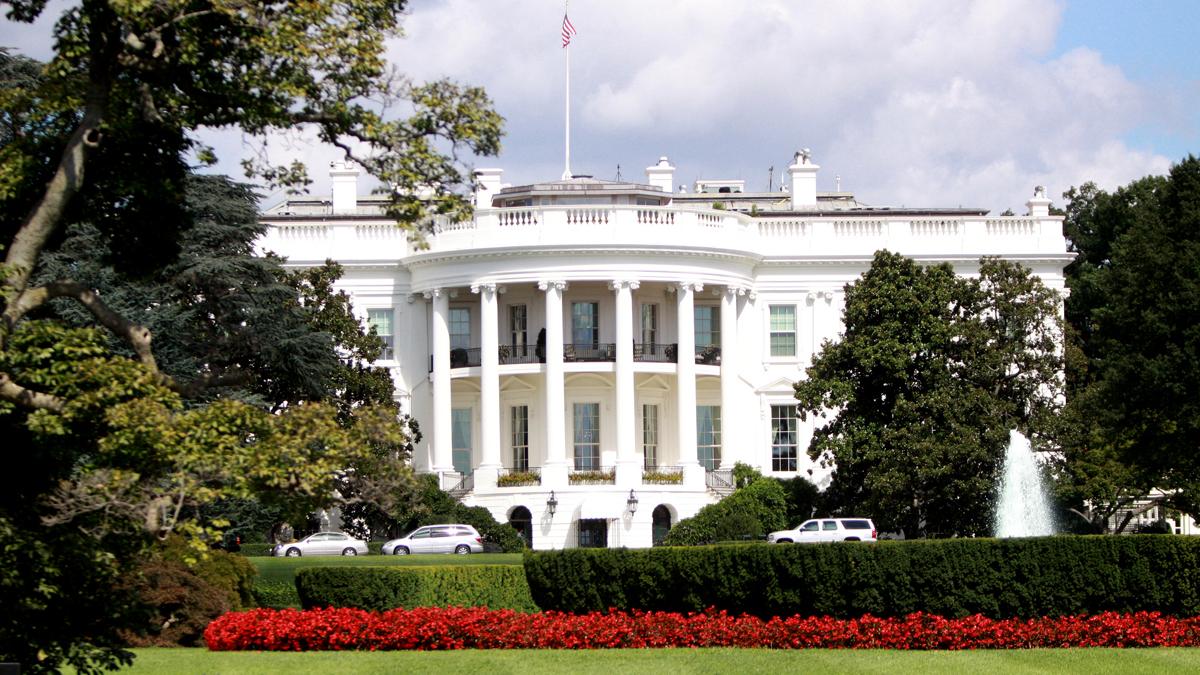
The U.S. response to the Australia–Fiji defence pact also deserves special attention. Washington not only gave its full backing to the agreement but also designated it as a key component of its broader strategy for maintaining stability in the South Pacific and containing China's growing influence.
Such an assessment from the United States is hardly surprising, given that Washington views China as an existential challenge to its global primacy. From this perspective, the defence agreement fits squarely into the regional security architecture that the United States has developed across the Asia-Pacific and Indo-Pacific through initiatives such as the QUAD (the United States, Australia, India, and Japan) and AUKUS. This architecture is ultimately aimed at achieving a central strategic objective: preserving U.S. dominance in this part of the world.

Meanwhile, as expected, Beijing reacted sharply to the defence alliance between the two countries. Within hours of the announcement of the pact, China conducted a test launch of an intercontinental ballistic missile over the South Pacific. As is customary, the Chinese Ministry of National Defence stated that the launch was a routine exercise carried out as part of the country's annual military drills and was not directed against the nations of the Pacific region.
Taking these developments into account, as well as broader trends in the foreign policies of regional states, it cannot be ruled out that such an anti-China approach will become increasingly widespread in the near future. Countries that reject the One China policy and maintain official diplomatic relations with Taiwan could play a leading role in this process, particularly with the backing of the United States.
How Beijing will respond to these developments—whether by intensifying pressure or by relying on its realpolitik approach, as some observers argue is currently evident in its policy toward the Marshall Islands—remains to be seen. What is beyond dispute, however, is that the People's Republic of China is unlikely to tolerate policies by any country that it perceives as being explicitly aimed at undermining its national interests.







 editor@caliber.az
 +994 55 444-88-98
 Азербайджан, Баку, ул. Низами, 203, Af Business House, 5-й этаж