










Pashinyan in the Kremlin and Trump in epic fury Caliber.Az weekly review
The editorial team of Caliber.Az presents the latest episode of the programme “Events” with Murad Abiyev.
Azerbaijan
The second meeting of Heads of Government/Vice Presidents of member states of the Organisation of Turkic States (OTS) was held in Baku. Following the event, a joint statement was adopted, in which the parties reaffirmed their commitment to developing cooperation across a wide range of areas.
Notably, activities within the OTS have intensified, which carries important geopolitical significance. In the context of increasing turbulence in international relations, Turkic countries feel the need to strengthen consolidated efforts to enhance common security and development.
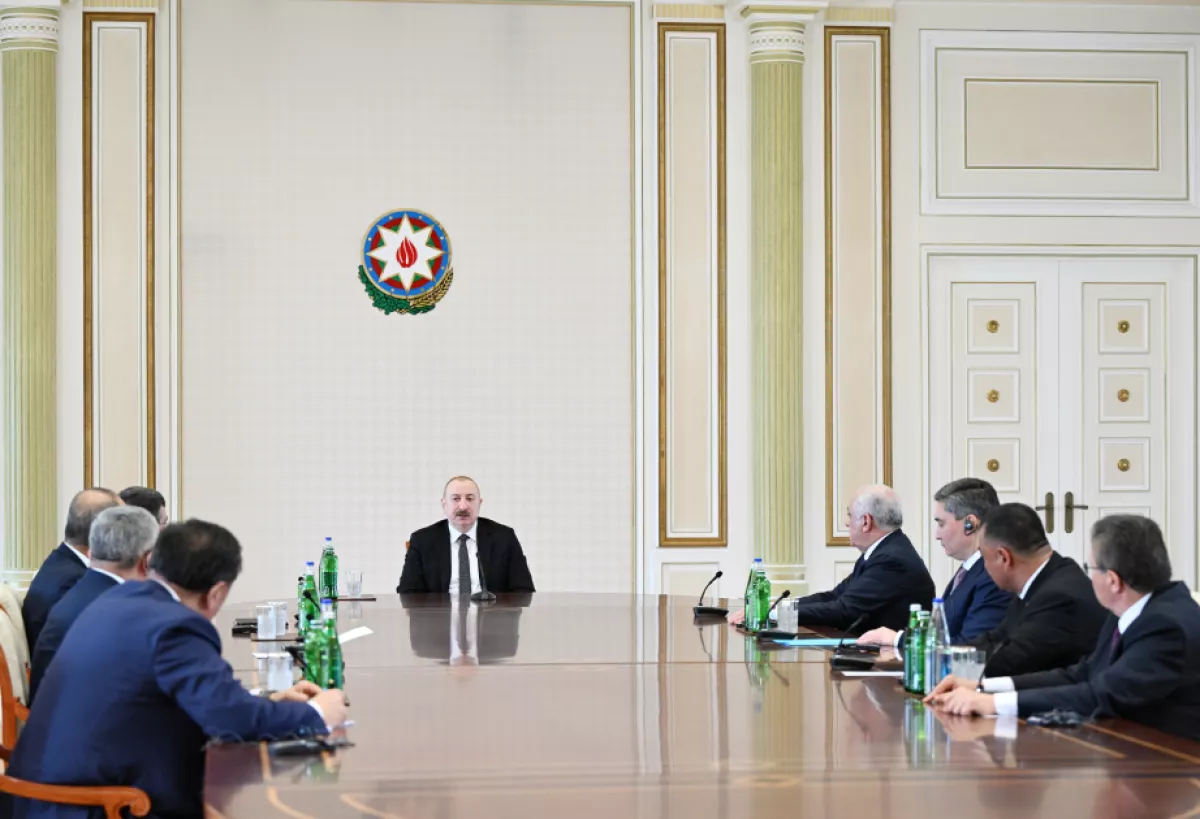
President of Azerbaijan Ilham Aliyev, welcoming the participants of the meeting, noted that the OTS’s influence on regional processes is growing, while its role on the global stage is also expanding. “We must reinforce our positions through collective effort,” Ilham Aliyev stated.
On this occasion, Hikmet Hajiyev, Assistant to the President of Azerbaijan and Head of the Department for Foreign Policy Affairs of the Presidential Administration, shared a post on social media. Among other points, he noted that as a result of 30 years of Armenian occupation, about 12% of Azerbaijan’s territory was contaminated with over 1.5 million landmines. Hajiyev also stated that since 2020, more than 400 civilians have died or sustained serious injuries from mines during peacetime, and that mine contamination continues to hinder reconstruction efforts in Karabakh and East Zangezur, as well as the safe return of former internally displaced persons. He reminded that the mining of Azerbaijani territories by Armenia remains a subject that has yet to receive moral condemnation from the so-called progressive global community, represented by the collective West.
Armenia
Armenian Prime Minister Nikol Pashinyan paid an official working visit to Moscow. The public part of the meeting between Pashinyan and Russian President Vladimir Putin attracted significant attention. This time, it was marked by extreme sharpness and tension. Initially, Putin, in his welcoming speech, politely but firmly presented Pashinyan with Moscow’s full list of grievances and demands for Yerevan. In response, Pashinyan answered equally politely but confidently, countering Putin’s remarks.
In brief, the Russian president outlined Russia’s economic ties with Armenia as exceptionally advantageous for the latter, effectively making them dependent on Yerevan’s foreign policy course. He emphasised the impossibility of Armenia simultaneously being part of both the EU and the EAEU. Perhaps the most striking point was Putin’s explicit demand that political forces aligned with Russia be allowed to participate in Armenia’s political competition.
Pashinyan responded that he understands the impossibility of simultaneous membership in the EU and the EAEU, but he did not assure Putin that Armenia would remain in the Eurasian Union. Instead, he stated that when the time comes to choose between the two, it will be the citizens of Armenia who make the decision.

Regarding the participation of Russian citizens of Armenian descent in elections to the National Assembly, Pashinyan reminded that, under the Armenian constitution, only individuals holding exclusively Armenian passports are eligible to run. At the same time, he smiled while speaking about the supremacy of democracy in Armenia, adding a few words about the freedom of the internet.
The outcome of the conversation seems to be that both sides remained firm in their positions. Considering that the public portions of meetings between various leaders are generally intended to send messages to the outside world, it can be concluded that both Moscow and Yerevan achieved their objectives. For Moscow, it was important to emphasise that it stands firmly on its positions and will fight for its candidates in Armenia’s parliamentary elections—a message directed both to pro-Russian forces in Armenia and to the patriotic community within Russia itself.
For Pashinyan, on the eve of elections, it was extremely important to show his voters that he stands guard over Armenia’s interests. This does not mean that Moscow and Yerevan had conspired to act in this way. At this stage, each side simply needed to publicly state its position, which they successfully did. This conversation also makes the question of what was discussed behind closed doors—and what agreements were reached—even more intriguing. Most likely, we will be able to draw conclusions about this based on subsequent developments.
Iran
The situation around Iran continues to dominate global attention. Tehran has consistently, at least publicly, rejected American proposals for negotiations.
Meanwhile, Donald Trump made a series of contradictory statements, particularly regarding the blockade of the Strait of Hormuz. He unexpectedly said that Americans do not really need this Strait and that its unblocking should be handled by those countries most affected by the blockade. However, this should probably be understood as a trial balloon aimed at NATO allies, who have been slow to join active measures against Iran.
In reality, Trump more or less clearly stated his position during his televised address to the nation. At the same time, he reiterated his point that the U.S. does not need the Strait of Hormuz, which could reinforce the perception that the American leader lacks a clear vision for resolving the crisis.
However, Trump’s further statements make his intentions unmistakably clear. In particular, and perhaps the most important point of his speech, he mentioned that the Strait of Hormuz would be automatically reopened after the end of the war. This indicates that the Americans are not thinking primarily about reopening the Strait—they are focused on dealing a crushing defeat to Iran.
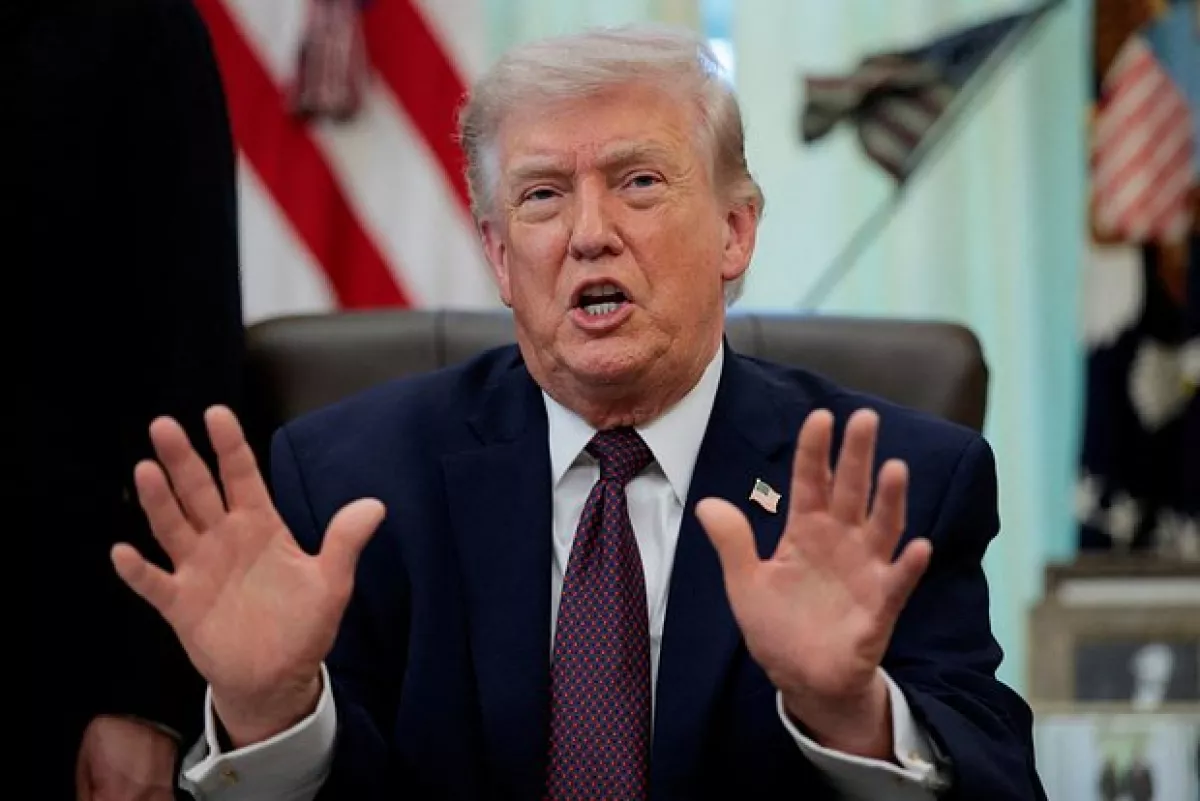
His subsequent remarks reinforce this view. The most striking one sounded very threatening: “We are going to hit them extremely hard over the next two to three weeks. We’re going to bring them back to the Stone Ages, where they belong,” Trump said.
Experience shows that when Trump threatens a country with force if it refuses to negotiate, he often follows through. This was the case with Venezuela, and twice already with Iran. Now, on the eve of the midterm elections to Congress, Trump desperately needs a triumphant conclusion to any military action. The situation demands a decisive move; otherwise, not only undecided voters within the Republican camp, but even his most loyal supporters, could turn away.
However, the Congressional elections are only part of the problem. The issue is not only Trump himself, nor even that his decisions could be more easily blocked legislatively if Republicans lose control of Congress. The real point is that the forces behind Trump—let’s call them the MAGA movement, although even this term is relative—require far more than four years of Trump in office to achieve their goals. For this, they need a relatively triumphant Trump term. From this perspective, a likely Republican defeat in the midterms would be the first signal that this triumph is in jeopardy. That is why it is so important for Trump to compel Iran to surrender quickly. All of this suggests that he is likely to carry out the threat he has made.







 editor@caliber.az
 +994 55 444-88-98
 Азербайджан, Баку, ул. Низами, 203, Af Business House, 5-й этаж