










Smooth as butter: Azerbaijan’s market tainted by fakes and inflation Caliber.Az overview
The Azerbaijan Food Safety Agency (AFSA) recently held an online meeting with butter importers to address violations in the labelling of foreign products. Such oversight is essential, particularly given that about half of the butter sold in the local market is either imported or repackaged domestically.
A closer look, however, reveals gaps in enforcement. Both AFSA and the State Service for Antimonopoly and Consumer Market Control need to step up efforts to detect counterfeit products, tackle monopolistic practices, and prevent other market violations.
The situation is set to become more challenging with the expiration of the butter import duty exemption in January 2026, which is likely to drive retail prices higher.
Recently, the Food Safety Agency has increasingly focused its oversight on the dairy market, identifying quality violations and verifying that product compositions match their declared specifications. For example, the Agency recently held an online meeting with butter importers to review legal requirements for labelling imported butter and accurately specifying its composition.
Inspections revealed labelling violations in certain types of imported butter, including products from Iran. According to Agency specialists, some imports feature generic labels such as “vegetable oil” or “butter” without providing essential information on nutritional content, energy value, fat percentage, allergens, and other key details.
The Agency stressed that consumers must receive complete product information in Azerbaijani. This includes the product’s name, composition, production method, shelf life, storage conditions, country of origin, and the name and address of the manufacturer.
The need to strengthen oversight of the imported butter market is more urgent than ever, as imports account for roughly half of all butter available in Azerbaijan. This includes not only pre-packaged products but also large shipments of unpackaged butter brought into the country for repackaging in local facilities. The latter practice is fairly common, as domestic dairy production, for various practical reasons, cannot meet the demand for sufficient volumes of affordable raw materials.
Although Azerbaijan has made significant progress over the past fifteen years in importing high-yielding dairy cattle breeds, the cost of milk raw materials remains relatively high. This is largely due to objective factors: unlike Belarus, Ukraine, Russia, and particularly Australia and New Zealand, Azerbaijan lacks extensive fertile pastures because of its climate and soil conditions.
In recent years, the most productive dairy herds have been shifted from pasture grazing to stall-feeding, primarily on large farms owned by dairy factories and agri-parks. While this approach has some advantages, it has also increased costs for compound feed, energy, heating, maintenance, labour, and other necessities. As a result, the average wholesale price of a ton of milk in Azerbaijan is at least one-third higher than in Belarus and significantly higher than in Australia or New Zealand.
Consequently, producing dairy products, including butter, from local raw materials is considerably more expensive. Azerbaijan meets roughly 48–49% of its milk needs through domestic production, while the remainder is imported—either as finished dairy products or powdered milk, mainly from post-Soviet countries. Without powdered milk, local dairy factories would struggle to maintain uninterrupted production, especially during seasonal declines in milk yields.
According to official statistics, Azerbaijan’s annual demand for butter is 38,000–40,000 tonnes, yet only slightly more than half of this demand is met using domestic raw materials.
The effects of imported inflation must also be taken into account. Between 2022 and 2025, prices for powdered milk and butter rose significantly among Azerbaijan’s main trading partners, and through trade transmission, this increase has negatively affected local production and retail.
This trend has contributed to a decline in domestic butter production. According to the State Statistical Committee, slightly over 26,890 tonnes of butter were produced from January to November 2024, marking a 9.1% increase compared to the previous year. However, during the same period in 2025, domestic production not only stagnated but fell by 9.4% to 24,358 tonnes.
Demand for increasingly expensive imported butter has also decreased. Data from the State Customs Committee show that approximately 23,053 tonnes of butter and other milk fats were imported during the first eleven months of 2025—a decline of 12.7%.
These can be seen as objective factors affecting the local dairy sector. Unfortunately, there are also subjective issues in the production and import of butter. One significant factor is the presence of monopolistic groups that control the supply of powdered milk and butter. Large holdings involved in butter repackaging and major wholesale importers often enjoy preferential access to products from the Commonwealth of Independent States (CIS), as well as trade channels from Australia, New Zealand, Iran, and Saudi Arabia. Such market dominance and unfair competition contribute to the high cost of imported butter. This effect is particularly noticeable in major retail chains, where the prices of packaged imported butter appear almost identical, as if set by copy-paste.
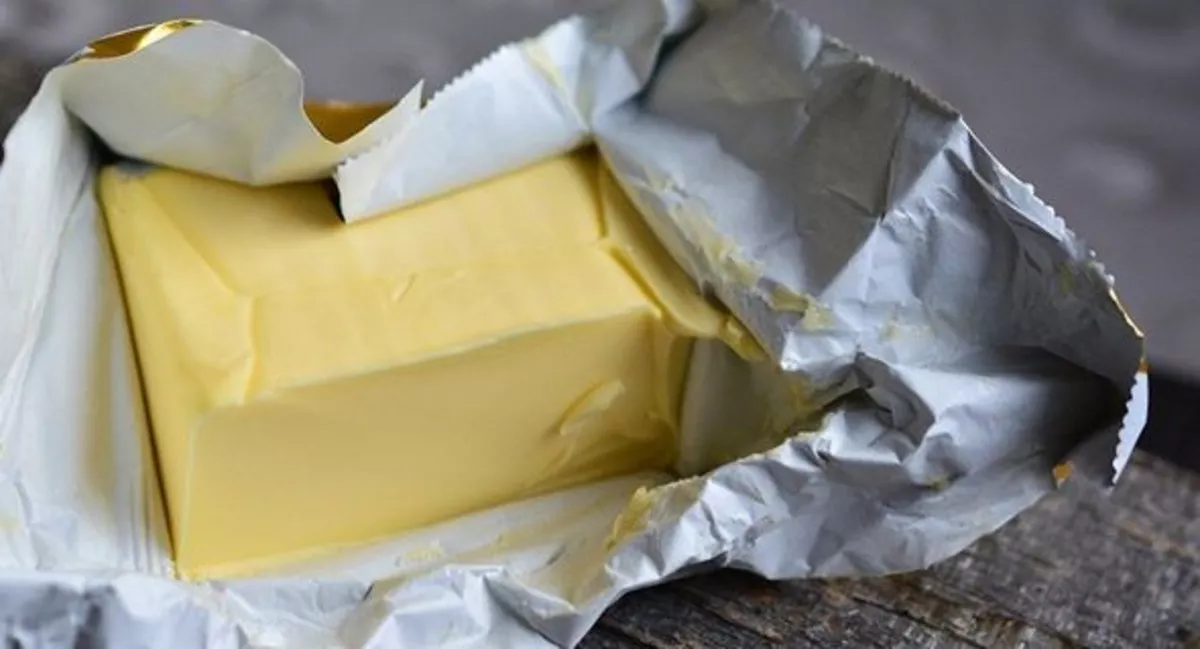
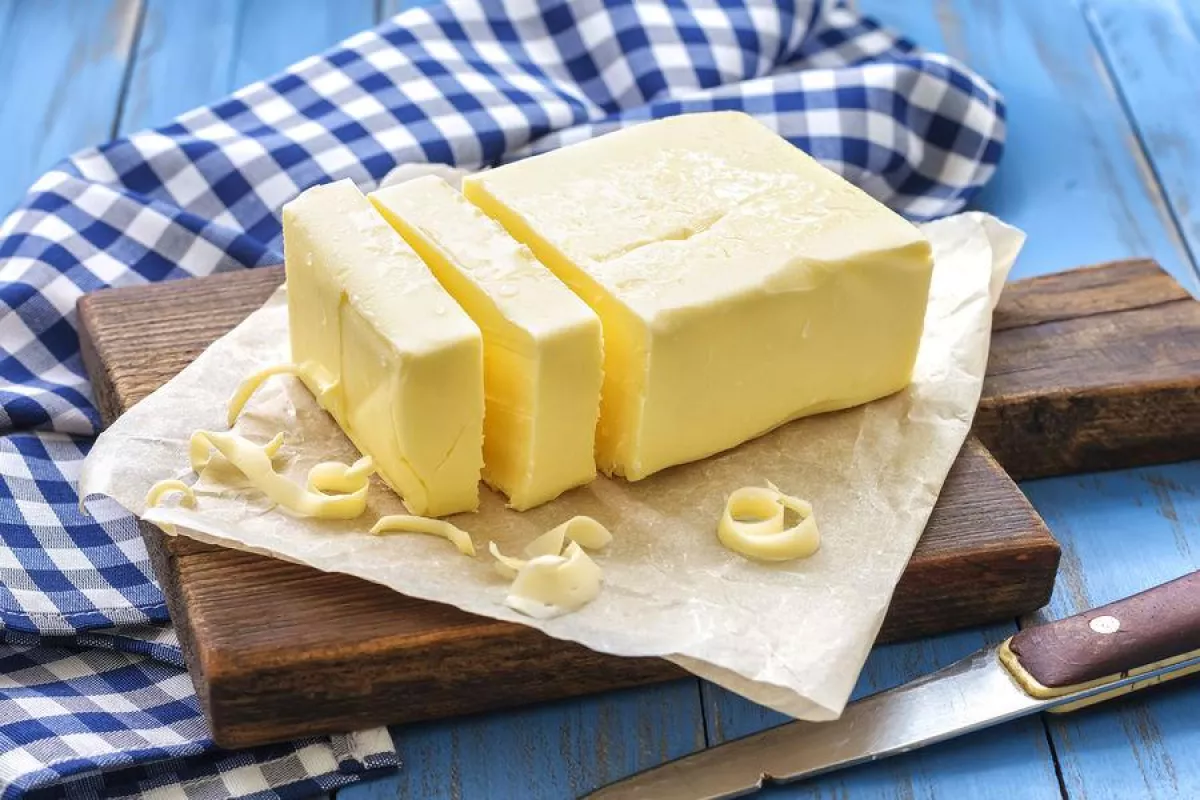
The market also struggles with the relatively low quality of domestic butter. Although packages prominently indicate 82.5% cream content, producers often fail to meet these specifications. Azerbaijani media and social networks have repeatedly reported cases where melting local butter produced a lumpy, uneven mass, clearly indicating the presence of additives such as vegetable spreads, margarine, milk proteins, starch, and other fillers. When melted, this butter does not fully liquefy, and a burnt or synthetic odour can often be detected.
Imported butter is often of poor quality as well, particularly bulk, unpackaged products from CIS countries. It is therefore unsurprising that during a recent online meeting with importers, AFSA specialists highlighted the lack of informative labelling on butter imported from Iran.
However, the issues with the Iranian supply chain go far beyond labelling. In 2022–2023, following inspections, Russia’s Rosselkhoznadzor banned the import of Armenian butter. Among other findings, authorities discovered that Armenian food factories were repackaging Iranian butter and cream, which contained high levels of bacterial contamination.
Iran’s dairy industry faces its own structural challenges. Due to climate conditions and feed shortages, it is heavily reliant on external supplies of powdered milk and canned cream, often sourced from Asian countries not listed in international registers of certified suppliers. As a result, Iranian butter and cream are relatively inexpensive and widely consumed, not only in Armenia but also in Azerbaijan, where significant volumes are imported.
Nonetheless, questions remain about the safety and authenticity of these Iranian products. Whether they meet the claimed quality specifications is still uncertain and warrants thorough investigation.
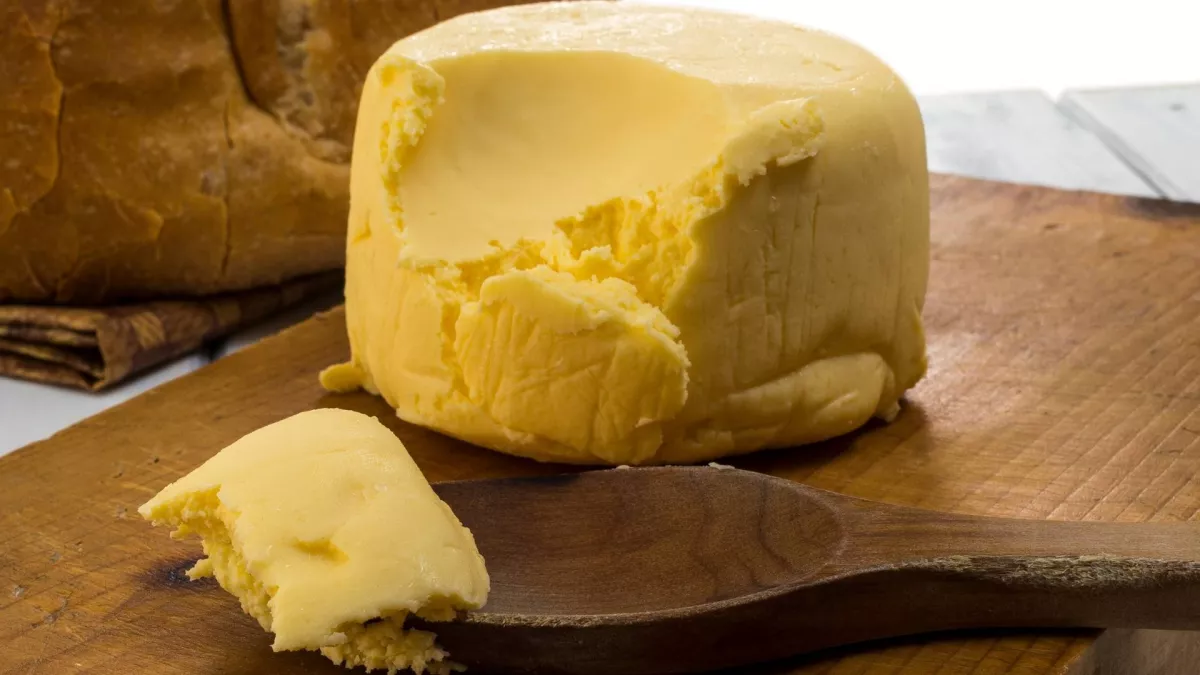
When examining the local market, particular attention should be paid to a product known as “nehrə yağı”, a traditional homemade butter. In reality, this popular rural-style butter is counterfeit in nearly 99% of cases.
Producing 1 kg of genuine butter requires roughly 25 litres of milk with a fat content of at least 3.3%. At an average wholesale milk price of 1.5 manats per litre (≈ $0.88), the production cost of homemade butter should be no less than 35 manats (≈ $20.60)—excluding labour, energy, transportation, and the seller’s profit. Considering that homemade butter is often sold in Baku markets for 15–20 manats (≈ $8.80–$11.80), it is evident that much of it is falsified, constituting clear consumer fraud.
“According to statistics, over the first ten months of 2025, Azerbaijan imported 42,400 tonnes of palm oil at an average price of 2.35 manats per kilogram [≈ $1.38],” says Associate Professor Fuad Islamzade of Azerbaijan Medical University. “This palm oil is frequently mixed with other oils and sold to the public as butter.”
Notably, Azerbaijan is not only importing palm oil but, in response to growing demand, increasing domestic margarine production. Over the first eleven months of 2025, the country produced more than 46,500 tonnes of margarine, marking a 3.1% increase from the previous year.
AFSA and the Antimonopoly Agency have been monitoring the market for several years, identifying, among other issues, batches of homemade butter and outright counterfeit products. For instance, in December of last year, AFSA specialists conducted raids on illegal street vendors at Yasamal Bazaar and near the “Inshaatchilar” metro station, uncovering cases of butter being sold without proper storage or temperature controls, and without documentation verifying product safety.
In April of this year, a dairy production facility in the Guba district was temporarily shut down after AFSA laboratory analyses detected microbiological contamination in samples of butter and cream. Agency representatives also reported producers selling homemade products made from vegetable spreads, packaged to imitate butter. Coliform bacteria, mould, and yeast were found in such cream and butter.
These findings underscore the urgent need to regulate the homemade butter market and to halt the supply of blatantly counterfeit butter.
The situation in this segment of the domestic market is likely to worsen, as import privileges for butter were removed in January 2026. The import duty, which had been 5% since 2017, has now been raised to 15%. This change is expected to push retail prices higher in the near future.
There is, however, some cautious optimism. Forecasts published by the Food and Agriculture Organisation of the United Nations (FAO) on January 9, 2026, indicated that the Dairy Price Index fell by 5.9 points in December. Butter prices, in particular, showed a sharp decline, driven by a seasonal increase in cream supply in Europe, stockpiling, and expectations of lower whole powdered milk prices.
Nonetheless, it remains challenging to predict the extent to which these global trends will impact the cost of butter imported into Azerbaijan, considering the higher customs duties and the continued dominance of monopolistic groups in the market.







 editor@caliber.az
 +994 55 444-88-98
 Азербайджан, Баку, ул. Низами, 203, Af Business House, 5-й этаж